
I have a client, a forest school teacher whom I’ve been supporting as she steps into a new year of teaching outdoors (there are more of us every day). This morning after a few email exchanges, she mentioned that she was having trouble with her jaw and that she might need to cancel our next meeting. She had had a full day of summer camp at the same forest school the day prior, and with this new condition she wasn’t sure if she was ready to talk.
It’s a trivial detail. Maybe. But after answering her final email, I picked up my cup of tea (an earthy, fermented pu-ehr) and heard myself say out loud to the electric blue of dawn just then climbing over the mountains: the somatic language of teaching and learning. I glared.
I don’t think I was ready to understand this until now. What I mean is the body sensations, postures, and movements that coincide with learning and growth. In other words, school.
Do you recall any familiar feelings, physical sensations, or repetitive behaviors that you felt during your school years? I can instantly identify quite a few: the bouncing knees, the various ways my teeth and tongue would rest or clench in my mouth, the convoluted ways I would hold a pencil in order to feel tension in my fingers. The way I would push the palm of my hand against the edge of the chair. I could go on and on.
The somatic language of teaching and learning.
It has been helpful to me to discover the language of neurodivergence. I have not written about it much, but my partner is an expert in the field and has helped me embrace the description I’ve always had of myself as ‘on the spectrum but not diagnoseable.’ She considers me a high-functioning autistic and herself an AuDHD, a blend of autism with ADHD which, to be honest, is rather attractive to me.
Because we’re weird. We make noises. We move our bodies in silly and fun ways. Our relationship has been very liberating to both of us, because rather than constrain these lifelong patterns we embrace them in each other. We love them in one another, freeing up space to love these things in ourselves.
So much has been written on the topic of neurodivergence and all the goofy things people like us do, so it’s not my intention to delve into that. For many people in that community, and I now consider myself one of them, it’s relevant and plain as day. For others it’s over-applied pop-psychology. I sincerely respect both views, but it’s been very helpful to me to have language and a community of understanding for what I previously just thought of a social awkwardness, math oddities, and idiosyncrasies. It’s helped me with my students, because it frees some of the physical, oral, and behavioral uniqueness of human behavior from the den of “bad behavior.”
I spent a month outside of my 5th grade classroom. It was the same classroom in which my construction paper rocket ship sailed around the room and lapped several of the other students’. Every time it made a full circuit, for quiz scores, completing assignments, book reports, etc., the teacher took us to Dairy Queen. Most kids never went. I went twice. That highly visible form of praise/judgement torture is a different story (I don’t think anyone was benefitted, myself included), but my point is I performed well. I was praised in school. Always.
But there was fully a month when my teacher just couldn’t stand to have me in her presence. I can laugh about it now, and I did back then. Sorta. It was normal for a child to have to sit outside the classroom, silently, when they got in trouble. But it wasn’t normal for a student to be parked out there for a month, and everybody in every grade knew that. Yes, hi 6th grade class walking by. I’m still here.
The truth is that I have a lot of compassion for my 5th grade teacher, my fellow classmates, and the catholic school structure in which it was nested. I had compassion back then too. I never hated my teacher. I adored her, even occasionally knocking on the door of her house with a big geek-out smile when my friend and I rode bikes past her house. Mrs. Brown. I was sort of in love with her, in that I’m-eleven-years-old-and-I-don’t-understand-about-life way that was, in the end, kind of adorable.
Except, I wasn’t. I was in the hall. I never understood why.
Increasingly, I do. I move and glitch. Honestly, a lot. I smile too often. Too big. I like holding pencils interlaced between my fingers, staring into space and thinking about things. Nobody had language for this back in the day. We still hardly do.
Today, I see these things in others. Not everyone. It’s not something we need to overapply. But I see the way my daughter gets excited and makes that sucking sound through clenched teeth that, though expressive and a little weird, is but a hint of what’s going on inside for her. I mean in her neurons.
We’ve had the great fortune to be surrounded by a community of friends and adults that haven’t shamed this out of her. I’m teary as I write that. We shame these things out of kids because they’re acting strangely. What so many of us don’t understand is that that person is doing something inside of themselves that is important and right.
I see my brother, 7-years-old in my memory, smiling and wiggling his fingers in that unusual way that no one else did. Why? Because he was really happy. I see my student, swinging back and forth on his hands during history class, receiving the lessons as well as anyone.
What is your body doing as it’s learning? Are there sensations you find familiar? Repetitive motions that, while seemingly nonsensical, were with you for years, and maybe still are?
Some of these somatic sensations are positive. For me, the bouncing of my knee is a clear sign that I’m engaged. For my 5th grade teacher it was the opposite, likely part of the reason I was in the hall. I don’t think she was right or wrong, rather, it was a miscommunication. We had a lack of shared understanding, shared language, plain and simple. Plus, I’m annoying.
Other sensations, like increasing tension in my teeth and jaw, are negative somatic sensations, indications of internal experiences that aren’t exactly wrong but aren’t exactly positive either. For me, it’s not necessarily a sign of lack of engagement or learning, but the desire for an anticipated outcome. Bouncing knees was an open-ended sort of feeling. I could go on and on.
Helping kids understand this about themselves will help them learn. This is an important statement, and I encourage you to let it sink it. It need not (and probably should not) proceed by diagnosing or labeling them, by framing it as neurodivergence or anything else. That is a top-down, external application of knowledge that is far too often misdiagnosed, misapplied, and wrapped like a yoke around a child’s otherwise capable and open heart.
Rather, a child should be invited to recognize and understand their repetitive movements and somatic sensations. The first part of that journey is simply to welcome it, to make these movements and feelings feel like they have a home. They belong. That work is primarily done by the rest of us generously not noticing and putting it in their face. What are you doing? That’s what we’re not going to say to a five-year-old. We’re just going to let them be who they are, without making them think about it, feel self-conscious about it, feel shame and oddity about it. Not at this stage.
Later, as a teen or tween, they might be invited to recognize what they’re feeling or experiencing as they cock their head to one side in that familiar way, or bite their pencil and stare into space.
I’ve referred to the language of neurodivergence with my daughter, but I’ve never suggested that she herself is neurodivergent. She is a maniac geek, in her own unique ways that aren’t so similar to my own. She’s just…a person. It’s helpful to have language, a way to describe things, but it’s almost never helpful to label people, especially if they aren’t embracing that label on their own.
Besides, what I’m trying to encapsulate here, these somatic expressions of learning and neural growth, is only a fragment of the term neurodivergent. What’s important is that there are ways we feel, there are body patterns of posture and movement, that coincide with internal neurological states. Recognizing these for what they are and not needlessly turning them into bad or shameful behavior – I’m going to be a little loud and honest: we will solve a lot of the world’s problems when we stop shaming these things out of our kids.
This needs to be held, obviously, within an understanding of openly rude and malevolent behavior. It’s not appropriate to hit the student next to you because you’re bored or frustrated. Pulling Suzie’s pigtails is not an expression of your wellbeing. There is a balanced ground to be found here. Enforcing socially acceptable behavior and rules in a class or learning environment are sensible choices and crucial to everyone’s collective wellbeing. Distinguishing between these two, rude behavior and healthy somatic expression, is a field ripe for increased awareness.
Consider my student, swinging rather quickly between his chair and desk during history class. We’re talking on thousands of occasions over eight years together. It’s very easy to interpret that behavior as disruptive, wrong, rude, or worthy of negative reinforcement. But it isn’t. It’s just his 12-year-old body wanting to move, to be in motion as he learns. I know this from years of study with him. There is nothing in him that is wrong or inadequate to the task of learning. There is nothing in him that is doing it ‘to’ me or any of his classmates and friends. He’s just swinging while he’s learning.
And yet, there’s the rest of us. It’s equally as important to understand the impact of that motion not just on himself, but on that of his classmates, or me, his teacher. These are very hard things to manage in a typical classroom, where students and teacher may have known each other only for a few months. I had the fortune of working with my students for years, so I was able to have these conversations with them, not just once or twice, but as an evolution of awareness and shared understanding.
“Alright Jeff,” began a typical interaction, “I’m totally fine with you bumping and swinging around a bit. You know that. We all know that. But I need to check in and make sure everyone else is okay, because…you’re kind of a maniac over there. I know you’re paying attention, and I know you’re not trying to disrupt anyone else…but, you know, it’s my job to make sure everyone is okay with a crazy maniac in the corner.”
Jeff laughs. We’re buds. It’s okay for me to call him a crazy maniac. I’m a crazy maniac too, and that’s open knowledge. That’s the fruit of intimacy we share after so many years of trust.
“Um actually, it is a little distracting,” says Nita, with a little edge of annoyance.
“Yeah, fair…” I acknowledge.
“It’s not bothering me,” says Gracie, throwing her arms in that I-don’t-care attitude we’re all familiar with.
“Yeah, it’s fine with me too,” says Greg, “I don’t…” His eyes are wide and he shrugs, as if he wonders why I said anything.
“It is a little annoying Jeffy Boy,” offers Michael, who prefers the pronunciation my-KAY-el to MY-kel, because he’s got the rizz. I hold a pause, looking for any tension between the two. It’s not there.
Others nod, shrug, or turn up the corners of their lips.
“Okay…so Jeff…can you maybe swing or do whatever it is your doing over there, but like…keep it to yourself a bit more?”
“Yeah.” He smiles with a tiny chuckle.
“Nita? My-KAY-el? That cool?”
“Yeah…” they shrug. I can see they’re not super bothered.
“Okay then cool. If we need to recheck in, let’s just do that. Good?” I get a few thumbs up, and turn back to my song about why the 16th century king of Spain, an Austrian Hapsburg who doesn’t speak Spanish, is in command of a Spanish-speaking empire that, prevented from sailing east to the Indies by the tiny nation of Portugal, instead sailed God-knows-where into the west, found the same place, which wasn’t the same place, and then became the richest nation in the world by taking it from the people who were already living there.
Interruptions like this…they weren’t interruptions. This is middle school. Learning how to navigate social situations, speak one’s piece, and look for consensus – in my opinion this is always a more valuable lesson to tweenagers than Hernan Cortes. But I digress.
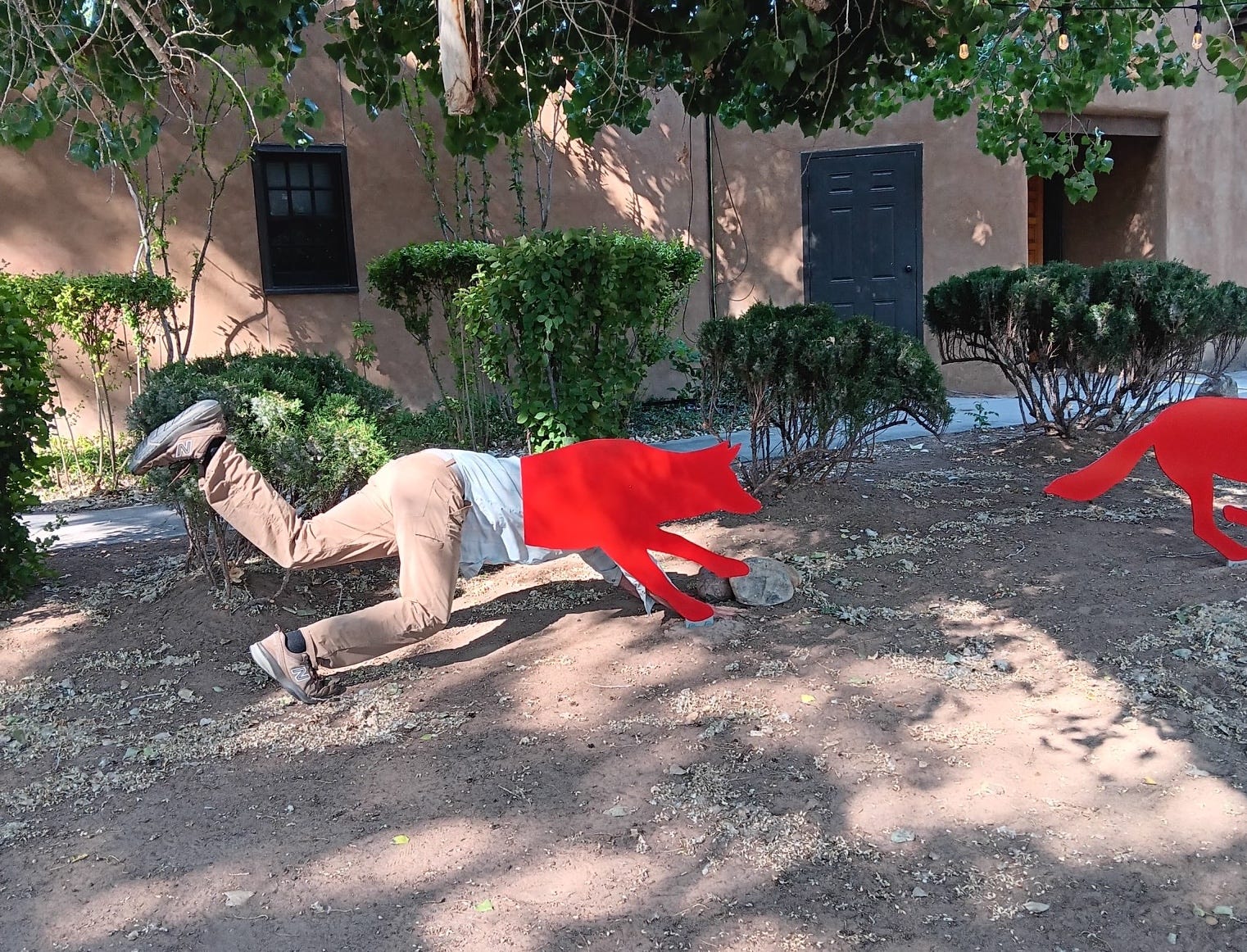
So let’s return. The somatic language of learning and teaching. What is happening in a child’s body when they are learning? Are there ways to help them explore that, to feel safe in it, socially safe and not shamed or teased? Are there ways to explore making the rest of the room feel safe too, to distinguish between movement and ill-behavior? Such explorations, for children, for parents, for teachers, for administrations – please, if you don’t already understand this, reach out to me because I honestly would like to help your child.
And then we have teacher. Because a teacher is undergoing somatic experiences in her own body as she goes about the challenging task of teaching and holding the attention of her students. This is happening for kindergarten teachers (and their students). This is happening for grade school teachers (and their students). It’s happening for middle school, high school, college, and… here’s the rub: it’s happening for all of us.
Somatic experience isn’t something that’s isolated to particular individuals or parents with an interest in pop-psychology. It’s an aspect of human life. We often feel it in stressful moments, or therapeutic settings, but it’s present in almost everything we do. Today, there are scores of therapists and practitioners working with somatic therapeutic models to help people process and understand their trauma, grief, depression, anxiety, manic behaviors, and much more. This is the primary field in which you’ll find this language and comprehension: therapy.
My partner, Rachel Halder, is a somatic resolution practitioner who largely works with women with sexual trauma. The somatic lens in this context is very sensitive. And necessary. It’s through conversation with her that I’ve come to understand this language and process better. Women, and surely men too, have a lot of bodily sensations to process as they face their histories of unhealthy and often abusive sexual behavior.
The comparison to education is not wide of the mark. Many of us have unprocessed guilt, shame, trauma, anxiety or fear around our experiences in school. It’s very common for us to bring this fear and judgement into the lives of our children as they face school. We don’t want them to have the same experiences we did, yet we often feel powerless in many situations.
I’m not suggesting a solution to any of this, nor that I am unique in connecting some of these dots, something many other wonderful teachers, parents, and therapists have already done. Some have expressed it better. As a forest school teacher for 10 years, I’m just developing an increasing awareness of the impact of our somatic sensations as we go about the important task of learning and growing up. Like many complex situations in life, there may not be top-down solutions, but increased awareness does help.
That’s what hit me as I set my email down this morning, took a sip of tea, and welcomed in the dawn with the words “the somatic language of teaching and learning.” The truth is that my client, a neurodivergent geek like me, may have an ailment in her jaw that has nothing whatsoever to do with her teaching at summer camp the day before. But I thought it was a fair question. In my role as support person, I think it’s helpful to invite in these kinds of inquiries. Could this sensation, this symptom, be understood from the somatic lens of the impact of a day of teaching? What’s happening in your body as you’re caring for those children? As every teacher knows, teaching has an impact on our bodies. Every lawyer knows this. Every nurse. Every accountant and bus driver. It’s not just the big muscle motions of daily tasks that leave imprints on our bodies, it’s the subtle ways we tap, we hold, we press, we clench, as we go about the sometimes difficult task of being alive together.
Right now, I’m focused on learning. Take a moment and ask: Are there specific body sensations, movements, or behaviors that you recognize in yourself as a student? Patterns you might be able to notice looking back? Or maybe in moments of great triumph, or great stress? These feelings or movements may be a very useful key to understanding who you are.
And now, are there specific body movements or sensations that you recognize in your child, or that your child recognizes in herself, as she attends school? These are likely very valuable things to explore with her. But always at an appropriate age and pace. We’re not trying to induce self-consciousness that leads to masking or hiding. We’re looking to discover the useful tools we might find, when the time is right, to help her navigate her unique style and path of learning and growth.
And if you’re a teacher or caretaker, are there specific body sensations you recognize in yourself when the class gets uppity, out of control, joyful, or relaxes into silent, engaged learning? Or whatever other range of experiences you have? Recognizing these and seeing them as allies and tools for discovery, rather than hateful or unwanted behaviors, may be a helpful lens.
With kindness and humility, and gratitude for all the people who helped me discover so much in life, including Mrs. Brown. Thanks.
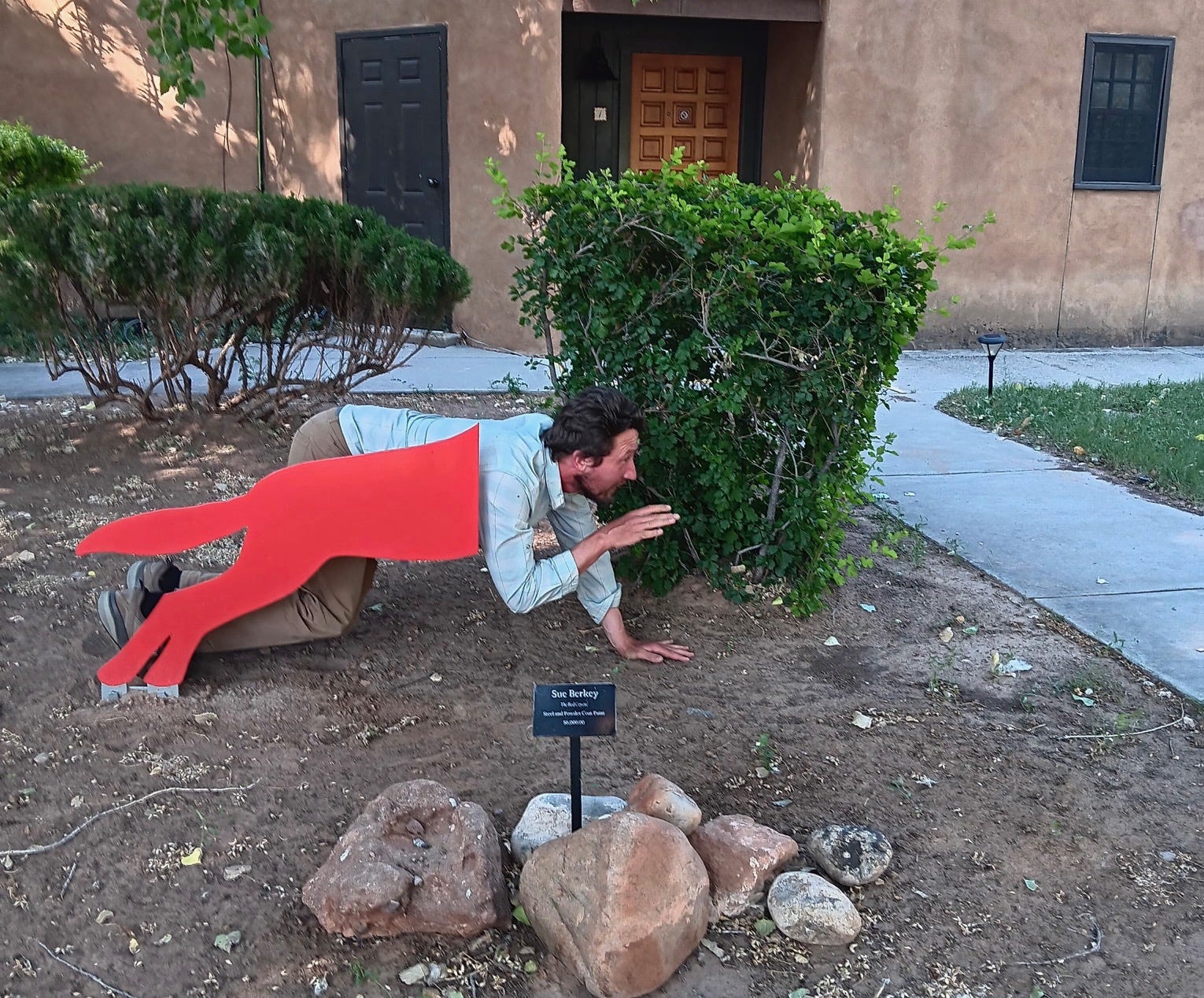
I am currently working with a learning center in Taos and a group of mothers near my home in El Rito, NM, talking and consulting about putting together forest school programs for their kiddos based in part on the Juniper School I created and ran for 10 years. I am also working with parents and teachers, both locally and online, who are navigating alternative paths of education for their children.
I AM LOVING THIS WORK!
If you are a parent or teacher facing choices or questions regarding learning and growth in your children, whether that’s in a conventional school, homeschool, or an alternative, now is an excellent time to reach out to me. I’m seeing the positive impact of my work in families and communities, and it’s making me smile.
I am available for a quick consultation call. If we have shared interests, we can discuss ways I may be able to help. I am interested in working with families, parents, teachers, and groups of parents who are seeking ideas and support as they think outside the box about what life and learning truly are. I’m focused on the human, not the curriculum, an inside-out approach. How do we understand ourselves, our bodies and minds, so that we’re building a bright and successful vision from the inside-out of who we are and what we want to take on in life? School can be drudgery. Being alive and in possession of one’s learning power is a joy.
Send me a message. We can start very casually.

No posts
Comments
Nothing yet. Say the first thing.
Sign in to join the conversation.