
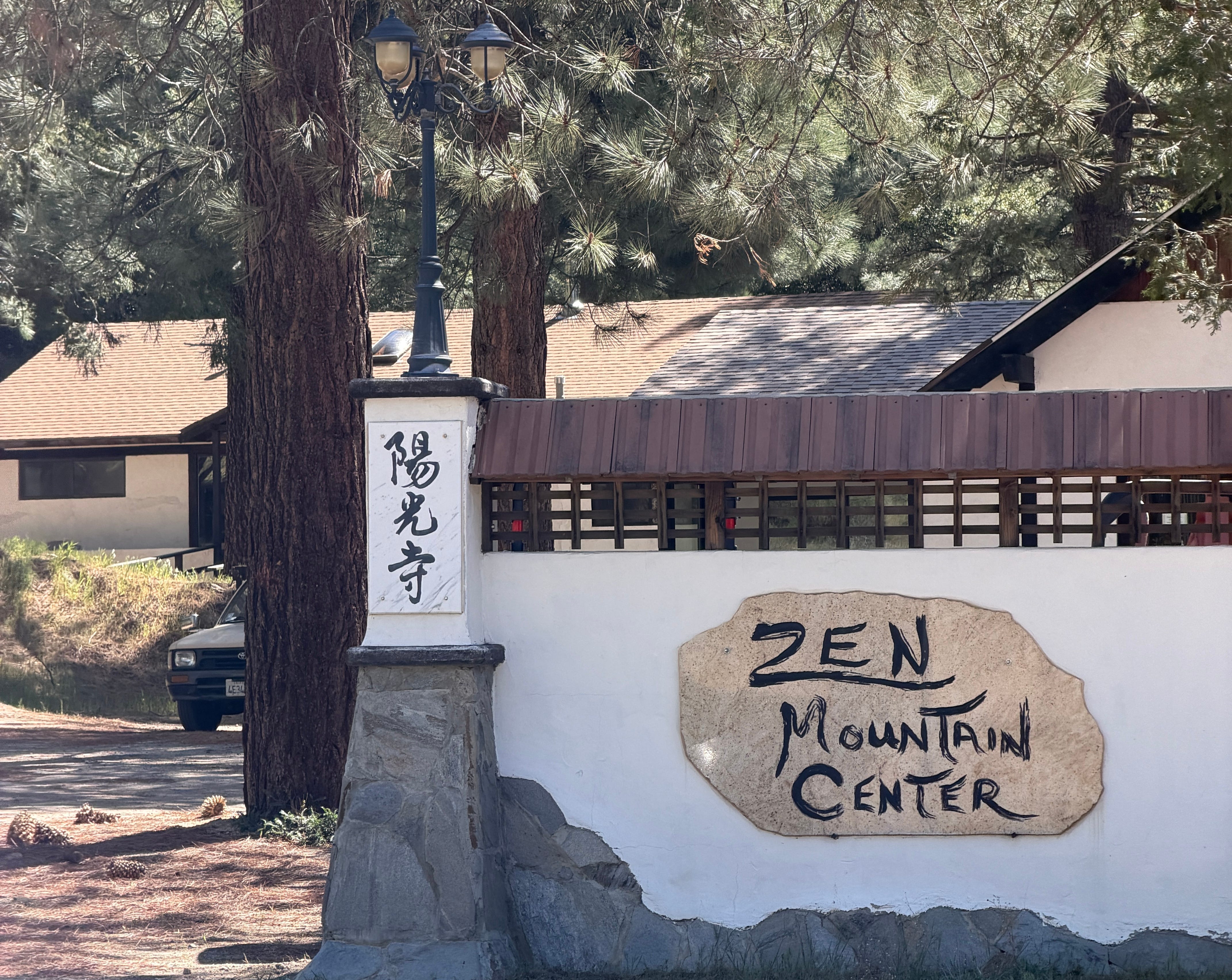
I recently sat in a zen meditation retreat at Yokoji Zen Mountain Center in Idyllwild, California. The retreat was their “Beginner’s Mind Sesshin.”
Sesshin is a Japanese word that means “touching the heart-mind” or “gathering the mind.” It is a time of silent intensive meditation practice.
A typical sesshin lasts 5-7 days. This one, however, was a short weekend retreat from Friday evening to Sunday morning.
I have been attending meditation retreats for over a decade now, but I recognized something different about this one — or more-so my approach to this one.
In the past, I used to go to meditation retreats with a subtle expectation to gain something, some kind of deep insight or enlightenment. Oftentimes I would have these kind of deep insights or “aha” moments of realization, especially in the beginning.
What would occur even more often, however, were sobering realizations that the fantasy I had about the retreat did not match the reality of it. The first few meditation sessions would feel special, like I am doing something extraordinary. Then, they would become increasingly difficult.
How long can I sit here? My back hurts. My knees hurt. I’m tired of the food here. Once I leave I’m going to get a big burrito, oh that sounds so good right now. I can’t wait for this to be over.
And on and on. I would work with these thoughts and the fantasy of leaving as much as I could, but at a certain point I would just feel burnt out and very resistant to continuing the practice (it took me a long time to realize that the resistance was actually making it much more difficult).
My approach for this retreat was noticeably different, and I attribute that shift to lessons I learned from my recent journey in Peru.
In Peru, I was working quite a bit with plant medicines, namely ayahuasca. The ayahuasca experience can be very intense and often very uncomfortable. My first experience with it on this trip was in a whole other category of discomfort—terrifying, even—and I truthfully didn’t want to drink it again.
What I realized, however, was that while the experience itself was uncomfortable, what concerned me more was the way my mind and ego reacted to it. I was completely resistant, freaking out, clinging desperately to my ego, grasping for comfort and safety, and very afraid to let go.
I understand that it is natural and very human to want comfort and avoid discomfort, so I don’t blame myself for feeling that way. However, the experience made me much more aware of death, of impermanence, and of how I react when I feel a brush with death.
When I die, I don’t want to meet death with so much fear and resistance, and even more importantly, I don’t want to meet life with so much fear and resistance. I realized that the only way to grow my capacity to meet life fully is to practice meeting life fully.
In other words, I realized that I need to face my fears, my discomfort, and my resistance in order to be free from them. If I am unwilling to face these things, they will continue to control me, and I will avoid life instead of meeting it directly.
This gave me a whole new approach to the remaining ayahuasca experiences. Instead of hoping they would be positive and comfortable, I expected them to be intense and uncomfortable, and I entered them with the intention of increasing my ability to be with those energies without being pulled into fear or resistance.
I feel I grew a lot through the remaining ceremonies because of that approach. Things that used to bother me or feel overwhelming were no longer a problem. My willingness to be with discomfort—to not fear it or resist it—made it less overwhelming. In fact, I realized that it’s far more uncomfortable to go through life trying to avoid all discomfort than it is to increase our capacity to accept it.
When I signed up for this meditation retreat, it wasn’t because I was hoping to gain some kind of enlightenment from it. I simply knew it would be a container that would force me to face myself more deeply than the conditions of my daily life allow. I knew it would be uncomfortable to sit for long hours, that I wouldn’t want to do that, but that I would have the opportunity to look at my resistance and practice being with it.
I think it’s really important to put ourselves in situations that challenge us, that test us, that stretch us, because that’s how we grow. If we don’t—if we always stay within our comfort zone—we will continue to avoid discomfort, and that comfort zone will get smaller and smaller, while the things we avoid will grow larger and larger.
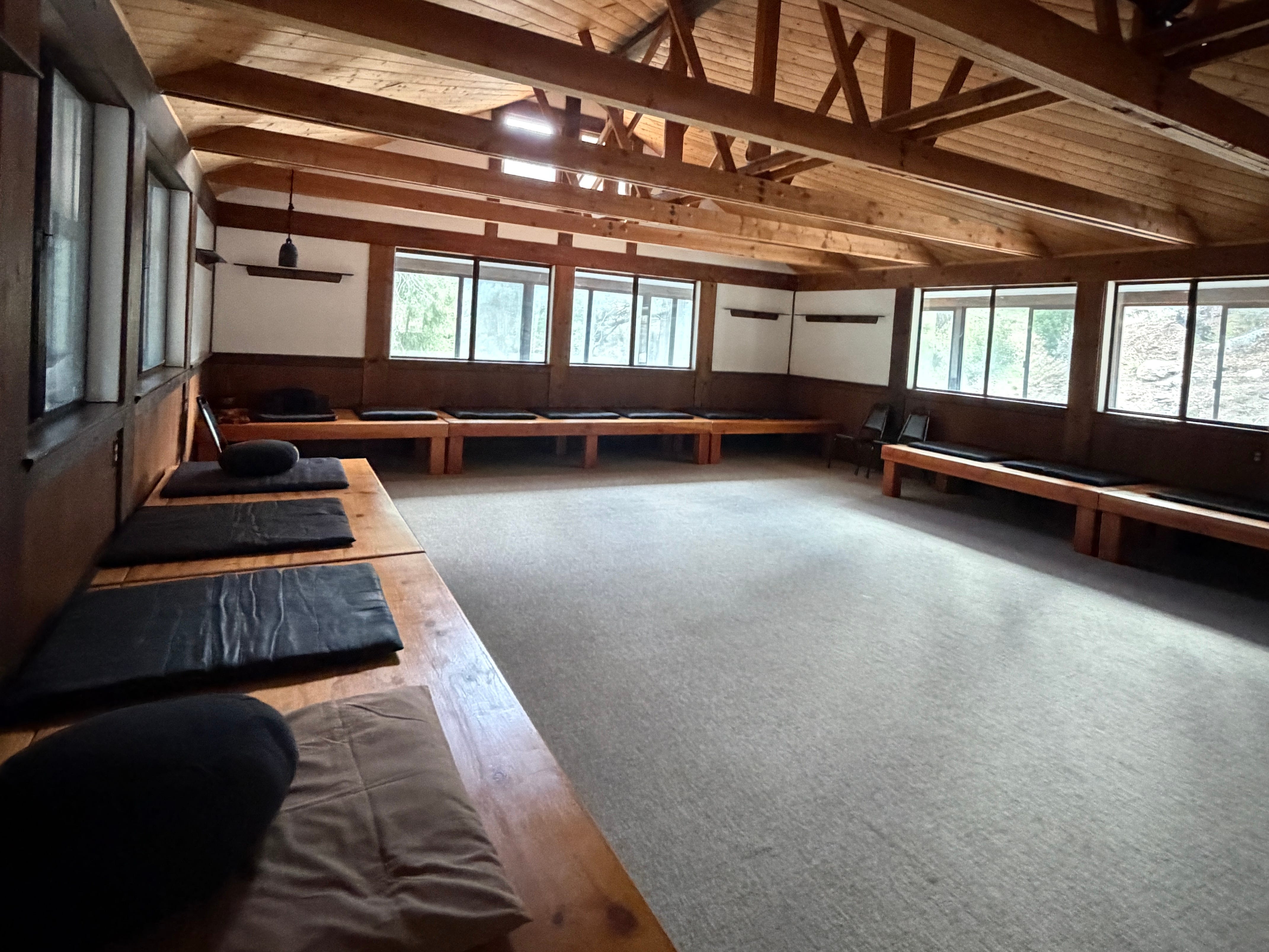
The retreat gave me plenty of opportunities to be with discomfort. I was experiencing a lot of allergies, so my nose was often stuffy or running. They instruct that there is “no blowing your nose or sniffling in the meditation hall,” so I would just let my nose run and observe it, or observe my stuffy breathing.
My knees were also in a lot of pain from the long hours of sitting. I realized that the way I’ve been sitting has contributed to that pain, as my left knee wasn’t making full contact with the ground, which over time creates strain. I’ve actually been sitting this way in meditation for over a decade and am only now realizing it. After all this time, I am still very much a beginner, but it’s nice to now understand how I can sit in a way that is more supportive.
Despite the discomfort, I didn’t feel much resistance to it. I felt quite at ease with the allergies, the body pain, and everything else that arose.
Overall, my intention for the practice was simple: to practice “being with what is,” whatever that may be. The knee pain—be with it. The runny nose—be with it. The restless mind—be with it. And even more deeply, to be with the space I was in and the moment I was in. Listening, being present, feeling the subtle aliveness of the moment and its constant flow of change.
I was practicing what in Zen is called shikantaza, or “just sitting.” This practice isn’t about focusing on a specific object or trying to achieve a particular state, but simply resting as awareness itself—allowing everything to arise and pass without interference, without grasping or rejecting anything.
What was interesting to me about this retreat was that I felt very neutral the entire time. My mind wasn’t fussy or avoidant in any way, but it also wasn’t ecstatic or overly joyful. It felt very simple, ordinary, and calm.
I had an insight that when the mind isn’t constantly receiving new stimuli or inputs, and instead has time to sit and process what it has already taken in, it begins to settle on its own. It reminded me of the analogy of muddy water becoming clear when it is left alone. As the mind grows quieter, the present moment becomes more clear.
I also noticed that while the meditations themselves felt quite ordinary, afterward I felt much more calm, centered, and present throughout the day.
I’ve come to realize that “being with what is” is a foundational and ongoing practice. Whether I am sitting in meditation, walking, driving, eating, or waiting in line—whatever is happening, I can practice being with it. Life itself is the practice. Each moment is an opportunity to be fully present, to be awake, to be in touch with life. And through being present, I can intuitively recognize what is most appropriate in that moment and how to meet it, how to respond. I don’t have to worry, think it through, or plan ahead. I can simply be present.
Another thing that stood out to me was the distinction between thinking and being. This is not a new insight for me, but I saw a new layer of it.
I noticed how much time is spent in a mode of thinking, being preoccupied, caught in thought, or simply forgetful of what is here. In that state, we can be so absorbed in our minds that we overlook the simplicity of just being. We’re physically here, but not really in touch with life as it is.
When we are simply being, we are directly in contact with life. There is a clarity and immediacy to experience—breath, sensation, sound—without needing to think about it. This being is always here, always available, but so often it goes unnoticed because our attention is continuously pulled into thought.
What I saw more clearly is that it’s not about creating being or getting somewhere else—it’s about recognizing what is already here, beneath or prior to all the thinking. And the more we return to that, the more life feels direct, simple, and complete as it is.
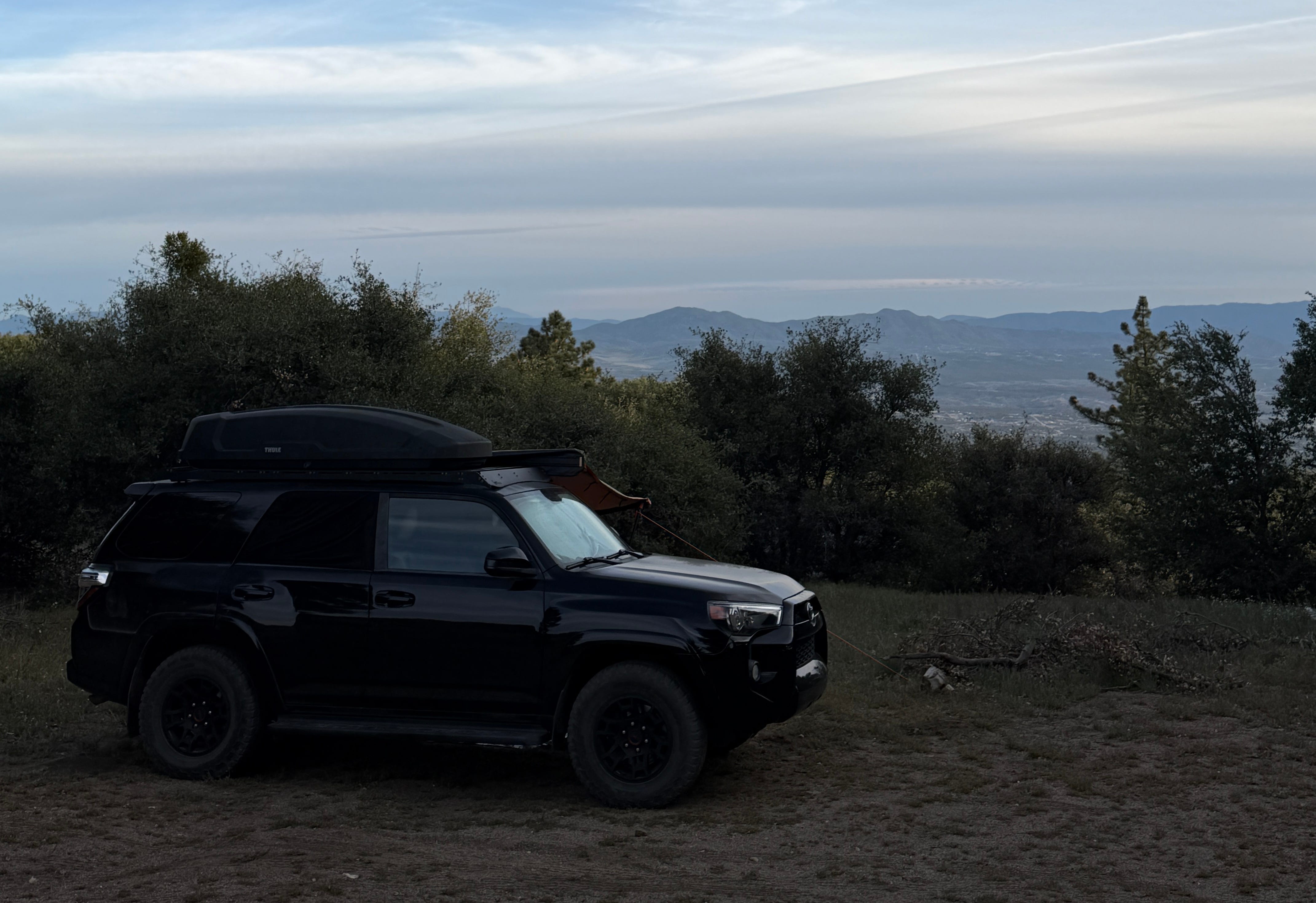
After the retreat, I spent a few days camping alone on top of nearby Thomas Mountain. I found a great spot with mountain views and had a lot of time to continue in silence, moving slowly, and relaxing into discomfort. For me, it can still feel a bit unsettling to spend multiple days alone in nature, but this time felt the most comfortable yet.
Overall, this retreat was a great experience. While it felt quite simple and ordinary during it, I noticed much less resistance in myself than I used to have. I feel more calm, centered and grounded, and for that I’m very grateful.
No posts
Comments
Nothing yet. Say the first thing.
Sign in to join the conversation.