
In 2009, 10 million people watched Danny Cahill win season 8 of The Biggest Loser TV show. He started with a body weight of 195 kg (430 lbs), and after 30-weeks of blood, sweat, and tears, he stood at the finale weighing 104 kg—a total weight loss of 108 kg!
In a recent Netflix documentary that sheds light on shows ups and downs, Danny sits in front of the camera, 16 years on from his win, having regained nearly all his lost body weight. He recalls a history of yo-yo dieting, estimating that during his lifetime he has lost over 1000 lbs through cycles of large weight loss and regain.
The documentary left me scratching my head.
How is this possible?
Your first instinct might be wrong.
It is not simply a lack of willpower or dedication to a healthy lifestyle.
The reality is a lot more complicated.
It is an ongoing tug-of-war between biology, environment, and behaviour.
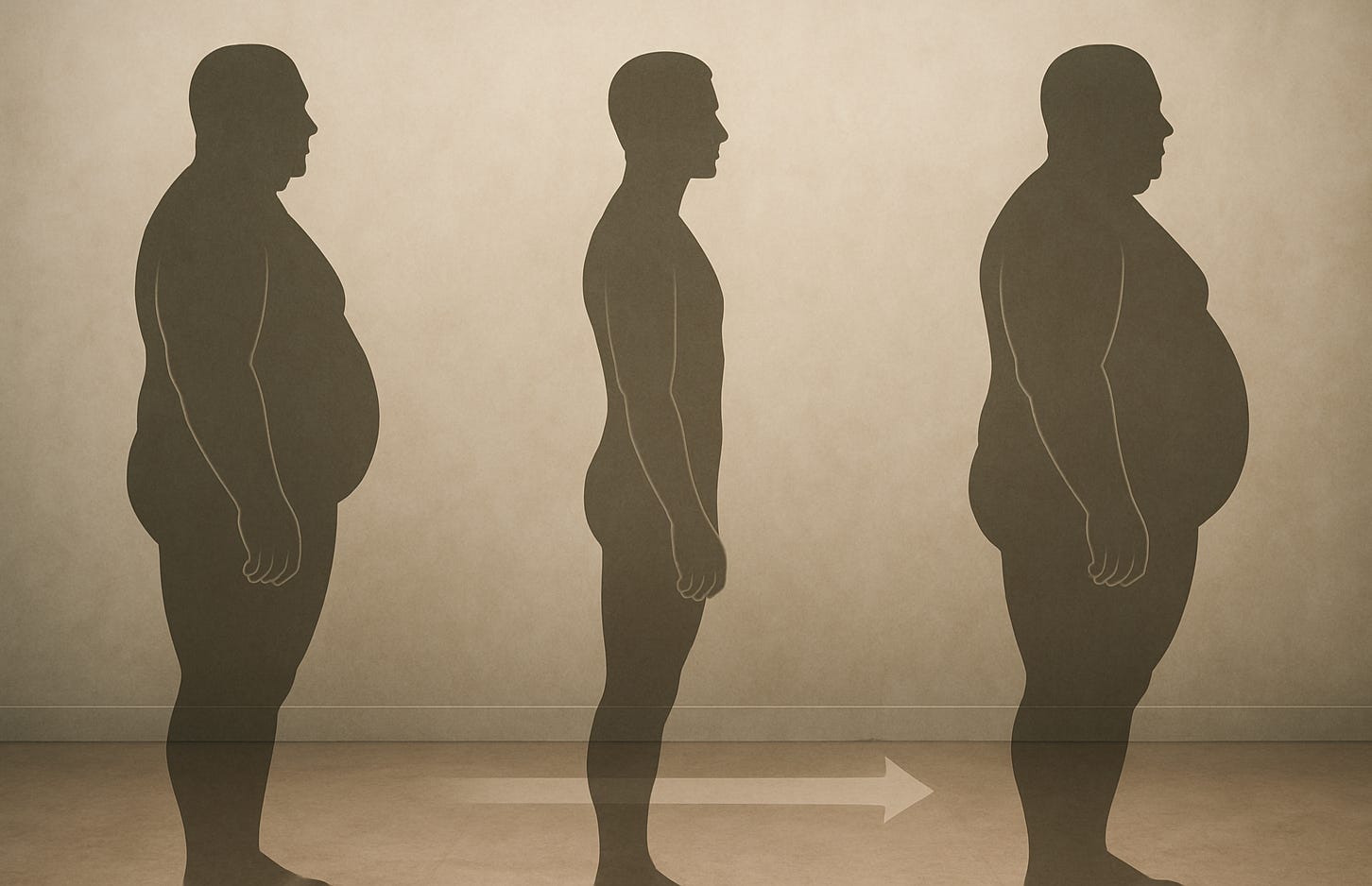
First, I will briefly address the willpower (personal responsibility) versus genetics (determinism) debate. These two are often pitted against each other with each viewpoint sounding something like this:
“Obesity is the result of laziness and poor choices; people just need to eat less and move more, it is that simple!” (personal responsibility)
“People have ‘bad genes’ and are predisposed to gain weight no matter what they do, it’s inevitable in our current environment!” (genetic determinism)
Neither of these captures the full story. Weight regain is not simply a test of character or a fixed destiny. The contribution of these factors exists on a sliding scale, depending on each person’s genetic risk and how this interacts with their environment.
The correct framing here is to think of obesity (and weight regain) as a neuroendocrine disorder triggered by environmental factors. This does not absolve personal responsibility. However, in the context of our current society and food environment, some people will be fighting against their biology for most of their lives.
To really understand why weight regain occurs, we need to look at what happens to metabolism, hormones, and behaviour after extreme weight loss.
Danny is not the only contestant to experience a rebound in body weight. In fact, maintaining the weight loss is the exception, not the rule.
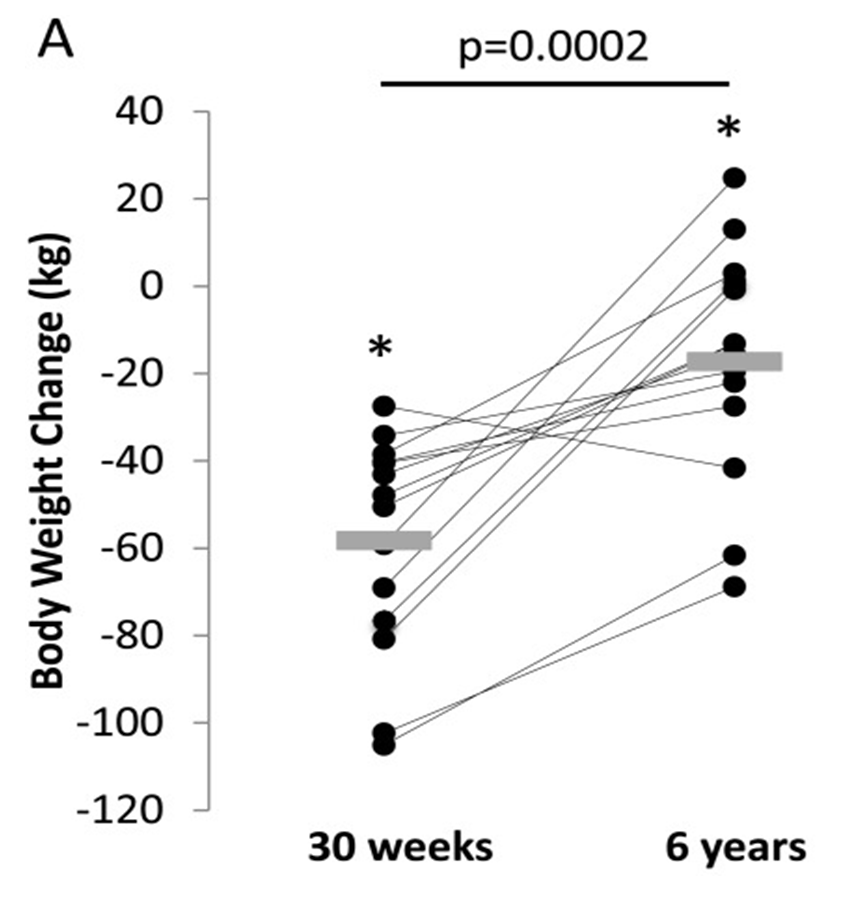
Researchers from the National Institutes of Health (NIH) studied 14 contestants from The Biggest Loser, or TBL, measuring their weight at the start of the show, at the end of the show (after 30 weeks), and 6 years later.
On average, contestants lost ~60 kg during the show. A remarkable achievement! Yet 6 years later, average weight loss was only ~20 kg and 5 contestants were at or above their starting weight. One person experienced an 80 kg swing, from an initial loss of ~60 kg to a gain of ~20 kg!
One popular theory is that large weight loss and yo-yo dieting causes metabolic adaptation (sometimes more dramatically referred to as metabolic damage). This is when the body’s metabolic rate drops more than predicted based on the change in body weight.
In a typical adult, the resting metabolic rate or “RMR” accounts for ~60-70% of total daily energy expenditure. It reflects the amount of energy your organs—mainly the brain, liver, heart, kidneys and skeletal muscles—require each day. It scales with body size, so larger people tend to have higher resting metabolic rates.
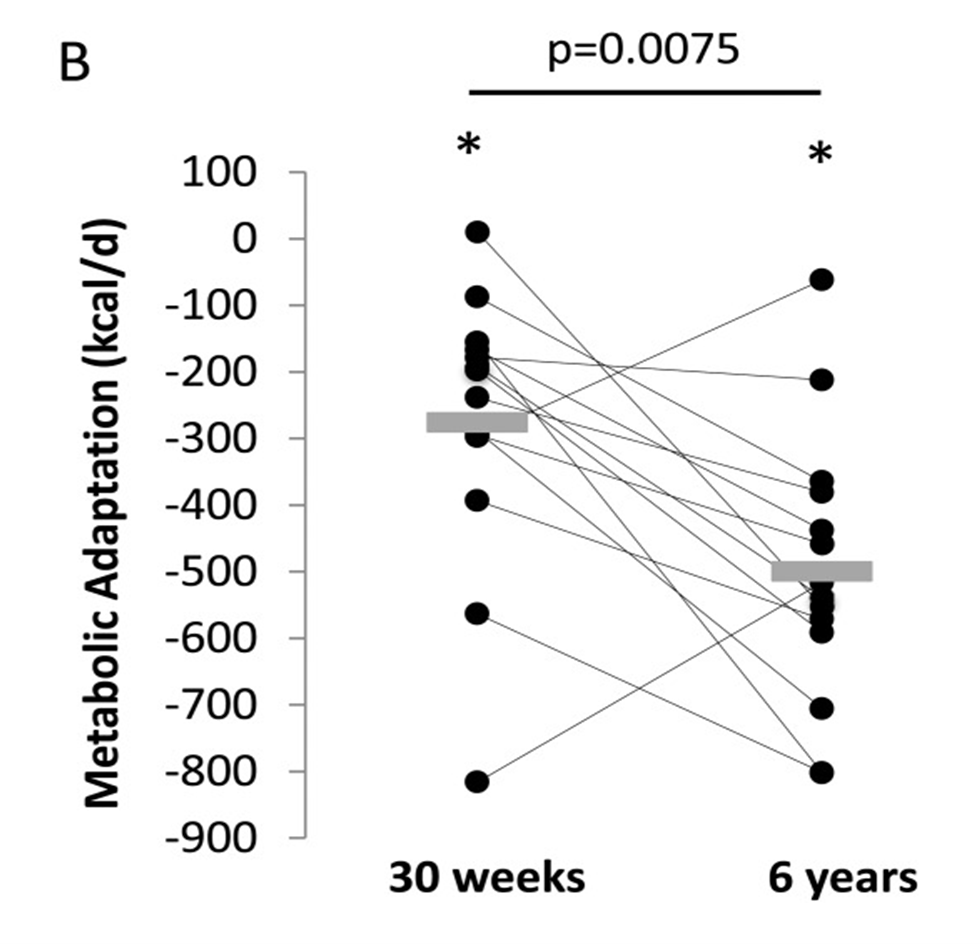
We can measure resting metabolic rate accurately in the laboratory using a method called indirect calorimetry. The NIH researchers used this method in the TBL contestants and compared the results with each person’s estimated RMR based on their age, sex, and body size.
By the end of the show, contestants had a resting metabolic rate 300 kcal per day lower than estimated based on their body size; 6 years later this had dropped to almost 500 kcal per day lower!
Imagine a fictional TBL contestant: 40-year-old male, weighing 150 kg, standing 5’10 tall. If we use a calculator to predict his resting metabolic rate, it would be around 2400 kcal per day. But when measured in the laboratory it is 1900 kcal per day—this is metabolic adaptation.
As the body burns fewer calories than expected, it seems logical that this metabolic adaptation causes weight regain.
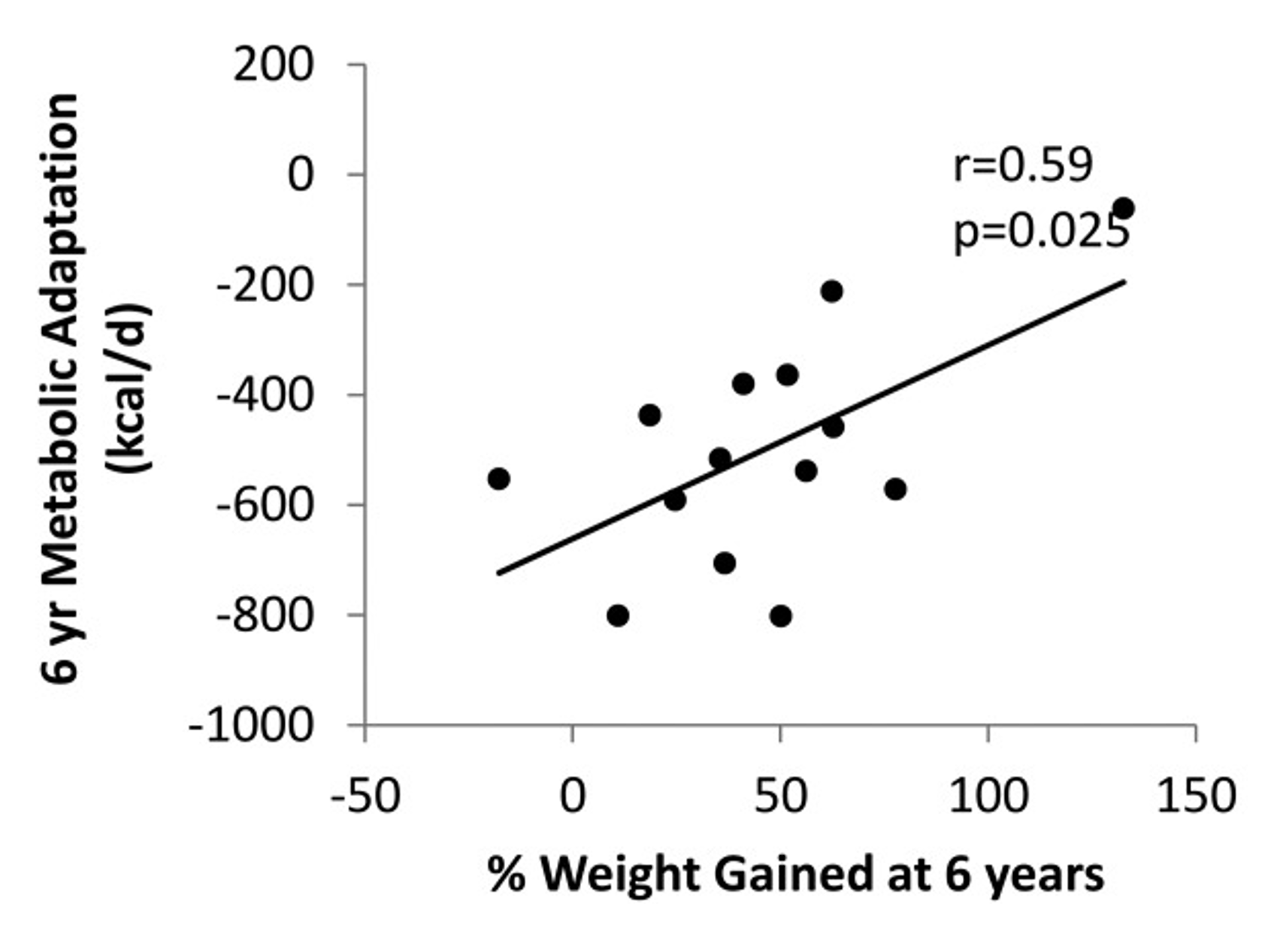
There is just one problem… People who experienced larger metabolic adaptation had better weight maintenance.
If this all sounds paradoxical, it is.
The apparent metabolic adaptation reflects high physical activity levels and continued dieting, causing a sustained negative energy balance at the time of measurement. The contestants who were more successful at maintaining their weight were also the ones with the higher levels of physical activity and, as a result, had a more pronounced metabolic adaptation.
I will take this one step further. Studies fail to show that greater metabolic adaptation predicts the amount or speed of weight regain.
In a more pragmatic weight loss trial, people who lost ~14 kg (~13%) over 8 weeks had a metabolic adaptation of -107 kcal per day. After 4-weeks of weight stability, the metabolic adaptation decreased to -49 kcal per day, and after 1 year and a small amount of weight regain there was no longer any metabolic adaptation. It is not permanent and there is no “metabolic damage”.
So, what does explain the rebound in body weight?
Large weight loss triggers a cascade of hormonal responses that increase hunger and decrease satiety (the sense of fullness).
Enter our two main characters: leptin and ghrelin. These hormones set the homeostatic drive for energy intake, our need for food.
Leptin, produced by fat cells, signals satiety to the brain to suppress food intake. Its concentration in the blood scales with body fat—more body fat equals more leptin.
Ghrelin, the counterpart to leptin, is released from digestive organs and stimulates appetite to promote food intake. Concentrations fluctuate throughout the day, rising before each meal, and falling afterwards.
After weight loss, leptin levels drop (lower satiety), and post-meal ghrelin levels are not suppressed (higher appetite). The catch is, unlike resting metabolic rate, these changes are not completely normalized with partial weight regain or maintenance. The body ‘defends’ its higher body weight.
The TBL contestants started with high leptin levels. At the start of the show, the contestant’s mean body fat percentage was 49.3% (BMI 49.5 kg/m2) with mean leptin levels of 41.1 ng/mL. These values align as expected.
By the end of the show, the mean body fat percentage was 28.1% (BMI 30.2 kg/m2) and mean leptin values had dropped to just 2.6 ng/mL. This level of body fatness would usually see a leptin concentration of around 10-40 ng/mL. The body is suppressing satiety signals, behaving as if energy stores are below their defended set-point.
There is another twist: people with obesity have leptin resistance. The brain, specifically the hypothalamus, is less responsive to these appetite-sensing signals. The hunger off-switch (leptin) is weakened.
What does this mean in practice?
Imagine hunger on a scale from 1 (not hungry at all) to 10 (ravenous).
A consistently lean person wakes up in the morning, their hunger is around 4/10. After eating a moderate breakfast, it drops to 2/10. Appetite is well-regulated.
Our former TBL contestant, fighting against their biology, does not have it that easy. They wake up with a hunger around 7/10. After eating a moderate breakfast, it drops to 5/10. Appetite is not well-regulated.
Though leptin and ghrelin play the lead roles, the bigger picture involves a full ensemble of dysregulated appetite-sensing hormones: peptide YY, amylin, cholecystokinin, pancreatic polypeptide, insulin, glucose-dependent insulinotropic polypeptide, and several others. Changes in these hormones vary widely across people with obesity and in their response to weight loss. Despite the noisy, complicated picture, the plot remains consistent: hunger up, fullness down.
These hormones alone do not always predict the amount or rate of weight regain. Perhaps it is because this system only regulates how much food we need. What about how much food we want?
If you believe avoiding food cravings just takes “more discipline” then consider that your cravings might be biologically different from our TBL contestants.
Homeostatic pathways that govern the need for food interact with our hedonic pathways that govern our want for food. This involves the dopamine reward system, which drives and motivates us to eat energy-dense foods even in the absence of hunger.
Leptin should suppress reward responses to food, but as it falls with weight loss so does its inhibition on the reward system. At the same time, the rise in ghrelin enhances dopamine activity in the midbrain region.
What happens? The reward value of food increases. Our TBL contestants notice food cues more, find them harder to resist, and food smells and tastes more desirable.
We can measure the reward sensitivity to food cues using brain scans and functional magnetic resonance imaging, or fMRI. Classic fMRI studies show that after 10% weight loss, reward-related brain regions respond more strongly to food images, and this effect is partly reversed by restoring leptin levels. In contrast, people with greater activity in self-control regions (the dorsolateral prefrontal cortex) have less weight regain one-year after dieting.
But here’s the gap: these studies have small sample sizes and its uncommon to see repeated fMRI across weight loss and regain cycles. Despite the reward system being a plausible driver of weight regain, it is one gear in a complex machine; we are relying on inference and prediction, not direct proof.
We can draw further inferences from recent research on GLP-1RA medications (Ozempic and Wegovy). Their use is associated with decreased neurocortical activation in response to high-calorie foods and food cues. This dampening of reward sensitivity *could* contribute to their success in weight loss and long-term weight maintenance.
If future research supports this, we have reached a point where pharmacology is the most effective way to reduce the drive and motivation to eat in our modern food environment.
Time now to move on from metabolism, appetite, and reward pathways. Our last this biological journey is to the fat cells themselves.
Our fat cells, known as adipocytes, expand during weight gain to store excess lipids and shrink with weight loss. But they are not innocent bystanders, emerging research shows they retain a ‘memory’ of obesity.
This is thought to occur via epigenetic changes—chemical tags added to cell DNA and proteins that increase or decrease gene activity.
One change means the formerly obese adipocytes absorb more glucose and lipids than compared with cells from people (or animals) that have never been obese. This primes them for storage during overfeeding.
A separate change links to adipocyte structure and appetite. Normally, when an adipocyte expands, it releases chemical signals to reduce energy intake and storage. After weight loss, the persistence of certain immune cells reduces the stress on adipocytes as they re-grow. Weight regain also causes reprogramming of immature immune cells, contributing to a hyperinflammatory response, termed the immune cell-based inflammatory obesity memory.
These recent mechanistic findings, while exciting, do not yet provide a “causal” link in humans. I am curious to see this research develop so we can discover how important adipocyte memory is to weight regain.
The collective biological changes increase hunger, decrease satiety, heighten sensitivity to food cues (sight, smell, taste), and prime the body for re-storage of energy. This makes sustained weight loss incredibly difficult.
Certain foods and behaviours can promote satiety and having a well-structured diet is necessary for weight maintenance. Unfortunately, the TBL contestants have far less room for error than someone who has always been lean.
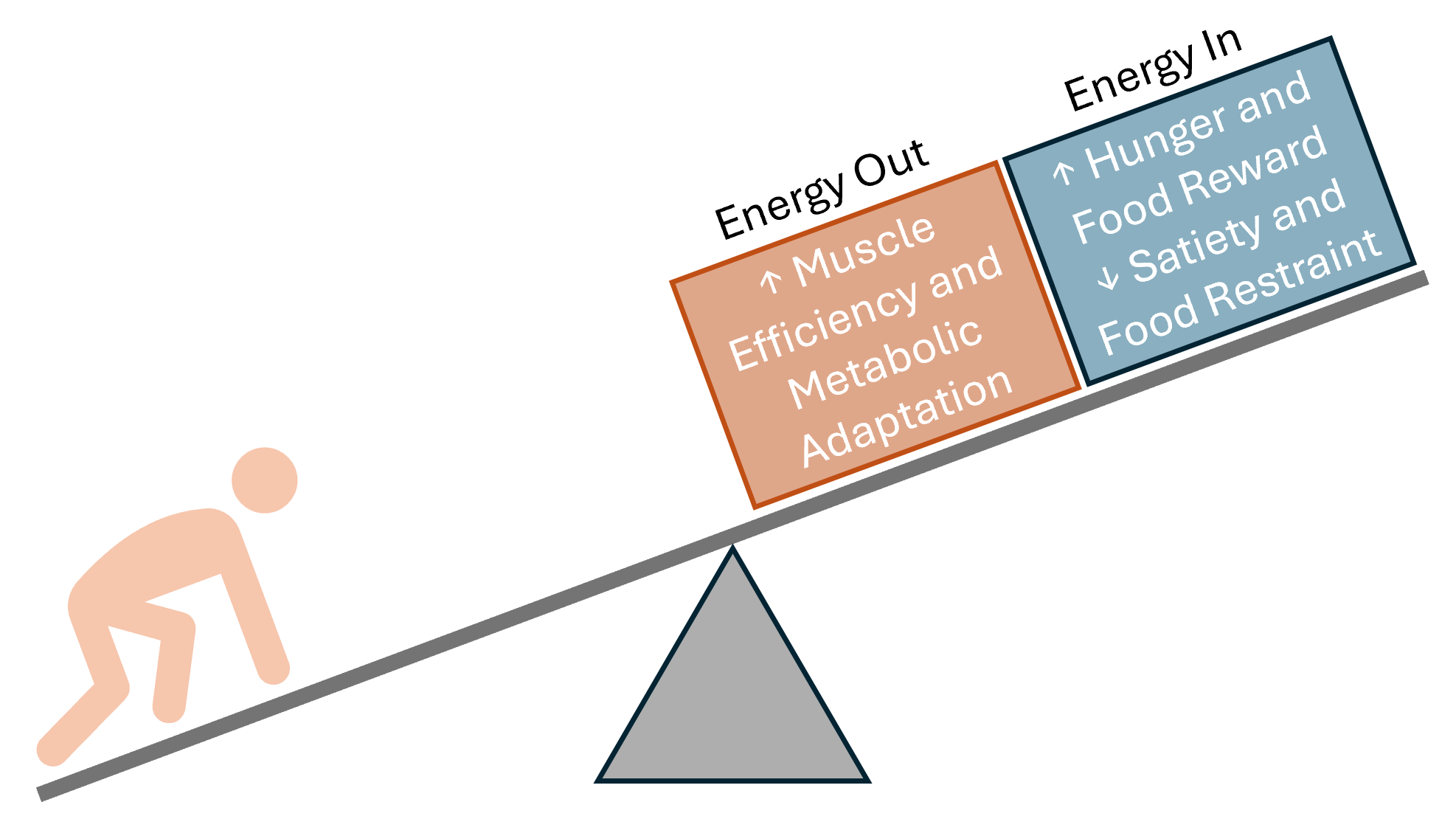
The study in TBL contestants showed that higher physical activity levels were associated with less weight regain. This ‘energy out’ counterbalances the appetite and reward signals promoting food intake and ‘energy in’. For many people though, the required activity levels will not be sustainable in the long-term.
After the show, TBL contestants return to normal life, moving away from a tightly controlled food environment to our uncontrolled modern food environment. Normal day-to-day life presents challenges, like managing stress and poor sleep, which drive appetite, cravings, and emotional eating. Previous habits that led to poor dietary control may persist. Home, work, or social environments with ample supply of highly palatable calorie-dense foods. On top of this, fighting against constant hunger and “food noise” becomes exhausting. Willpower may last 6 months, 1 year, maybe even several years, but it is a finite resource.
I view the behaviours that lead to weight regain as understandable, human responses to overwhelming biological pressure.
Where is Danny now?
We see him at the end of the series. He describes how he kept the weight off for about 5 years after TBL ended. Then gradually regained “much of” weight back over the next 10 years.
Along with his wife, he has decided to adopt healthier lifestyle habits for the rest of 2025: “We need to do it for the right reason. Not for a show. Not for a prize. But for our health.” He continues “…if I don’t find success by the end of the year… I’ll probably go on them (GLP1-RAs)… because they are being successful for a lot of people.”
Danny has a balanced view on TBL. He praises some parts, like how TBL helped “build a bridge” over the stigma for larger people to exercise in gyms—a sense of “if they can do it, maybe I can too”. He also acknowledges the unhealthy nature of the weight loss and is quick to add that his experience only represents one person.
Other former contestants do not feel the same.
For Suzanne Mendoca, there was nothing positive from her time on TBL – “I’d like to say no. Yeah, that’s a big no.” and when discussing life after the show “I came back with a severe eating disorder. I stopped eating. I avoided any type of social situations and going out.”
The documentary closes with a sobering fact.
In 2004, when The Biggest Loser premiered, 32% of American adults were obese.
By 2025, that number had climbed to 45%.
For many, the tug-of-war between biology, environment, and behaviour continues.
For a deep dive into the good, bad, and unknown factors of GLP-1RA medications (weight loss injections like Ozempic and Mounjaro). See my two previous articles – Part 1 and Part 2.
No posts
Comments
Nothing yet. Say the first thing.
Sign in to join the conversation.