
I’ll share an essay on each literary genre as we go on. I want to begin with poems, as I’ve used them for my main source of material thus far. Yet, they also sit closer to the root of what I care most about.
Poems belong to the unique category of things that are known immediately, intuitively, and fully while defying and resisting empirical definition. We all recognize them, yet when asked to describe one, we either hesitate or our attempts end up being comparisons.
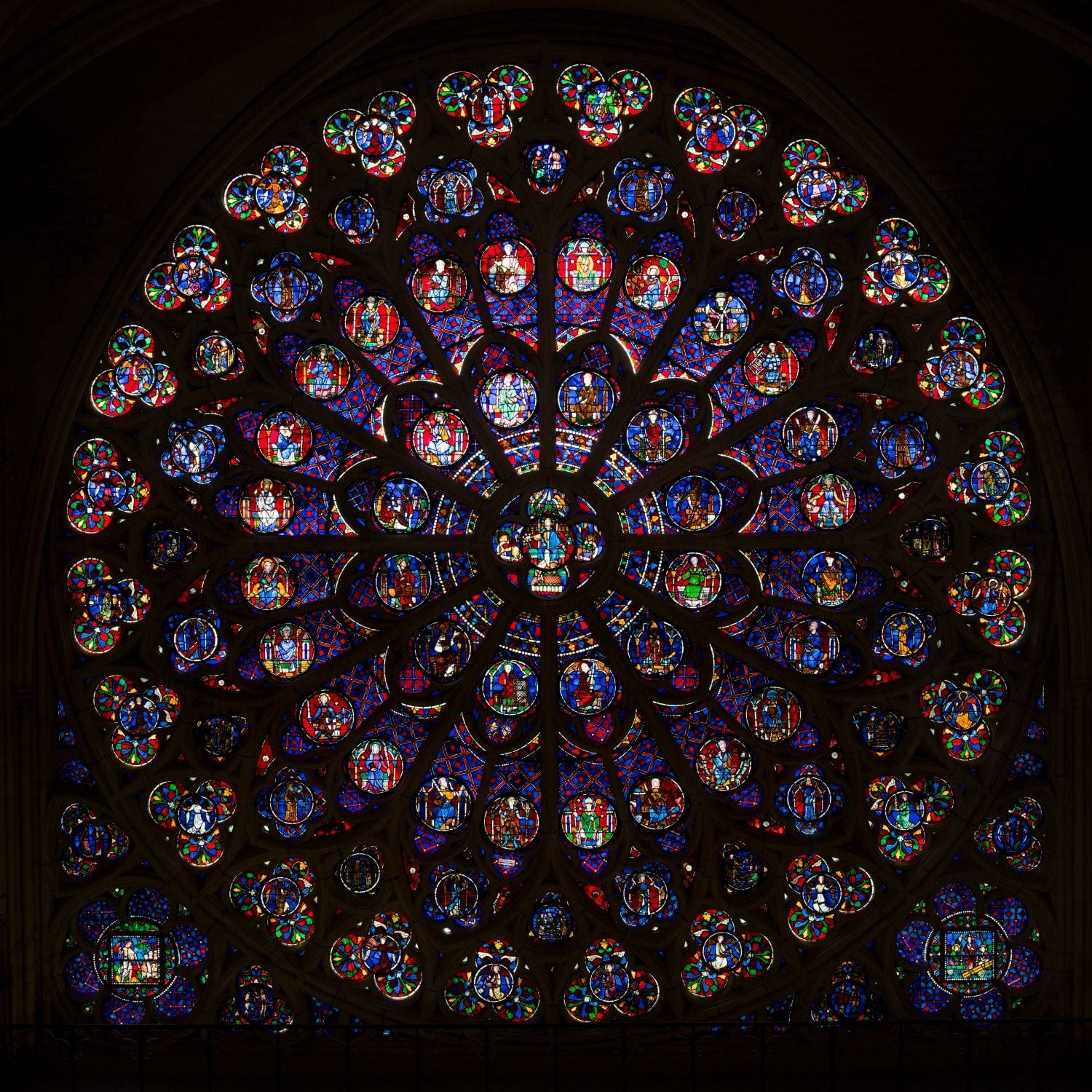
My love for poems is not an idle love. What poems do is reveal a way of seeing which reveals the thing seen. A poem might have an argument or communicate information, but its primary existence is to be the seeing and the seen at the same time. When I read a poem, I am looking at a lens through that lens. I am looking at someone else’s looking. When I write a poem, I’m offering you the lens I used along with what becomes visible through it. The lens is rarely a clear glass. Most often it’s kaleidoscopic.

Poems exist for their own sake. I’m not entirely convinced by that statement, yet it is compelling enough for me to sit with it. A novel moves a plot. A play moves a drama. A poem, though, even when it’s epic and narrative, aims at something else: to be equal in presence to the thing it attends to. It does not describe the world as much as it participates in it. Its lens concentrates light. It magnifies, distorts, and brings near what is far. Simone Weil’s famous utterance that attention is the rarest and purest act of generosity finds itself demonstrated in poems, artifacts of generosity. No poem was ever necessary; no poem had to exist. All are gifts.
And yet, poems aren’t rare. They’re among the most common artifacts of culture. Wherever language exists, poetry exists. Before institutions, before formal education, before most trained art, there were inculcated rhythms, chant, images, lines. Poetry is not (and should not be) the domain of the specialists, though more and more it has been framed that way. Modern culture has mistaken obscurity for depth. The unintelligible has first chair, and the common has been abandoned. In the past 150 years, we’ve been trained to treat poems as inaccessible, luxurious, and irrelevant, instead of having as common a place in the home, the bar, and the workplace as the furniture therein.
Poems are far tamer than feared, though wilder on encounter, and far richer than most expect. At its best, a poem transforms how you see. And because how you see determines what you make, the best poems change what you make. This is why poems matter for human excellence. Leadership is a function of seeing. The practice of poetry — reading it, and even writing it — is the practice of new vision.
My love of poems is not an idle love. It is an animating love that shows up in my vocational work. Through conversation, my clients and I begin to use new lenses. The world, which once appeared flat or fragmented, reveals itself as layered, dynamic, and majestic. Instead of being confused or bothered by what we see, delight and wonder take the fore. The world is a shifting mosaic to interact with rather than a problem to be solved. Poetry trains this capacity.
So, why poems? I want to practice and demonstrate a way of reading that brings out what poems see because that practice is a playing for keeps. My purpose is to expand our vision to see the worlds that are available to us, while also expanding our ability to participate in the new worlds that float into view. That’s all, man. It’s worth doing in itself.
No posts
Comments
Nothing yet. Say the first thing.
Sign in to join the conversation.