
Text within this block will maintain its original spacing when published
Axe-fall, echo and silence. Noonday silence.
Two miles from here, it is the twentieth century:
cars on the bitumen, powerlines vaulting the farms.
Here, with my axe, I am chopping into the stillness.
Axe-fall, echo and silence. I pause, roll tobacco,
twist a cigarette, lick it. All is still.
I lean on my axe. A cloud of fragrant leaves
hangs over me moveless, pierced everywhere by sky.
Here, I remember all of a hundred years:
candleflame, still night, frost and cattle bells,
the draywheels' silence final in our ears,
and the first red cattle spreading through the hills
and my great-great-grandfather here with his first sons,
who would grow old, still speaking with his Scots accent,
having never seen those highlands that they sang of.
A hundred years. I stand and smoke in the silence.
A hundred years of clearing, splitting, sawing,
a hundred years of timbermen, ringbarkers, fencers
and women in kitchens, stoking loud iron stoves
year in, year out, and singing old songs to their children
have made this silence human and familiar
no farther than where the farms rise into foothills,
and, in that time, how many have sought their graves
or fled to the cities, maddened by this stillness?
Things are so wordless. These two opposing scarves
I have cut in my red-gum squeeze out jewels of sap
and stare. And soon, witha few more axe-strokes,
the tree will grow troubled, tremble, shift its crown
and, leaning slowly, gather speed and colossally
crash down and lie between the standing trunks.
And then, I know, of the knowledge that led my forebears
to drink and black rage and wordlessness, there will be silence.
After the tree falls, there will reign the same silence
as stuns and spurns us, enraptures and defeats us,
as seems to some a challenge, and seems to others
to be waiting here for something beyond imagining.
Axe-fall, echo and silence. Unhuman silence.
A stone cracks in the heat. Through the still twigs, radiance
stings at my eyes. I rub a damp brow with a handkerchief
and chop on into the stillness. Axe-fall and echo.
The great mast murmurs now. The scarves in its trunk
crackle and squeak now, crack and increase as the hushing
weight of the high branches heels outward, and commences
tearing and falling, and the collapse is tremendous.
Twigs fly, leaves puff and subside. The severed trunk
slips off its stump and drops along its shadow.
And then there is no more. The stillness is there
as ever. And I fall to lopping branches.
Axe-fall, echo and silence. It will be centuries
before many men are truly at home in this country,
and yet, there have always been some, in each generation,
there have always been some who could live in the presence of silence.
And some, I have known them, men with gentle broad hands,
who would die if removed from these unpeopled places,
some again I have seen, bemused and shy in the cities,
you have built against silence, dumbly trudging through noise
past the railway stations, looking up through the traffic
at the smoky halls, dreaming of journeys, of stepping
down from the train at some upland stop to recover
the crush of dry grass underfoot, the silence of trees.
Axe-fall, echo and silence. Dreaming silence.
Though I myself run to the cities, I will forever
be coming back here to walk, knee-deep in ferns,
up and away from this metropolitan century,
to remember my ancestors, axemen, dairymen, horse-breakers,
now coffined in silence, down with their beards and dreams,
who, unwilling or rapt, despairing or very patient,
made what amounts to a human breach in the silence,
made of their lives the rough foundation of legends-
men must have legends, else they will die of strangeness-
then died in their turn, each, after his own fashion,
resigned or agonized, from silence into great silence.
Axe-fall, echo and axe-fall. Noonday silence.
Though I go to the cities, turning my back on these hills,
for the talk and dazzle of cities, for the sake of belonging
for months and years at a time to the twentieth century,
the city will never quite hold me. I will be always
coming back here on the up-train, peering, leaning
out of the window to see, on far-off ridges,
the sky between the trees, and over the racket
of the rails to hear the echo and the silence.
I shoulder my axe and set off home through the stillness.
When was the last time you did something hard by hand? What is your relationship to stillness?
This is what I hear myself asking myself after reading this great poem. “Axe-fall, echo and silence.” These words come as steady as the rhythmic chopping of the tree. This poem describes the present happenings of the noonday axeman, the crack and squeak, the tearing and falling, the tremendous collapse. It also describes the imaginative participation of the noonday axeman. The thoughts, ruminations, reflections, nostalgia, curious probing, and firm resolution of this silent witness are in conversation with the very real tree being felled by the very real axe.
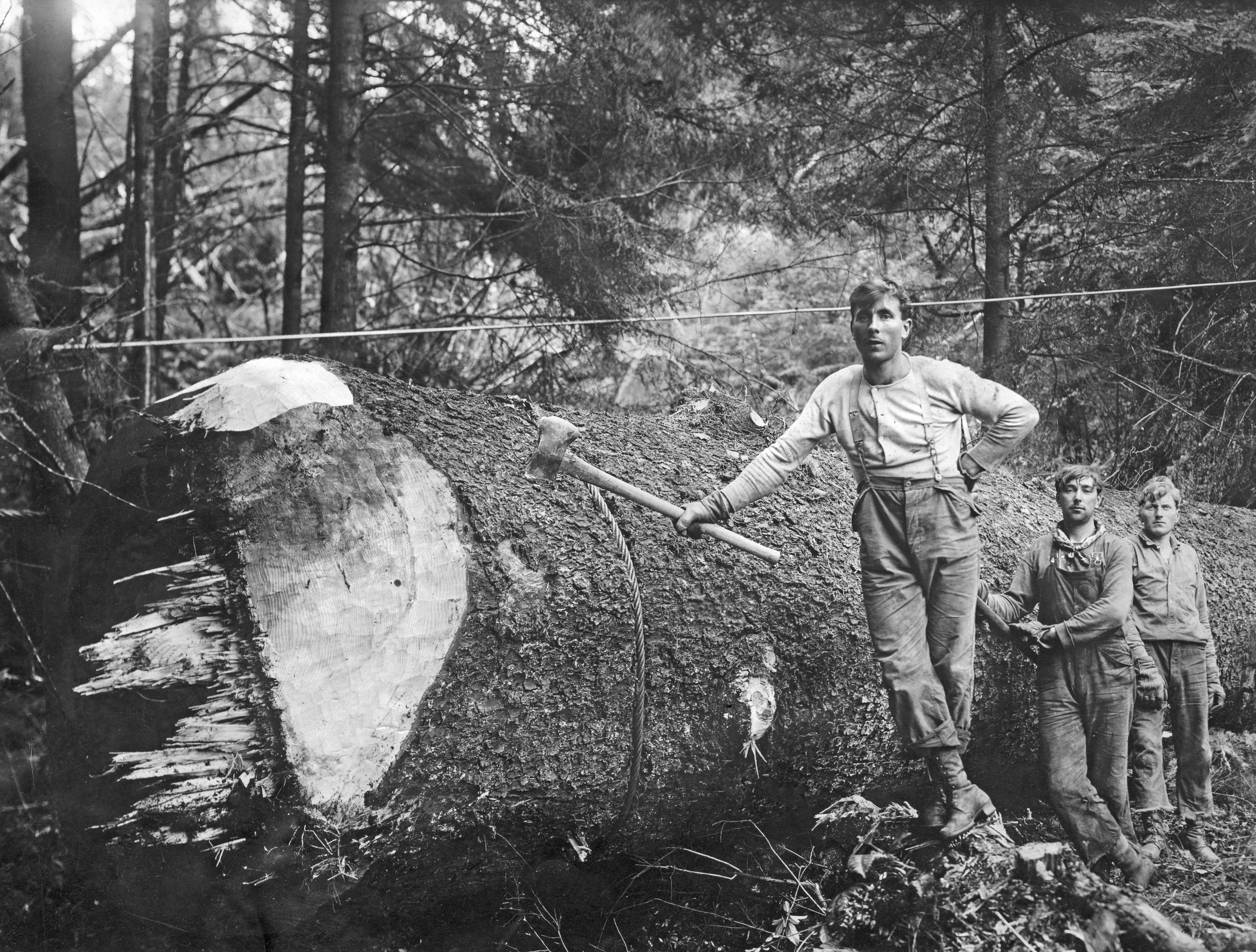
The axeman suggests the city is a protection from the maddening effect of silence. That silence is the seedbed for “drink and black rage and wordlessness,” yet here is the noonday axeman standing between the dark night of maddened men and the bright morning of industrial promise, who seems to understand silence. He hews a tree down, we don’t know why — there is no stated purpose. He is not retreating to experience undefiled nature as Wordsworth does. He is acting on it, somewhat violently, standing between two worlds. In the stillness and in the silence, he both stands and moves, is interrupting the silence while also creating it: “axe-fall, echo, and silence.”
He speaks as someone who knows, someone with authority.
He understands the “wordlessness” of his ancestors, who couldn’t stand the “unhuman silence.” He sympathizes with how they coped. He sees these copes as the stuff of legend, who created a “human breach” as they confronted the stillness that perseveres between every axe-fall and echo. They planted seeds of possibility that some “could live in the presence of silence.”
He doesn’t sympathize with “the cities, you have built against silence” and the “metropolitan century” that creates something different than a “human breach in the silence.” It’s only created noise. Noise that distracts, that “dazzles,” “bemuses,” through which we “dumbly trudge.”
While I have a similar opinion to the poet regarding cities, it’s not identical. Regardless, it’s not the brightest illuminating insight of the poem. What’s here for us is an insight into belonging and the possibility of having free passage between multiple worlds.
“It will be centuries/before many men are truly at home in this country….” To be at home in the country of silence and the country of noise is no small task.
In order to make a home, “men must love legends else they will die of strangeness”. Murray gives us a new legend to love, teaching us the many names and flavors of silence. The noonday axeman is a guide on the narrow path between the wild, hauntingly silent world of nature and the chaotic, distracting, masking world of the modern city. Follow closely.
No posts
Comments
Nothing yet. Say the first thing.
Sign in to join the conversation.