
Text within this block will maintain its original spacing when published
While snow fell carelessly
floating indifferently in eddies of
rooftop air, circling the black
chimney-cowls,
a spring night entered my mind through the tight-closed window,
wearing
a loose Russian shirt of
light silk.
                 For this, then,
that slanting line was left, that crack, the pane
never replaced.
I am becoming more and more convinced that the development of imagination is the most important activity to which humans ought to apply their energy. That’s one of the motivating ideas driving these little musings.
By imagination, I don’t solely mean the activity by which we think up contrived scenarios, though that activity is indeed downstream. By imagination, I meant nothing more than our image-making faculty. The imagination is at work in every act of mind that re-presents data that we get from the senses to itself. Every thought, idea, inference, deduction, conclusion, judgment, opinion, or hunch passes through the imagination before it is any of those things. It is the filter of phenomena. Developing it, honing it, gives it greater filtering power - broader and finer.
Meanwhile, I’ve noticed that the world and all of those phenomena are more accidental than we’d ever like to fully acknowledge. Our innate drive to control and our insistent urge to experience certainty don’t like how accidental and indifferent those phenomena tend to be.
Levertov is leaning into these realities in this poem and observing something that we can latch onto for our own steadiness.
After witnessing the indifferent and careless winter, she reports “ a spring night entered/my mind…wearing a loose Russian shirt of light silk.” Perhaps she’s making an allusion, some reference that those who know can quickly recognize and use to add a layer of meaning to this appearance. Perhaps she’s practicing synechdoche, in which a part stands for a whole. The Russian shirt could be the appearance of a lover or other companion who brings springtime vivacity into the room.
Both are unlikely. The allusion may be there, but it would be so specific that it’s practically unrecognizable to anyone who isn’t the poet herself. The synecdoche doesn’t find purchase according to the dense logic of the rest of the poem: a human can’t enter through the “tight-closed window” in any real way, not as real as the spring night itself does. And so we must read her as simply imaging a spring night, wearing a loose Russian shirt of light silk in her room, where the indifferent snow is eddying off the roof, seen through a tight-closed window. Do you see it?
Levertov assigns intention to what’s going on in her world. “For this” she concludes. The crack was left unrepaired for a reason after all, to let this image in. The spring night is the spring night. The Russian silk shirt is itself. What, then, is the crack?
A hyperactive reader may be tempted to put the meaning of Fallen Nature on its shoulders. After all, Levertov is a Catholic writer in her own way, and a master of her caliber would know how to leverage images to stand for deep spiritual realities. However, nothing else in the poem is asking for that kind of weight to ballast it. In fact, it would create an imbalance that would require something like identifying the concepts of sin/death with winter and life/salvation with spring. Then what do we do with the Russian shirt? Such a reading sabotages itself.
So then, let’s imagine the crack is indeed itself, a slanting line in a tight-closed window — tight shut in an effort to control the uncontrollable, accidental, careless, and indifferent winter. This ordering force has a crack in it, into which loveliness, strangeness, ghostliness, something soft, something wild, something alive enter unbidden and are welcomed. Here, in some room in winter, a crack, a byproduct of an accident, is in the glass of a window, letting in images, physical and imagined - neither of which competes for reality, for they are both equally real.
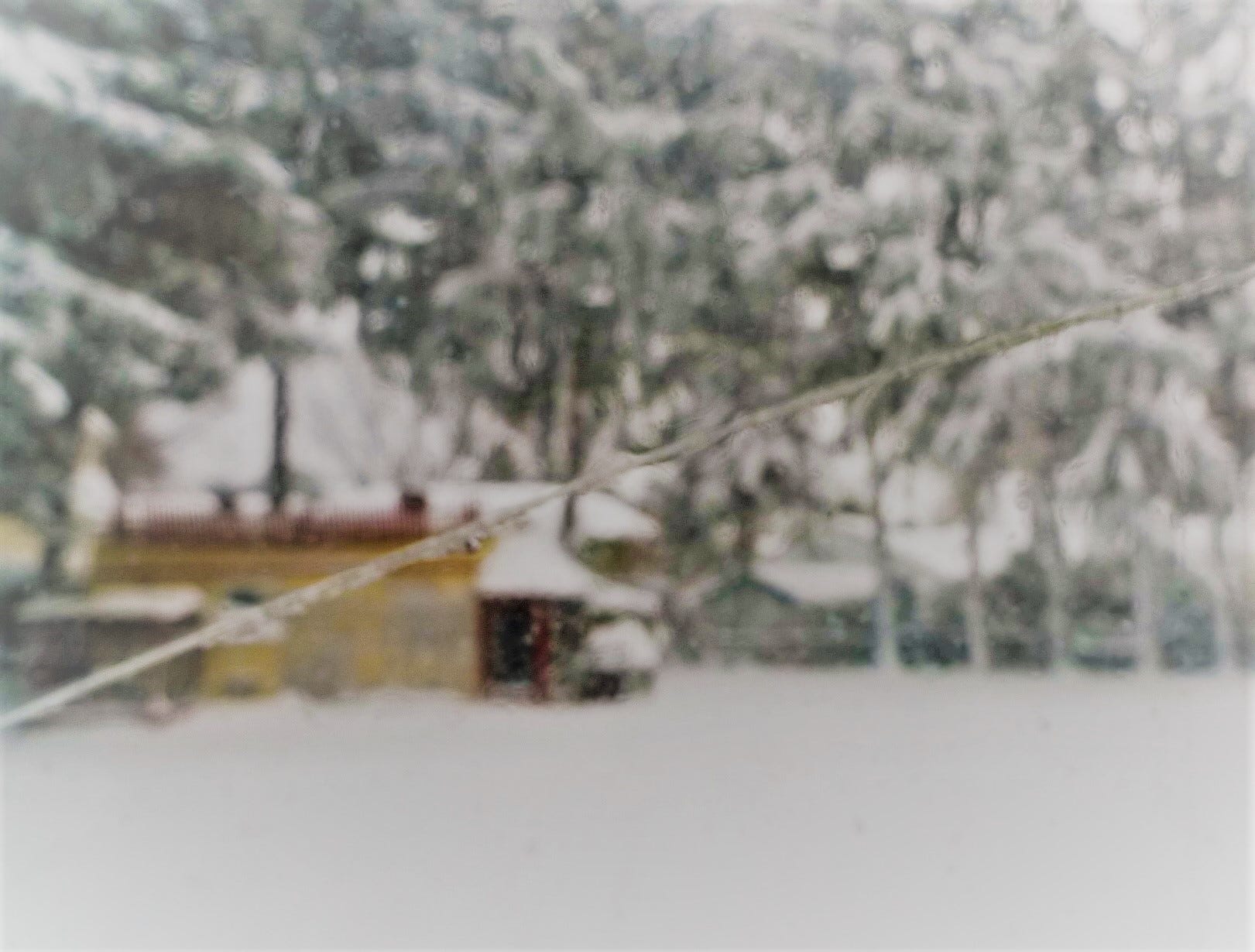
Minds that work like the one in this poem are more capable than those that don’t. One of the presuppositions in the work I get to do with leaders goes something like this: “living in liberty means having maximum possibilities available.” The cultivation of imagination, therefore, is essential. To grow into our capacity, we must see through the crack, the filtering faculty through which an invisible reality, not the one we see through the window, reveals itself. The crack opens us up to deal choicefully with what is, not confined to the options provided by the tightly closed mechanisms we use to control.
No posts
Comments
Nothing yet. Say the first thing.
Sign in to join the conversation.