
In 1702 a baby boy was born in Spitalfields in London, an area known for its terraced houses and known for the local weaving and silk working trades. The boy, named John, was born to his carpenter father and devoted mother, adding a second son to their young family. The couple, the Sheppards, already had a child named Thomas. While John was still a young boy however, his father died.
John was in his teens when he became apprentice to a chair maker in Houndsditch, and he soon began to be known by his nickname, Jack. On the sudden death of his employer, Jack managed to find service with another man in the trade, but left after claiming he had been badly treated. He then found work through an old friend of his father’s, a woollen draper in the Strand named Mr Kneebone. Kneebone introduced Jack to a carpenter in Wych Street. He was working there when he met Elizabeth Lyon in the Black Lion alehouse in Drury Lane. Nicknamed Edgworth Bess, after the name of her birthplace, she was described as an ‘abandoned’ woman, with links to other criminals in the area. As the two developed a friendship, Bess encouraged Jack towards a life of crime.
Continuing to work as a carpenter, Jack began to steal items inside the various houses he visited for work. While working on furniture, he pocketed tankards, spoons and other items and took them back to Bess at the alehouse. Another woman, named Maggot, was impressed with Jack’s light-fingeredness and urged him to start burgling houses in the area for even higher financial gain. Accordingly, at the house of a client named Mr Bains in White Horse Yard, he stole a piece of fustian cloth. At midnight, he returned, removed the bars from Bains’ cellar windows and stole goods and cash worth £22. As thefts continued, Jack’s job was put at risk. Bains reported the missing cloth to Jack’s employer, who then found cloth of the same description among the young man’s belongings. Despite his mother claiming that she had given him the cloth herself, no one believed the story and Jack’s continuous dealings with well-known characters of London’s criminal community, along with his late-night adventures, saw the two men part ways.
Now unemployed, Jack retreated further into the criminal underworld. He was admitted into a gang run by a man named Jonathan Wild. A particularly large theft was carried out in the high-status home of a client in Mayfair, where Jack stole cash, gold rings and four suits. Soon afterwards, he heard that Bess was imprisoned at St Giles. He went to visit his friend, and the guard refused to admit him. Jack knocked him down, broke open the door and freed her, earning himself praise and attention among their friends in the criminal community.
It was in 1723 that Jack’s brother Thomas was arrested and detained at the Old Bailey for two petty offences, and burned in the hand as punishment. The brothers now became partners. They robbed a public house in Southwark, and with Bess also in attendance they broke into a shop run by Mrs Cook, a linen draper in Clare Market, stealing £55 worth of goods. Eventually, a friend of Jack’s named James Sikes turned him in, in the hope of securing a reward, proposing they drink together at a pub in St Giles. A constable arrived, who imprisoned Jack, but he picked open a hole in the roof and escaped in the night.
You can’t fault Jack’s tenacity, but this wasn’t his only daring escape. After a pickpocket attempt went wrong he was seized, along with Bess, and the pair were imprisoned at New Prison in Clerkenwell. Pretending to be husband and wife they were permitted to stay in the same cell. Once again, the crime community rallied to Jack’s side. Friends and fellow gang members visited him, sneaking in small tools, and Jack filed off his cuffs and broke open a window. Tying a set of blankets together, he and Bess climbed down to safety and were once again on the run.
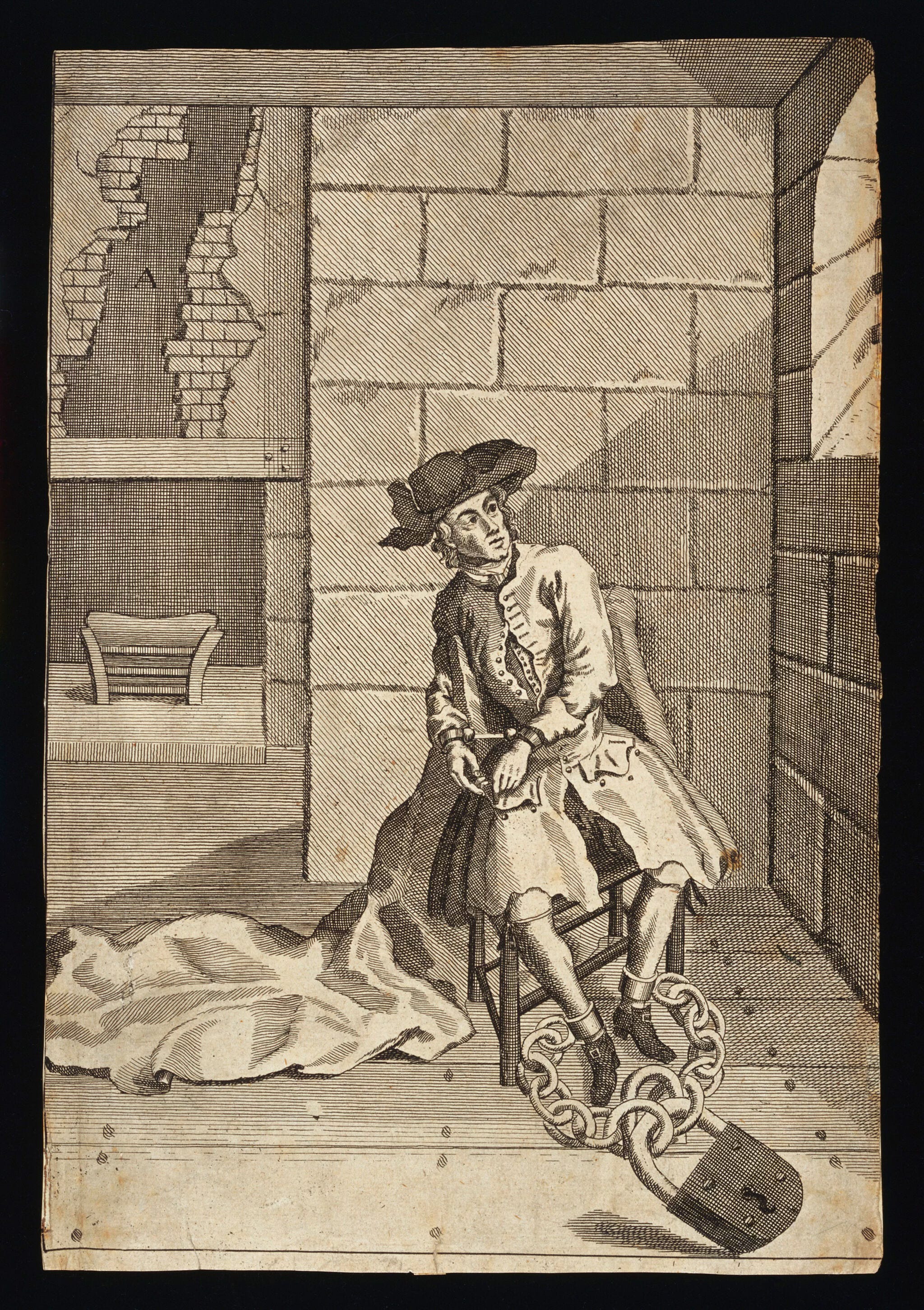
Jack was now quickly becoming a celebrity, and his escapes were being shared in local stories as legend. He was approached by Charles Grace, who asked to join him, along with an apprentice named Lamb. Together the three men decided to raid the home of Lamb’s employer, their target being the man’s lodger. At 2am Lamb used a key to let in the other men, and they got away with a substantial quantity of cash and other goods. Lamb’s employer immediately suspected the apprentice of the crime, and called in the authorities to investigate. On being questioned Lamb broke, telling them everything about Grace, Jack and their conspiracy. Lamb was taken to Newgate prison, and sentenced to be transported to the colonies. Thomas, Jack’s brother, was found guilty of stealing from Mary Cook, and was also sentenced to be conveyed out of the realm. As for Jack, he was apprehended and imprisoned at Newgate in the summer of 1724. On 30 August, a warrant for Jack’s execution was authorised.
But Jack wasn’t giving in. Friends once again smuggled in tools during their visits, and he filed away iron spikes to access a hatch through which two women pulled him down so he could escape out into the street. When he was caught again, the authorities took no chances. He was taken to a room in the centre of the building, cuffed with irons and chained to a loop in the floor. But Jack found a ‘small nail’ in his cell, and unpicked the chain that secured him to the floor. Still wearing his cuffs, he worked his way through various corridors and locked rooms in the building until he escaped once again. Exhausted, he slept in a cow shed, tricked a farmer into giving him food and ripped his clothes to pose as a beggar.
What Jack did next was his undoing. Seeing an opportunity to break into a pawnbroker’s in Drury Lane, he stole a sword, clothing and jewellery and posed as a wealthy gentleman of the city. Enjoying a dinner at a public house in Newgate Street, he took a coach passing Newgate Gaol, where he had been previously imprisoned, and met with his mother, who urged him to leave the kingdom immediately for his safety and freedom. He ate, drank and enjoyed the company of men and women, believing he would be slip away unnoticed. In an episode of drunkenness though, he stumbled into a series of alehouses and gin shops, where a young boy working in one of the establishments recognised him. Jack was taken to Newgate, ‘without being capable of making the least resistance, though he had two pistols in his possession’.
Jack had a strong belief in his own celebrity, believing that either his friends would rescue him once again, or bizarrely, that he would receive a pardon issued by the king, George I. But no pardon came. We can be sure that this time Jack, who had made a laughing stock of the authorities and their attempts to detain him, was kept in strict confinement. On 10 November, he received the death sentence for his crimes. But Jack, unconcerned, had one more escape up his sleeve. He asked a friend to take his body after it had been hanged at the gallows and ‘put him into a warm bed as soon as he should be cut down, and try to open a vein’. Cutting into a vein and forcing bleeding was a long-standing medical treatment believed to cure many diseases and conditions and Jack genuinely believed this would resuscitate him. Jack Sheppard was hanged at Tyburn on 16 November 1724, aged just twenty-three years old. There is no evidence that he was ever brought back to life as he had planned, his body being taken to a public house in Long Acre following his execution. He was later buried in the churchyard of St Martin in the Fields church, in Westminster.
On the blog: Thomas Vachell and Lettice Knollys, Power Couple of Reading, The Tomb of Ellen Gethin and Thomas Vaughan in Kington Church and The Medieval Women of Cardiff Castle.
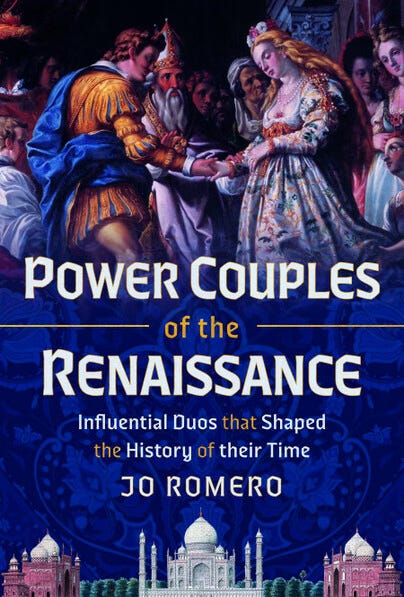
Plus! My new book, Power Couples of the Renaissance, is available now to preorder from Pen and Sword Books. It features couples whose relationship dynamics went against the accepted norms of the period, and tells the story of power-hungry partnerships that ruled, fought and patronised the art, science and culture that spread across the globe during one of the most tumultuous periods in history. You can find details of my other books here. It’s listed at a special pre-order discount at the moment, so grab it before it goes up!
No posts
Comments
Nothing yet. Say the first thing.
Sign in to join the conversation.