
As the warm summer breezes of August shifted to the cool haziness of early September 1568, a man staggered to his bed feeling unwell. Exhausted, he kicked off his boots, threw off his blankets and hoped for some respite from the burning fever. Laying shivering in a cold sweat was the Edinburgh merchant James Dalgliesh, the first resident to contract a new outbreak of plague in the city.
Or so the sixteenth-century scribe of A Diurnal of Remarkable Occurrents that have Passed within the Country of Scotland recorded. In an entry dated September 8, 1568, the clerk wrote: ‘Sep. 8. – Ane called James Dalgliesh, merchant, brought the pest in [to] Edinburgh’. It’s not clear whether this date marked James’ death once his infection was known, his arrival into the city or his diagnosis. In any case, James’ unfortunate infection would trigger a significant chain of events that affected thousands of residents in Scotland as well as beyond.
It is not surprising that the new outbreak was first discovered among the merchant class. They were usually wealthy and had connections with captains, crew and other merchants from around the world. They checked their goods lists against sacks of produce while traders and shipmen mingled in busy trading areas in Edinburgh and the nearby medieval trading port of Leith. Stores of grain in ships and on land would have attracted rats, the infamous super spreaders of the fourteenth-century bubonic plague via their host fleas. Wines, silks, wools, almonds, spices and other goods were traded in and out of Edinburgh, with close contact and personal communication necessary for business. The nineteenth-century writer Robert Chambers identified a number of merchants who owned shops, or ‘buithes’ situated in Edinburgh’s High Street in the sixteenth century. If James was one of these, he would have dealt with suppliers, customers and people from different areas as he co-ordinated the constant sale and supply of his stock. James’ booth would have been opened via a hatch at the front of the shop, revealing what was for sale to passers-by. As a member of a tight-knit community, he may have been familiar with another local merchant, the wealthy Edward Hope, who owned a mansion in Tod’s Close, Castlehill. Another merchant, Robert Gourlay, would have been planning and building his house while James lay in his bed. His grand four-storey home was finished in 1569 and had a warehouse or shop on the ground floor, with the family’s living quarters based across the floors above.
Edinburgh was used to dealing with episodes of plague. In 1513 the council ordered shops to be closed and people kept inside their homes to try and prevent its spread, while the following year it still raged ‘in a horrible manner’. In 1520, blame for a new outbreak was placed on infected residents having been ‘taken in the Houses and Barns in the Borough-Moor’. The council decided that the best plan was to order these houses to be demolished. If the owners refused, the other citizens were allowed to pull them down themselves. But it wasn’t just plague that worried the residents. Within two years of James Dalgliesh falling ill, the Scottish king Henry Lord Darnley had been assassinated, his rival had married the queen (Mary, Queen of Scots), and after suspicion that the couple were responsible for Darnley’s murder, they fell from power. Scotland now ruled with a child, James VI, at its helm, overseen by a regency government. James Dalgliesh lived through all of this. He might even have seen Queen Mary processing through Edinburgh in 1567 where ‘she was insulted by the Populace, with Volleys of the most bitter Execrations’. It was clear many believed her secretly responsible for Darnley’s murder. Among the sights both Dalgliesh and Mary would have seen that day was a flag fluttering high above the crowds depicting the ‘late King lying under a Tree, with the Prince his Son on his Knees before him, with the Motto “Judge and Revenge my cause O Lord”’.
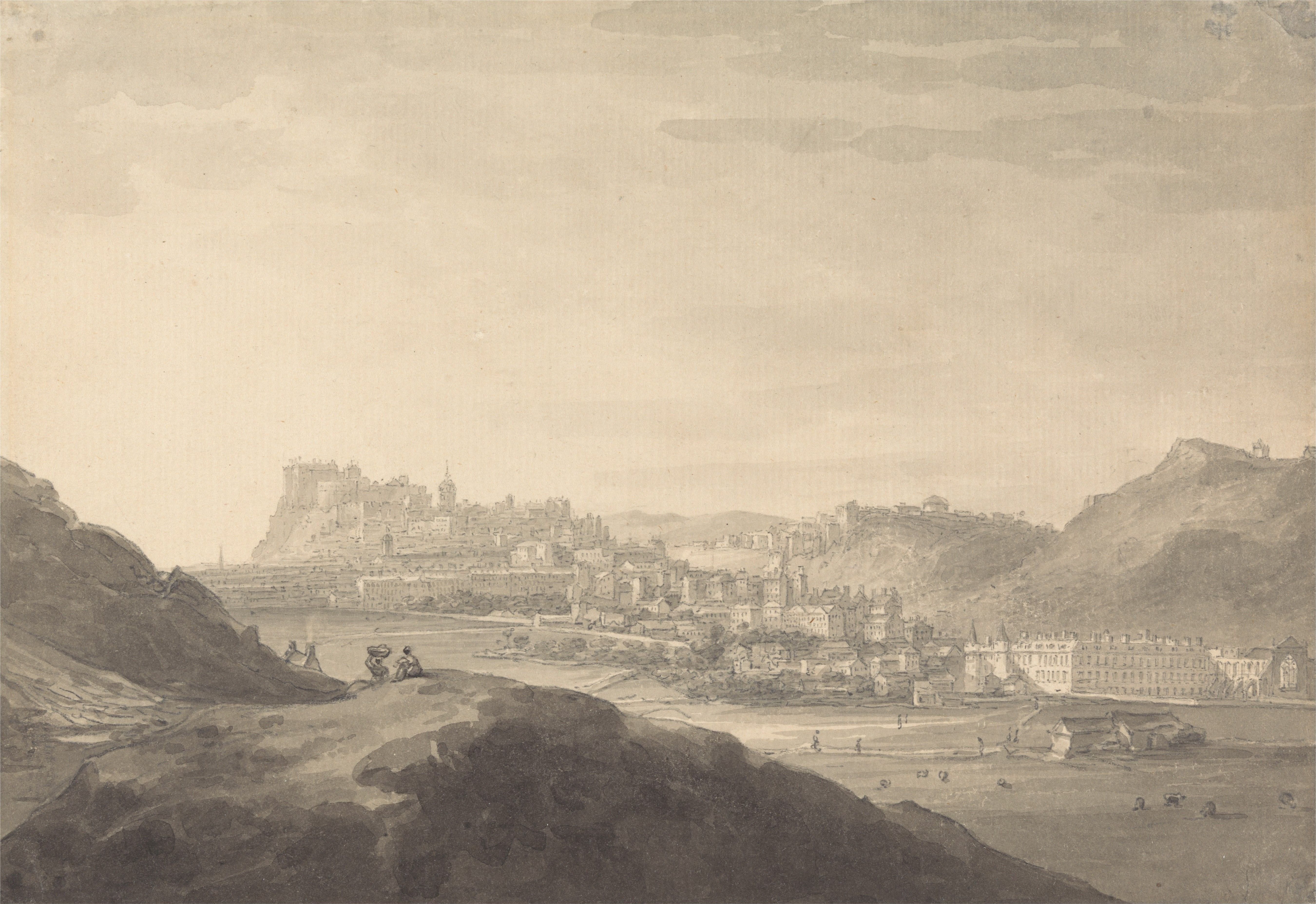
Dalgliesh might also have quickly boarded up his shop during the riots of summer 1567, when the council refused to allow the performance of a Robin Hood play in the city. Residents broke open the defensive gates and descended on the streets, robbing and stealing wherever they could. Order was restored although many of the rioters escaped. Hooking the wooden shutter open over those next few mornings, he would have heard the distant military drumming the council ordered to take place at 5am and 8pm from the city walls, one of the security measures imposed following the riots.
After Dalgliesh’s diagnosis was discovered on 8 September, the plague had spread widely enough by 15 October to warrant a response from the council. Officials were appointed to ensure areas were kept clean and oversee burials of the dead. On discovery of a case of plague in a house, no one was to leave the home ‘under the pane of deid’, or allow anyone to visit them, although they could visit friends only if they were accompanied by an officer after 11am. According to the statute, plague burials were to be carried out at Greyfriars’ Kirk, and it’s possible that this is where James Dalgliesh was buried, if he did indeed die from his infection.
There was also a strong literary response to the outbreak. That year, the physician Gilbert Skeyne wrote sadly on how the plague had divided the social classes in Scotland, reporting that ‘everyone has become so detestable to other (which is to be lamented), and specially the poor in the sight of the rich’. Then in the role of Professor of Medicine in King’s College, Aberdeen, he published a treatise in response to the outbreak called Ane Breve Description of the Pest, urging citizens to return to God to ‘pacify his wrath against us’. He also set out the main symptoms of the disease which included fever, fainting, swelling, vomiting and stomach ache. Among the cures he recommended were herbal remedies including vinegar and rose water, opiate cordials and the drawing of blood, all treatments that Dalgliesh might have been offered after first falling ill.
As Edinburgh shut its doors and checked loved ones for signs of the plague, a man named George Ballantyne put his quarantine to good use. Leafing through his vast collection of poetry from his base at Newtyle near Meigle in Strathmore, he copied 372 works by writers including William Dunbar and Robert Henryson. The result, after three months, was 800 pages of literature freshly penned and organised from faded and mutilated scraps of paper. Today, the volume is part of the National Library of Scotland and reveals a great deal about the country’s medieval and early modern works.
The September 1568 outbreak of the plague continued until February 1569, and is said to have killed around 2,500 people in Edinburgh alone. But it also led to political measures aiming to control the spread of the disease; a treatise published on moral, social and medical responses to the outbreak and a collation of works that might otherwise have been lost. James Dalgliesh is not widely recognised by history, but as he fought to overcome a disease that would later kill thousands, he was recorded in ink as the man who had unknowingly brought the outbreak into Edinburgh.
Thanks for reading! Have you also seen…
Peter Mundy’s Reaction to Shah Jahan’s Peacock Throne in 1632
The Saxon Welsh Legend of Melangell
Jane Seymour’s Jewels and What She Did With Them
The Bull on Bell Street, Henley-on-Thames
Strange Monsters of the Scottish Lochs 1500-1635
and What Linked Isabella d’Este of Mantua With the Tudors.
Oh - and my third book - Power Couples of the Renaissance is out for pre-order! Love a bit of drama, fights for power, heady romance and culture? Find out more about it here.
Post Sources: Chambers, Robert. Domestic Annals of Scotland, 1885; Chambers, Robert. Edinburgh Merchants and Merchandise in Old Times, 1859; Maitland, William. The History of Edinburgh from its Foundation to the Present Time, 1753; A Diurnal of Remarkable Occurrents Passed within the Country of Scotland, 1833; Tracts by Gilbert Skeyne, Medicinar to His Majesty, 1860; Lauder, William. The Extant Political Works of William Lauder, 1870.
No posts
Comments
Nothing yet. Say the first thing.
Sign in to join the conversation.