
I started writing reports after Norseman many years ago. To evaluate and to learn, for myself and within the team. In 2021 we had a challenging year for our race lead and our safety and medical crew. So I started making blog posts that are available to the public, in addition to my internal reports. They became surprisingly popular. So here is another one, from 2026.
If you have read the last few of these, you know the pattern. In 2023 we shut down Mt. Gausta because of thunderstorms and stopped the race at the 32 km mark, and lightning struck our racetrack in the hour after. In 2025 Fredrik and I stood in the bow of the ferry at 0420 and could not see the water, the kayaks or the mountains, and we were 20 minutes away from sending 252 people into a dark fjord in a complete white out.
This year, none of that. 255 athletes started, the weather behaved, the mountain stayed open, and the day unfolded more or less the way it looks on paper.
A quiet Norseman is a strange thing to write a report about. It is also exactly what we are working for.
As always, I follow the water temperature closely in the days before the race. It changes the whole time, and it varies a lot along the swim track. I measure it several times, at several places. It seems fairly constant that the water at the starting point is about 2°C warmer than at the swim exit in Eidfjord.
On race day the fjord was around 14°C. By Norseman standards that is quite average. Not the 19°C that made it hard to call myself a cold water scientist a few years ago, and a long way from the 9.8°C that once made Jonny Hisdal and me swallow temperature sensors and swim it ourselves before deciding what to do. 14°C is a temperature we know well and are comfortable with.
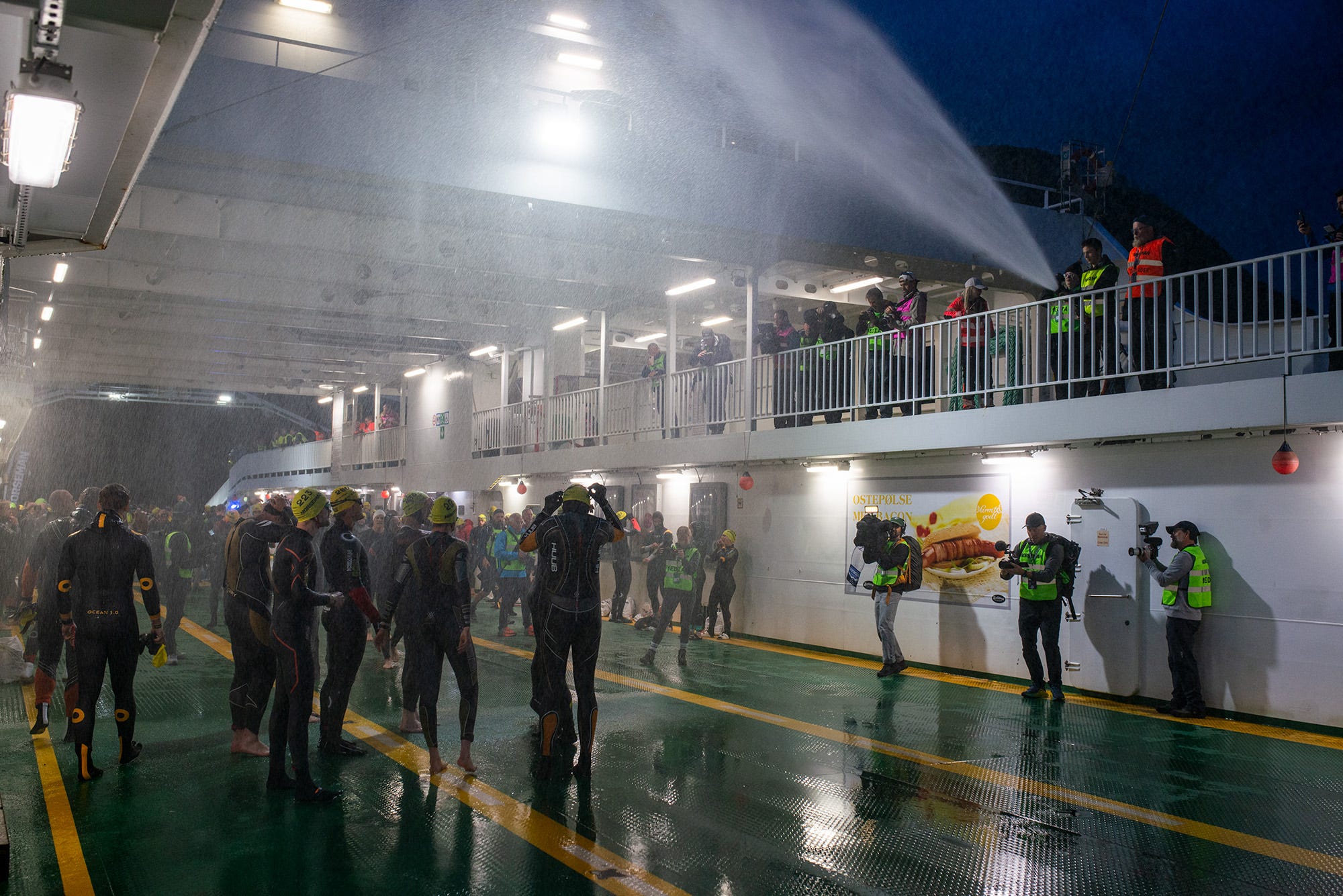
But I want to be very clear about one thing, because an average year is exactly when people get careless. 14°C is still cold water. The first minute after you jump off that ferry is still the most dangerous minute of the whole race, and it has nothing to do with hypothermia. It is the cold shock response, the gasp and the racing heart, and it does not care that the number looked friendly on the morning briefing. This is why we spray the athletes with cold water on the ferry deck before they jump, and why I keep telling everyone who comes here to get into cold water at home, again and again, in the weeks before they travel. Five or six cold exposures cut that response roughly in half. It remains the single most useful thing an athlete can do to prepare for our swim, in a cold year and in an average one.
The swim went fine. So did the bike. And the valley, the first 25 km of the run where the heat can really bite, sat at around 18°C.
That 18°C is worth a few words, because we came into this race better prepared for heat than we have ever been.
Ahead of the race I wrote a whole piece about the heat in the valley, as part of the five-part series I published on my Substack in race week, because that stretch out of T2 lies low, is sheltered from the wind, and is run in the middle of the day. It is the part of our course where I think the risk of serious heat illness is highest. So this year we built a proper system for it, with cooling and drink stations along the first 25 km, agreements with local residents to use their garden taps, and hoses with a soft spray so we could cool athletes as they run past.
We rigged the hoses. We added staff. And then the valley gave us 18 degrees.
So the honest answer is that we did not learn very much from it, simply because it never got warm enough to test the system properly. That is not a disappointment. It is a system that is now built, staffed and ready, waiting for the year that it is needed. And that year will come.
People always ask if everything went well. It did.
We saw approximately ten patients through the day. Out of 255 starters, in a race like this one, that is a low number. There were no serious accidents. What we did see was mainly a few cardiac concerns and some minor trauma. Nothing that turned into a big incident.
But there is one pattern in those numbers that I keep noticing, and I want to say it out loud.
A good share of the people we treat at Norseman are not athletes. They are support crew.
Minor injuries, mostly. Nothing dramatic this year. But it is a consistent finding across many years now, and it says something about how this race actually works. The athlete is prepared, tapered, fed and watched over by a whole organisation. The support crew has been awake since three in the morning, is driving a strange road in a strange country, carrying bags up hills, standing around in the weather, and thinking about somebody else all day long. Then they get tired and something small happens.
So my message to next year’s support is the same as always, and now I have numbers behind it. Look after yourselves. Eat, drink and sleep before race day. You cannot take care of your athlete if you are the one we end up treating.
If the weather was not our antagonist this year, something else was, and it is the part of this report I most want people to read.
Traffic.
The traffic on our course grows every year, and it is a real challenge. This year we again had several traffic violations. The one I keep coming back to is support cars stopping badly. A car parked in the wrong place on a narrow Norwegian road, at the wrong moment, with tired athletes and other cars coming through, is genuinely dangerous. It is the kind of thing that can turn a quiet race into a very bad day in a couple of seconds.
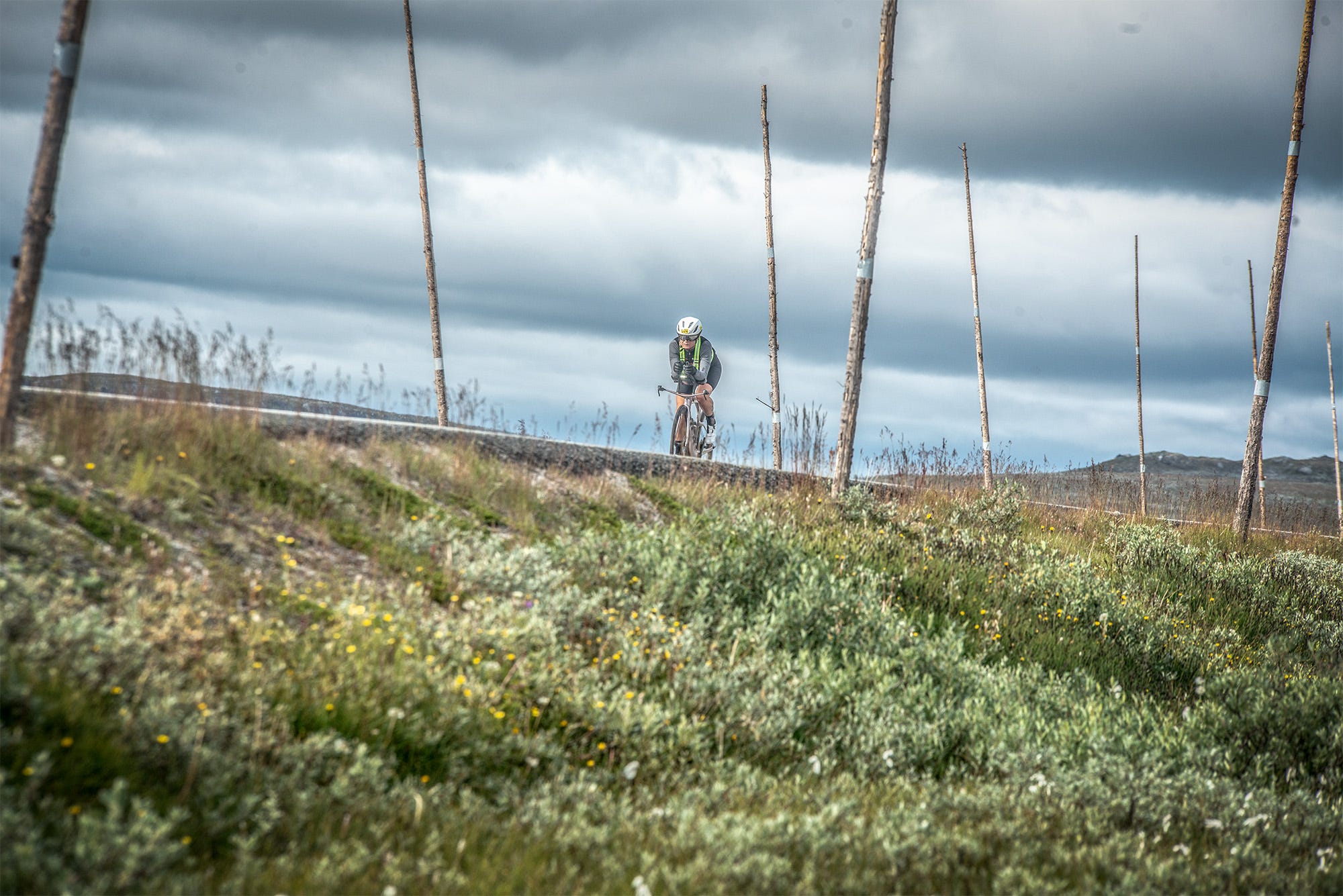
Two things helped us a lot. We had 13 race marshals on motorbikes, and they are crucial. They see things fast, they move fast, and they are our eyes in places no car can be. And we had police present, including two police motorcycles. Having the police out on the course is extremely helpful, and I am grateful for it.
I will say it plainly to everyone who comes to Norseman with a support car. The way you drive and the way you park is a safety issue for everybody out there. Please take it as seriously as we do.
None of this happens by itself. Our safety and medical organisation this year was around 50 people.
We ran three medical cars following the race, each with a doctor and a paramedic or a nurse, all of them experienced people. In addition we had a paramedic car and stationary doctors at selected points along the course. And along the whole racetrack, our local Red Cross groups were present and on alert all day.
That is what a quiet race actually looks like from the inside. Fifty people spread over 226 kilometres, mostly waiting, ready for a day that never quite came. It is a strange kind of work. When it succeeds, nothing happens.
Our success is not a result of chance. It comes from preparation, from a group of very committed people, and from evaluating and improving this event year after year.
We also did quite a bit of research again this year, with blood sampling and lung function testing on our athletes. This continues the work our research group has built up at Norseman over many years, and I look forward to sharing more when the data is ready.
You can’t fight nature. Usually I write that sentence after nature has beaten us. This year I get to write it the other way around. Nature was kind, and we were ready anyway.
That is the whole point of this work. You prepare for the year with the thunderstorm, the white out and the heat, and then you accept it gracefully when you get a beautiful day instead.
If you want the physiology behind all of this, I wrote a five-part series on my Substack, Mixed Physiology, in the week before the race. It covers the first minute in the cold water, the afterdrop that catches athletes out on the bike, SIPE and the lungs, the heat in the valley, and what our research finds in the blood and the heart of a finisher. You can read the whole series on my Substack blog.
Thank you so much for taking the time to read. If you have any suggestions on how we can improve our safety and medical work, please share them with me in the comments or in a DM. I always want to hear it.
I am very happy to listen and adapt!
Jørgen Melau Safety and Medical Director, Norseman Xtreme Triathlon
This blog post represents my personal views and does not necessarily reflect the opinions of my employer or any organizations. I have no affiliations with any companies relevant to this.
I’d love for you to join my Substack blog!
If you find this interesting and want to support my work, consider selecting the monthly paid option.
No posts
Comments
Nothing yet. Say the first thing.
Sign in to join the conversation.