
Every year the Norseman Xtreme Triathlon starts the same way. Athletes jump from the tailgate of a car ferry into the Hardangerfjord before dawn, swim 3.8 km in water that rarely climbs out of the low teens, then ride 180 km and run a marathon that ends on the top of Mt.Gaustatoppen at close to 1,900 metres. As medic and chief safety officer, my work is not solely about race. My work is the handful of people who, on any given day, stop being athletes and become casualties. And in this environment, whatever else has gone wrong with them, cold is almost always part of the picture.
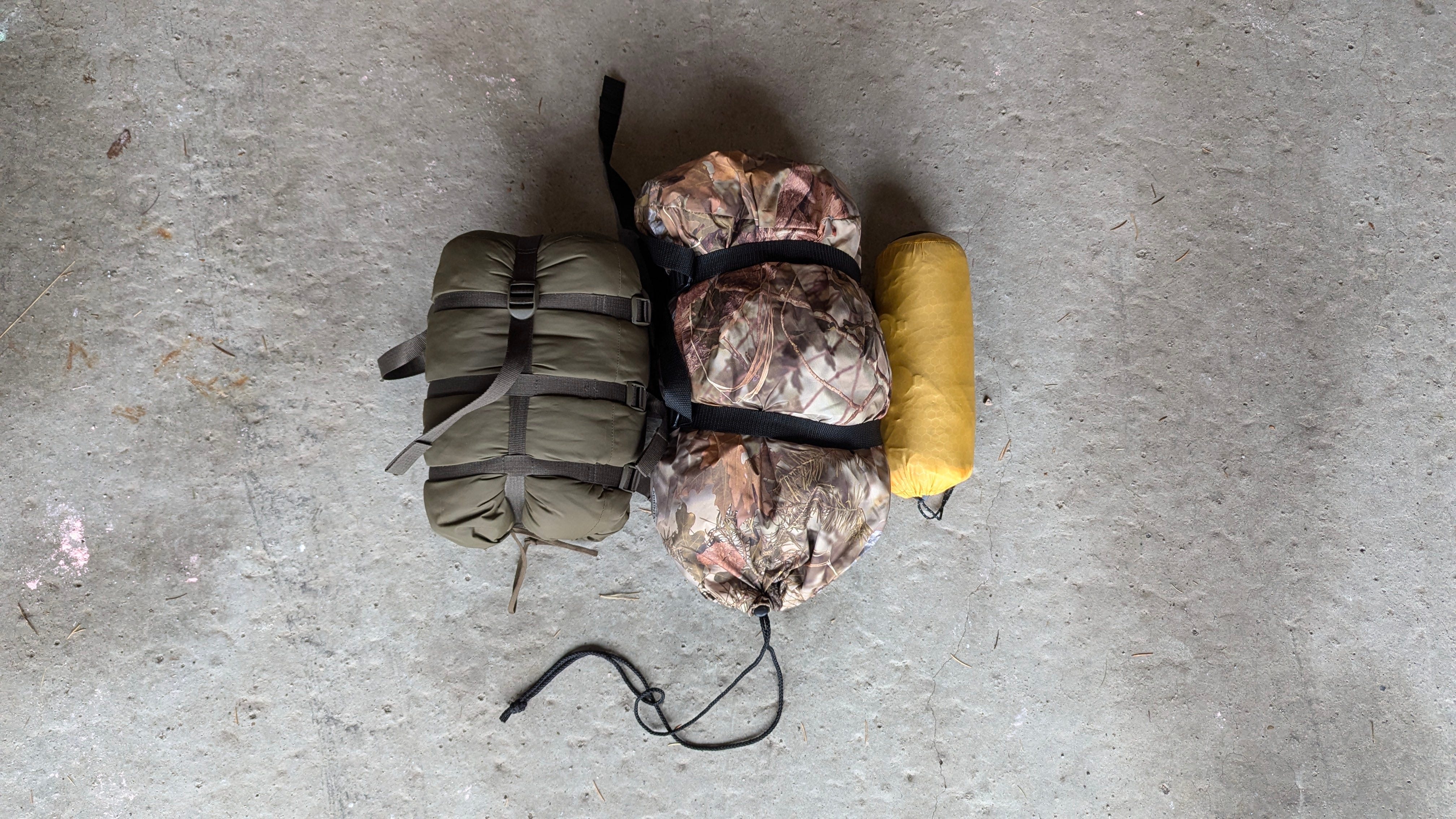
This piece is about the kit I carry specifically for hypothermia prevention, and the reasoning behind each item. I want to be clear from the start that this is a scenario-specific loadout. It is built for this event, this terrain, and this weather. In another type of work I would very probably choose otherwise, and I will return to that at the end. And obviously, we carry much other medical gear. This article just covers hypothermia-specific gear.
When I plan the kit, the casualty I am planning for most is not the swimmer pulled blue from the fjord. It is the rider who goes down hard on the bike leg, or the runner who falls on technical ground. Trauma is the highest-probability mechanism across a long day on bikes and exposed roads, and trauma brings its own cold problem with it.
Trauma-induced hypothermia is not the same animal as the cold you get from sitting still on a mountain. It is a secondary hypothermia driven by the injury itself. Hemorrhage and shock reduce perfusion and metabolic heat production; the body’s thermoregulation is blunted, clothing gets cut away, blood and water leave the patient wet, and any fluids we give can pull the core temperature down further. The result is that a casualty can lose heat fast even in conditions that would never threaten an uninjured person.
This is dangerous even though the numbers on the thermometer say otherwise. In trauma, hypothermia is one corner of the lethal triad, together with acidosis and coagulopathy, each of which influence the others. Cold directly impairs the enzymatic clotting and platelet function, so a hypothermic trauma patient bleeds more, which worsen shock, which worsen the cold. Some clinicians now describe a diamond rather than a triad, adding hypocalcaemia, but the principle is unchanged. Even mild drops matter. A core temperature below roughly 36 degrees is already clinically significant in a bleeding patient, and mortality climbs steeply as the core temperature falls further. There is no place for more cooling here. For the injured casualty the doctrine is simple and aggressive: stop the heat loss early, before it ever becomes a problem to treat.
So the first job of my kit is to let me wrap an injured person quickly and completely, on the spot, before evacuation even begins.
The second scenario is the one created by time. A long wait at the point of injury, or a long and slow evacuation across difficult ground, can tip a casualty, or even a stopped but uninjured athlete, into accidental hypothermia. This is the primary, environmental kind, and the Norseman course is built to produce it: cold-water swimmers, lean and glycogen-depleted competitors with very little insulation of their own, wet clothing, wind on the high sections, and weather that can turn on the climb to Gaustatoppen with little warning. An athlete who was generating plenty of heat while moving can cool alarmingly fast the moment they stop.
Soon, the patient will depend entirely on us to stop further loss. A casualty waiting forty minutes for a stretcher carry in the wind is a very different problem from one I can package and move in two minutes, and my kit has to cover both.
Whatever the mechanism, the physics of heat loss are the same. A person on the ground loses heat by radiation, convection, evaporation, respiration, and, above all when they are lying down, by conduction into the cold surface beneath them. My kit is organised around attacking those pathways in order, and the single most important principle is this: insulate from the ground first. A casualty lying on cold rock or wet grass will keep losing heat no matter how well you cover the top of them.
My default, go-to setup is two items: a windproof insulated casualty wrap and an inflatable insulating ground mat. The wrap I use is a Jerven blanket, a multi-use insulated cover I can deploy in seconds to build a casualty burrito: it stops convective and radiative loss, blocks the wind, and keeps rain and spindrift off. Underneath goes the air mat, a Therm-a-Rest NeoAir Xlite, as the conductive barrier, lifting the patient off the ground with a high warmth-to-weight ratio for its packed size. For a controlled scene and a reasonably short evacuation, this pairing is light, fast, and more than enough. It is what I reach for first.
When the situation gets worse, in bad weather, or with a long wait at the point of injury, or a long evacuation, I escalate to a heavier system: an insulated synthetic sleeping bag with an overbag that boosts it for the cold. The bag I carry is a Halite Recce Synth 3, a synthetic-filled bag (ClimaShield Apex under a Pertex shell) rated to roughly minus four for comfort, with a comfort limit near minus eleven. The choice of synthetic over down is deliberate and central. Norseman casualties and Norseman weather are wet, and down collapses and stops insulating when it is soaked, whereas synthetic fill keeps most of its loft and warmth when damp. Over the top goes an overbag, in my case a Halite Overbag Pro, which adds in the order of fourteen degrees and turns a three-season bag into something I would trust for a genuinely cold, prolonged hold. This is the kit for the casualty who is going to be with me for hours rather than minutes.
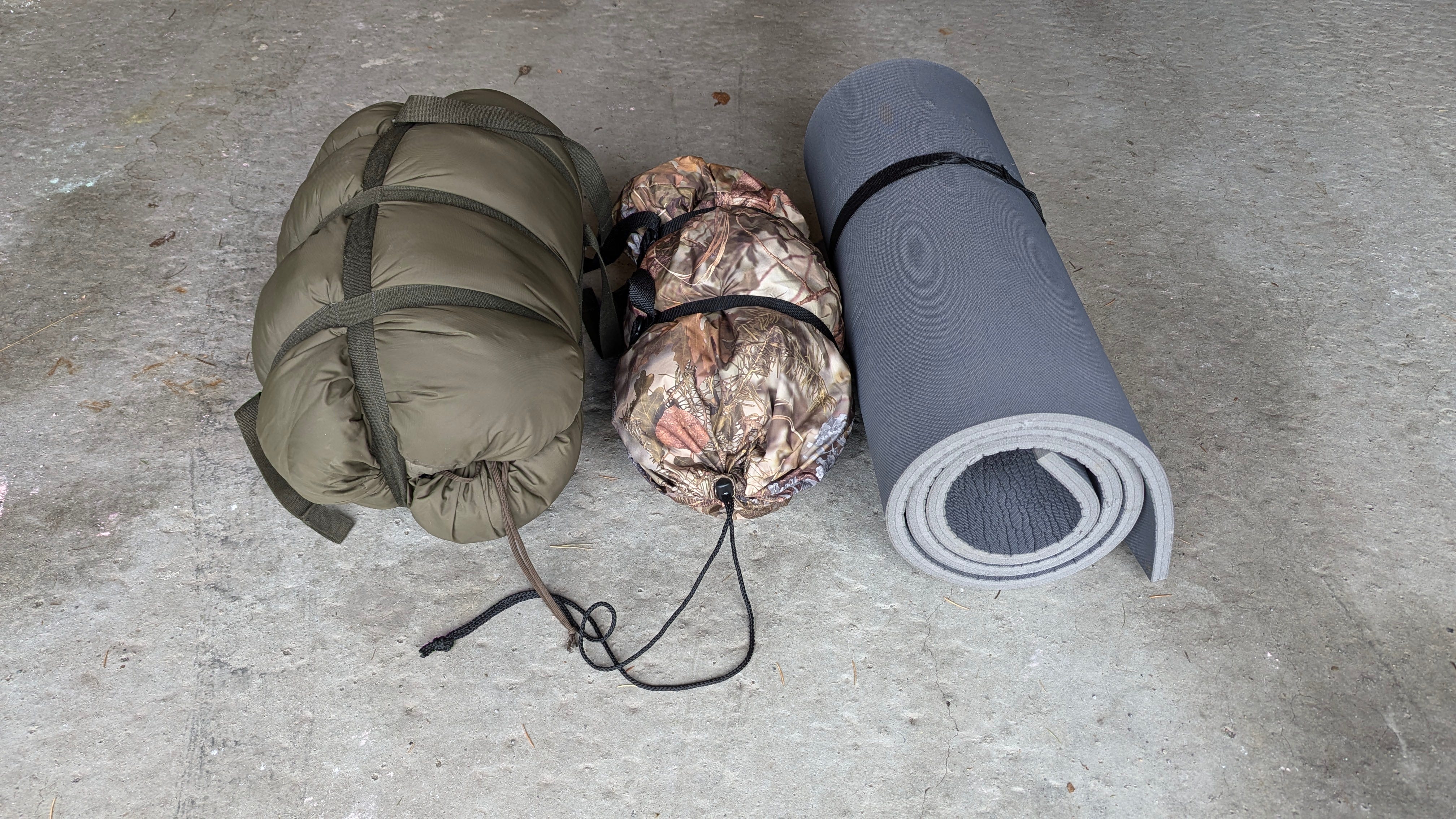
The last variable is the terrain of the evacuation itself, and this is where I change the mat rather than the bag. For an evacuation over rough ground I swap the inflatable for a closed-cell foam mat, a Mammut Bamse. The air mat is an outstanding piece of kit, but an inflatable is vulnerable to puncture. On a stretcher carry across boulders and scree, a single sharp edge can deflate it, and a deflated mat means the patient is back on the cold ground with the conductive pathway wide open again. Closed-cell foam cannot puncture and cannot fail, and it goes on insulating no matter how roughly the carry goes. I accept the extra bulk because reliability is the whole point at that stage.
It also goes by the story that I also carry a tent as a shelter when necessary. I use both a one-man tent (Nortent Vern 1) and a two-man tent (Hilleberg Nammatj 2). I choose depending on the pack size, current conditions, and weather forecast. When using for casualties, I use both without an inner-tent, as the shelter option is what I am after. So I unclip the inner tent before race day.
So the full logic is a ladder. The insulated wrap over the air mat (Jerven and NeoAir Xlite) for the fast, controlled case. The synthetic bag and overbag (Halite Recce Synth 3 and Overbag Pro) when cold and time stack up against me. The foam mat (Mammut Bamse) in place of the inflatable whenever the ground we have to cross would threaten an air mattress.
I want to repeat what I opened with, because it is easy to read a gear list as a universal recommendation, and this is not one. This setup is chosen only for this scenario: a defined event, well-known terrain, a supported evacuation chain, and the specific wet, cold, maritime-to-alpine conditions of the Norseman course. Every item is a deliberate answer to those particular constraints.
In another type of work, the answers would change. A different climate, evacuation distance, weight budget, mission length, or casualty profile would all push me toward different equipment. The kit is for this specific mission, not the other way around. What I would keep in any setting is the reasoning: identify the most likely casualty, respect the cold as part of almost every trauma picture, insulate from the ground first, and build a ladder you can climb as the situation gets worse.
This blog post represents my personal views and does not necessarily reflect the opinions of my employer or any organizations. I have no affiliations with any companies mentioned in this text.
No posts
Comments
Nothing yet. Say the first thing.
Sign in to join the conversation.