
Reading time: 6 minutes

I used to believe teachers were supposed to be miles ahead of everyone else.
More disciplined. More integrated. Less confused.
Somewhere along the way, many of us absorbed the same silent rule: never let people see the part of you that is still struggling.
Whether you are a university lecturer, a psychotherapist, a coach, or a retreat leader, the pressure is often the same: appear certain, composed, evolved. If your work involves guiding people through the messy terrain of the human condition, this reflection is for you.
For me, the shift away from that silent rule happened in my late twenties. Looking back, I realize how fortunate I was to receive this teaching at such an early, formative age, before the habits of professional mastery could fully harden. Deep in the waters of Buddhist practice in California, Roshi Joan Halifax said a single sentence that shifted my internal compass forever.
“Jorge,” she told me, “we teach what we need.”
I do not remember the specific question I asked Joan that afternoon, but I remember the weight of the silence before she spoke. And the feeling of recognition that followed—as if a sudden draft had cleared a smoke-filled room. As if someone had finally named the secret engine beneath almost every authentic form of teaching.
Her words have stayed with me since that day.
Impostor syndrome thrives wherever people confuse teaching with perfection.
We assume that to guide others, we must first become flawless ourselves. So we hide our contradictions. We curate wisdom. We perform certainty.
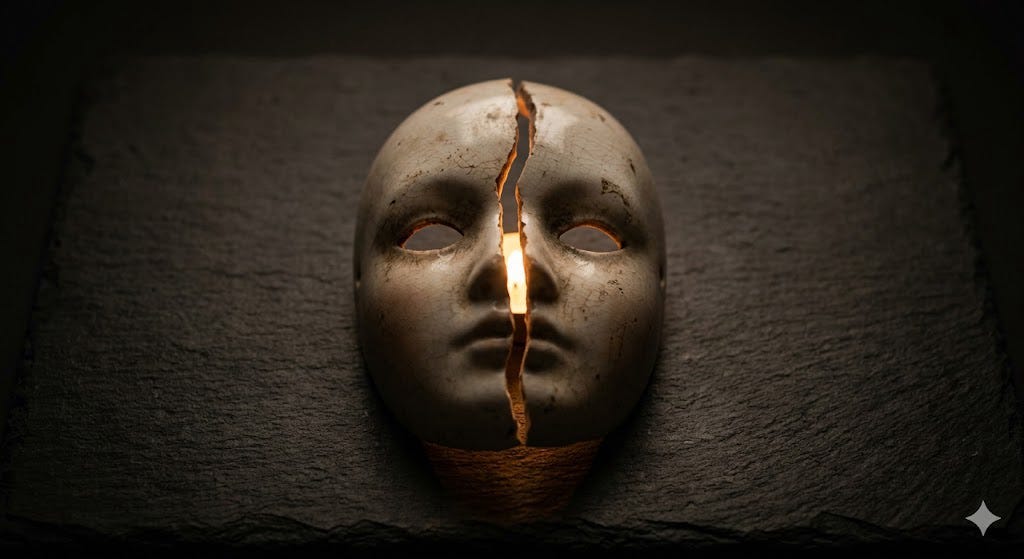
We learn to wear what I have come to think of as the “guru mask.”
But the teachers who have helped me most were never performing invulnerability. They were simply a few—or many—steps deeper into the same terrain. They remembered the valleys because they still carried traces of them.
Knowing our shadows and unresolved anxieties does not make us frauds.
It makes us human.
And often, it is precisely that humanity that allows others to trust us.
Roshi’s maxim invites us to flip the script: if we teach what we need, then teaching stops being an act of subtle superiority and becomes an act of shared exploration. It frees us from the pedestal.
I have found that my work on the integration of sexuality and spirituality, for instance, is rooted precisely in the blocks I navigated in my own youth. My workshops on embodied spirituality were born partly from the necessity of learning how to inhabit and ground my own highly mental nature. And my writings about intimacy and relationships do not emerge from mastery (far from it), but from an ongoing engagement with the questions themselves.
Some teachings emerge less from arrival than from this kind of active wrestling with what we have not yet fully integrated. I am not teaching from a place of completion, but from the front lines of my own evolution.
Perhaps this is why impostor syndrome is so common among sincere teachers: they are acutely aware of the distance between what they teach and what they have fully embodied. But teaching is not invalidated by incompletion. Often, it is animated by it.
You are not a fake for teaching what you have not fully “solved.”
You are a guide because you are still willing to learn alongside those you lead.
The idea itself is ancient. Seneca wrote that “while we teach, we learn.”
Centuries later, Richard Bach gave the insight its modern spiritual phrasing in Illusions: The Adventures of a Reluctant Messiah:
“We teach best what we most need to learn.”
In the book, the protagonist discovers a “Messiah’s Handbook” suggesting that we are drawn to certain teachings not because we have mastered them, but because we are being shaped by them.
Even George Bernard Shaw’s cynical jab—“He who can, does; he who cannot, teaches”—accidentally reveals something true. Teaching is often the domain of people still navigating the fires of becoming.
Perhaps this is why we trust people who have survived something.
Not because they are perfect.
But because they are real.
When we speak honestly about our struggles, people feel it immediately.
Not because suffering itself is wisdom, but because lived experience creates a different kind of authority. You cannot truly map a territory you have never walked. Knowing the valleys of a subject allows you to guide others through them with genuine discernment and compassion.
When you are honest about your past and present struggles, your teaching becomes “real” in a way that academic or psychospiritual “perfection” can never replicate.
But an important distinction must be made: vulnerability is not confession for its own sake—nor is it a performance of false modesty. There is a critical distinction between an open wound and a healed scar. Effective teachers do not bleed their unprocessed trauma onto their students; instead, they teach from the scars that prove survival and integration are possible.

And something else happens too: when we teach a lesson—forgiveness, embodiment, courage—we reinforce it within ourselves. Teaching becomes less a performance of expertise and more a form of ongoing practice.
People can feel the difference between wisdom and performance.
Performance creates distance.
The wisdom of vulnerability gives others permission to be human too.
It is the willingness to remain human while guiding others.
This relationship between teaching and inner need finds some of its deepest expressions in the archetype of the wounded healer. This concept suggests that a person is often drawn to the healing arts precisely because of their own deep-seated wounds.
The roots of the “wounded healer” archetype stretch back through Greek myth, shamanic initiation traditions, and ancient healing cults. But Carl Gustav Jung gave the motif its modern psychological form, arguing that the healer’s authority emerges not despite their wounds, but partly through a conscious relationship with them:
“It is his own hurt that gives the measure of his power to heal.”
In many shamanic traditions, the “call” to become a healer often begins with a “shamanic illness”—a profound personal crisis or near-death experience that the individual must navigate alone. It is not the avoidance of pain that makes the shaman powerful, but their ability to transform that pain into a map for others.
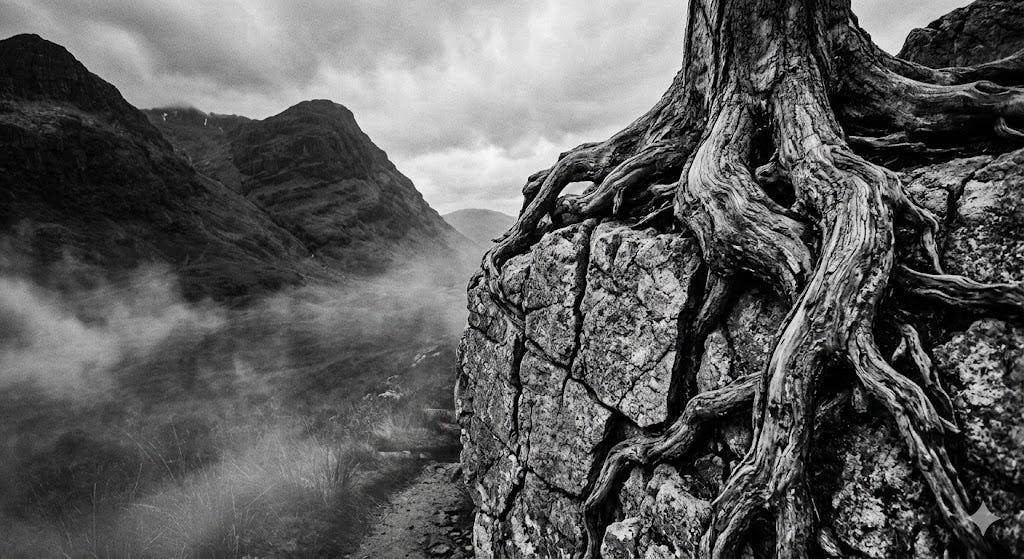
The wound becomes not just a source of suffering, but a form of apprenticeship.
The healer does not stand outside the circle of suffering. They lead from within it.
Healing becomes possible because the wound in the teacher resonates with the wound in the student, creating a bridge of recognition rather than a hierarchy of power. Here, authority emerges not from being fully “healed,” but from remaining consciously engaged in the process of transformation itself.
The healer is not someone untouched by suffering. Often, they are someone who became intimate with suffering and refused to let that intimacy turn into bitterness.
Over time, something surprising happens.
The thing we began teaching in part out of necessity slowly becomes embodied wisdom. Not perfection—never that—but a lived intimacy that opens into insights capable of helping others.
The wound becomes a doorway instead of a source of shame.
As educator Parker J. Palmer noted in The Courage to Teach, “we teach who we are.” We do not merely dispense information; we transmit our inner reality and our ongoing attempts at wholeness.
And maybe that is what real teaching actually is:
not standing above others as an expert,
but standing beside them as someone still practicing,
still failing,
still learning,
and still willing to remain open.
In a world obsessed with mastery and performance, that kind of honesty is quietly revolutionary.
I want to dedicate this essay to Roshi Joan Halifax, whose words inspired its creation. Joan not only guided my Buddhist practice for several years and a vision quest in the New Mexico desert, but also offered me a piece of life-altering feedback on one of the overly intellectual essays I wrote for her class: “Brilliant, but irrelevant!” I have spent the years since trying to write what truly matters.
Bach, Richard. (1977). Illusions: The Adventures of a Reluctant Messiah. Delacorte Press.
Halifax, Joan. (1982). Shaman: The Wounded Healer. Crossroad Publishing.
Halifax, Joan. (1993). The Fruitful Darkness: Reconnecting With the Body of the Earth. HarperSanFrancisco.
Jung, Carl G. (1966). Fundamental Questions of Psychotherapy. Princeton University Press.
Nouwen, Henri J. M. (1979). The Wounded Healer: Ministry in Contemporary Society. Image Books.
Palmer, Parker J. (1998). The Courage to Teach: Exploring the Inner Landscape of a Teacher’s Life. Jossey-Bass.
Seneca. Epistulae Morales ad Lucilium (Letters from a Stoic). Various editions and translations.
Comments
Nothing yet. Say the first thing.
Sign in to join the conversation.