
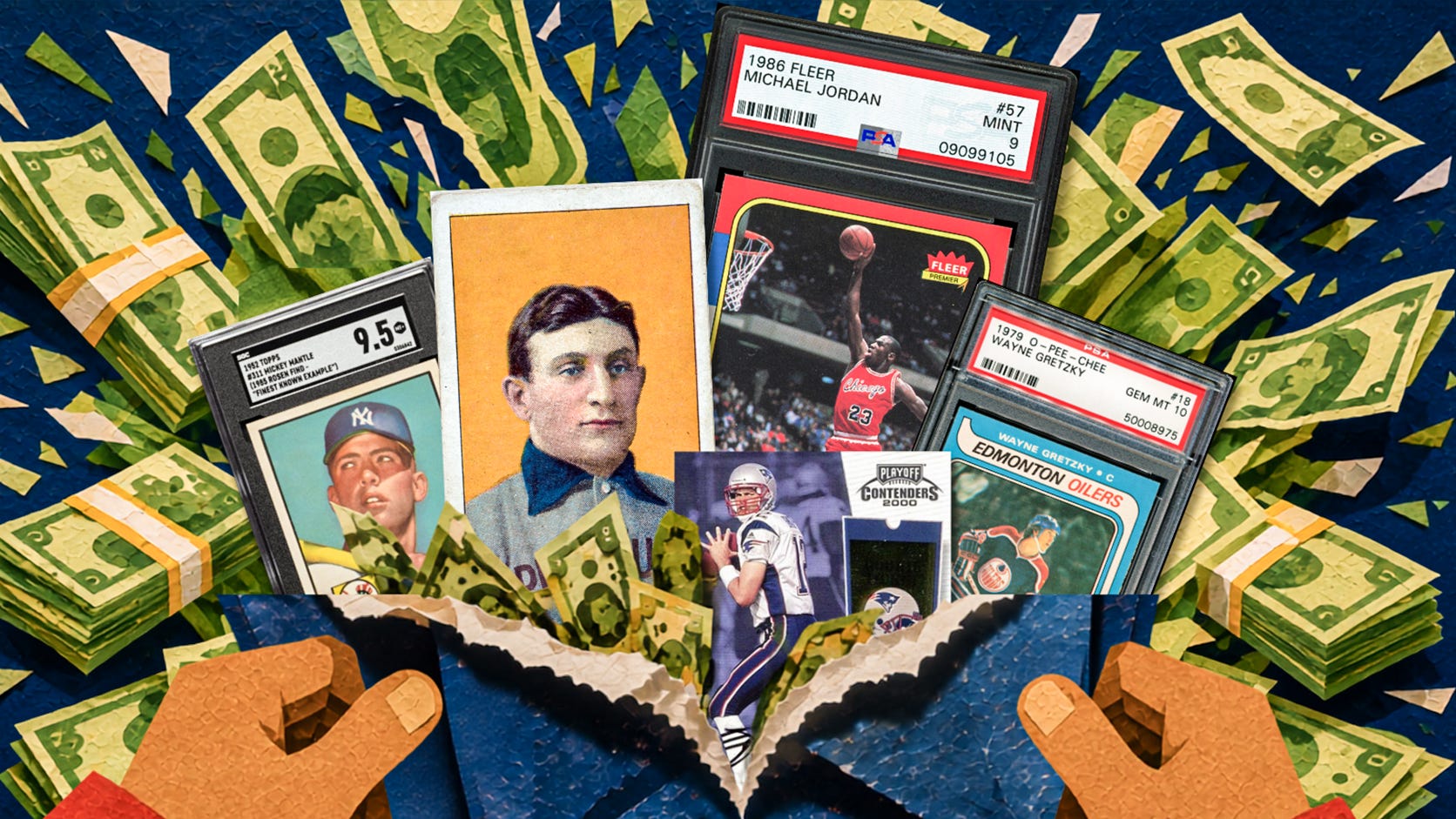
A single sports card sold for nearly $13 million last year. A billionaire investor showed up on business television wearing a trading card around his neck like a gold chain. Grown adults chase influencers down the aisles of hotel ballrooms so they can get a picture with the guy who told them to buy Luka Dončić rookies four years ago. Investment funds buy rare cardboard the way other funds buy stocks.
This is the modern sports card industry.
For most of the last hundred years, sports cards were what kids traded on playgrounds and adults kept in shoeboxes in the basement. Today they are treated as financial assets, as status symbols, as a way to get rich quick — and as evidence of what people start investing in when the old ways of building wealth stop feeling possible.
My latest video is a history of how a hobby became a market, told through three people inside it: a former Wall Street derivatives trader who turned ten thousand dollars in cards into twenty million and now runs a company loaning money against them, a lifelong collector who wrote a four-hundred-page book on why the grading system underneath the entire market is quietly broken, and a Manhattan card shop owner who thinks the whole debate about what a card is has become a false narrative.
My family had the absolute joy of attending the second night of BTS’s Arirang World Tour in Foxboro on Thursday, and I was blown away by the creative ambition, maturation and evolution of the group performing in front of an enormous audience.
The one thing that I believe really separates BTS from so many enormous world music acts is that intimacy they continue to maintain with their fan base, even after becoming some of the most famous people in the world. But even beyond that, I loved seeing how the group’s stage presence has evolved. Compared to the Permission to Dance tour coming out of COVID, off their massive hits in Dynamite and Butter, BTS is no longer going all out with choreo in the way they used to (I get this. I am their age, and have so many more aches and pains now than I did five years ago).
In place of the choreo, the group stepped up the ambition of the stage itself, creating a unique 360 stage with a rotating center that allows the group to walk closer to the audience than it has in recent years. The backup dancers, ode to Korean culture through a variety of dance sets created such an enormous sense of anticipation that my fianceé and mother both teared up and screamed like school girls. It was truly a sight to behold.
Charade is the most Hitchcockian film Alfred Hitchcock never made — Stanley Donen directing Cary Grant and Audrey Hepburn through a Paris labyrinth of stolen money, false identities, and murders staged with the same brisk elegance Hitchcock had perfected a decade earlier in To Catch a Thief. It's an artifact of its exact moment: Henry Mancini's score, Maurice Binder's title sequence borrowing from the Bond films he had just helped invent, Hepburn in Givenchy, Grant playing Grant one last time before his retirement, all of it wrapped in the specific mid-century fantasy of European sophistication that would essentially disappear from American movies within a few years.
And yet the DNA is everywhere after it, every romantic thriller that tries to marry banter to body count, every twisty caper where the mystery is really about whether the leads should trust each other. Donen made a movie so confident in its own genre pastiche that it accidentally became a template, and watching it now feels like standing at a hinge point — the last real gasp of one kind of studio filmmaking and the quiet blueprint for what would replace it.
Thanks for reading, and for your support.
Joon
No posts
Comments
Nothing yet. Say the first thing.
Sign in to join the conversation.