
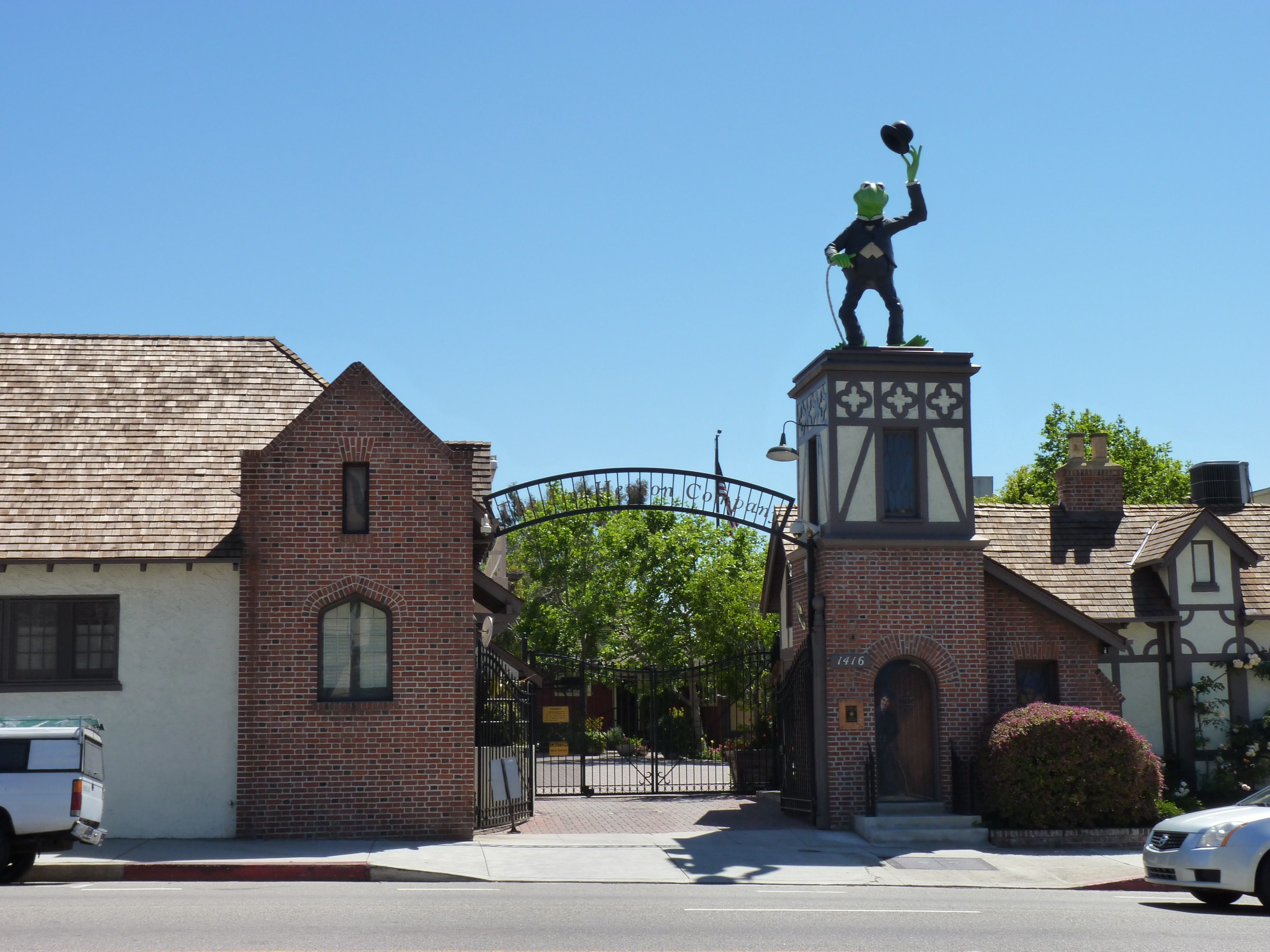
Let’s all be more Jim.
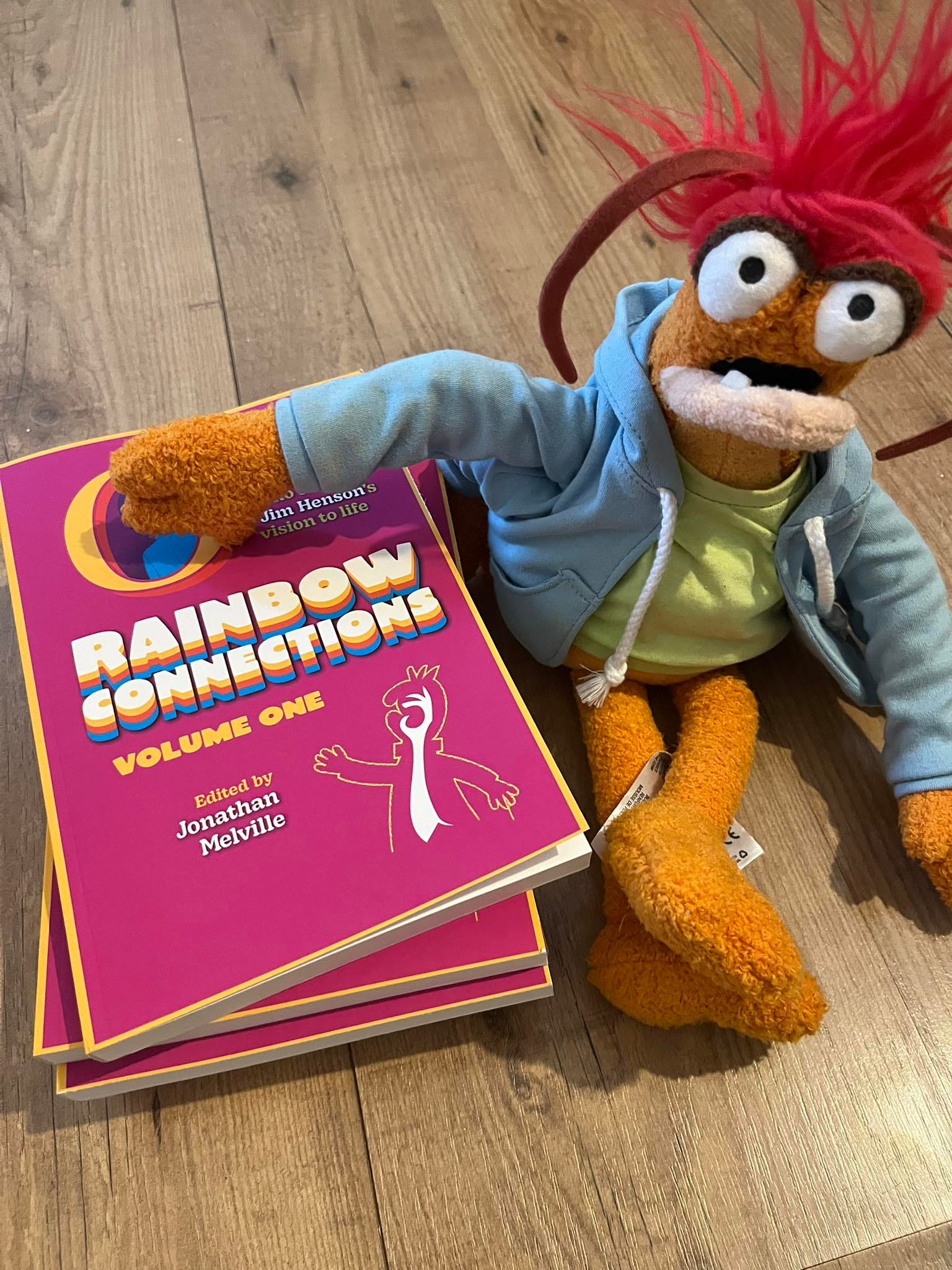
That's the lesson I’m taking away from editing Rainbow Connections: Volume One - Meeting the People Who Brought Jim Henson’s Vision to Life (Amazon link), my new book celebrating Jim Henson and the people who helped bring his vision to life.
I’ve always been a fan of the Muppets - The Muppet Show started just a few months after I was born, which dates me somewhat - and have always been fascinated by the work that went on to bring some of my favourite TV shows and films to the screen including Sesame Street, The Muppet Show, Fraggle Rock (both the North American and UK versions), The Dark Crystal, Labyrinth, Muppets Tonight and Dinosaurs.
How do you celebrate those productions and people in a way that hasn’t been done before? My idea was to interview as many people who either worked with Jim or worked on productions after his death in 1990 to try and tease out what made a Henson show so unique. In the end I spoke to 17 puppeteers, writers, directors, producers and other creatives who worked on dozens of productions between them.
The full list of interviewees:
Bill Barretta: Puppeteer, Producer, Writer, Director and Actor
Steve Barron: Director
Fran Brill: Actress and puppeteer
Tony Charmoli: Director (previously published chapter from Tony’s autobiography)
Mark Eades: Producer, Muppet*Vision 3D
Louise Gold: First British Muppet performer
David Gumpel: Director and Producer
Bruce McNally: Art Director and Designer
Rob Mills: Puppeteer
Larry Mirkin: Producer
Victor Pemberton: Writer/Producer, Fraggle Rock (UK)
Austin Pendleton: Actor, Max in The Muppet Movie
Mike Quinn: Muppet performer
Gord Robertson: Puppeteer
John Stephenson: Creative Supervisor, Jim Henson’s Creature Shop (1979–2004)
John Stevenson: Artist, Designer and Director
Jocelyn Stevenson: Writer and Producer
Jeremy Swan: Director
I was slightly overwhelmed by the love that everyone still has for Jim Henson, though perhaps it was obvious they would. A Henson set was a happy set, the sort of place none of my interviewees ever experienced again. Colleagues told me he never shouted at them, welcomed mistakes, found joy in the small things in life, made everyone feel valued and laughed. A lot.
One memorable quote: “Jim’s rule was if the creative guy disagrees with the business guy, the creative guy takes precedence.”
If it’s possible to sum up the Henson philosophy, it looks something like:
• Never talk down to your audience
• Embrace both humour and heart
• Foster creativity and collaboration
• Push technical boundaries
• Create entertainment that makes the world better
Hopefully the book adds to the information that’s out there already, with a few new stories that even the biggest Henson experts haven’t heard. But I also hope new fans will stumble across it and discover some of these incredible series and films for the first time.
Again, let’s all try to be more Jim, the world needs that right now.
Rainbow Connections: Volume One is available from Amazon in paperback and ebook, and other stores will stock it soon. Realistically, Amazon is the biggest marketplace for all of my books so I have to go there first, but I hope bookshops will soon be able to take orders for it.
If you do read and enjoy it, a review or rating on Amazon would be a huge help. It’s incredibly difficult to get books discovered, so every review helps. Ratings are much faster to do and are also a way of supporting what I’m doing.
The same goes for all my books - if you’ve ever read one and liked it, please consider popping over and leaving a rating or review.
If you want to read a free chapter from the new book, please scroll past this photo of Pepe the King Prawn…
Steve Barron, Director
“Jim was an amazing man full of ideas, full of great enthusiasm to innovate and to press things forward.”
Already known for music videos such as A-ha’s Take On Me, Steve Barron brought his innovative visual style to The Storyteller and helped establish the darker, more sophisticated side of Henson productions.
In the 1980s, as MTV transformed the music landscape, Steve Barron was quietly reshaping the music video itself. His work didn’t just accompany songs; it often became inseparable from them. The pencil-sketch animation of A-ha’s Take On Me and the glowing sidewalk tiles in Michael Jackson’s Billie Jean became as memorable as the tunes themselves.
Steve had a knack for creating visuals that lingered in viewers’ minds long after the songs had ended, a talent that caught the attention of another visual innovator, Jim Henson, who was in the middle of production of Labyrinth. Henson soon invited Steve to direct two promotional videos for the film, Underground (1986) and As the World Falls Down (1986).
Says Steve, “I went in to meet with Bowie and chatted through the ideas, then met with Jim Henson who said, ‘Look, I’ve directed the film, and I’ll show you a cut of it, and if you want to use some of the creatures and characters from our Creature Shop, please go ahead. We can even leave the set up for a day or so for you to mess around with.’ He left it very much open what to do and where to do it.”
During the production of the music videos, Steve formed a friendly relationship with Jim, showing him some of his recent work, including the video for Take on Me, with its blend of pencil-sketch animation and live action. Steve’s use of silhouettes, a technique he’d refined, particularly caught Jim’s eye. “When I’d worked in post-production, I found that the best way to believe them and feel satisfied with them was through silhouettes, and doing them against white instead of green screen. I wanted to do a whole video that was about these silhouettes and the journey of characters and creatures.”
Impressed by Steve’s work, Jim approached him soon after to direct ‘Hans My Hedgehog’, the half-hour pilot for NBC’s The Storyteller. The show would focus on early European folk tales, offering a darker take on fairy tales that predated the Grimms’ versions, a stark contrast to the sanitised Disney adaptations that had dominated for decades.
Steve met with writer Anthony Minghella several times to discuss the format and direction of the show. “Jim had talked about what format the whole show could be, whether it was more of a storyteller in a room than it was about the actual images of the story. I said, ‘We should do it on film, we could do it straight from negative and edit it digitally,’ and he was fascinated by the new way of doing effects and online editing.”
This conversation was taking place at a time when the film industry was on the cusp of a digital revolution. Traditional celluloid was still king, but new digital technologies were emerging, promising new creative possibilities and cost efficiencies.
“He let me go at it and we came up with something that looked quite abstract, quite out there. The silhouette technique was partly a cost-saving device, but mainly as a composite tool, to really make the composites work and also to keep the darkness and I’d seen some interesting animation and some silhouette drawings for the stories.”
This approach aligned with a growing trend in visual storytelling that favoured mood and atmosphere over literal representation. Influenced in part by European art films and the resurgence of German Expressionist aesthetics in popular culture, this trend was evident in works like Blade Runner (1982) with its shadowy cityscapes, and Peter Gabriel’s Sledgehammer (1986) music video, which used surreal imagery to create a mood-driven visual experience.
“Jim was amazing. He just said, ‘Look, we’ll get the creatures that Anthony’s written and just shoot for seven or eight days,’ that was for the pilot. And then it played in the States and they ordered eight more episodes of it.”
Creating The Storyteller’s world
The Creature Shop’s expertise and dedication to character development quickly became apparent to Steve. At a time when practical effects were still dominant and CG was in its infancy, Henson’s Creature Shop represented the pinnacle of puppet and animatronic technology. Their Camden Town studio was a hub of innovation, pushing the boundaries of what was possible in practical effects.
“They’re all about character because Jim came from the world of character and that was his strength. They had so many great people working in the Creature Shop that I had no doubt when we went to do The Storyteller that it would be stunning,” Steve says, confident in their ability to bring the stories to life assuming they had sufficient time to explore the numerous possibilities the project presented.
Despite the darker tone of some stories, The Storyteller was intended for a family audience. “It could have been very bright and colourful, and cartoony, and Disney and still with the same dialogue, but we went for dark. From my point of view, everything was about something that I was fascinated by and enjoyed, but I wasn’t aiming it at a young audience. I was just aiming to do it as well as it could be for us to enjoy because I think that’s the only thing you know. You’ve got to go with what you really enjoy.”
Steve adds that John Hurt was an ideal fit for the role of the mysterious Storyteller. Hurt, known for his distinctive voice and powerful performances in films like 1980’s The Elephant Man and 1984 (1984), brought gravitas to the role.“You couldn’t have got a better voice, those tones are immediately evocative of beautiful storytelling,” Steve says. “He was the number one choice for the Storyteller. On the first episode, we had quite an extended nose for him and it looked a little bit fake, so I remember on the following eight, which we just started five or six months later, we trimmed that down quite a bit. So he’s telling more lies in the first episode.”
Following the success of the pilot, Jim asked Steve to serve as a creative director for the series. “I went into the meetings with everyone and they showed me the scripts and we had a long meeting about the world of silhouettes and how the post-production would work. I brought in my editor who’d done most of my music videos. Everybody tries to keep that uniform look.”
Regarding the experience of working with Jim, Steve explains that he “loved working with him, he was amazing, and we got quite close as friends, I saw him socially quite a bit. He was an amazing man full of ideas, full of great enthusiasm to innovate and to press things forward.”
On the subject of a potential second season, Steve notes that The Storyteller was an expensive production for its time slot, with each episode being shot like a movie and the cost of the creatures being very high. “I think it was mainly a cost thing.” While a second series was eventually produced under the title The Storyteller: Greek Myths, featuring Michael Gambon as the Storyteller instead of John Hurt, Steve wasn’t involved in this iteration.
With rumours of a potential remake, Steve acknowledges the enduring appeal of The Storyteller, even if he doesn’t expect to be involved in any new production. “I think it’ll always have its place. It’s got some naivety in there that’s very hard to recreate.”
Finding the tone
Steve’s collaboration with Jim Henson continued with Teenage Mutant Ninja Turtles, a project that came to him through writer Anthony Minghella. This adaptation came at a time when comic book properties were just beginning to be seen as viable sources for major film productions, predating the superhero movie boom of the 2000s.
Golden Harvest, a Hong Kong-based production company known for its martial arts films, had approached Minghella about adapting one of his plays into a movie set in the Far East. Although that project didn’t materialise, the company was looking for Western properties to produce for both Eastern and Western audiences, reflecting the growing globalisation of the film industry.
“They said they’d got this thing with these turtles and they didn’t quite know how to make it as a movie, and Anthony suggested I get involved in that. I got involved in developing the script and enjoyed what their world was and the back story.”
Teenage Mutant Ninja Turtles, created by Kevin Eastman and Peter Laird, had already become a pop culture phenomenon through comics and an animated series. However, translating the concept to a live-action film presented various challenges and Steve and his team struggled to find distributors interested in the project. Undeterred, he reached out to Jim Henson, hoping to secure the Creature Shop’s involvement in bringing the Turtles to life on screen. “I rang up Jim and I said, ‘I’ve got this thing, it’s a really mad comic book, but I think it’d be amazing if you do the creatures, or your Creature Shop could,’ knowing that the ninja thing might be a problem with Jim.”
Initially, Jim expressed concerns about the martial arts elements of the story. “He looked at it and he rang me up and said, ‘Look, I’m worried about these nunchucks and these scythes and swords and it just kind of goes a little bit against what we’ve done at the Creature Shop, I’m not sure.’”
After a few days of discussion, Steve assured Jim that he would find the right balance in the film’s tone. “I said, ‘I’ll find a tone that isn’t stupid, but has got some magic to it.’ In the end, he rang me up and said, ‘Go on, let’s go for it.’” The Creature Shop’s involvement helped secure some distribution deals, but the team still struggled to find an American distributor until just before shooting began. Ultimately, the film defied expectations and became a massive success. “It went through the roof, which no one was expecting. It was a little low-budget thing. Half the budget went on creatures. We only had $7 million left to make it.” This success—earning more than $200 million at the global box office—helped pave the way for more comic book adaptations and creature-heavy films in the 1990s.
The Creature Shop embraced the project, pushing the boundaries of their craft to create the Turtles’ realistic movements and facial expressions. “They started using new technology, better radio control, all kinds of servers that would operate 17 facial expressions that were beyond what had ever been attempted before. These characters would then carry the packs that weighed 50 pounds on their backs. They were doing some super amazing, pioneering things which Jim got very excited about.”
The film’s release in 1990 coincided with the growing popularity of the Teenage Mutant Ninja Turtles cartoon series and toy line, demonstrating the power of cross-media synergy that would become increasingly common in the entertainment industry. “The cartoon came out first and got kids into it, although while we were shooting it had only been out for a few months and nobody had heard of it except kids who got up at about six in the morning. Then the toys appeared because the cartoon was paid for by a toy company. Kids started asking for the toys, but it was on a different level when the film came out. It went mainstream everywhere, it turned the franchise upside down.
Sadly, Jim Henson passed away shortly after the film’s release, leaving a void in the industry he had helped shape. “I saw him in LA a few days before he passed and he had a bit of flu. He did get to see Turtles and enjoy the fact that it was a big hit.”
Asked to sum up his experience with Jim Henson, Steve says, “You get to meet quite a lot of renowned and famous people in a career or where you work in film and TV, but there are very few, in fact, none like Jim because he was such a beautiful person. He had such a big heart that just poured into his work. He was lovely and generous, an amazing legend of a person.”
No posts
Comments
Nothing yet. Say the first thing.
Sign in to join the conversation.