
Every Thursday, the food pantry ministry opens.
You can see volunteers arriving early. They set up the tables, chairs and signs. Canned goods, bread, diapers, and sometimes a stack of gift cards are set out. Names are checked. Bags are filled. A mother expresses her gratitude with hugs and smiles. A man without a home jokes with the staff and excitedly walks away with their bag. A deacon smiles back. By sundown, the shelves are lighter and the room is quiet.
For one week, the pressure in the lives of people in the community eases.
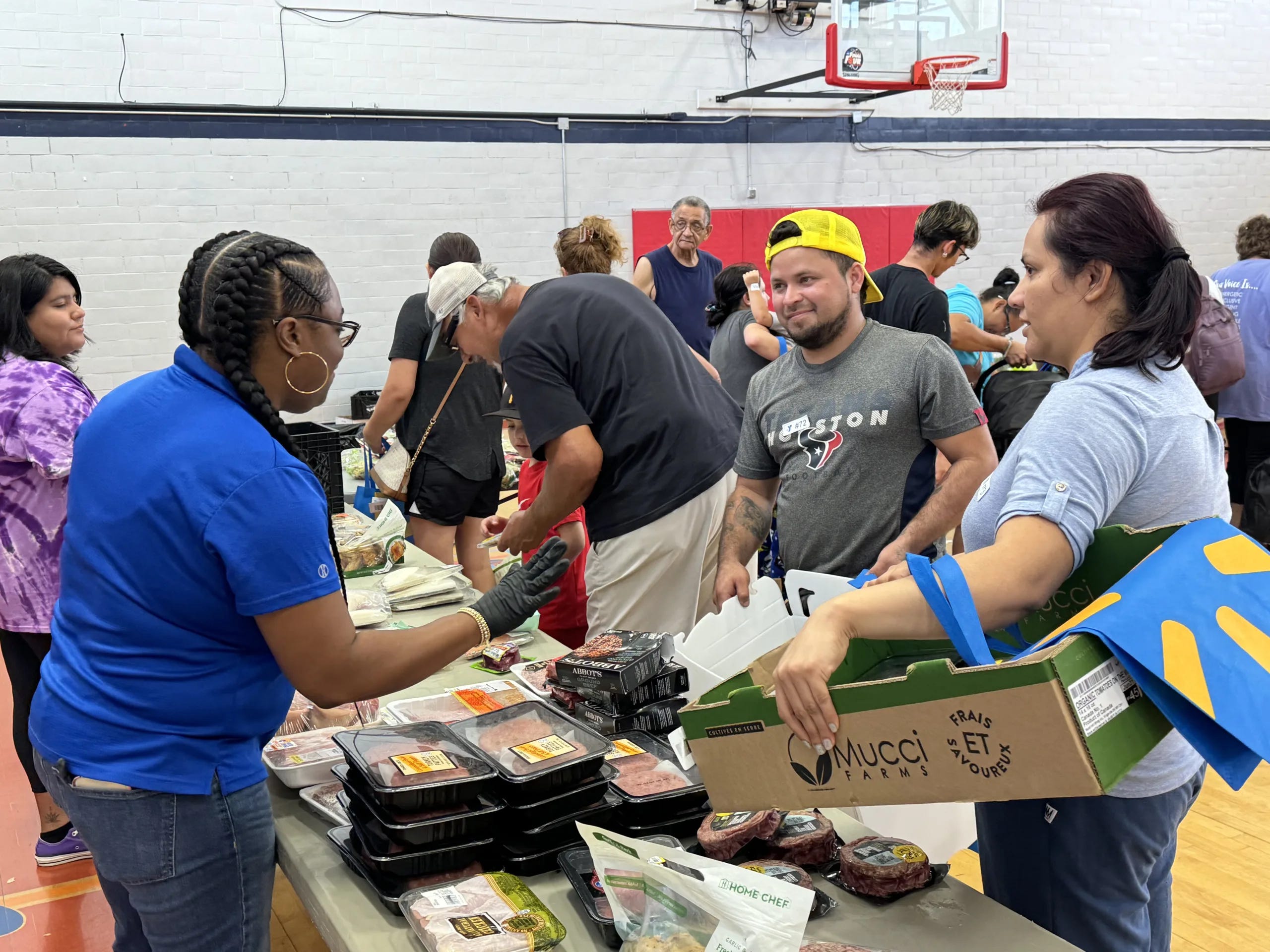
No one is ungrateful. When hunger is urgent, a pantry is a mercy and a blessing. However, the people running it know what comes next. Many of the same families will be back in line the next week or the next month. The coordinator will copy attendance into a spreadsheet. The grant report will count bags distributed. Donors will ask, “Did our gift help?”
The honest answer, rarely voiced, is yes and no.
Yes, bodies were fed.
No, the neighborhood did not get stronger and the situation hasn’t changed.
That is the problem with one-way charity.
Temporary relief is critical in moments of crisis. If someone is hungry, you feed them. If someone is bleeding, you help stop the bleeding. To ignore immediate pain in the name of long-term strategy would be discompassionate. It would be negligence and cruel.
But if the same families are bleeding every week, then the wound is larger than the moment.
Relief can be faithful work and still fail to build a system the community can stand on.
Food pantries and giveaways often move value in one direction: from giver to receiver.
That direction matters. In a crisis, one-way help can be lifesaving. It is important to serve and resolve acute needs within our families and communities. We cannot overlook the pain people are carrying in the present.
However, if people return with the same wound week after week, then a greater issue is at play. It is not merely a shortage of canned goods. It is a shortage of agency, opportunity, ownership, and infrastructure.
Agency is the ability to participate, contribute, and see a path forward.
If we only staunch the bleeding for a short time, the clock resets once a person walks out the door. The work of mercy, love and long term change must become more than temporary relief. It must help create clear pathways that move someone from needing help to becoming a pillar of strength for others.
We must turn assistance into revitalization.
When people picture communities sharing life and resources, they often reduce the idea to a mood. They imagine emotional warmth, good intentions, or a vague sense of togetherness. Some picture whimsy and wild abandon.
Yet Acts 2 describes something sturdier.
“They devoted themselves to the apostles’ teaching and the fellowship, to the breaking of bread and the prayers… All who believed were together and had all things in common. And they were selling their possessions and belongings and distributing the proceeds to all, as any had need” (Acts 2:42–45).
Notice the architecture.
Teaching. Fellowship. Shared meals. Prayer. Common life. Possessions valued and distributed according to need.
That is not a monthly pantry distribution.
That is a model of coordination.
The early church was magnetic in part because people could see resources move with integrity. The weak were not left behind. The community was not built only on downward patronage, with the wealthy handing things down while power stayed at the top. It was built on mutual responsibility under shared accountability.
James refuses the cheap version of faith. If a brother or sister is poorly clothed and lacking daily food, and one of you says, “Go in peace, be warmed and filled,” without giving what the body needs, what good is that? (James 2:15–17).
So yes, a food pantry is good work.
But by itself, its impact is dulled.
In many of our existing systems, survival still depends on patrons. Elites control the finances, status, and access. Help may flow downward, but power stays at the top.
Many modern systems still follow that pattern.
A foundation writes a check. A church or nonprofit runs a pantry, benevolence fund, or emergency program. A family receives aid. A report is written. The funder congratulates itself and moves on.
But the people in need are not able to move on.
They received help. They received a boost. But they rarely experience ownership in the outcome. They are still constrained by the same context that made the help necessary in the first place.
That does not mean donors should be cynical.
It does not mean pantry volunteers are naive.
It means the infrastructure was built for relief, not reinvestment and elevation.
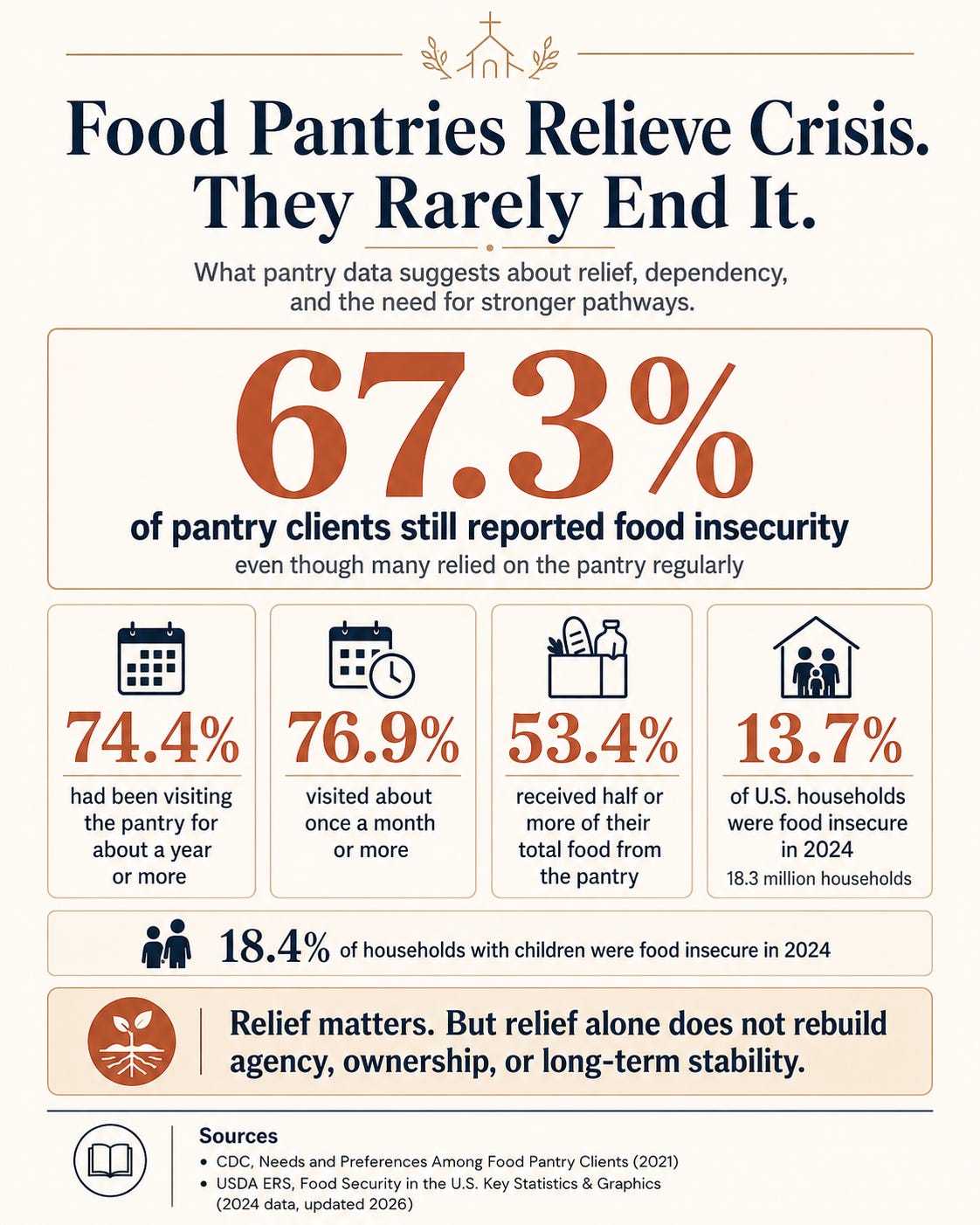
In one CDC-published study, most pantry clients had been using pantries monthly or more for at least a year, and more than half received half or more of their total food from the pantry, yet 67.3% still reported food insecurity.
That is not an argument against pantries.
It is an argument against pretending that bags distributed are the same as lives transformed.
A better system still opens the pantry on Thursday. These crises are real.
But it also asks questions ministries are already feeling in their bones:
What happens after the bag is handed out?
How do we help someone move from recipient to participant, and eventually from participant to leader?
How do we recognize and track the contributions people are already making that institutions often ignore: childcare, mentoring, cleanup work, elder care, volunteering, organizing, showing up consistently?
How do neighbors build visible ownership in projects instead of remaining permanent clients of programs?
How do resources begin circulating through the community instead of only passing through it?
These are not just charity questions.
They are infrastructure questions.
This is also where A.I. can serve, if it is put in its proper place.
Not as a replacement for care.
Not as a digital caseworker pretending to know someone’s life.
But as a tool that helps people find pathways they often cannot see alone.
A.I. can help a parent understand which benefits they may qualify for, draft a resume, prepare for an interview, find childcare resources, compare job training options, translate confusing forms, or organize the next steps after a crisis. It can help ministries and nonprofits see patterns across needs without reducing people to data points.
But A.I. by itself does not create agency. It only becomes useful when paired with trusted people, local institutions, clear opportunities, and systems that let participation turn into progress.
Blockchain technologies, like cryptocurrencies, can be used to more efficiently move resources and support accounting.
These tools are not the miracle.
The miracle is what becomes possible when people can finally see the next faithful step and have a community walking with them toward it.
That is the shift The Village is testing in Homewood with Homewood Children’s Village.
Not replacing compassion with software.
Not turning ministry into an app.
But giving compassion infrastructure it can ride.
The pantry can still open on Thursday. The groceries still matter. The hugs still matter. The prayer still matters.
But the actions of the day can become more than a record in a spreadsheet. They can become the beginning of a pathway: from need, to participation, to contribution, to ownership, to visible neighborhood change.
That is the work ahead.
Not less mercy or love, but more architecture and systems and redefining of culture so that a renewal can be experienced.
Forward this to a foundation, ministry, or civic funder focused on revitalization.
Coming Soon: Time Dollars: What If Service Could Build Community Wealth?
No posts
Comments
Nothing yet. Say the first thing.
Sign in to join the conversation.