
“We must cultivate our own garden.” -- Voltaire, “Candide”
If a green agricultural revolution is afoot, cities and engaged communities may be its new home.
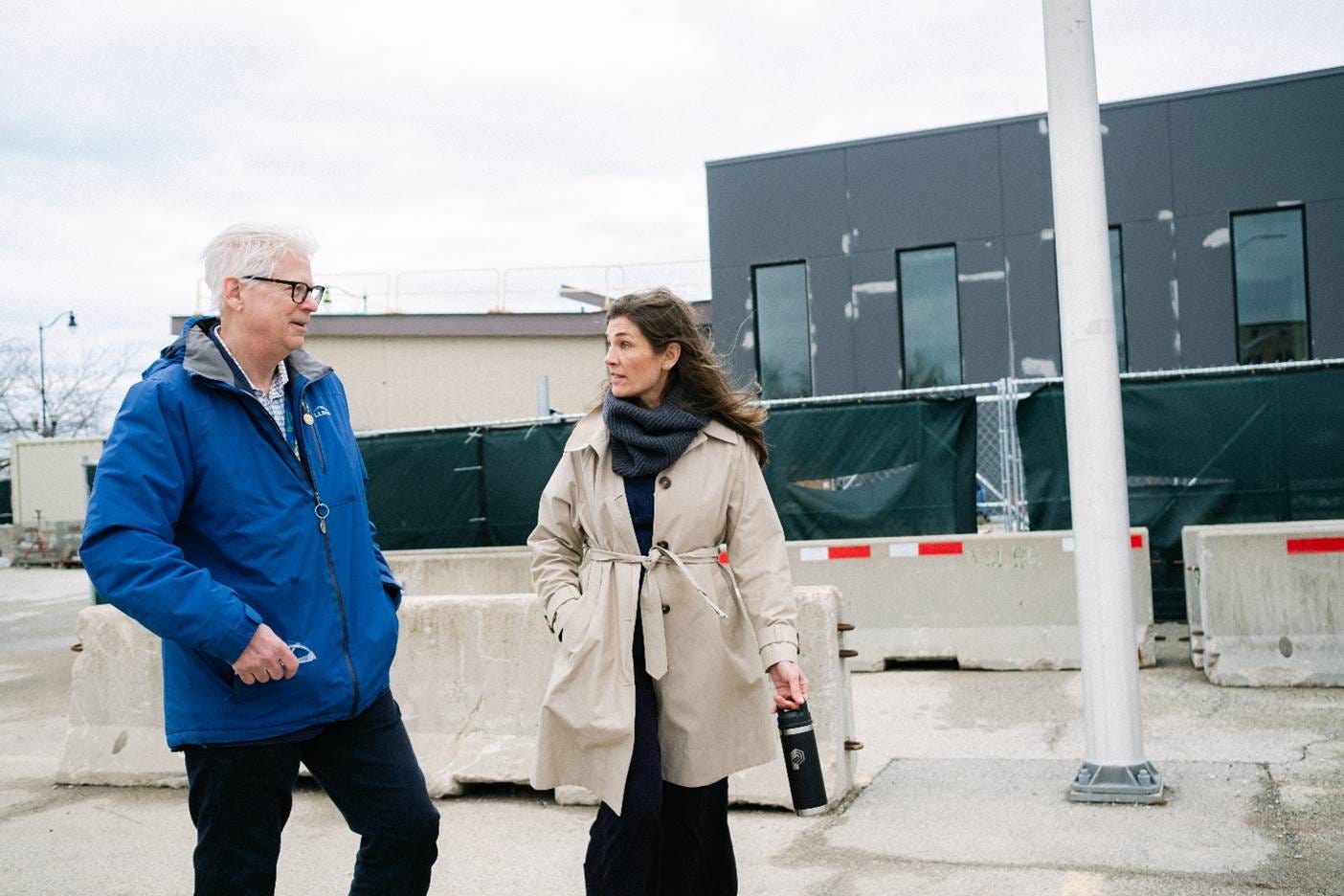
Having honed many of her skills at the Chicago Botanic Garden, Windy City Harvest and The Farm on Ogden, Eliza Fournier and her team are pioneering an innovative new venture at the Urban Farm Center (UFC) at the College of Lake County’s Lakeshore campus in Waukegan. The UFC will not only be a nexus for new career paths in the agricultural, food processing/wholesale and preparation industries, it’s a link to much more. It will integrate with CLC’s horticultural and greenhouse program at its main Grayslake campus. It will also work with the Lake County Forest Preserve’s Greenbelt Farm in North Chicago (which she manages). And it will also provide support and a retail outlet for other education-focused non-profits such as Liberty Prairie and Grow Lake County.
Perched on a bluff above the lakefront, Waukegan is an unpolished gem just north of some of the most desirable real estate in Chicagoland. Although Waukegan is the county seat, outside of the government complex, its downtown is a smattering of slowly recovering (or departed) businesses, housing, arts venues and few people.
A graduate of Lake Forest College and Indiana University, Eliza is clearly inspired by the prospect of “the combination of food, people and nature.” The UFC is a phoenix in community education. Emerging out of Sheridan Road and CLC’s Lakeshore campus like a post-modern firebird, it welcomes all with a generous wingspread view of Lake Michigan two blocks east and two public transportation access points. It could be to Lake County what the Six Flags amusement park is to the metropolitan area -– a perennial destination -– yet with a defined purpose of providing education and healthy food. Such an enterprise is sorely needed.
Waukegan, like many urban locales, was once a boomtown, supported by several industrial complexes that shut down (leaving their toxic waste) decades ago. Two of the buildings adjacent to the UFC are boarded up, soon to be repurposed by CLC. One building, which housed a switching facility for the Illinois Bell telephone network, was abandoned decades ago when telecommunication eventually transitioned into a digital enterprise.
There is no supermarket in downtown Waukegan, which is dominated by the county jail and administrative/justice complex. Waukegan’s institutions are rallying, though. Its century-old-plus Carnegie Library is now home to native Ray Bradbury’s donated book collection, museum and event space. It was lovingly restored by the Park District and public and private donations: An exquisite indoor space within eyeshot of brutish industrial buildings on the lake. Once home to Jack Benny, Waukegan has mounted a brave revival. One abandoned landfill is hosting a solar farm. It’s main drag – Genesee Street – is home to a thriving theatre within an arts district. A coal-fired power plant on the lake is closed and will not darken the lakefront one day (toxic coal ash ponds need to be safely removed).
There’s more. Waukegan is situated on a precious, ecologically invaluable Lake Plain Preserve, an endangered 15-mile coastal dune and swale ecosystem along the Lake Michigan shoreline spanning from Waukegan to Kenosha, Wisconsin. Nearly hidden throughout Waukegan are splendid ravines that unfurl into the lake like moths at night, mysterious chasms that inspired and spooked a young Ray Bradbury (“Dandelion Wine”). Yet will Waukegan’s wounded-though-healing downtown be a draw for people who ordinarily wouldn’t consider visiting or buying food there?
“When somebody, especially living in a city, may not feel comfortable walking onto a farm... or even a college campus,” Eliza asks with an answer in mind, “They might think, ‘Is this for me? Do you have to be enrolled here to be here?’ How can the Urban Farm Center be the front door, not only for what the farm center has to offer, but everything that Lakeshore Campus and CLC has to offer?”
Hyperlocal growing is a glowing light in the future of education. At the UFC, students can learn everything from raising mushrooms to preparing produce for distribution; The UFC will also sell food that it grows in a community struggling with food insecurity. Nearly anyone from Lake County or Chicago can access the UFC through public transportation. Better yet, the UFC will have a commercial kitchen, walk-in coolers, a greenhouse and prep areas.
The time couldn’t be more right for the UFC. Massive storm events are washing fertile Midwestern topsoil into the Mississippi watershed. Much of our food in Illinois is shipped in from a thousand miles or more, adding to the immense carbon footprint of modern agriculture. More enlightened eaters are increasingly embracing regenerative (low- or no chemical) agriculture; hydroponics (indoor controlled agriculture); locally grown organic vegetables, meat and fish. Visionaries in this new paradigm say that the future of agriculture is inside, chemical free, indoors and supported by communities and not corporations.
Hey, this is real human stuff. None of this newsletter’s words or images were produced by AI. They are opinions and insights based on my own experience and activism. I didn’t hallucinate any of this. If you like what you’re reading, please upgrade to a paid subscription. Thanks!
Community agriculture, though, is a big umbrella. It translates to more backyard or empty-lot gardens. Container gardens on balconies and porches. Getting entire families, schools, places of worship and institutions involved in growing their own food. Repurposing water from sump pumps and roof run-off. More importantly, everyone can be involved from children to retirees. Many are already engaged.
At its heart, “ComAg” is a garden revival movement that embraces diverse communities and extends its tendrils all the way into inner cities. To do that, we need to cheerlead and implement a new worldview on growing and eating. We all have to eat and consume healthier minimally processed fresh foods. That will require a shift in how we view and support agriculture. ComAg could even pick up and amplify Ebenezer Howard’s visionary 1898 “Garden City” urban planning rubric.
Wendell Berry is one of our foremost voices and critics on agriculture, industrial farming and community. His prophetic classic “Unsettling of America,” published nearly 50 years ago, prescribed a healthier path for food production. Much of what he’s written and said echoes a Native American view of reciprocity: Don’t just consume land, nutrients and water, be grateful for it and return vitality to the soil.
“… if you’re going to have sustainable agriculture, it has to be adapted locally. Local adaptation means that you observe in the economic landscape the same processes that you find in healthy natural landscapes: You must have diversity. You must have both plants and animals. You must waste nothing. You must obey the law of return — that is, you must return to the ground all the nutrients that you take from it. You must protect the soil from erosion at all times. You must make maximum use of sunlight.”
Does technology play a role in community agriculture? Of course it does, from regulating light, water and nutrients to optimizing indoor growing conditions. Artificial intelligence (AI) may help immensely with the analytical math we need to scale up.
Although AI will do many things, however, it will not directly feed us. We still need human hands and minds to do that. On a broader level, though, community agriculture will be a catalyst in reviving the American spirit of self reliance.
When you grow something, it feeds more than your body. Eliza, I surmise, has employed this mantra for decades, transforming it into something concrete and life giving in the real world. While it’s certainly great to encourage people to grow and eat healthier foods, to scale up we still need to cultivate hearts and minds.
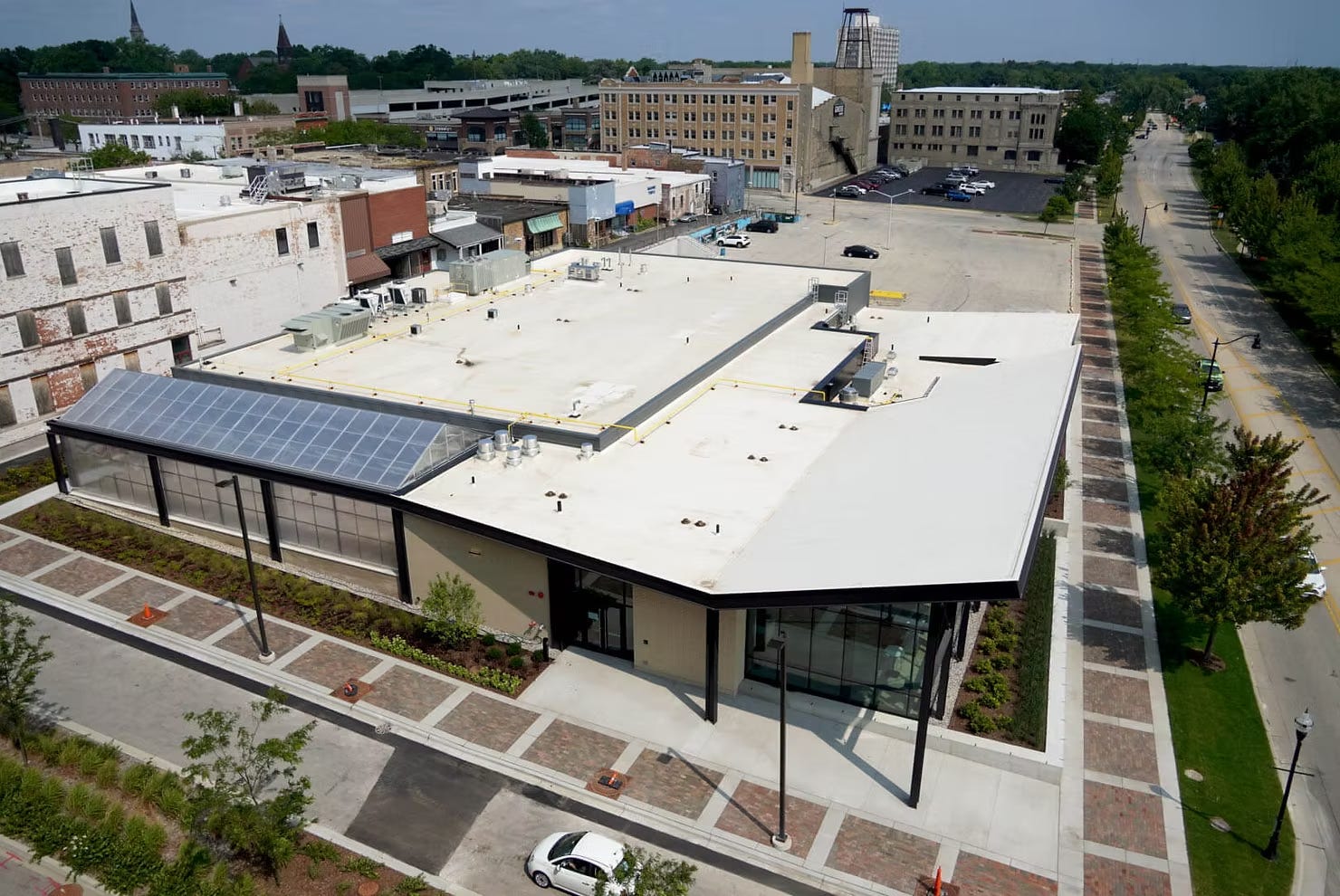
Note: If you want to see the Urban Farm Center, you can view the exterior any time on Sheridan Road just north of Washington Street in Waukegan. Be sure to make some time for the splendidly restored Carnegie Library kidde corner to the UFC. A “soft” UFC opening on October 17 will be during Waukegan’s monthly ArtWauk and “Zombie Walk” event (from 2:00 p.m. to 6:00 p.m. The center will open to the public in January.
Vincit Omnia Veritas (in truth, there is power)
Please consider upgrading to a paid subscription. As a bonus, subscribers receive free access to my new book “The Natural Neighborhood,” which is serialized in this newsletter: A new chapter every month. To contact me about speaking and writing or offer even more dangerous ideas, email me: johnwasik@gmail.com
No posts
Comments
Nothing yet. Say the first thing.
Sign in to join the conversation.