
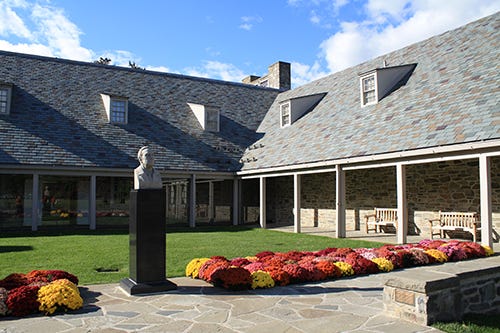
I have visited here quite a few times. The first visits would have been part of elementary school “field trips.” However, the last time was only a few years ago, when, as an adult, I felt the whole facility showed a great deal of architectural restraint.
FDR first floated the idea of the library in the late 1930s. These were decidedly different times; to illustrate that, in 1939, the Roosevelt family deeded the land to the government, and FDR himself did the first architectural sketches, as shown below:
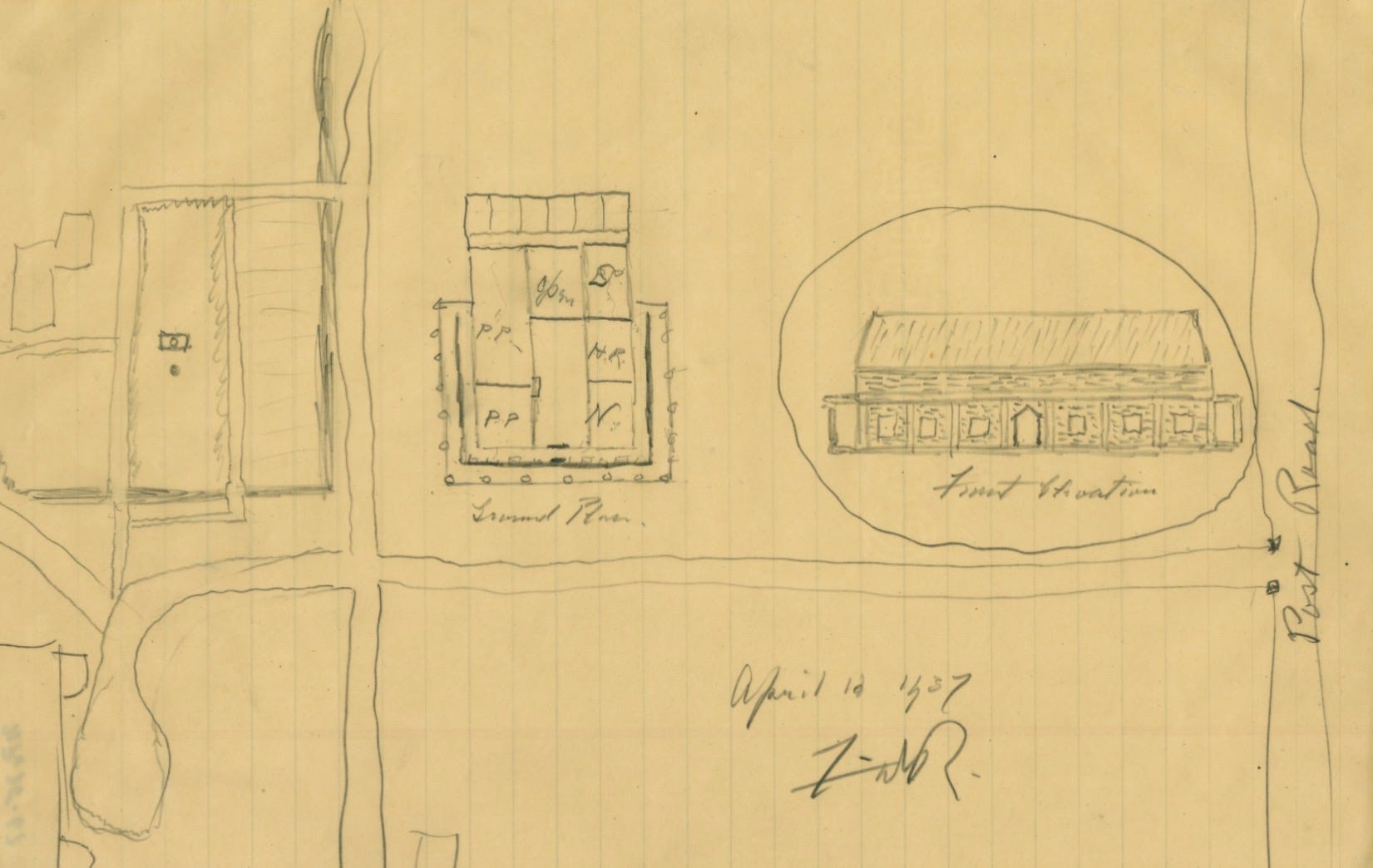
The original Roosevelt design called for Dutch Colonial architecture, utilizing local fieldstone and timber. The resultant project looks very much like the initial FDR idea. The President would eventually turn the architectural work over to Henry Toombs and finally to Louis A. Simon.
If you are in the metro New York area and are looking for a low-key historical destination. This library provides a great deal of information, just a short trip north of Manhattan in the Hudson River valley.
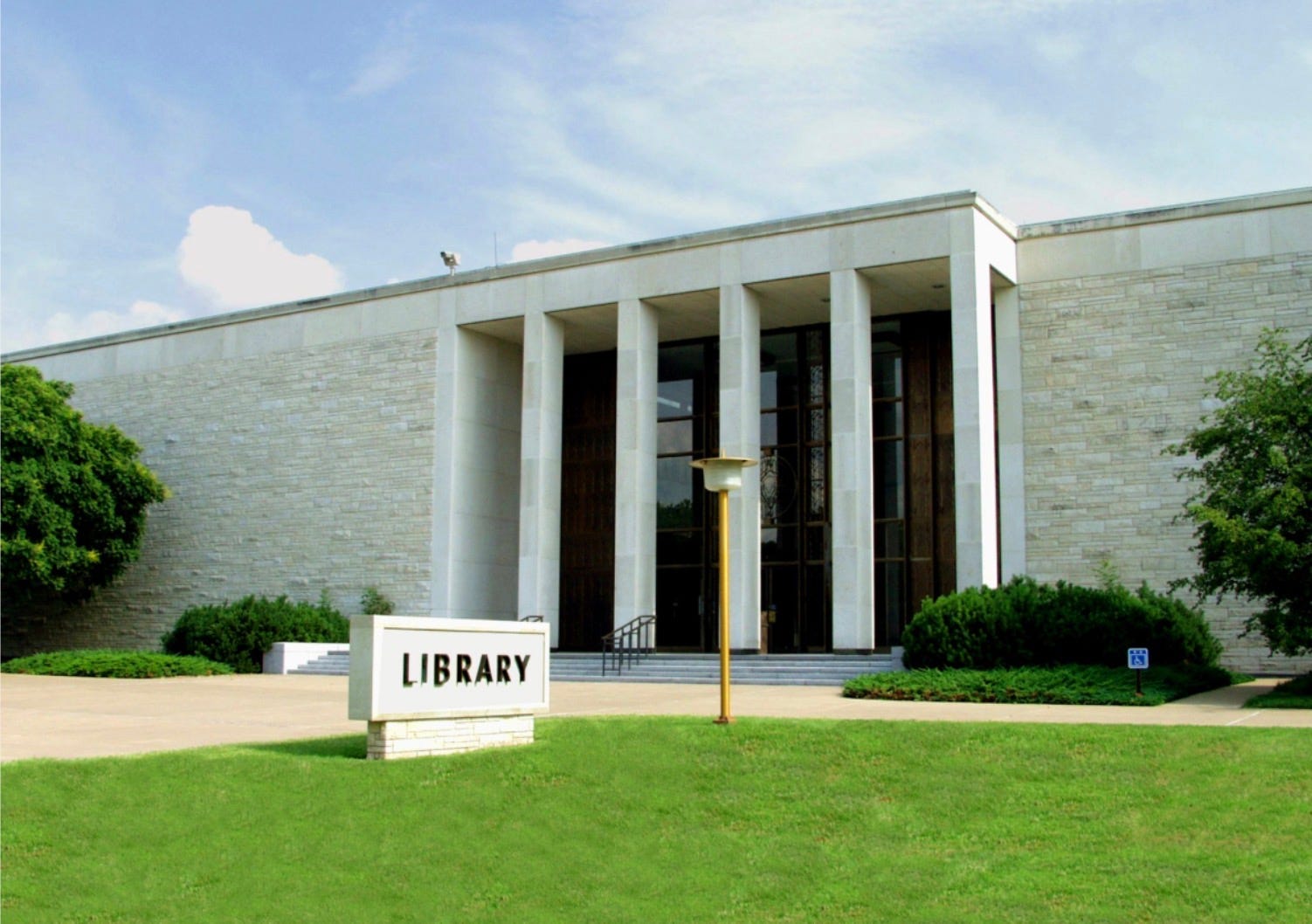
The Eisenhower Library and Museum is not the sort of flamboyant work by a celebrated architect that typically comes to mind when discussing “Architecture for the Soul.” Rather, it seems fitting for an all-American soldier, war hero, and president, who carried himself with humility and an unassuming manner. In keeping with this personality, the library and museum appear to be perfectly suited to serve as a community college building anywhere in America, which is, I expect, exactly what the General [as he preferred to be called post-presidency] wanted.
The night before D-Day, Eisenhower penned a letter to be made public in case the invasion failed to achieve its objectives:
Our landings in the Cherbourg-Havre area have failed to gain a satisfactory foothold and I have withdrawn the troops. My decision to attack at this time and place was based upon the best information available. The troops, the air and the Navy did all that bravery and devotion to duty could do. If any blame or fault attaches to the attempt it is mine alone.
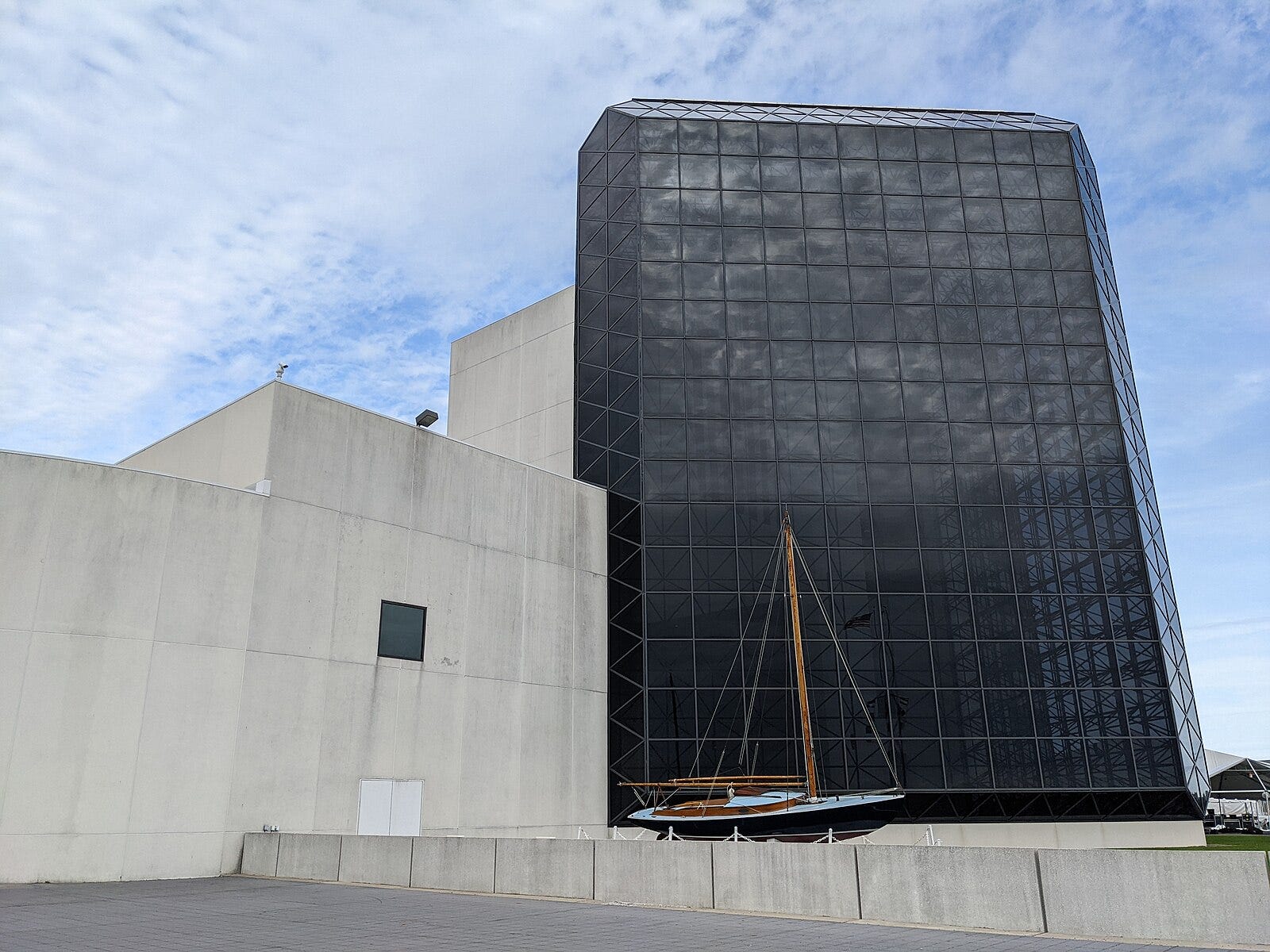
In November 1963, President John F. Kennedy was assassinated in Dallas, Texas. I was in grammar school, sitting in Mrs. Vianni’s class in suburban New York, but I remember it like it was yesterday. We now know that, prior to his death, the President had visited the Boston area to begin selecting a location for his Presidential Library. Somehow, after his murder, the family carried on. They decided on a waterfront site in Dorchester.
The process of selecting the architect became the stuff of legend. The advisory committee named to help in the process included Mies van der Rohe, Louis Kahn, Alvar Aalto, Hugh Stubbins, Pietro Belluschi, and Benjamin Thompson. In the end, according to the museum website:
Jacqueline Kennedy played a major role in the selection of I.M. Pei to be the architect of the Kennedy Library. At an early meeting in 1964, Mr. Pei explained to Mrs. Kennedy, somewhat apologetically, that as a relatively young architect he had not worked on monumental projects. Though relatively unknown and obscure at the time, Mrs. Kennedy nevertheless selected Pei.
The architect was selected in December 1964, but due to more factors than can be chronicled here, the groundbreaking did not occur until June 1977. Pei considered it to be quite an emotional project. His clients were, after all, not only Jackie Kennedy and the Kennedy family but the American public in general and the donors in particular.
I.M. Pei commented that his selection of the white concrete reflected his thoughts that the building, given its proximity to the water, made it a lighthouse of sorts. I confess to having never been inside. But the architect succeeded in creating a symbiosis between the sea and the structure, contributing in no small measure to the Kennedy legend.
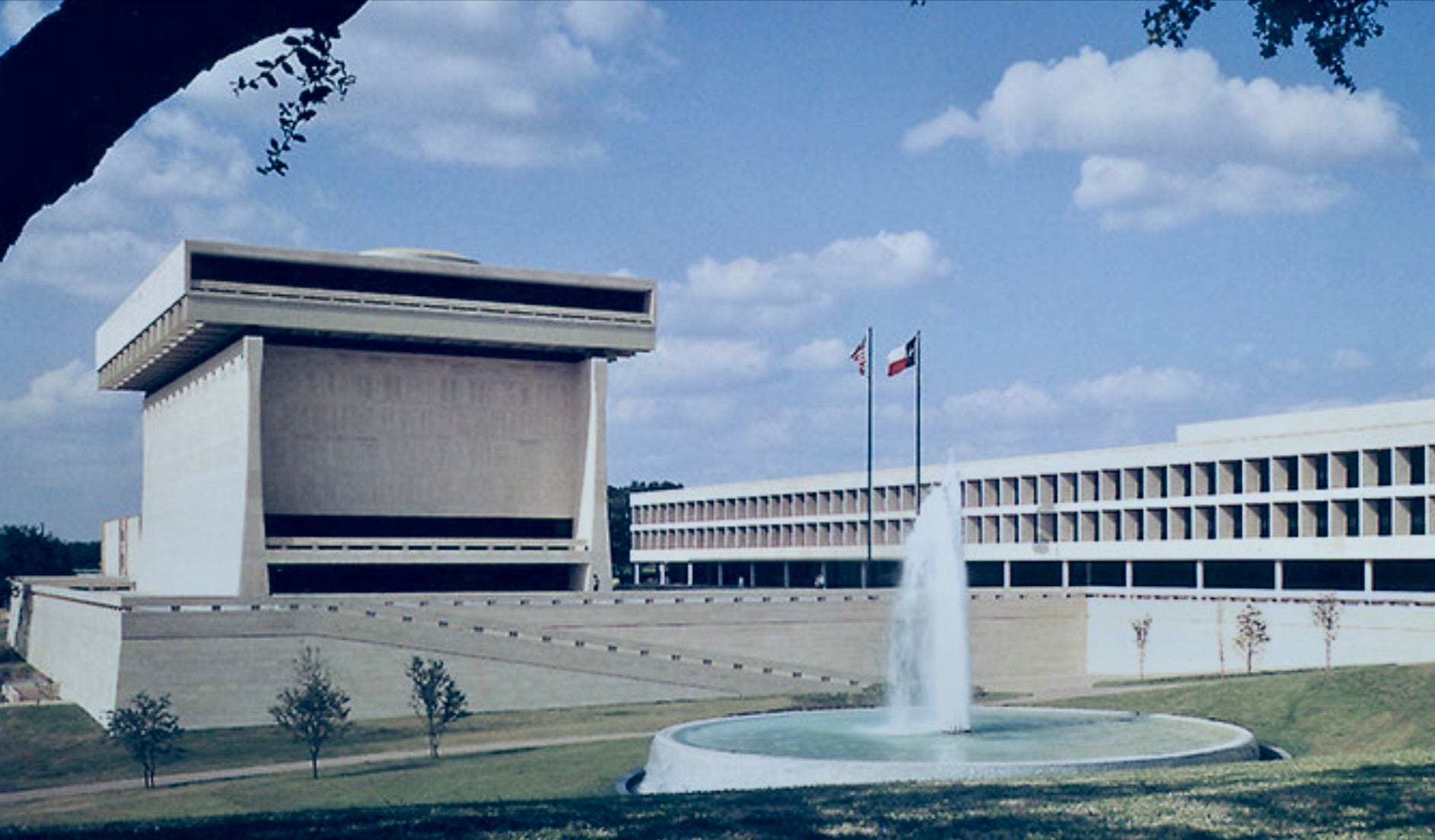
Situated on the campus of the University of Texas in Austin, I was surprised, in researching this post, to learn that Gordon Bunshaft and SOM had designed this Library. Maybe the combination of the “big city” architects and the decidedly not “big city” President seemed odd. More clarity on this later.
The general concept and preliminary planning for the LBJ library began soon after his landslide re-election in 1964. The University of Texas at Austin provided the land and a portion of the funding.
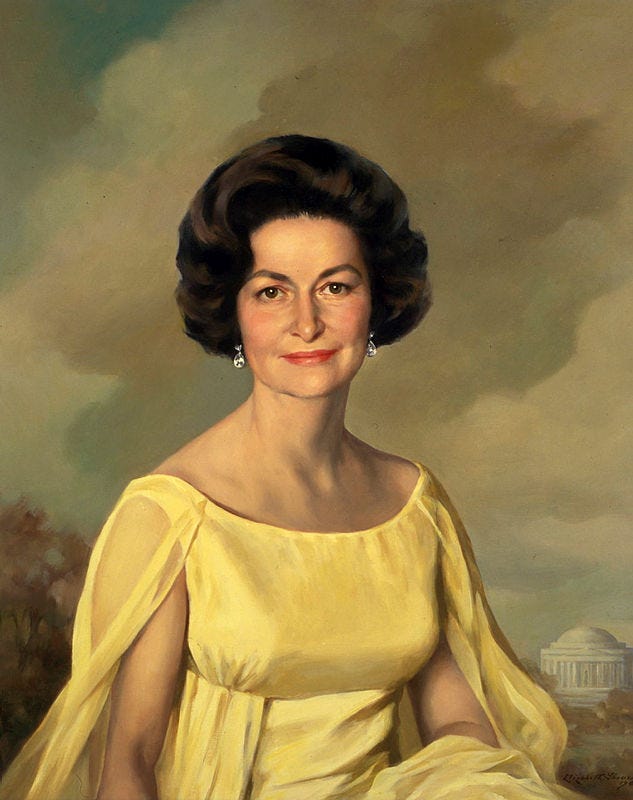
In my memory, the First Lady, Lady Bird Johnson, was very active. One of her major causes was beautifying our highways and public spaces in general. But for our purposes today, Lady Byrd was extremely influential in the planning of the building, going so far as to tour existing Presidential Libraries around the country, and was instrumental in the selection of SOM and Gordon Bunshaft as design architects.
The Texas Architectural Society, in giving an award to the building, had this to say:
Designed by SOM in association with Brooks, Barr, Graeber & White, the library houses a collection of material from President Johnson’s entire political career. The 10-story, travertine-clad building’s signature space is its Great Hall, which prominently displays four floors of archival stacks that contain 45 million documents from Johnson’s term as President of the United States
I have seen the LBJ twice, but I never went inside. Despite being clad in travertine, the building resembled a concrete example of “Brutalism.” Which is not my favorite.
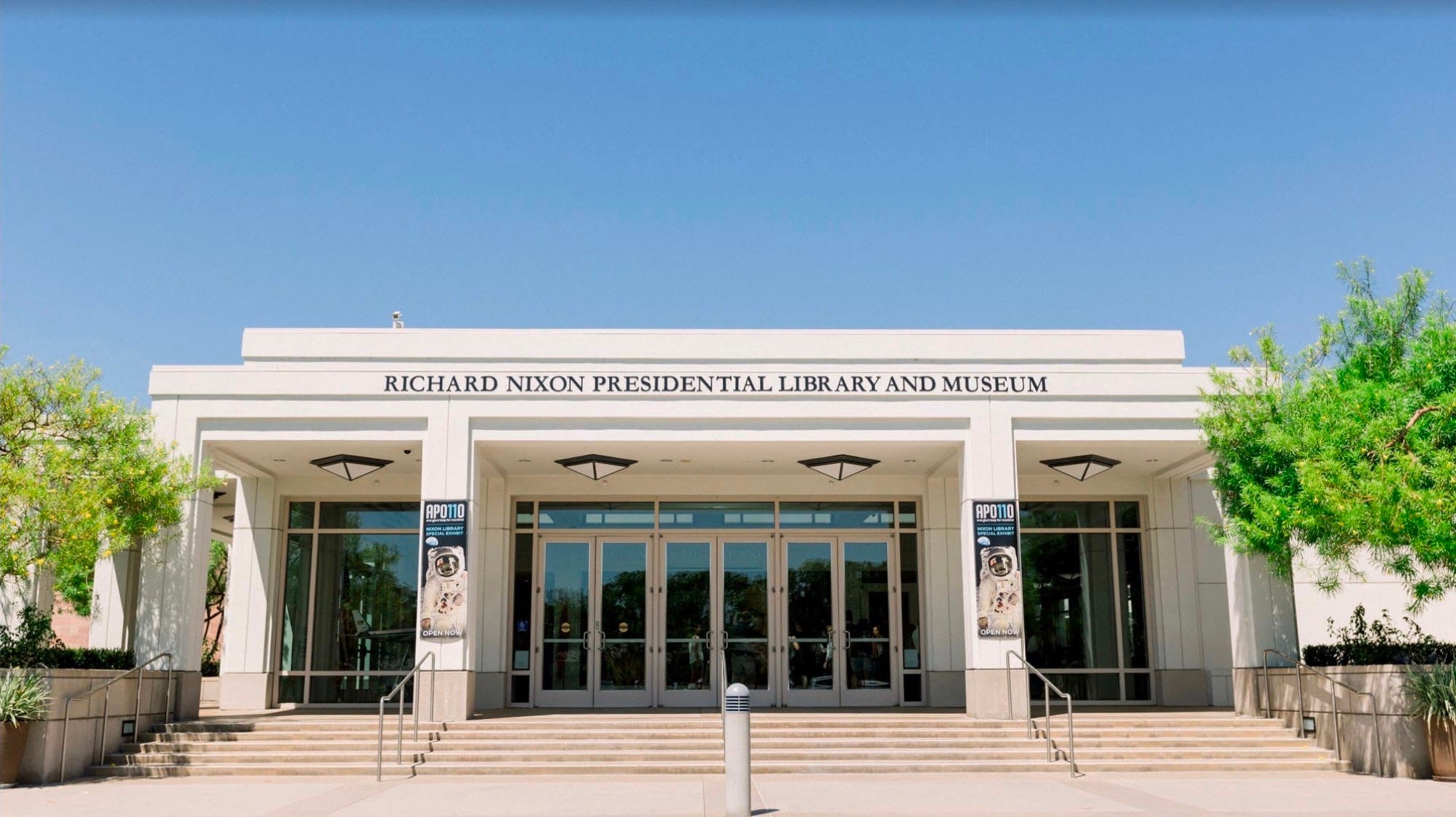
The library was initially intended to be built at Nixon's alma mater, Duke University. After considerable protest from a group of Duke faculty members, this idea was abandoned. In 1990, the Nixon Library opened in Southern California on land formerly owned by the Nixon family.
Leon Whiteson, writing in the LA Times, explained his view of the library architecture:
Designed by Langdon Wilson Architecture & Planning, a national firm headquartered in Newport Beach, the library is a fine and appropriate building with no pretensions of being a great act of architecture. Its style expresses the down-home, ordinary-guy side of Nixon’s character rather than the ambiguities of his complex soul.
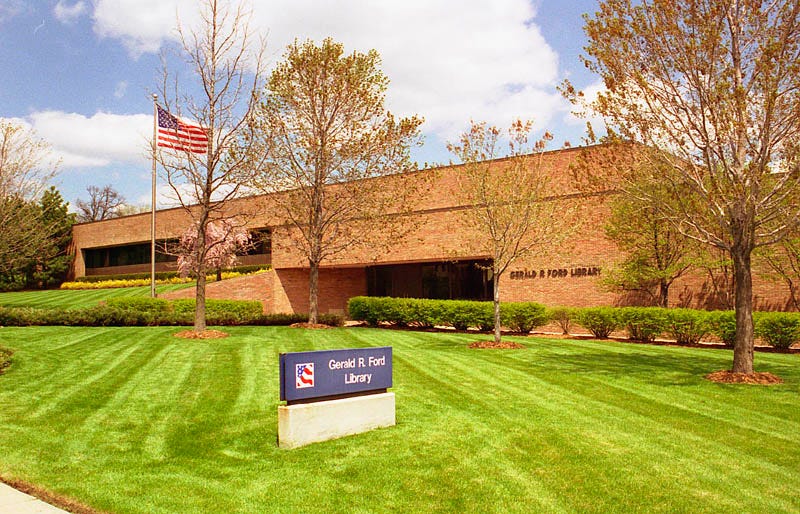
The Ford library was designed by Jickling, Lyman, and Powell Associates based in Troy, Michigan.
Writing for Dezeen, Ellen Eberhardt briefly described the architectural design of the library:
The mostly brick structure features clean lines and light orientation typical of midwestern mid-century modern architecture.
This building is similar to the Eisenhower Library in that its straightforward, unadorned structure certainly seems to reflect the man.
It is appropriate that the Presidential library of a true “Michigan man” like Gerald Ford is located on the campus of the University of Michigan. Of note, the Ford library in Ann Arbor is separate from the Ford museum in his hometown of Grand Rapids. If my research is correct, this is the only instance where a President’s library and Museum are not co-located.
The original subject of this post was the newly opened Obama library. It quickly became apparent that the broader topic of Presidential libraries was a more appealing write and hopefully a better read. But very soon after that decision came the realization that 10 or 11 Presidential libraries would require a part one and part two.
Stand by for a second post covering the Truman, Carter, Bush, Clinton, and Obama libraries
No posts
Comments
Nothing yet. Say the first thing.
Sign in to join the conversation.