
“We read from our history books / and saw how our hopes were dashed against the rocks / except for the few less spectacular / who were more determined / and did succeed to a certain extent / but were forgotten anyway”
(Honor Role, “Throwing Rocks”)

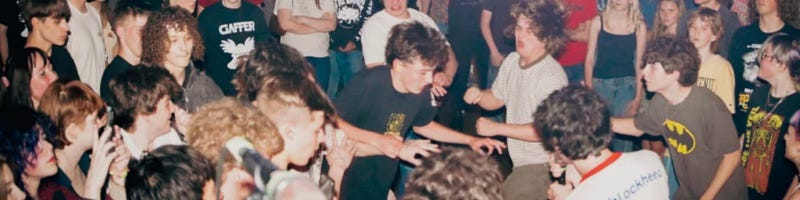
For suburban kids in the 1980s (and 1990s, and apparently last week), the most essential element of a strong punk and alternative music scene was arterial.
If you hung out with me back in the day, you know that the Huguenot Bridge and Powhite Parkway were essential capillaries that gave us relatively fast access to the action downtown.
For a long time those two roadways, and the University of Richmond radio station, and Plan 9 Music helped keep the blood of eclectic kids in Bon Air and Midlothian oxygenated.
It looks like nothing’s changed.
My conclusion after stumbling upon an article about the band Gaffer. Gaffer is made up of four high school students in Chesterfield who played their first real breakout show at the Greenfield Community Center off of Robious Road. Now they play downtown.
And like all the bands and musicians with Southside roots that came before them — Graven Image and Honor Role, Aimee Mann and The Dads, The Others and the Eccentrics, and Pavement stalwart and hype man Bob Nastanovich — they found their way downtown as soon as someone’s learners permit allowed.
It wasn’t unusual to cross the Huguenot Bridge a half dozen times in a day — Plan 9 after school, then driving everyone to a show, then driving someone with an early curfew home and heading back downtown for the headliner. Then driving home again.
But back to Gaffer, the emo band from Southside. Their first album has just been released on Ephyra Records, and a recent profile in Idiot EQ magazine tips the hat to both their suburban roots and their emergence downtown at spots like Gallery 5 and Black Iris. And their origin story doesn’t feel too different from the bands that came before. Same arterial network. They just have email now:
Richmond’s the kind of city where this band makes sense without much explanation. Eli’s uncles were all in Richmond bands. Henry’s dad was in tons of them. The four of them grew up around instruments and shows.
Most of Gaffer’s gigs they book themselves, the way Eli booked Ephyra, sending emails all day from school to spots like The Camel and Gallery5, usually splitting bills with other high school bands.
Selling shirts at a show on a Saturday and seeing them in the hallway on Monday is one of the parts of being in Gaffer that keeps coming back up. “When we sold shirts at our last show, we went to school the next day and saw so many Gaffer shirts,” Eli says. “It was a really awesome feeling.”
The bands change. The music changes.
And the Huguenot Bridge keeps making the connections.
I had an idea last week, and true to form it got bigger, then smaller, and then I discarded it, and then I breathed life back into it.
And then decided: one step at a time.
The idea: Hot Analogue Summer. I put away my TV and laptop. Set aside my phone and Kindle. Pick up a paper book and go outside while it’s still light out. And then I read until it’s dark. At least one night every other week — when the kids aren’t with me — until the end of September.
What my brain did: Took the simple front yard reading idea, and expanded it into a sort of Moveable Feast (of words and ideas) that hops around to various spots in town to read. And then it snowballed. Invite friends to join me or announce it on Facebook, and see who shows up. And not read because everyone will talk, my brain interjected. And then my brain asked why I needed to announce anything to begin with. And quickly replied to itself that I like spending purposeful time with my friends and random interesting people. And finally, exhausted, I turned my brain off and said, never mind.
I’m doing it anyway.
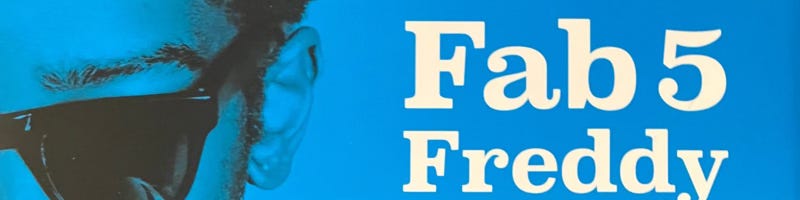
The first week is ready. I’m going to be in Norfolk for a few days for work. Hotels are traps after a long day of work. Zero social pressure. The laptop and TV make for easy evenings. Empty calories for the brain. So I’ll find a spot on the Elizabeth River and crack open “Everybody’s Fly: A Life of Art, Music, and Changing the Culture” by Fab 5 Freddy of the Fabulous Five.
The next week will be the week of July 13. Date and place TBD. I have “Exit Party” by Emily St. John Mandel, “Ransom” by Daniel Silva, “A Swim in a Pond in the Rain” by George Saunders, “Gilead” by Marilynne Robinson, and “Tomorrow, and Tomorrow, and Tomorrow” by Gabrielle Zevin in the queue.
The Norfolk trip gives me a secret door to trick my brain. The week of the 13th will be interesting as my introverted mind and my social heart wrestle for the map. I’ll keep you posted.
You might want to pick out a good book. Just in case.
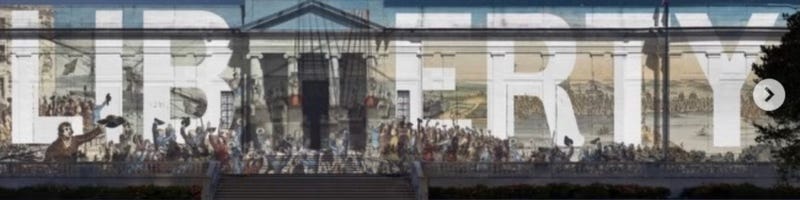
Word on the street is that the 250th IllumiNATION at the Virginia Museum of History and Culture was a standout event.
“A really unifying moment,” a trusted source texted me.
Jack and I went on the first night, this past Thursday. Because me, we arrived early and scored parking — and were first in line at Timber Pizza truck. It was hot. We circled the building exterior twice, saw some friends, listened to some fife and drums. And then Mr. Wake at 3:30 in the Morning (Jack) realized he was tired.
So, we got ice cream from Westray’s Finest and headed home. And missed the big illuminated wall.
On the way home, we talked a bit about America’s 250th birthday celebration. His YouTube news and culture sources have left him a bit jaded, but he’s also been disappointed by our two semiquincentennial events to-date.
“Maybe the 252nd will be better,” he said. “When we have a new president.”
“253rd,” I said, adding, “the new president won’t be in the White House until 2029.”
Silence from the back seat.
“Maybe we’ll have a funeral if Trump doesn’t leave office,” he said.
I didn’t get what I expected, or thought I wanted, from a New York Times column about divorce this week.
But it did get me thinking about memories. And reminded me why I write this weekly newsletter.
The first Christmas after I was separated, I gave each of the kids a small box with 100 tiny photos. Mostly different photos. A collection of small moments from birth until that difficult autumn to remind them that they came from a family, that they were loved, that over the course of their lives they each had moment after moment of happiness alone, with their friends, with each other, with their mom, with me.
Proof.
That small moments, ordinary moments, matter. They accumulate. They persist.
And they never truly go away.
The boxes were for them. But they were — obviously — about me.
Proof that I had accumulated a great deal of joy — often in small doses, but real and significant. I had artifacts, and photos. Tangible images that confirm my memories of the journey. (Except the DC trip that the kids and I remember; their mom doesn’t; we have no photos of. Did it happen? Who knows.)
Documenting the past keeps me from spiraling out into space. That’s what this newsletter does. It grounds me in the moments. And it helps me to remember — my mom, Bill Martin, Jack’s funny moments, Thea’s graduation. Evidence that love never dies — that our relationships, even with those who are dead and those we haven’t met yet, will remain alive for as long as we can remember.
Trails of breadcrumbs. Small boxes of tiny photographs.
Revolution Summer is ready to be sprinkled with pixie dust and shared with agents and publisher — and Off Belay is going under the editorial microscope in July.
I’m heading to Saxapahaw, North Carolina, with the kids this weekend. My dad and stepmother lived just south of the town in the middle of a small Quaker farming community. We’re going to visit family friends while we can. But also to walk the Haw River Trail, explore the town and its farmer’s market, test the geography.
The town (thinly veiled with a different name) and the river are the physical spine of my fourth novel, LeGrange, which is next up for editorial red ink. Perhaps by early fall. A taste:
He paused once more, listening. The two-syllable whistle of an Eastern Towhee rose from a nearby branch. Beneath it, lower and further off, the mourning dove. A piccolo and a cello.
That’s when he saw it from the corner of his eye. Something grey and vertical that hadn’t been there on a thousand other mornings.
He left the trail and made his way to the river bank, studying the cairn as he approached. It was rougher than the ones he knew from out west — stacked layers of slate-blue volcanic stone mixed with chunks of black basalt and bright white quartz. Two dozen rocks, hand-sized and smaller, nestled in and rising from a tangle of sycamore roots. A weathered hand cradling a wish-making stack of stone.
He settled onto a nearby trunk. Listened to the murmur of the water. Let his mind wander north along the watershed. Swepsonville, Graham, Altamahaw, and beyond. A thousand-mile system of trails stretching from the western mountains to the Outer Banks.
Comments
Nothing yet. Say the first thing.
Sign in to join the conversation.