
“You said, don't go get all in your head about it
Baby, that's the only place I know”
(Sorcha Richardson, “Illinois Again”)

It’s a Friday night in June.
I’ve finally seen a doctor about the pinched nerve in my neck, but my shoulder blade is on fire. Writing hurts. Watching TV hurts. I’m standing in front of an open refrigerator thinking about dinner.
But I’m not really hungry.
What I want is connection. Another human being across the table carrying curiosity and stories. Maybe a bad joke.
I open Facebook and start composing a post in my head. “Anyone want to grab dinner tonight?” Then I roll my eyes and close the laptop without typing a word. It’s the kind of thing people post when they want to look spontaneous but are really just taking a census.
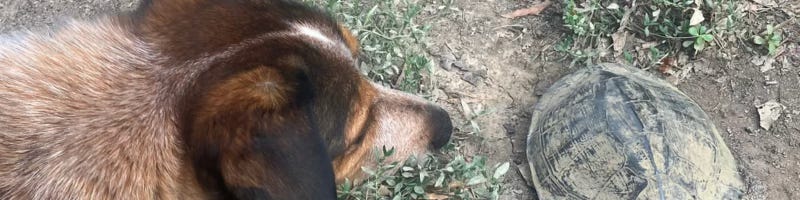
I stare at the dog side-eyeing me from the other end of the couch. She is completely indifferent to my existential crisis.
By most measures, I’ve got a solid relational circle. The week behind me had been full despite the shoulder: a work trip, dinner with a friend in Charlottesville, drinks one night, a drive to Norfolk for Echo & the Bunnymen, lunch with Sam, long walks with Addie, long walks with friends.
I don’t lack community.
And yet here it is again — that familiar ache. The quiet desire for another human being to lean forward over the table and tell me about their kid’s first year of college, or sketch their vegetable garden on a napkin with the kind of enthusiasm that only makes sense to them. Someone who texts back, “Sure. See you at seven?” Probably with a really stupid emoji.
For most of my life I’ve believed every yearning has an object, every ache a cause. That there’s a treatment plan for every longing. My consulting work is built around root causes and finding new paths forward — “creating a future that’s different from the past.”
And don’t get me started about parenting.
But sometimes the thing beneath the thing is just more of the thing. Not another answer. Not another diagnosis. Just a human feeling asking not to be solved quite so quickly.
A friend recently pointed me toward an essay that introduced me to a line from Sufi mysticism I haven’t been able to shake:
“I was a hidden treasure, and I wished to be known, so I created creation that I might be known.”
It’s attributed to God. God wanting to be known.
I don’t know what I believe about God on any given Tuesday. But I know something about wanting to be known. Seen. Heard. And I know the feeling of treating that want as a problem — a thing to diagnose, to craft an origin story for, something to repair.
But the water below the waterline is just more water. Different water. The garden on the napkin is just a garden. A different garden.
Perhaps they don’t need to be more than what they are.
Jack asked me recently what we might see if humans had twenty-three kinds of cones instead of three. We made a list together: ultraviolet light, gravity, ghosts, other dimensions, love, loneliness…
Hidden treasures.
Another line from that essay that stuck with me: May the heart stop mistaking its depth for damage.
I’ve spent years assuming the ache itself was evidence that something was broken. That if I understood it well enough — if I traced it back, named it, repaired it — it would finally disappear.
Maybe that’s true sometimes.
But perhaps the ache is just pointing at itself. A treasure that wishes to be known.
And maybe that’s why we tell each other stories.
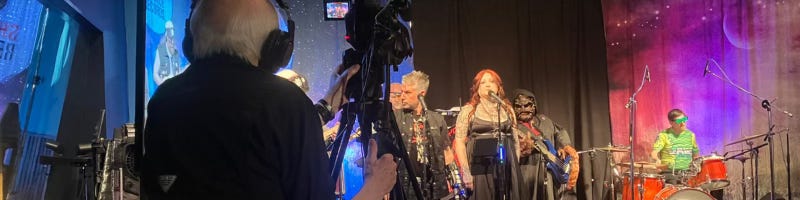
** not Nick Cave pictured above…
I’ve been living life with the addled confusion of J. Alfred Prufrock recently, sparked by the occasional moments when I look across a table mid-conversation and realize I’m sitting on the hinge between mid-life and end-life.
(I mean, I hope I’m on the hinge and not beyond it.)
This morning I sat down to write and my pinched neck mess — which has descended from probably a 9 to a 2 on the Pain Crescendo Threshold™ over the past two weeks — flared up.
But because I am youthful, I persevered.
Wincing.
Then musician Nick Cave, who at 68 remains both wiser and significantly older than me, perfectly captured the strange comedy of aging in a recent Red Hand File:
“This morning I wake feeling great. … I stand before the bathroom mirror, my piercing blue eyes looking vital and dangerous, and my hair sleek and black as a fucking raven’s wing. I bound out of the hotel … [but] up ahead, two old people shuffle towards me … saying unbelievably depressing things like ‘We’ve been fans for half a century’ [and] how her mother used to love me, her fucking mother! … Then, I suddenly realise … the worst thing about being an old rockstar is that the old rockstar’s old fans don’t know how to work their fucking phones. The couple stand there, jabbing uselessly at their screens … and I try to help them, but I don’t know how to work their phones either.”
I laughed out loud.
I also felt seen.
Not completely seen.
Give me another decade.
There’s a new place to go on the inter webs to find ways to connect in RVA.
It’s called the Social Connectory, and I have to admit I didn’t really get it when Risa Gomez first told me about her idea sometime last winter on our way into a Many Hands (aka Mindful Mornings) morning event. She said [something coherent and clear] and I heard another online event calendar.
It’s not that. Not at all.
The Social Connectory is exactly what its tagline says: FIND YOUR PEOPLE. SHOW UP.
Or an online hub that gathers a gajillion events, clubs and gathering spaces in an organized way so that you can find the people and places and activities that light you up. And then tear yourself away from your socials and go out into the light of day to engage with human beings in a multi-dimensional way.
There’s a simple directory. There’s a simple search feature. And when you find something that taps your inner chime, go check it out. That’s how I found Butter & Filth Pole and Aerial and decided that my comfort zone lived in a different reality — like maybe Goat Yoga RVA.
Anyway, literally dozens of organized pathways to light up your life — a place where your existing passions can be amplified, or a new passion can be explored. Go forth and connectory.
I have good news, and I have more good news.
My writing coach said very nice things about Revolution Summer in her latest editorial letter—a mix of critique, guidance, direct feedback, and assignments. Which, oddly enough, is exactly what you hope for from a good editor.
Even better, we had a banger of an editorial call this past week and identified two key adjustments that will make the novel ready for prime time.
Which is to say: ready to begin earnestly pitching literary agents and independent publishers.
Heather may also help me tighten the final seams of Off Belay, the novel I somehow wrote in two weeks back in early May.
That means I have a very clear target.
Two novels ready to pitch at the James River Writers Conference in late September, after the Hopscotch and Iron Blossom festivals, natch.
Unbelievably, the 27th running of the JRW Conference will be the first one I’ve attended. (Something something courage.)
A simple blocking and tackling update: Two novels deep in revision with a goal to have them ready to pitch before summer bows its weary head. Fifteen months after I started writing my first novel.
When the global ecosystem finally fails, it’s likely going to happen in the Atlantic. But we may not know about it until it’s too late.
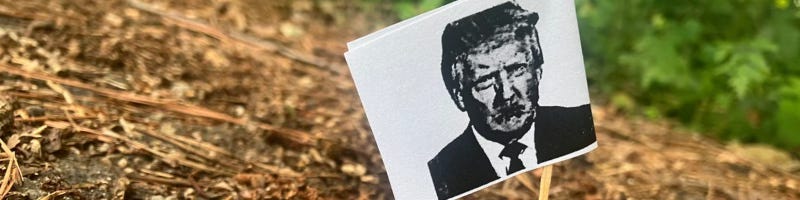
Now that the Trump administration is dismantling the Ocean Observatories Initiative, a network of 900 deep-sea and surface sensors, it’s increasingly likely that we’ll all be very surprised when the Atlantic Meridional Overturning Circulation (Amoc) finally stops circulating.
The Amoc is a system of Atlantic Ocean currents that move heat from south to north, regulating climate the way a good circulatory system does. Like any good system, it benefits from continuity. And when its gets overloaded — say by too much cold water, or disruptive circulation from neighboring systems — it falls apart.
It last fell apart 12,000 years ago. It took 1,000 years to reset. And in that long window of time — 40 generations of people — Northern Europe, parts of northern Asia and North America were glacially cold, while the southern hemisphere baked.
It’s the sort of climate event that happens fast, once the current shuts down. It’s already weakening, and the chance of collapse is increasing. And now we have one less way of knowing what’s really happening.
Comments
Nothing yet. Say the first thing.
Sign in to join the conversation.