
You walk into the study and the first thing that hits you is books.
Shelves of books, floor to ceiling, spines worn soft from being pulled down and read so many times over the years.
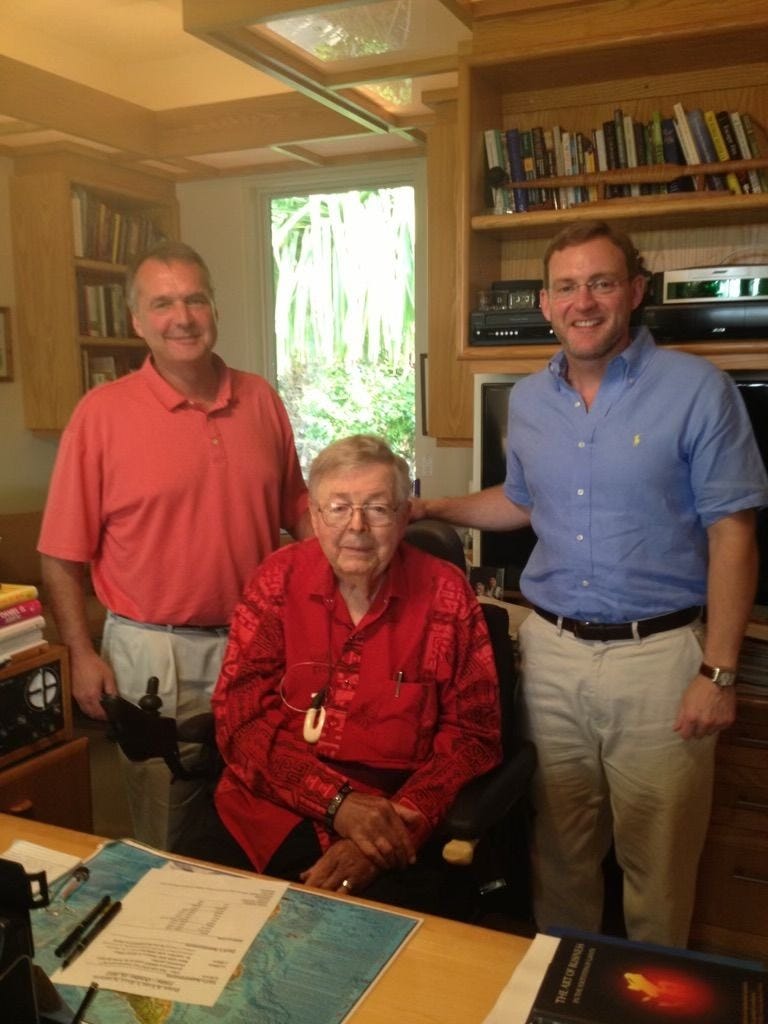
It’s 2014 and I’m just about to have a private audience with Earl Bakken, the founder of Medtronic and inventor of the pacemaker.
Earl sits in front of me, wearing a red, patterned shirt, the kind a man wears for comfort in tropical weather. Reading glasses hang from a cord around his neck. A nautical chart lies open on the desk in front of him, like he’d been in the middle of plotting something before we walked in.
I was told I’d have thirty minutes with him.
But that short visit turned into several hours.
Bringing Muhammad to the Mountain
I’d been involved with Medtronic over the years, through consulting work and a young patient of mine in Cincinnati who was among the first in the country to receive one of their defibrillators. The Medtronic Christmas Conferences were truly inspirational, patients and their families getting up on stage to tell stories of how Medtronic devices had saved their lives.
There was never a dry eye in the house.
My patient told one of those stories.
As a 12-year-old, she survived a sudden cardiac arrest with no obvious explanation. At the time, there were no approved pediatric defibrillators, so her care required a special FDA exemption. Jim (pictured), then working with Medtronic, was part of the team around that effort and stayed connected to her story over the years. A Medtronic device saved her life.
A decade later, when she became my patient, we were able to trace the event to a genetic defect she shared with her father and, we later found, her own son. That discovery opened the door not only to preventive treatment within her family, but to a broader series of FDA exemptions for other families carrying the same defect..
That connection pulled me further into their world than I expected. It was the beginning of a decades-long connection to Medtronic. And so when I mentioned to leadership that I’d love to meet Bakken if he was ever coming back to Minneapolis, they didn’t wait for him to travel. They flew me to Hawaii to meet him instead.
As they say: if the mountain will not come to Muhammad, then Muhammad must go to the mountain.
The idea that spawned a market
Earl Bakken co-founded Medtronic in a garage in Minneapolis in 1949 with Palmer Hermundslie, the two of them fixing hospital equipment to pay the bills.
A few years later, Bakken built the first wearable, battery-powered pacemaker, and in doing that, he built not just a device, but an industry that hadn’t existed previously. There was no such thing as a battery-powered pacemaker before Bakken made one.
Like all great entrepreneurs, he didn’t just create a product. He created the market.
By the time I met him, Bakken had long since retired to a self-sustaining estate on the Big Island, black lava rock stretching out past the windows in every direction. His own water system. His own power. A man who’d spent his life inside hospitals had built himself a home that was completely self-reliant, which tells you a lot about the man himself.
He sat across from me in his wheelchair. He was already advanced in years. He was also, unmistakably, still bright as a tack.
We talked for three hours.
Eventually he reached into his pocket and pulled out a small envelope, the kind you’d use for a business card. He tipped it onto the table between us. A tiny silver object rolled out, no bigger than a coin. It was an early prototype of a leadless pacemaker. The future of his own industry, carried around in his pocket like spare change, shown to a junior cardiologist he didn’t really need to spend time with.
He wasn’t showing it to me the way you’d show off an old trophy.
“What do you think?” he leaned in and asked. “Think people will trust something this small?”
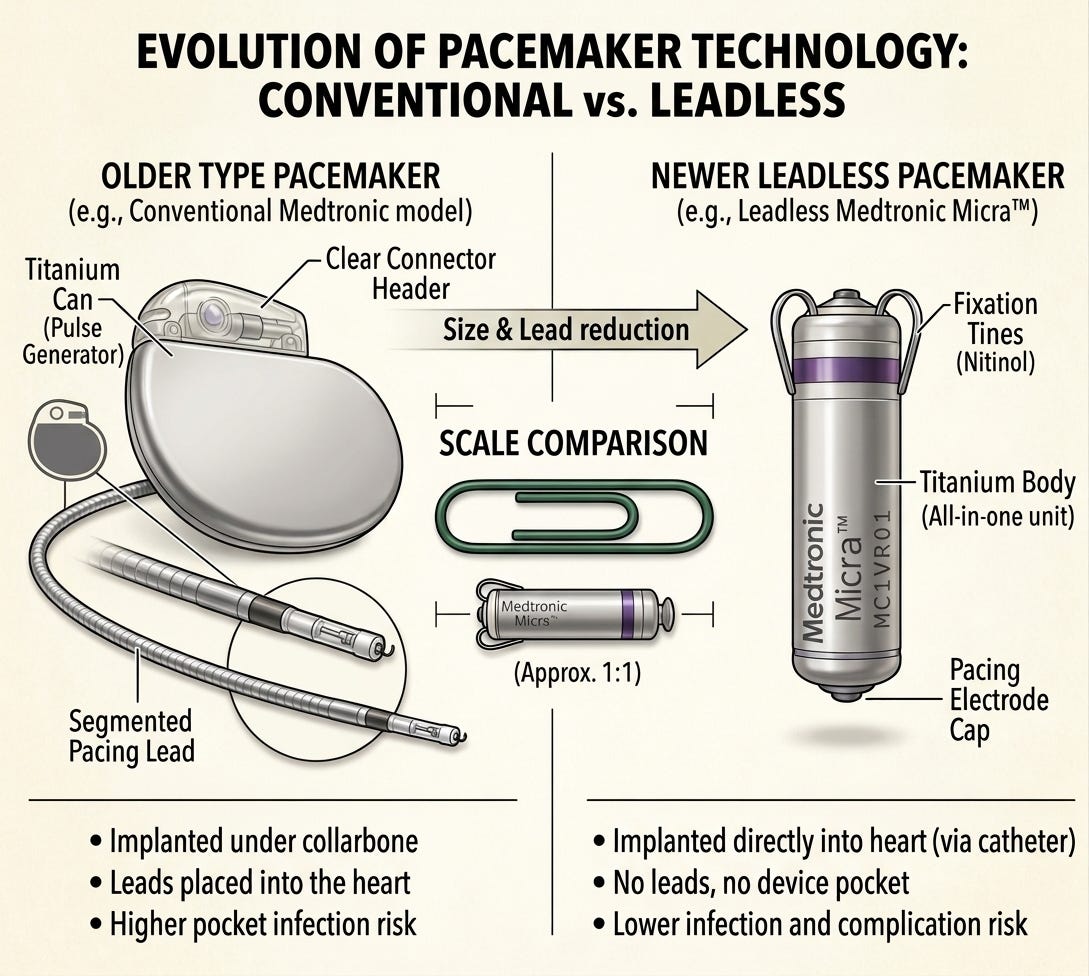
He wanted to know where it might fail. Whether cardiologists would trust something leadless like that, which was a huge innovation at the time.
Here was a man in his eighties, decades removed from the garage where he built his first device, still asking a stranger for notes on his next one. He was running a program he called Earl’s Garage at that point; getting kids interested in electronics, the same spark that had once been his own.
Why the outsider perspective matters
Bakken wasn’t a physician. He never claimed to be one.
He was an engineer turned inventor who had immersed himself in the world of medicine.
But what he understood, better than most people who did have MD after their name, was that you’re not just treating the heart. You’re treating the whole patient.
He hated traditional hospitals, so he built one that wasn’t traditional. Patients admitted to a room got to choose which painting hung on the wall. Families could cook meals from home for their loved ones. Pets were allowed in.
It might seem like a small thing. But that simple act of giving a patient choice over their surroundings actually made a world of difference.
To my mind, Bakken wasn’t thinking about care as an intervention. “Care” to him was the whole environment around the person receiving it.
On the flight home I reflected on my experience.
Here’s what I learned:
You don’t need a medical degree to change how medicine is practiced.
Even the most important people can be gracious and generous with their time.
You can still innovate in later life.
What struck me most wasn’t the pacemaker in his pocket or the shelves of books.
It was that you’d never know any of it by talking to him.
He was humble. Gracious. Like many people I’ve met who achieve that level of success.
He didn’t need you to know. He just wanted to know what you thought.
Who’s the Earl Bakken in your corner of medicine? The outsider who saw something the rest of us missed because they weren’t trained to miss it?
#PhysicianEntrepreneur #PatientAdvocacy #Cardiology #HealthcareInnovation #BendingTheCurve
No posts
Comments
Nothing yet. Say the first thing.
Sign in to join the conversation.