
I recently delivered a talk titled Happiness is the Only Reason to Live to an audience eager to learn. They were interested in discovering ways to enhance their happiness through meaningful engagement both at home and within their community. None of the audience members were familiar with my bicycle accident or my memoir, Accidental Motivation. In addition to introducing myself and my accident, I took the opportunity to highlight my thoughts on happiness without delving into my philosophy of Selfish Determinism. This turned out to be a wise decision.
After my talk, there was a break, and I had the opportunity to engage with the audience. It was clear that my accident and survival were captivating, but the transition to my other points, including such a bold statement about happiness being the only reason to live, was met with healthy skepticism. Moreover, when I asserted that you can never really know anyone but yourself, that you cannot guess what will make someone else happy, and that positive selfishness is the way to prioritize your actions, it sparked numerous questions.
This was quite possibly the first time many had heard these ideas.
A group of five remained close as others came in and out of the discussion. Their questions highlighted an interest in happiness and quickly delved into other ideas from my memoir, such as free will, control, and determinism. I prefaced my comments with a disclaimer that each of these could be individual hour-long talks.
My talk highlighted happiness from my perspective—meaning this is what I found during my journey through life that led to my happiness. I did not tell them what they had to do, only what worked for me.
It was clear that many felt rewarded when giving of their time and money but had not thought about why that was the case.
Society and religion often herald and reward selflessness—acting for the good of others or for the common good. It is a motivational tactic to elicit behavior. Telling them that I benefited by being selfish—healing my body and mind, caring for my family, and pursuing my own happiness—seemed contradictory to everything they had been taught and believed.
When I used the term “Positive Selfishness,” I was referring to a selfishness that many agree with. It is moral and good to want to be happy and healthy, to care for your family, and to want to be the best partner, spouse, parent, or friend. Wanting these things for yourself is selfish by definition.
Even though I discussed positive selfishness and happiness, there’s more context I could have provided.
Happiness is the only reason to live. AND your happiness inherently includes the happiness of the loved ones around you. This means that you are happier when the people you care about are happier. In some cases, there is no way for anyone to be happy unless the loved ones around them are happy.
To be happy, you must know yourself, which means taking the time to reflect on what brings you joy and fulfillment. I chased the American Dream not because anyone ever said it would make me happy. I chased it because I knew nothing else and hoped that a good job, money, and material things would bring joy to my life.
The idea that you can only know yourself makes sense, but only after you talk through the influences in a person’s life. It’s hard enough to understand yourself and your motivations, let alone try to understand anyone else. Given that you can only truly know yourself, you start from what you know—yourself.
The statements “You can’t drink from an empty cup” and “Put your own oxygen mask on first, then help others” ring true. This is obvious in extreme situations, but people often fill the time and attention void between life’s necessities and get distracted. We all get distracted by our own thoughts, influences from our family and friends, or the countless others that want something from us that may not align with our needs, wants, and desires.
The pursuit of happiness in your life and the lives of those you care about requires conscious effort and intentional actions. Happiness is a journey, not a destination.
The topic of determinism was too deep for a twenty-minute post-happiness discussion. However, that did not stop me from trying to answer the question, “If I agree with the idea of determinism and that we don’t have ‘control,’ what does that do for me?”
Had I been better prepared, I might have responded like this: “If you recognize the limited control we have over events while understanding that we can still influence outcomes, you can focus on what brings you happiness, such as self-care, personal growth, and relationships. Embracing determinism means appreciating life’s journey without trying to control every outcome. Instead, you can influence your responses, decisions, and environment to create positive change.”
The key to success in a deterministic universe is understanding that we don’t have control and working with that knowledge.
As a father, I can influence my children by setting a good example—respecting everyone around me, living a good life, and setting boundaries for them with consequences for non-compliance. However, I cannot control them. I am one of millions of influences in their lives. The same is true for any relationship, personal or professional.
Willpower is sometimes described as self-control or self-regulation—the idea that if you put your mind to it, you can do anything. In a deterministic universe, that is absurdly false. External influences in our environment are constantly pushing you this way and that.
Some say willpower is overrated, and others say it is non-existent. Scientifically, there have been studies that show activity in the prefrontal cortex when someone is focusing hard on a task, but that does not confirm that willpower, as we understand it, exists.
At best, willpower is a dull tool that can be pointed toward an objective but is easily discarded when the next shiny object catches our attention. Think about it: Wouldn’t every person who wants to lose weight simply be able to concentrate hard, use their willpower, and choose to exercise more and eat the right food? We set ourselves up for failure anytime we rely solely on willpower.
To be successful at being happy or achieving any goal in life:
“Success comes from aligning our environments and habits
with our goals rather than relying solely on willpower.” — John Holsinger
Willpower can be seen as both a real phenomenon with psychological and neurological underpinnings and an idea that may not fully explain self-control. Its effectiveness may depend more on context, motivation, and the use of strategies that align with one’s goals than on an inherent ability to resist temptation. Ongoing research in psychology and neuroscience continues to explore the complexities of willpower and how it operates within the broader framework of human behavior.
I have appended my slides and notes that I used to prepare for my Happiness talk. I hope you have enjoyed reading this post. Your comments are helpful and much appreciated.
Hello, everyone. My name is John Holsinger, I grew just twenty miles away in Brookville, Ohio. I’m here to talk about a journey we all share—the pursuit of happiness.
Seven years ago, I experienced a life-changing event. A traumatic bicycle accident left me questioning everything I thought I knew about control, happiness, and purpose.
In 2016, I faced a situation that would become my worst nightmare and, ultimately, my greatest awakening. Five months after a difficult divorce, I joined the Bat City Cycling Club in Austin, TX, for a Memorial Day ride aptly named “The Fastest Labor Day Ever.” It was meant to be an exhilarating 60-mile ride with over fifty cycling enthusiasts.
At 8:30 a.m., I vividly recall the excitement of riding out of the parking lot. But my next memory was waking up in a hospital bed ten days later.
During the ride, as we sped along a bridge at 30 MPH, a cyclist ahead of me had a tire blowout. The chain reaction that followed led to a sudden stop. Being clipped into my pedals, I lost my balance and fell over the bridge, plummeting fifty feet onto the rocky riverbed below.
The accident left me bruised and broken—both physically and mentally. When I regained consciousness, I was diagnosed with global amnesia, unable to recall past events or form new memories. Confined to a hospital bed for two months, I grappled with some of life’s profound questions.
Amidst the haze of my recovery, one painful truth became clear: I was unhappy and had nearly died. It was then that I resolved never to let myself die unhappy.
It took me nearly two years to recover physically and mentally.
During this time, I spent much of my recovery on my own. I was divorced and my children were in school.
I realized that happiness is the sole purpose of life, and it was up to me to pursue it.

I grew up in a tight-knit, wholesome small town marked by simplicity and community. However, this idyllic setting was shattered by the untimely death of my father when I was ten. I was forced to confront the fragility of life and how it impacted my happiness.
Thrust into a role I was not prepared for, I became the ‘man of the house.’ This turmoil left me unhappy and searching for control—control over the unknown around me and control of my life.
This has influenced my approach to happiness, emphasizing the importance of living in the moment and cherishing each experience.
As I grew older, I pursued the American Dream through education, an Engineering degree from the University of Cincinnati, and a successful career in IT software sales with IBM, SAP, Software AG, and Oracle.
Like many, I believed that achieving the American Dream would lead to happiness. However, it did not.
My career in high-pressure sales was marked by stress and dissatisfaction. I hit awards but was left with a sense of emptiness.
At one point, I was traveling every week leaving Monday morning and returning Friday afternoon. In addition, international travel was required which took me away from home up to two weeks at a time.
The stress from my job and career was sometimes overwhelming. After years as a marathoner and Ironman triathlete, where I only drank on Saturday evenings due to my grueling training schedule, I turned to alcohol as an escape. I started a weekly personal happy hour with a Seagram’s 7 & 7 every Friday at 5 p.m. to mark the end of a tough week and to cope with my dissatisfaction with life.
To make up for my time away and my dedication to my work life, I tried to make my ex-wife happy by buying the family expensive vacations and toys—Disney Cruises, cars, and a pool—or helping with dinner and chores around the house.
Whatever I did, she seemed to remain unhappy. I began to realize that I was not in control of her or her happiness. In fact, I was unhappy at that time.
Then it hit me: I learned that it’s impossible to guess what will make someone else happy; the best you can do is focus on yourself and your own happiness.
This was painful but a necessary lesson in understanding that happiness must come from within.
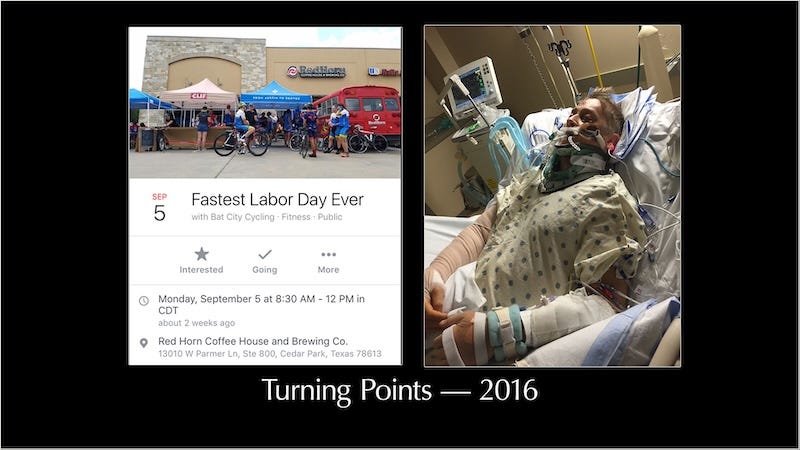
After sixteen years of marriage and six years of relationship therapy, I was divorced from my high school sweetheart in 2016—a turning point in my life.
But that pain was five-months-fresh, and I hadn’t had the time to process anything other than the sale of our home and my children’s visitation schedule when I had my accident.
The cycling accident was THE turning point that forced me to reevaluate my life. It was my “Accidental Motivation,” to change my life.
The months of recovery were a period of introspection and soul-searching.
I was confronted with the stark reality that I had been living an unfulfilled life, driven by external validation rather than internal joy.
What was wrong with my life?
I did everything I was told from my parents, family, friends, and society.
I was determined to find an answer. A simple answer that could be true for me or anyone else, in any situation.
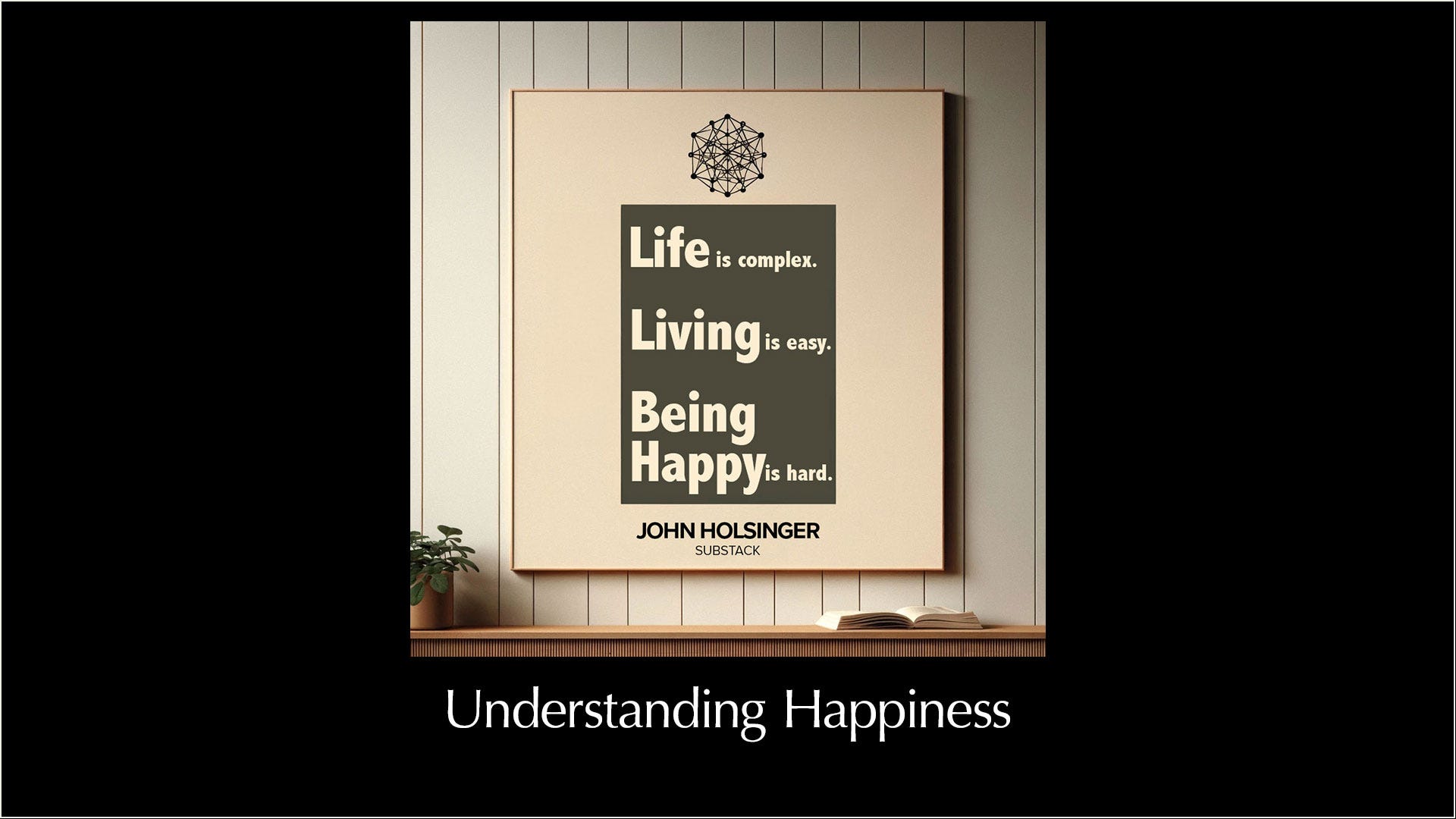
I have come to understand that happiness is not a destination but a way of life.
It is not found in material possessions or achievements but in the moments and experiences that bring joy and fulfillment.
Happiness is deeply personal and requires a commitment to self-discovery and self-acceptance. It means embracing who you are and pursuing what brings you joy, while staying true to your values and principles, rather than conforming to societal expectations.
HERE'S A SURPRISE: I realized that you can’t truly know what you want—what makes you happy—unless you’ve experienced it before.
If you only repeat what makes you feel good, you’ll never grow.
Keep searching for what brings you greater happiness—that’s the journey.

You can only truly know yourself and that is where your focus should be.
POSITIVE SELFISHNESS emphasizes prioritizing your own happiness so you can better contribute to the happiness of those around you.
It’s not about being self-centered but recognizing that you cannot pour from an empty cup.
Think about this. After my accident:
I was selfish when I wanted to heal my body and mind.
I was selfish when I wanted to live, to be there for my family.
And I was selfish when I wanted to be happy.
This seems obvious and it seems ok.
Now, today, can I be selfish and take care of myself?
What’s wrong with wanting to be the best spouse, the best partner, the best father, or the best friend? No, it’s not.
Prioritize yourself. It’s okay because your happiness incudes the happiness of those around you.
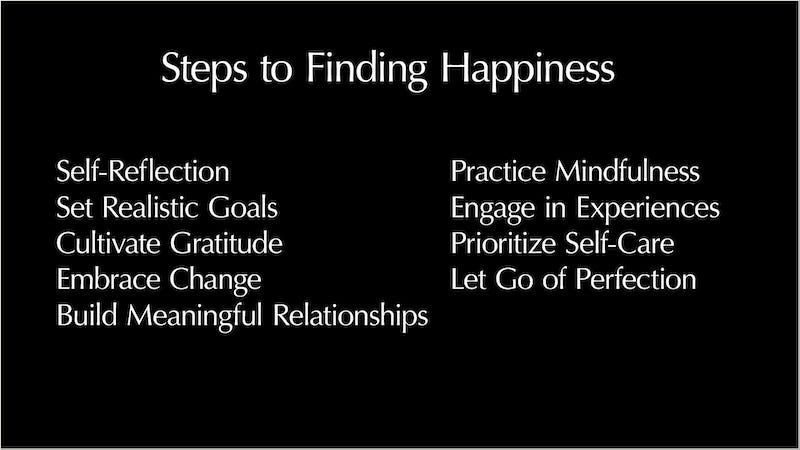
Finding happiness requires conscious effort and intentional actions.
Self-Reflection: Take time to reflect on what truly makes you happy. Identify the activities, people, and experiences that bring you joy and fulfillment.
Ask yourself: When do I feel most alive? What brings a smile to my face?
Set Realistic Goals: Pursue goals that align with your values and passions.
Cultivate Gratitude: Practice gratitude by acknowledging and appreciating the positive aspects of your life. Gratitude shifts your focus from what you lack to what you have.
Embrace Change: Be open to change and new experiences. Growth often comes from stepping outside your comfort zone and embracing the unknown.
Build Meaningful Relationships: Surround yourself with people who uplift and support you. Invest in relationships that bring joy and meaning to your life.
Nurture relationships by spending quality time with loved ones. Be present, listen actively, and show appreciation for the people who matter most.
Practice Mindfulness: Incorporate mindfulness practices into your daily routine.
Ellen Langer, a professor at Harvard University defines mindfulness as an active state of
noticing new things, which leads to a heightened awareness of the present moment. It is not about meditation but about being open and attentive to the present circumstances.
After my accident, I was forced to live in the present. I had no past memories and could not form new ones.
Now I understand that living in the moment is the only reality we have.
Engage in Experiences: Seek out activities that engage you fully and bring you joy.
Whether it’s hiking in the Grand Canyon with friends, pursuing a hobby, or going to a sporting event with your family, these experiences enrich your life.
Prioritize Self-Care: Take care of your physical, mental, and emotional well-being. Self-care is essential for maintaining a healthy and happy life.
Let Go of Perfection: Embrace your imperfections.
Happiness comes from accepting yourself as you are & embracing your unique qualities.

I have shifted my approach to happiness by focusing on what I want to experience.
Instead of being a “sightseer” who goes places just to see them, I want to be a “sight doer.”
After my accident, there were so many things I wanted to do with people I cared about.
The Grand Canyon hike took almost a year of planning and physical training.
During that year, I was talking, texting, and emailing my high school friends more than ever. I learned so much more about their lives—personally, professionally, and with family.
The memories and the experience of hiking the Grand Canyon are far more meaningful than any “let’s catch up over lunch” event.
With other friends, I’ve engaged in joint business activities and charitable events.
Now, when I talk with someone I care about, it’s more than just “let’s have lunch.”
I want to engage with the people I care about on a more substantial, ongoing level.
If I like you, if I love you, I want to share more experiences with you regularly.
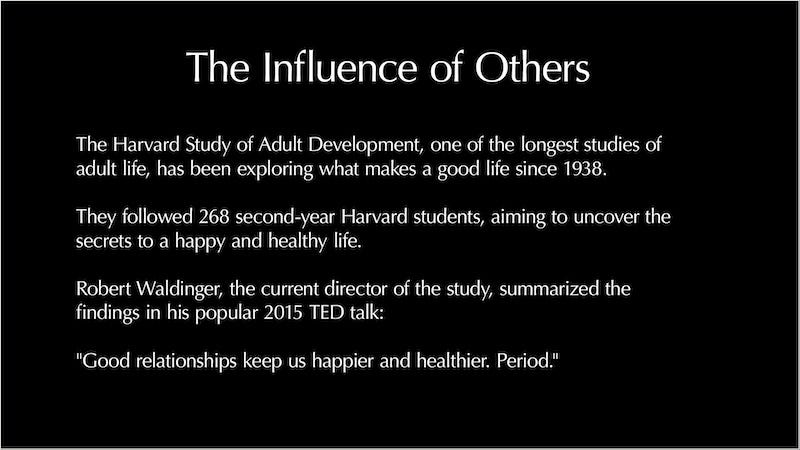
I have been influenced by the people around me.
My father’s legacy, as an idealized role model who never had the chance to disappoint me.
Growing up in a rural farming community in Ohio, independence was highly valued.
I worked hard to be seen as a reliable and self-supporting person, capable of handling any task on my own.
While being self-sufficient is commendable, I’ve come to realize that living without relying on others can be lonely and isolating.
I now understand that humans are social beings, and relationships are more rewarding when they are based on mutual support and give-and-take.
My time in the hospital forced me to confront this head-on. I had to rely on others for everything – was hard at first. I had to let them and learned to appreciate. After my recovery, I returned the favor, to people in need.
Today, I believe the most powerful bonds I have are rooted in needs-based, give-and-take relationships. Helping and receiving help creates a much tighter bond.
These relationships foster a sense of connection that is essential for true happiness.
….The Harvard Study: "Good relationships keep us happier and healthier. Period."
Happiness is closely tied to finding purpose and meaning in life.
It’s essential to understand that happiness is not a byproduct of success but a fundamental reason for living .
Finding purpose means aligning your actions with your values and passions.
It means engaging in activities that bring joy and fulfillment, contributing to something greater than yourself, and making a positive impact on the lives of others.
Sharing what I’ve learned is my purpose and meaning.

I want to share an idea that may seem different from what we often hear: that while each of us is unique, we are not special. There are over eight billion people on the planet!
This is not meant to diminish our value, but rather to highlight the incredible power of our uniqueness.
Each of us has a distinct set of experiences, skills, and perspectives that make us who we are.
Your superpower is your uniqueness. Leverage what is different about you and use it to your advantage!
Self-acceptance. Embrace your personal journey and the factors that have shaped you. This can help foster contentment and reduce pressure to conform to external standards.
Authenticity is key. Be true to yourself and pursue what genuinely brings you joy and fulfillment, rather than seeking validation from others.
Remember that while we are unique, we share common experiences and emotions with others. This interconnectedness creates empathy and fosters a sense of community and support, reminding us that we are not alone in our journey.
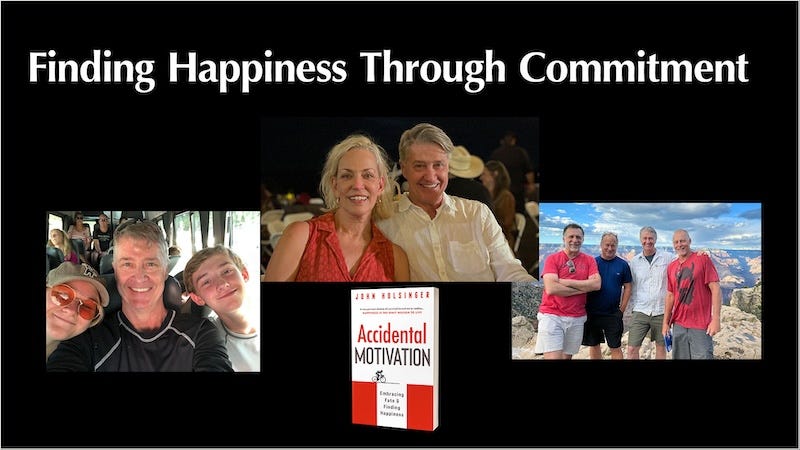
As I stand before you today, I want to emphasize that happiness is a journey, not a destination. It is a personal and ongoing pursuit that requires intention, effort, and a commitment to self-discovery.
I committed to every relationship and project that I was interested in. If I was going to do it, I would do it 110%.
I was committed to my children. My son played in the high school band so I became a super booster moving props on the field, going to every performance, as well as being the Vandegrift HS Band Booster Fundraising Chair. My daughter wanted to be an aerospace engineer so I supported her by sending her to what we thought was the best university, Embry-Riddle Aeronautical University.
I committed to every relationship as a partner and friend…
Comments
Nothing yet. Say the first thing.
Sign in to join the conversation.