

Heat domes have made 2026 a year of pressure cooker cities. The problem has been aggravated by the fact that a city’s roofs and roads are dark by default. That single design choice bakes billions of dollars of heat, illness and energy cost into urban systems every summer—costs nobody is billed for, and everybody pays. The Smart Surfaces Coalition’s wager is that if you can measure those costs, you can build a market to avoid them.
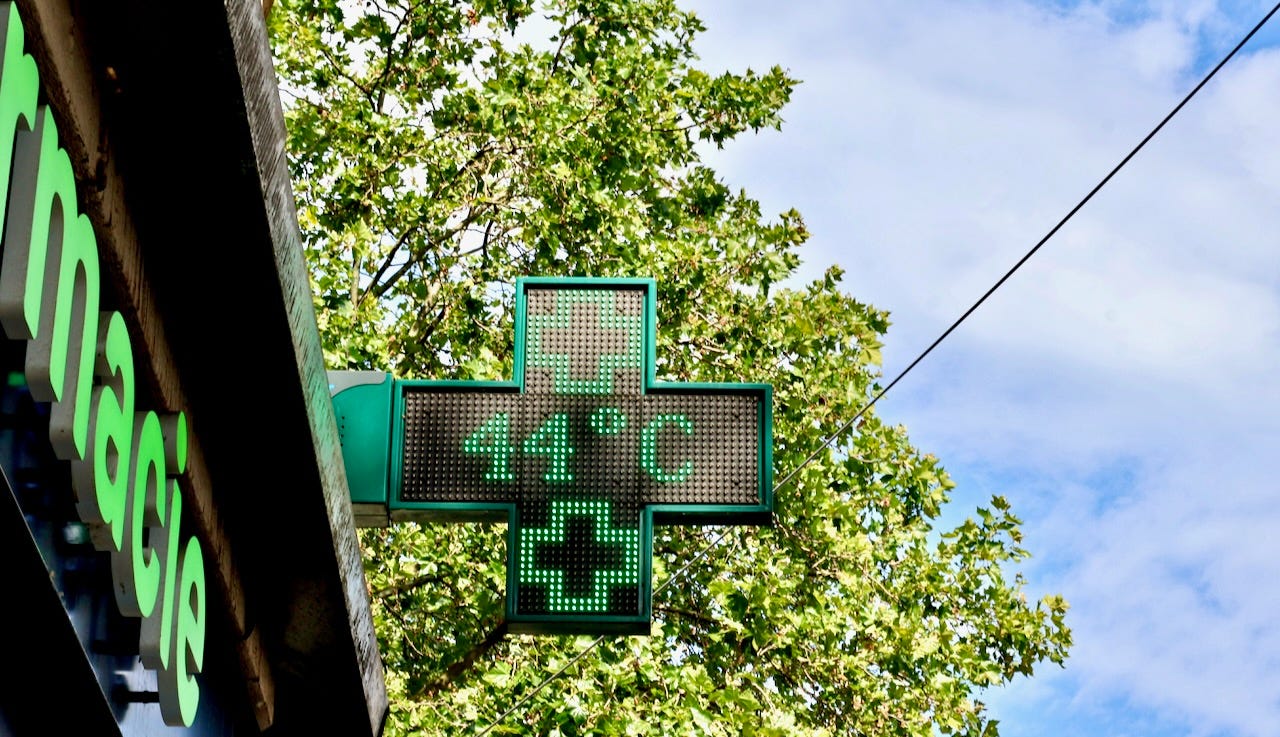
Extreme heat is now the deadliest form of weather, and cities feel it the worst: dark asphalt and dark roofs absorb sunlight and re-radiate it, pushing dense neighbourhoods several degrees hotter than the leafy suburbs next door—the urban heat island effect.
None of this should come as a surprise. Forty years ago I reviewed a sci-fi novel, Nature’s End, which opened with a “blocking high” suffocating Denver. Today, predicted or not, the economic bill is enormous, growing and, tellingly, mostly invisible.
Heat already drains something like US$100 billion a year from the US economy in lost worker productivity alone, a figure the Atlantic Council projects will roughly double to US$200 billion by 2030 and reach US$500 billion by 2050. And that is the conservative slice: it excludes the toll heat takes on health systems, infrastructure, tourism, and the electricity grid.
This is a classic market failure. The heat a black roof throws off is an externality—the owner enjoys the cheap roof, while the costs (a hotter block, hospital heat-stroke admissions, a strained grid, a flooded street) land on the public. Markets are blind to costs no one is charged for.

Among the pioneers in the space is the Smart Surfaces Coalition, founded in 2019. This is a nonprofit of 40-plus partner organisations pushing cities to adopt what it calls “smart surfaces”: reflective (“cool”) roofs and pavements, urban trees, green roofs, permeable paving, solar PV, and green stormwater infrastructure—deployed together, as a system, rather than one demonstration project at a time.
Its central offering is not a product but a spreadsheet: an open benefit-cost analysis tool that lets a city model the temperature, health, stormwater, energy and carbon effects of transforming its surfaces, and put dollar figures on each.
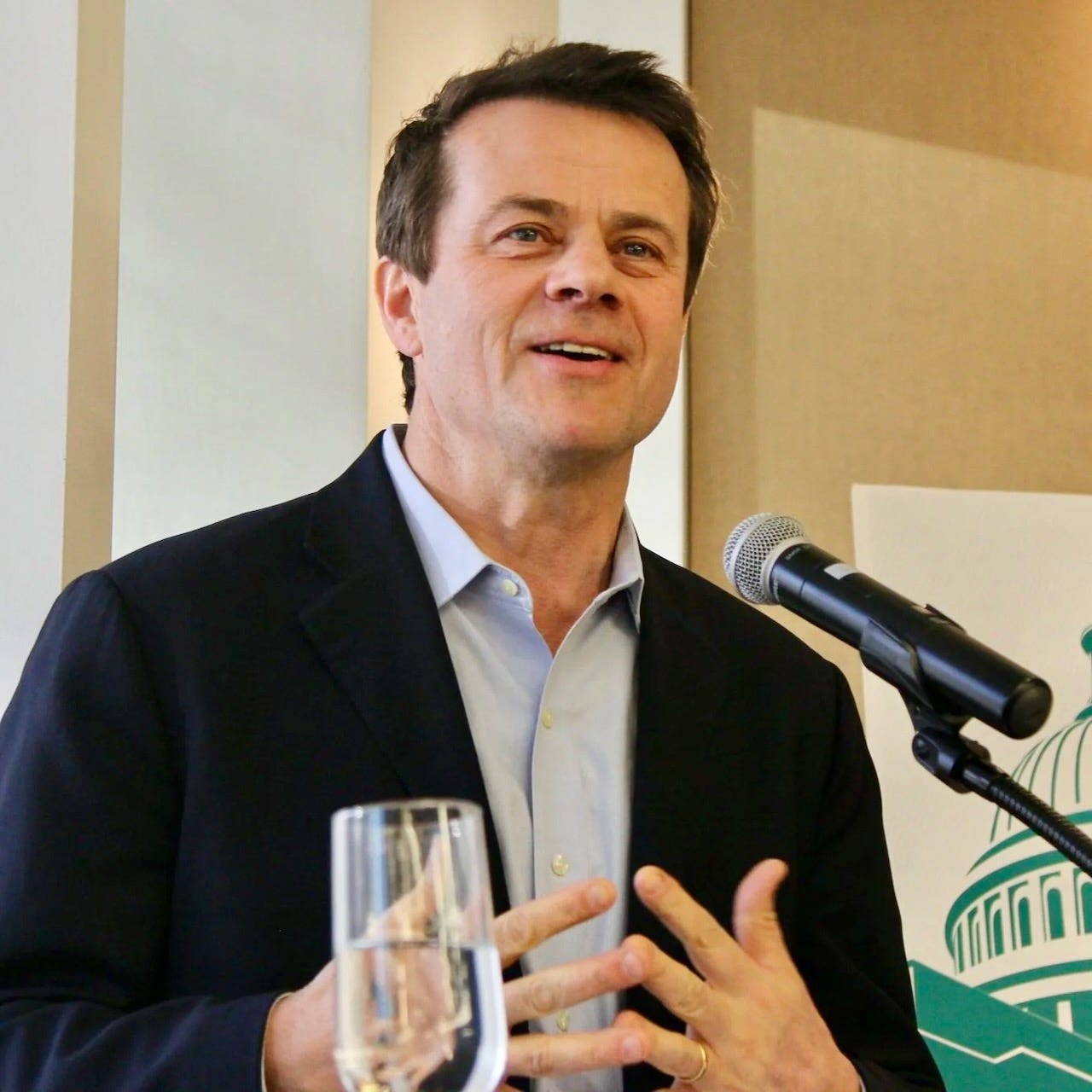
Its founder, Greg Kats, is unusually well-placed to drive this agenda [1]. He ran financing for energy efficiency and renewables at the US Department of Energy, was a managing director at the multi-billion-dollar clean-energy investor Good Energies, helped build the LEED green-building standard, and now also runs the advisory and investment firm Capital-E. In other words, he has spent a career turning environmental performance into something finance can underwrite.
As Kats told me, “One issue is we know costs—capex, opex—well, but the benefits are largely not quantified and so are ignored. We are systematically quantifying these with leading partners and that is tipping the scale for decision makers. A second issue is risk. Anything new feels risky. We show that the Smart Surfaces approach is lower risk—in part by having a cohort of cities go through this together. And we coordinate and train around100 additional cities through our Peer Learning Network, plus another 60 cities or so through our Cool Roadways Partnership, focused on roads and pavements.
Ask “how big is the market for cooling cities?” and the honest answer is that there are three quite different markets here and conflating them is where most analyses go wrong.
First, the sellable hardware—the products a contractor can invoice. Cool-roof coatings are roughly a US$6 billion global market today, projected to reach US$9 billion by 2030; the broader cool-roof market (membranes, tiles, coatings) runs around US$15–20 billion. Green roofs are smaller but growing fast—perhaps US$5–7 billion by 2030 at 15%-plus annual growth—and permeable pavement is already well past US$10 billion. Add urban forestry and solar, and you have a large, unglamorous, compounding infrastructure market. Nothing exotic—just steady demand.
Second, the brute-force alternative these products displace. The default answer to a hot city is to buy more air-conditioning—a market that is vastly larger and growing far faster. The International Energy Agency expects the global stock of ACs to rise from about 1.6 billion units to 5.6 billion by 2050—roughly ten new units sold every second for three decades—with cooling energy demand set to more than triple. Smart surfaces are demand destruction for that market: every degree shaved off a neighbourhood is cooling equipment that never has to be bought or run. It also explains why smart surfaces are under-marketed—no incumbent gets rich from a city that needs less cooling.
Third, and decisively, the pool of avoided costs. This is where the real money is, and it is mostly public rather than private. When the Coalition modelled citywide adoption across 10 major US metros (home to 34 million people), it found roughly US$26.6 billion in public-health benefits, US$10 billion in electricity savings and US$34.8 billion in infrastructure savings—about US$71 billion in total—alongside 79 million tonnes of avoided CO₂e, 275 billion gallons of managed stormwater, and peak summer temperatures cut by 5°F or more. Atlanta’s policy alone would cool its hottest neighbourhoods by up to 6.3°F and yield some US$760 million in net benefit. Returns of 4:1 or better are typical.
One caveat, though. The hardware figures are third-party forecasts with wide ranges, and the Coalition’s benefit numbers are modelled projections, not audited outcomes. They are best read in terms of direction and order of magnitude. But even when heavily discounted, the asymmetry is the story: a modest hardware spend unlocks a value pool at least an order of magnitude larger.
The real reason cool roofs are not already universal is not that the technology is unproven; it is that the benefits are diffuse and public while the costs are concentrated and private. When a landlord pays to re-coat a roof, the cooler air, the avoided hospital visits and the unflooded street accrue to the neighbourhood, the health system and the city.
That split-incentive gap is precisely the kind of missing market we must now pay more attention to. Seen that way, the Coalition’s real product combines measurement and valuation with policy plumbing. It offers a credible way to quantify the public value, and then spotlight the codes, procurement rules and financing structures that let a city capture it.
Most of the value that smart surfaces create is avoided public cost, not captured private revenue. A coatings firm can sell paint, but no one today can easily sell the cooling itself—the fewer deaths, the lighter grid, the drier basement. So, is “the market for cooler cities” a market at all, or a public-goods coordination problem wearing a market’s clothes?
The answer determines the whole strategy. If it is fundamentally public, the levers include better regulation and larger budgets. On the technical side, we need things like reflectivity minimums in building codes, cool-surface requirements in public procurement, tree-canopy mandates.
If some of the value can be financialized, then the frontier is instrument design—heat-resilience bonds, stormwater-fee credits, health-system co-payments, insurance-linked structures that pay out on avoided heat losses, even utility programmes that fund cool roofs the way they fund efficiency because it defers grid spend.
Urban heat is not evenly distributed. Across US cities, the hottest neighbourhoods map with unsettling precision onto historically “redlined,” lower-income and minority communities—less canopy, more asphalt, older housing, higher energy burdens.
That makes smart surfaces one of the rare climate interventions whose benefits fall most heavily where need is greatest, and it changes the political economy: this is adaptation that doubles as public-health and environmental-justice policy. It also complicates the market framing, because the residents who would benefit most are the least able to pay the upfront cost—another argument that the financing, not the physics, is the hard part.
So, to dig a little deeper, I asked Greg Kats six questions:
JE: You flag tens of billions of dollars in public benefits, yet adoption is still slow. When you sit across from a mayor or a CFO, what is the single objection that stops the check—and what have you learned to say back?
GK: The most common objection is that although such decision-makers believe there are broad benefits of smart surfaces, including health, lower energy bills, and lower insurance risks, they don’t have credible benefit-cost data for their city. So, they don’t include these benefits in the policy decisions. Our response is to provide highly detailed, documented, city-specific cost-benefit analysis—and then help model and shape city policy changes.
Is “the market for cooler cities” genuinely a market, or a public-goods problem? Where, concretely, do you think private capital can earn a return on avoided heat?
Private capital returns in this market are challenging because benefits are largely in the public arena—health, outdoor workers, tourism revenue, lower electricity bills. The cost-benefit ratios for CO2 reduction and CO2e offsets through strategies such as cool roofs are compelling. The cost is under $5/ton, so a fraction of the California CARB price or the European Trading Scheme price.
If you could pass one policy tomorrow that would move the needle the most—a national reflectivity standard in building codes, a cool-surface procurement rule, or a tree-canopy mandate—which would it be?
Mandating more reflective low-sloped and steep-sloped roofs is the largest low-hanging fruit. Average roof reflectivity for low-sloped roofs today in European and North American cities is about 0.2—bouncing back only 20% of sunlight. And we can more than triple that at zero or extremely low marginal cost to 0.7, reflecting 70% of sunlight back up into space.
Much of this exits the atmosphere—literally cooling the planet. At scale, this is one of the highest, most cost-effective, and rapid ways to slow global warming. For example, the June 2025 Atlanta cool roof bill (one of dozens of citywide measures we co-developed with our partner cities) will, by itself, cool Atlanta by 2.4 degrees Fahrenheit, cut electricity bills by $310 million, and cut CO2e by 3.6 million tons.
Surprisingly, foundations focused on mitigating climate change have largely ignored this opportunity—even though it is highly effective and cost-effective, with substantial, quantifiable health and equity co-benefits.
What would a financeable “cooling benefit” look like—a heat-resilience bond, a stormwater credit, a utility programme? How close is anyone to issuing one?
With the City of Dallas, SSC helped shape a climate bond resolution that ties the city’s most recent $1.25 billion bond to the goals of its climate action plan, including the implementation of smart surfaces. All cities facing heat and flooding issues should do the same. It would increase resilience, mitigate the impacts of climate change, and save cities a lot of money. Rating agencies should also be looking to drive the same strategies.
There is a 3-part series in Risk & Insurance (a major industry publication) that documents how Smart Surfaces improve city credit risk—and protect cities’ access to low-cost financing via the municipal bond markets.
How can the long-standing structural inequalities be redressed rapidly and at scale?
If you look at low-income and minority areas in cities, specific policies drove and reinforced racial inequality, and you can see that these areas are today hotter, darker, more impervious and less healthy.
Until these structural inequalities are redressed, US cities will remain blighted by the physical scars and markers of racism—communities where millions of families must raise children in environments that are physically hostile in summer, with worse pollution and health outcomes, higher electricity bills and diminished experience of the outdoors.
In many major cities where we work, smart surfaces deliver cooling and reduce the risk of flooding—with the greatest improvements in lower-income areas.
Ten years out, say in 2037, the 50th anniversary of the Brundtland Commission report, what would real success look like—a line in every building code, a new asset class, or simply a world where no one builds a black roof without a reason?
Our Coalition’s stated objective is to make Smart Surfaces the urban design norm before 2040. Dark impervious surfaces are the urban design norm today. In the US, we are maybe one-third of the way to a tipping point at which Smart Surfaces, rather than dark impervious surfaces, are the lowest-risk default choice in urban design.
Twenty more big cities and counties have approached us asking for help. If that work is funded, and the policies that we co-develop with cities are implemented, we would have impacted 40% of the U.S. urban populations, a likely tipping point where smart surfaces then inevitably become the urban design norm.
The dark roofing industry opposes the shift to more reflective surfaces. They employ lobbyists and disinformation, so our coalition must educate and overcome this lobbying to get bills through city councils. The Guardian did a great piece on this.
Europe, where there is a great deal of innovation and—as of this summer—greatly expanded interest in citywide cooling, could be on the same schedule. India, where we have also been working, could by 2037 have an irreversible national movement for citywide adoption of Smart surfaces and cooling.
To be clear, 2037 will not be a date when all surfaces are smart—reflective, porous, or green—but the date at which smart surfaces become the default design norm for all cities and suburban areas—where the full transition is both well underway and, hopefully, irreversible.
[1] Disclaimer: I have known Greg Kats for almost 40 years and serve on the SSC advisory board.
No posts
Comments
Nothing yet. Say the first thing.
Sign in to join the conversation.