
Having given up Economics after one year at university, back in 1968, it still surprises me when I am asked to speak in public about…Economics. But earlier this month I was in Lisbon to keynote the Building Sustainability Together conference organised by Católica (University) as part of Lisbon Sustainability Week.
The invitation came via Filipa Pires de Almeida, executive director of Católica’s Center for Responsible Business and Leadership. Ands after opening the event, I did a fireside chat with professor Filipe Santos, dean of the Católica-Lisbon School of Business and Economics. In the process, new connections began to form in my brain between the “dismal science” and the aching-for-regeneration real world.
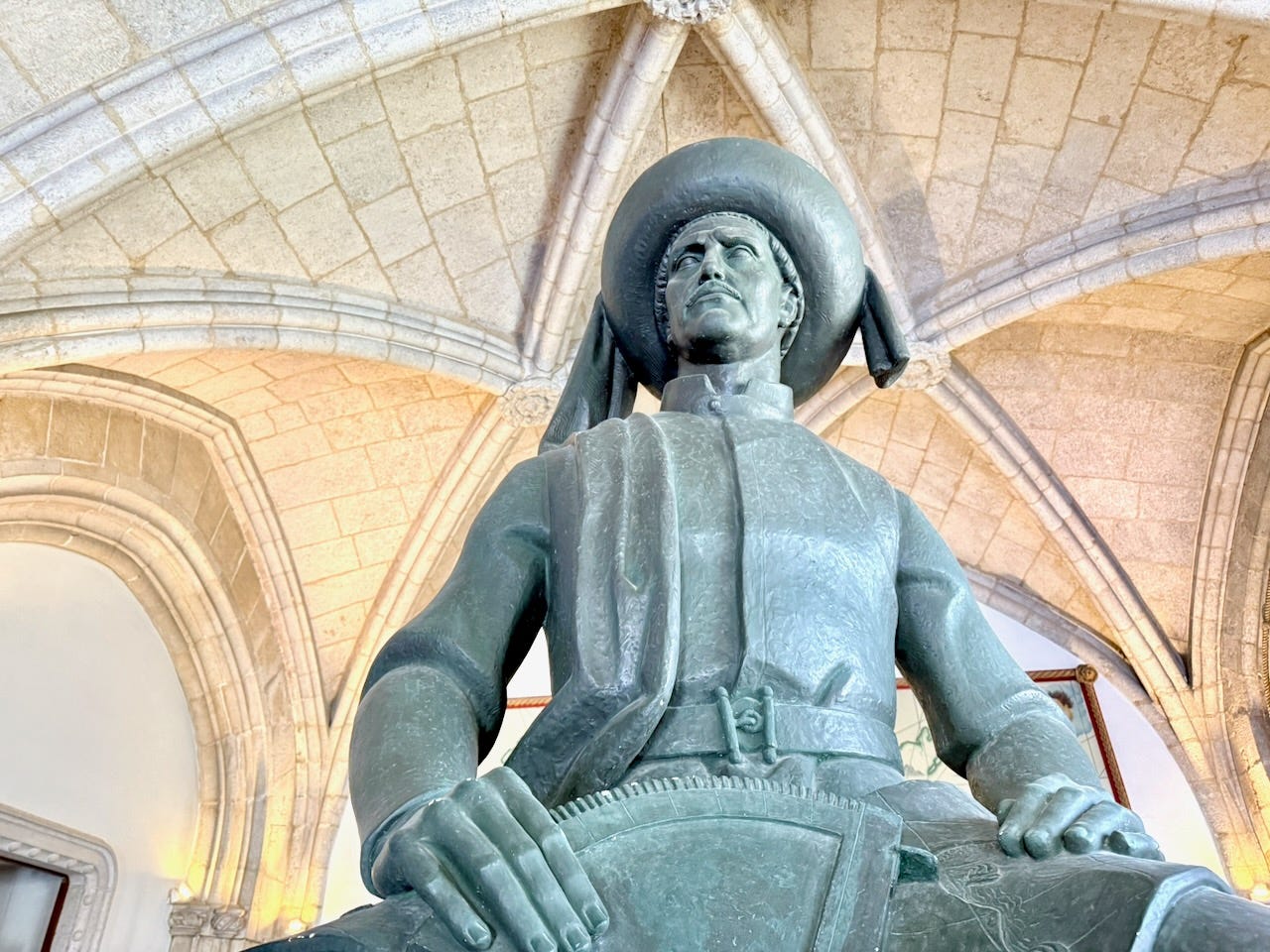
The next day, for example, Elaine and I spent a fascinating morning in Lisbon’s Maritime Museum, following in the tracks of a famed navigator who rarely went to sea. I had long been fascinated by Henry the Navigator, who earned his epithet (from the English, as it happens) not at the tiller but as a patron—a prince who turned exploration into a systematic project, gathering pilots, astronomers and chart makers and pointing them down the unknown coast of Africa.
What Henry understood, better than almost anyone else at the time, was that maps bring power. If you know where the currents run, where the reefs and shoals lie, where the storms cluster, you potentially hold an asset more valuable than any cargo.
And Portugal understood this so well that it made map secrecy a matter of state. Charts and rutters, or handbooks of sailing directions, were tightly guarded under what historians call the política do sigilo—the policy of silence.
The master maps were royal property: to leak them was treasonable. As a result, for a few extraordinary decades, a small kingdom on the western edge of Europe held a near-monopoly on the knowledge of how to reach the wider world.
Monopolies of physical things like maps, though, are hard to maintain. Henry’s lock was eventually picked by the Dutch. Jan Huyghen van Linschoten, a young Netherlander in Portuguese Goa, secretly copied once-secret charts and sailing directions to the Indies and published them in 1596.
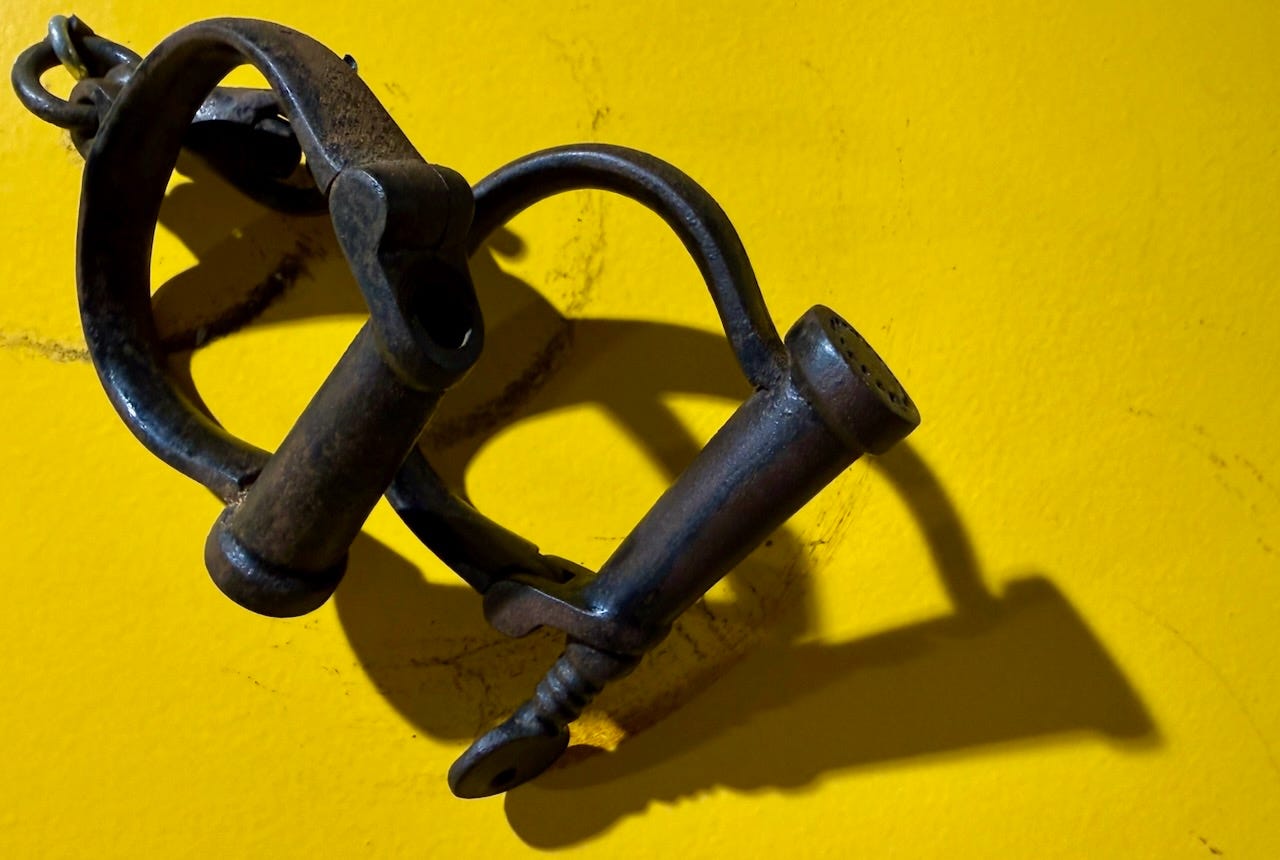
Within a few years the same routes were being sailed by the Dutch and English East India companies. Still, we should be clear about what that great remaking of seal-lanes involved: those charts also served conquest, resource extraction and the booming slave trade alongside mainstream commerce.
Increasingly, I have come to see economists, for better or worse, as navigators—cartographers of commercial seas and oceans. Their work can lead to extraction or to regeneration, of course, but if we picture an economy as a body of water with its own currents, tides and sudden squalls, then the economist’s task is to chart it. To say where value can be found, how the risks concentrate and when the market weather might turn. To help the rest of us navigate.
Some economists chart demand, some trade, some the deep currents of growth. Emeritus professor Robert F. Engle, with whom I had the pleasure of sharing the platform in Lisbon, and later having dinner with, charts market storms. He won the 2003 Nobel for a family of models he began building in 1982. Risk, he demonstrated, is not a constant background hum, as economics had long assumed. It clusters. Calm breeds calm; turbulence breeds turbulence.
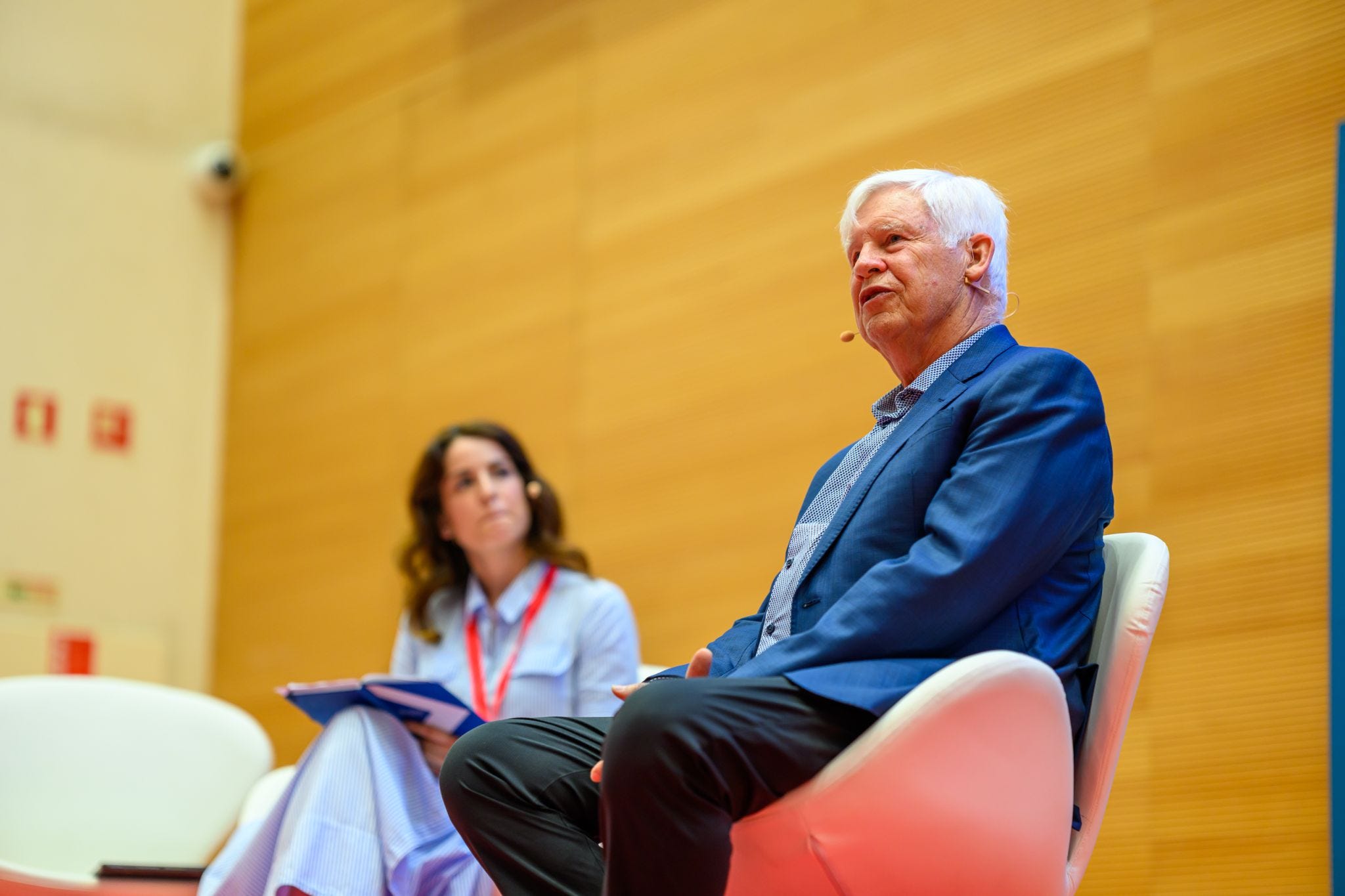
Economies are embedded in our societies, which have their own rhythms and, indeed, convulsions. Viewed through the lens of deeper time, WWI set the scene for WWII, a disruption that many might now see as a Black Swan event, but which was foreseen by Winston Churchill. Engle’s own family history reflects the torments of the era.
We had a fascinating conversation with his wife, Marianne Eger, whose mother—Edith, or “Edie”—survived the Holocaust and was later known as “the ballerina who danced for Josef Mengele.” Few stories underscore quite so dramatically the ability of the human spirit, or at least of some extraordinary people, to overcome seemingly insurmountable odds.
Still, even if Engle drew the chart of where the squalls gather, it was Hyman Minsky—whose work I mentioned in my Lisbon keynote—who explained why the storms keep returning. Minsky—an economist treated as a heretic in his lifetime and only truly canonized after the crash of 2008—argued that stability is itself destabilizing.
His financial instability hypothesis concluded that a long calm does not reassure a market so much as corrupt it: the longer the good weather holds, the more confidently investors take on debt and risk, drifting from prudent financing toward the speculative and finally the reckless, until over-rigged vessels capsize in what we now call “Minsky moments.”
Minsky and Engle complement each other. Minsky supplies the narrative—tranquillity breeding the very recklessness that ends it—while Engle supplies the instrument, the mathematics that can track the clustering weather Minsky described. There is even a warning folded into the pairing: a volatility model, like a market, can be lulled by a long calm and under-price the coming squall at the very moment when the danger is greatest.
Now we are living through another slow-moving Minsky moment—with decades of cheap, fossil-fuelled calm quietly building the systemic risks that a super-heated planet will one day reprice, in what seems like an instant.
We have watched exactly this happen, not long ago. In the years before 2008 the banks navigated using a risk-chart called Value at Risk, and a neat little equation—the Gaussian copula—that priced mortgage risk as though the calm would hold forever. The chart said the sea was flat almost until the moment it capsized the fleet; one writer later dubbed that formula the one that killed Wall Street.
But here is the detail that, on reflection, I find most moving. Henry hoarded his charts, whereas Engle gives his away. V-Lab, the economics lab he built at New York University, publishes its estimates of market volatility and systemic fragility openly, for anyone to access and use.
This modern navigator has inverted the política do sigilo: the risk-map is now a public good. That is a quietly radical act, and exactly the direction a sustainable economy needs to travel—away from proprietary silence, toward shared instruments for a common future.
The most basic likeness between navigators and economists is that both work from a representation rather than the thing itself. A chart is not the ocean, and a model is not the economy. Both are deliberate simplifications, and both are useful precisely because they leave things out. The navigator and the economist alike must live with the knowledge that the map is not the territory.
Then there’s the matter of reading position from indirect signs. Navigators rarely see their destination. They infer where they are from stars, soundings, currents and speed. The economist does the same with indicators—inflation, yield curves, unemployment—none of which is the economy, all of which are bearings taken on something you cannot look at directly. Both practise some form of dead reckoning: projecting forward from the last known fix via heading and speed.
The unnerving property they share is that error can compound with distance. The further you sail from your last certain position, the more your estimate can drift—which is exactly why economic forecasts, like a ship’s reckoning, are trustworthy over the next mile and likely fictional over the next thousand.
As I learned in the most interesting project I did at school, navigators for centuries could find latitude easily—via the sun or pole star—but not longitude, which needed an accuracy no instrument could give until John Harrison came up with his chronometer, the subject of my long-ago project.
Thousands drowned not because they were reckless but because one whole dimension of their position was unmeasurable. Their captains sailed confidently in the dimension they could read straight onto the rocks in the one they couldn’t.
As I have argued via the triple bottom line, economics has its own longitude problem—the ecological and social costs that are quite deliberately kept off the books as “externalities.” You can fix your position beautifully in the priced dimension and yet drift, uncharted, toward catastrophe in ones that no standard instrument yet reads.
A second distortion involves map projections. Mercator’s projection, the one that let sailors plot a straight course, did so by monstrously inflating the wealthy north and shrinking the global south. Greenland expanded to the apparent size of Africa, which is some fourteen times larger. Now GDP, we might conclude, is a Mercator projection of value. It enlarges whatever is priced and shrinks to invisibility whatever is not—the unpaid, the natural, the borne-by-others.
Every sailor knows the sea has moods, and so does every market. And there are, to my mind, three moods that really matter. First, there is optimism and growth—the Bull, charging ahead with the wind behind him. Second, there is pessimism and retreat—the Bear, hauling in the sails as storms loom on the horizon. And Engle’s great gift is to have proved that these first two moods are not folklore but real, trackable weather systems.
But then there is a third mood that the old charts barely register: ambition and regeneration—symbolized by the Beaver, nature’s own engineer, the creature that does not merely ride the water but rebuilds the watershed, buffering flood and drought alike and creating resilience where there was none.
This is the market mood I am most interested in charting, because it is the one our economy now needs most—and yet understands least. If we can measure the Bull and the Bear, the urgent question now is how we can learn to see, incentivize and finance the Beaver. I see economist Kate Raworth’s Doughnut Economics as an early mapping of that territory.
In like manner, those long-ago Portuguese navigators knew that coming home from the African coast, a caravel could not simply beat back up the shoreline against the prevailing wind. It had to do something that must have felt like madness—sailing away from Portugal, far out into the open Atlantic in a great arc, to catch the westerlies that would then carry it home.
They called it the volta do mar, the turn of the sea. The counter-intuitive truth was that the direct route was the fatal one, and you reached your destination only by first appearing to abandon it. What better image for our required regenerative turn?
The efficient path—squeeze the quarter, book the sure return, hug the coast—is often the one that strands you and your assets. The Beaver’s slow dams, the patient capital, the apparent detour through resilience rather than raw efficiency: these are the volta do mar of tomorrow’s economy, the long way round that turns out to be the only way home.
Meanwhile, almost every navigational tool, ancient or modern, rests on a quiet assumption: that the sea, the ocean, keeps its shape. That the reefs and shoals stay where they were drawn. By contrast, the sustainability crisis breaks that assumption. It is, as an economist might put it, a slow, correlated, non-stationary, tail-dominated risk—and “non-stationary” is the word that should keep us awake. Climate change shifts the shoals, redrawing the coastline as we are sailing along it.
Consider Cape Bojador, the bulge of the Saharan coast that medieval sailors would not pass. Beyond it, everyone knew, lay boiling seas, monsters and perdition—until Gil Eanes rounded it in 1434, sailing calmly back, and the terror began to evaporate. We should think of Bojador whenever we hear that we cannot decarbonize and prosper at the same time, that the waters beyond the growth-as-usual and sustainability-as-usual worlds are unsurvivable.
One of my favorite modern economists is Marianna Mazzucato. And her thinking on the Mission Economy comes to mind here. Those great voyages required the Portuguese Crown, involving sustained sponsorship, pooled capital, chartered companies, harbours, provisioning, the patience of a state that could think in decades. No captain, however brilliant, and no chart, however accurate, could open a sea route on private willpower alone.
The same is true of the sustainability transition, and I say this as someone who has spent fifty years urging individual companies to do more. There is a hard ceiling constraining what even the most enlightened business will do—and more to the point, can do—in the absence of strong, sustained policy and market support.
You can hand a company the finest risk-chart ever drawn, showing every climate storm and stranded-asset shoal with perfect clarity, and yet it will still not willingly set sail in the indicated direction. Even the best corporate navigators cannot conjure the wind.
What moves a fleet—or in this case an economy—is the wider context, or environment. Commercially, that means carbon prices that shape powerfully markets over time, standards that hold through political storms, subsidies aimed at regeneration rather than extraction, and capital that is patient enough to wait for the Beaver’s slow dams to fill.
I should be careful with the word Crown, however, in case it sounds as if the state alone can carry us. The ocean is the oldest commons we have, and it was Elinor Ostrom—the first woman to win the economics Nobel—who showed that a commons need be surrendered neither to the market nor to the sovereign to be governed well. Fishing communities, irrigators, whole villages have for centuries navigated shared waters through shared, self-made rules, neither privatized nor nationalized.
So perhaps “Crown-scale” is the wrong phrase and “commons-scale” a better one: not merely a state that can think in decades, but polycentric institutions—cities, coalitions, standards bodies, citizens—charting the waters together.
There are grounds for hope, meanwhile. We have never had better charts. Engle and his kind have mapped the moods of the market—the optimism, the pessimism, and increasingly the storms—with a precision Portugal’s Prince Henry could scarcely have dreamed of. And, to their great credit, Engle and his team are giving those charts away.
Ultimately, a chart is an invitation, not a voyage. The question for the coming 10-15 years is whether we can summon that commons-scale ambition and set sail in new directions, along the way making capitalism and our economies not simply less degenerative, but more regenerative.
When I shared an early draft of this post with the Católica event’s organizers, an interesting response came from Filipa Pires de Almeida, who had first invited me to the Católica event:
The analogy between economists and the great navigators is powerful, and perfectly captures the kind of leadership we will need for the next stage of the sustainability transition: leaders who can chart new territories, navigate uncertainty and help society find a regenerative course, rather than simply optimize the (failing) one we are already on.
Her Católica colleague, adjunct professor António Baldaque da Silva, who has served as a managing director at BlackRock and is now executive director of Católica’s Center for Sustainable Finance—and also happens to be a serious sailor— noted:
Navigators are by nature at the mercy of the sea. So they are by nature patient—they work with the natural world, respecting its rhythms. We know the destination but cannot control when we will get there. Some of us think we can outgrow nature, making everything predictable, operating at our own rhythm. But we do this at our peril, both as individuals and societies…
It struck me that these are the sort of economists who make sense to me and should increasingly shape our future.
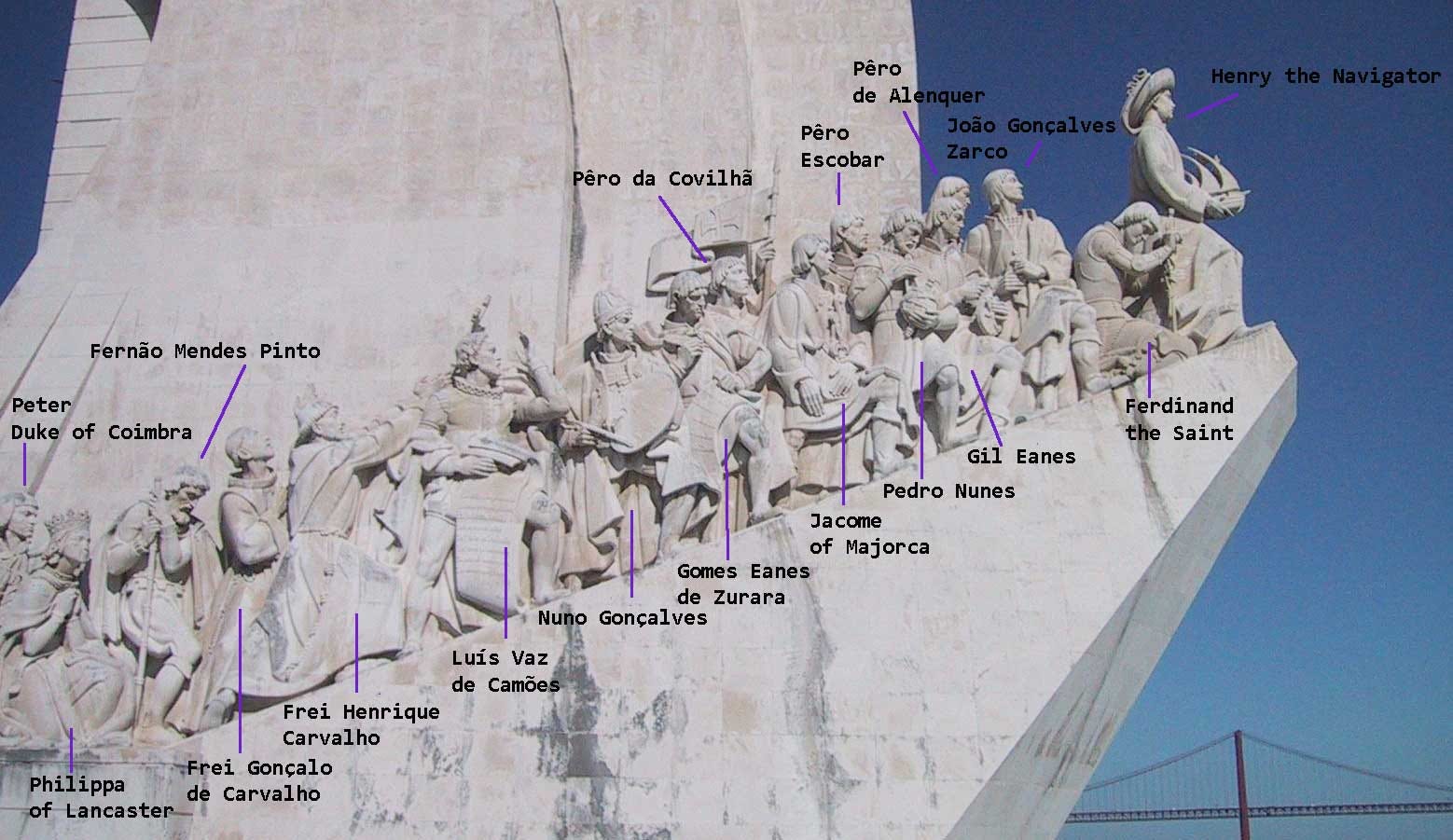
Meanwhile, Portugal celebrates those who led its voyages of discovery with Lisbon’s Padrão dos Descobrimentos, or the Monument to the Portuguese Discoveries. So, we might ask, whose names will appear on future monuments to the leaders in Economics and other disciplines who taught the world to take on tomorrow’s equivalents of the volta do mar?
No posts
Comments
Nothing yet. Say the first thing.
Sign in to join the conversation.