
The following birth story is written by my mother, E. Mager and translated by myself for you to enjoy. As part of The Generations Project it kicks off a series of 3 birth stories. I am grateful that my mother tells her story starting with her own birth since her own mother cannot tell her story anymore. Eo´s story shows how important pregnancy and birth are for the rest of life. There are so many layers in this story, I could comment on every sentence she is telling.
The Generations Project: It All Starts With Birth
·
October 4, 2023
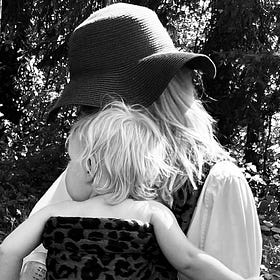
"The Generations Project: Connecting Past and Present" is a personal exploration of birth experiences across generations. It begins with my own birthing story, from the perspective of my mother. She recounts her own birth in 1962 via Cesarean, her childhood health struggles, and her eventual decision not to have children—a decision that was later reversed. The story continues with my mother’s detailed account of my birth in 1987, including challenges and her resolution to avoid pain relief during delivery.
“Dear Johanna, you asked me to tell you about my experience with your birth. But it starts a lot earlier than that.
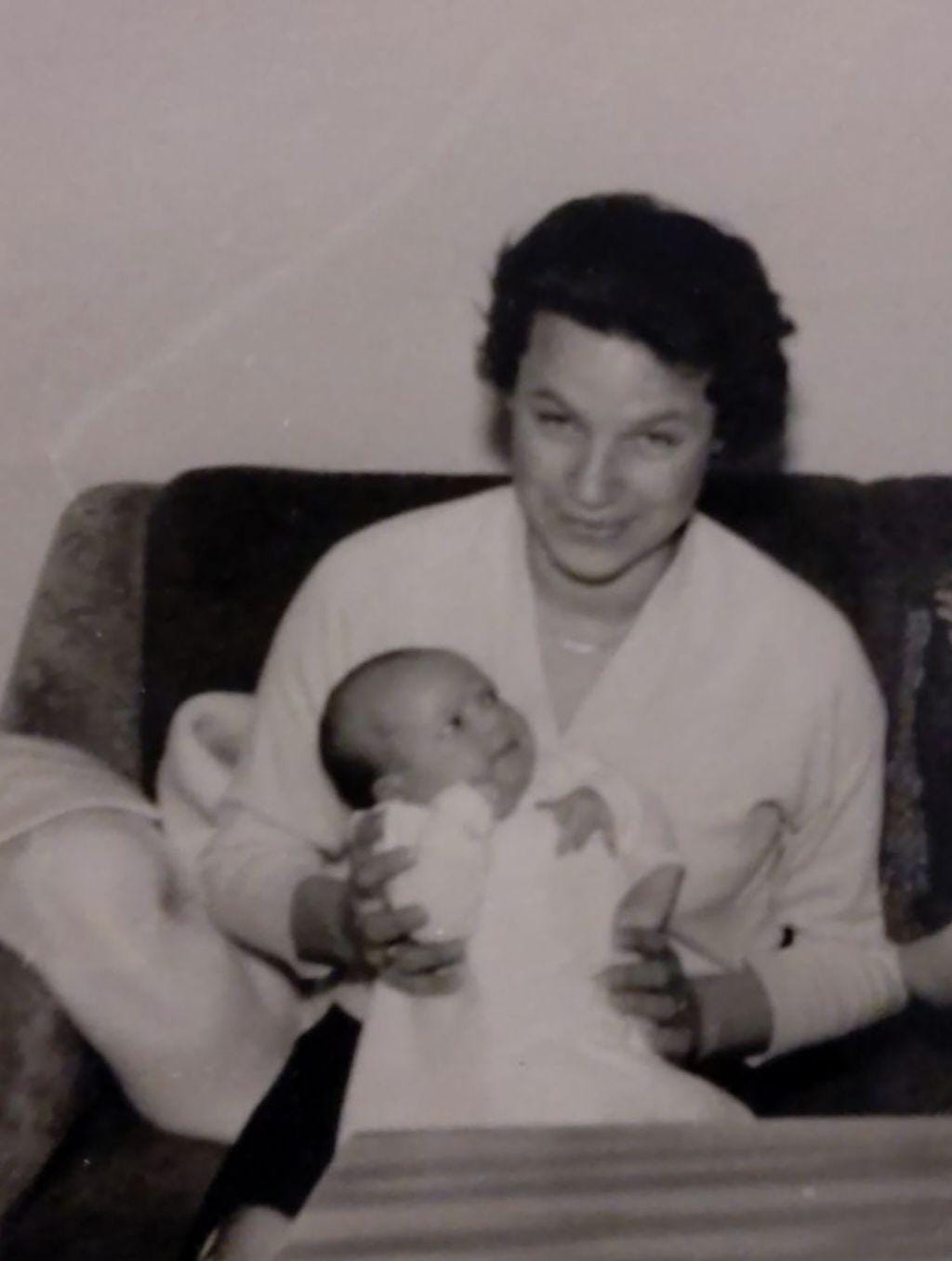
April 1962 - Eo’s Birth
I was a planned C-section. My mother was a civil servant and therefore had good health insurance. Since the doctor considered her pelvis too narrow, he planned the C-section. I was expected to be born on April 19th, but we only got the appointment for April 25th, a Wednesday. Around 5:30 PM, I was gently brought into the light.
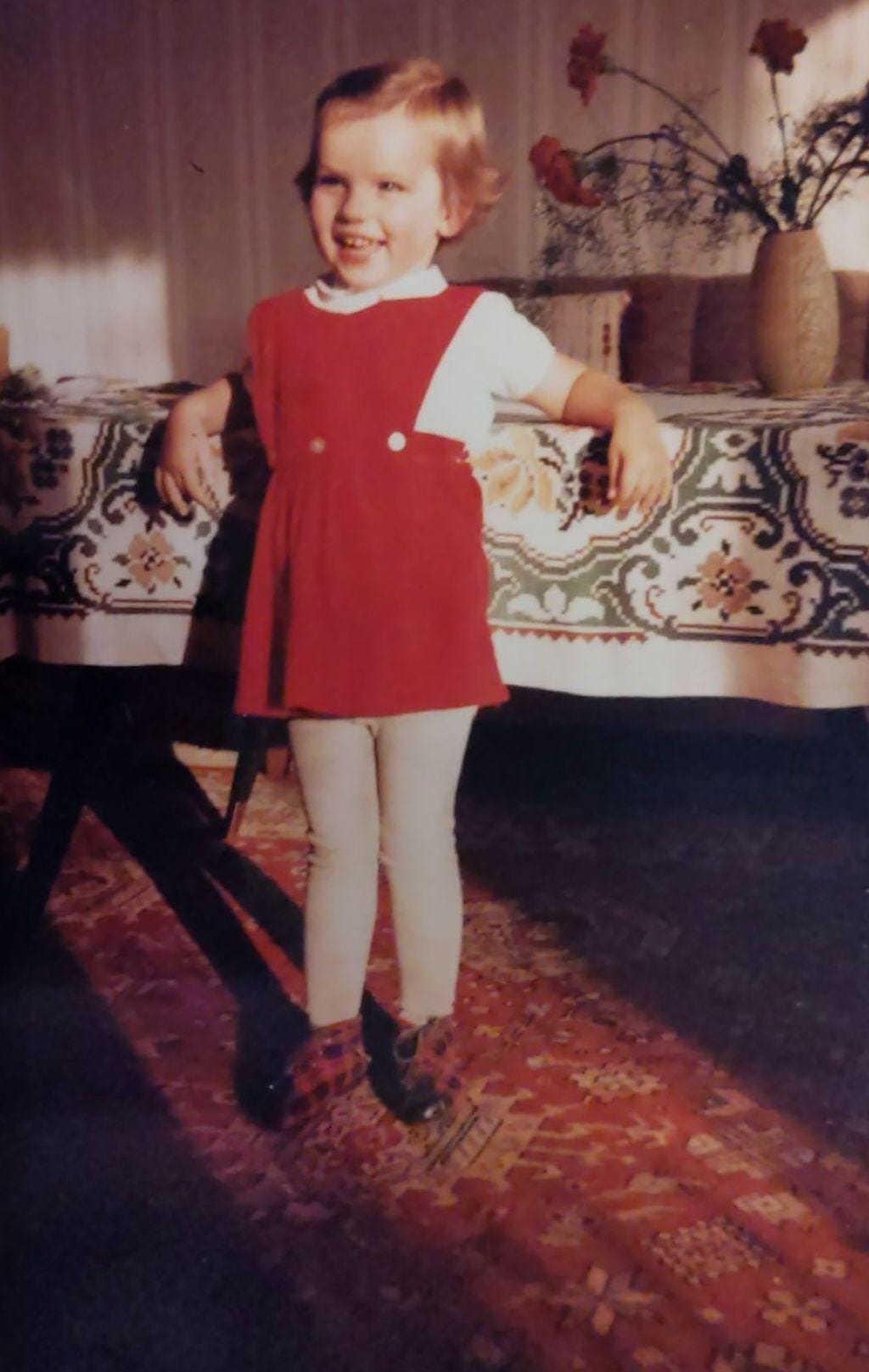
1966
I was a cheerful child but often suffered from stomach aches. Frequently, the doctor would come in the evening to prescribe some powder or other. At four years old, I had a severe case of appendicitis, which required emergency surgery in the middle of the night. For me, it was a profound and lasting traumatic event that haunts me to this day. Around the same time, my mother experienced the painful delivery of my sister. She had to endure 23 hours of labor because she was “just” a housewife by the time and in a lower insurance class. This experience had a significant impact on me.
Unfortunately, I did not witness it all, but I was told about it, or rather, I overheard it from the adults' conversations. As a result, I decided at four and a half years old not to have children, and I was very serious about it.
Johanna: Let me jump in here: first of all, WOW! Can we please stop underestimating how our adult behaviour affects our children? To have a 4 year old decide they do not want children because of a conversation they overheard and keep that up until later in life is astounding. I always knew that my mother had an “unreasonable” fear of everything doctor-related but I could never understand where that was coming from. It´s rooted in deep early-childhood trauma and has the potential to be passed on to new generations. As a mother of 3 beautiful children, Eo has luckily overcome her fear of giving birth.
Besides, it is hard to fathom that the outcome of your birthing experience is related to your income and insurance class. It is true and it is still true today.
1986
I explained this to Dad at the beginning of our relationship and that I did not want children due to the fear of pain, doctors, and hospitals. When I did become pregnant and was certain I did not want an abortion, I decided to postpone the panic until the end of the pregnancy. By the way, I felt fantastic for most of my pregnancy.
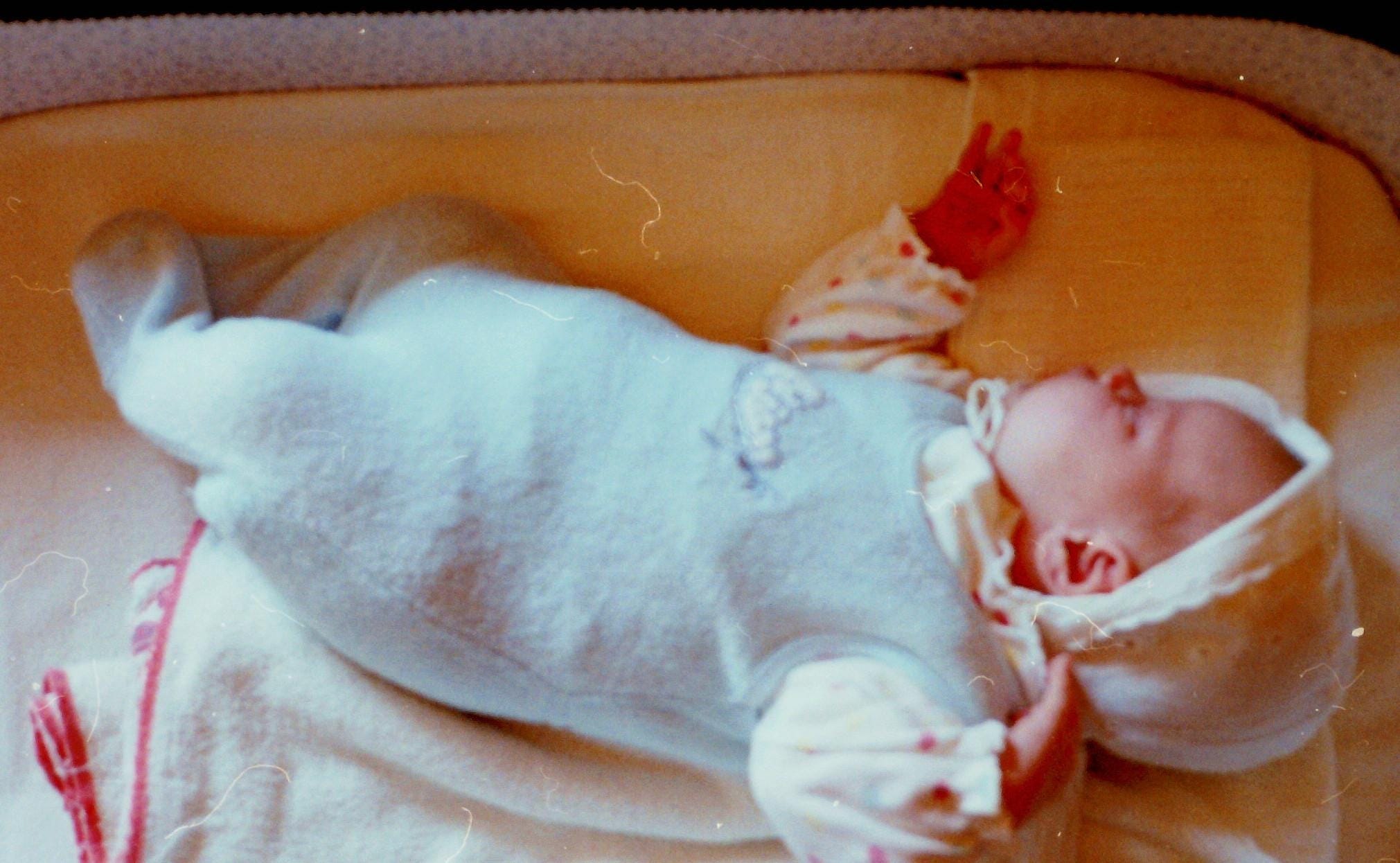
1987 - Johanna’s birth
Things became difficult when, in January 1987, my gynecologist informed me that I had a kidney infection and that my child was no longer being nourished. PANIC! She told me that I had to go to the hospital immediately, without stopping on the way. However, I drove tearfully to Dad´s office. It was snowing. I cried. He then took me to the hospital where you were supposed to be born. At 25 weeks, you were not yet viable if you had been born at that time. You would have needed to reach at least the 28th week. That was the goal. That's what I was told. I was put on a continuous penicillin drip and had to constantly go to the delivery room for monitoring on the CTG. In the hospital, I got to know the doctors and nurses, which somewhat alleviated my fear for the birth to come.
Moreover, I wanted everything to turn out well for you, and it did. After about twelve days, I could go home. The treatment healed the kidneys, permanently, by the way. Before, I had repeatedly had kidney infections that were probably never properly cured. Now everything was good.
Johanna: Today, I know quite a bit about antibiotics and let me be honest, I am not a fan. So, naturally, I am wondering what the effect of a 12-day penicillin drip is during pregnancy. There has been various research and yes, a number of antibiotics are deemed to be save during pregnancy. However, save does not mean good. I don´t want to discount the stress and fear of the mother, scared of losing their child in early pregnancy. And I don´t know how I would react in a similar situation. I am happy the kidneys have been cured for life, though and that I made it through quite alright.
Dad and I took a pregnancy course. I attended pregnancy gymnastics. In the course, we were the first to deliver our baby. The course instructor asked us if we were willing to try homeopathic remedies based on ancient knowledge about plants that should facilitate birth. We agreed. What harm could it do? So we got three jars of globuli, which I was supposed to take about three weeks before the due date. Daily at breakfast and every half hour when it started. Apart from Pulsatilla, I can't remember the names of the globuli. The three preparations were supposed to do the following:
ensure that the child arrives at the correct term;
soften the cervix;
prevent cramps.
We had fun counting the little beads. I was supposed to take five beads from each jar. Sometimes too many rolled over the table.
Johanna: I am really happy with this homeopathic experiment my parents tried in the last weeks of pregnancy. Maybe that´s the reason why I am also very welcoming of holistic methods that are not based on western-medicine.
Never the less, you took your time. After the due date, we had to go to the hospital every two days for the CTG. On the 10th day, the time had come. On the night of May 7th, I started having contractions. It started off quite gently. The contractions did not come very quickly one after another. I breathed through them, as I had learned in gymnastics. That helped. In between, I slept. Around 6 a.m., I got up and showered. We then drove to the hospital on spring-like streets. By then, the contractions were coming every 5 minutes.
We arrived at the hospital around 7 a.m. I was annoyed that Dad was separated from me. He had to sign some papers. I was scared and didn't want to be left alone. I was also determined not to have any pain-relieving injections because I still had my fear of needles. Initially, they didn't take my impending birth seriously. They told me that if I walked into the hospital so upright, they would send me right back.
Johanna: Funny story part 1: I had the same experience, walking into the hospital “so upright” and I told the midwifes that they do not know me and that I am very good in coping with pain.
But then I was examined gynecologically. The cervix was very soft and almost 10 centimeters dilated. They hadn't expected that. They then hurried to prepare the delivery room. I believe I got an enema and then was led into the delivery room. I remember not being in a hurry.
Johanna: Funny story part 2: They did not even bother to examine me until hours later, and turns out I was only 2 centimeters dilated. So my mother ACTUALLY knew how to deal with contractions. More on that when I tell the birth story of my daughter Skye.
As soon as I lay on the delivery bed, a nurse comes to put in an IV, and that too during a contraction. I pushed them away and was very outraged. I wanted to do everything without injections. I hadn't anticipated a precautionary IV. When the contraction was over, it had to be done.
Johanna: I know times have been different then but ARGH “it had to be done”. No discussion. There are more indicators for obstetric violence in this story, although at the time they were not seen as such. And even today, many interventions are just “done” without consent. As a Birth Doula I am passionate about the rights of the women in birth and I can only hope that we are on the right road to make things better. A recent article (Dutch) in De Correspondent shows how current the topic is. Even in 2023, one in three pregnant women have unnecessarily bad experiences in the delivery room.
Dad was with me the whole time. The contractions came and went. I breathed through them with moans, as I had learned in the course. In between, I tried to relax. Right from the start, I had a CTG so I could constantly hear your rapid heartbeats. Everything was good.
Johanna: “Everything was good” for the child. When I asked my mother how she felt about how things went down the response was that “there was no choice, it had to be done”. “There was no other way.” “I wanted you to be healthy.” And so on. When we believe that those things are normal, they will be. Luckily in her case, this did not leave behind additional trauma in regards to her birthing experience.
Then I was supposed to push. I tried as best as I could. Unfortunately, it wasn't very effective. Apparently, I was pushing more into my throat than into my pelvic floor. So it took a while and didn't lead to the desired result. Eventually, your head was visible, and the midwife made a targeted episiotomy. I was already annoyed and exhausted from the constant pushing. I said I wanted to go home. At that moment, your heart rate weakened. Then the nurse, a doctor, and the midwife encouraged me, saying I had to make a real effort now. They pulled the sheet across my belly and pushed the child, you, out of me with united force.
Johanna: Being supposed to push, an episiotomy, fundal pressure, … I am not here to judge since “I wasn´t there”, well technically I was, so I don´t know if those interventions were necessary or not. But in todays world, reading this and knowing that it was not discussed with my mother at the time, is just devastating and heart breaking.
There you were, and everything was good. First, you relieved yourself. Black meconium stained my white socks. But by then, everything was already covered in blood and my own excrement, which had been pushed out of my intestines. Not bad. However, stitching the episiotomy was tough. The anesthetic injected into my thigh was not enough to suppress the pain of the stitching. I cursed quite a bit. You were placed smeared on my belly until the placenta came.
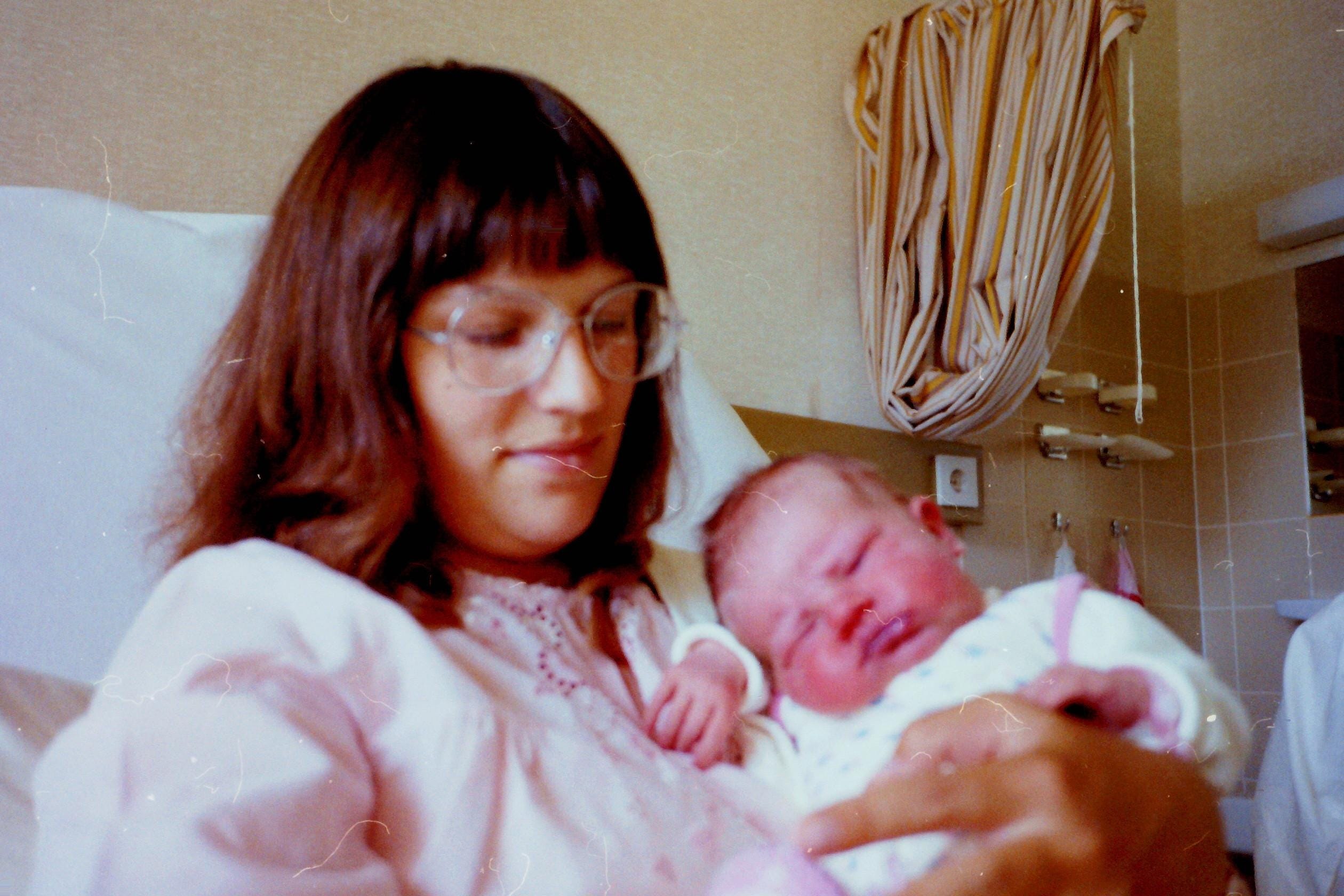
Shortly after, I was able to breastfeed you for the first time.
Your smell was overwhelmingly beautiful, perhaps not particularly fragrant, but wonderful to me. Then I was very tired. We both came to the room cleaned up. You had passed your APGAR test, though not with full marks. The fact that your heart weakened during birth meant that subsequent pregnancies were labeled 'high risk'.
We both rested thoroughly after the hard work. The nurses came by regularly and told me that you were still sleeping.
Johanna: I always have to laugh about this part. It was perfectly normal in 1987 that children were sleeping seperated from the mothers in the first hours (maybe even days) after giving birth.
I was exhausted and grateful. Everything went as desired. You drank well from my breast, and in between, you slept. Dad diapered you in the first few days. Grandma and Grandpa came to visit. I stayed in the hospital for six days. I was able to thoroughly rinse the episiotomy stitches with chamomile solution. All good. Back at home, the midwife came once a day. Mostly, she did postnatal exercises with me. She visited until your umbilical cord fell off.”
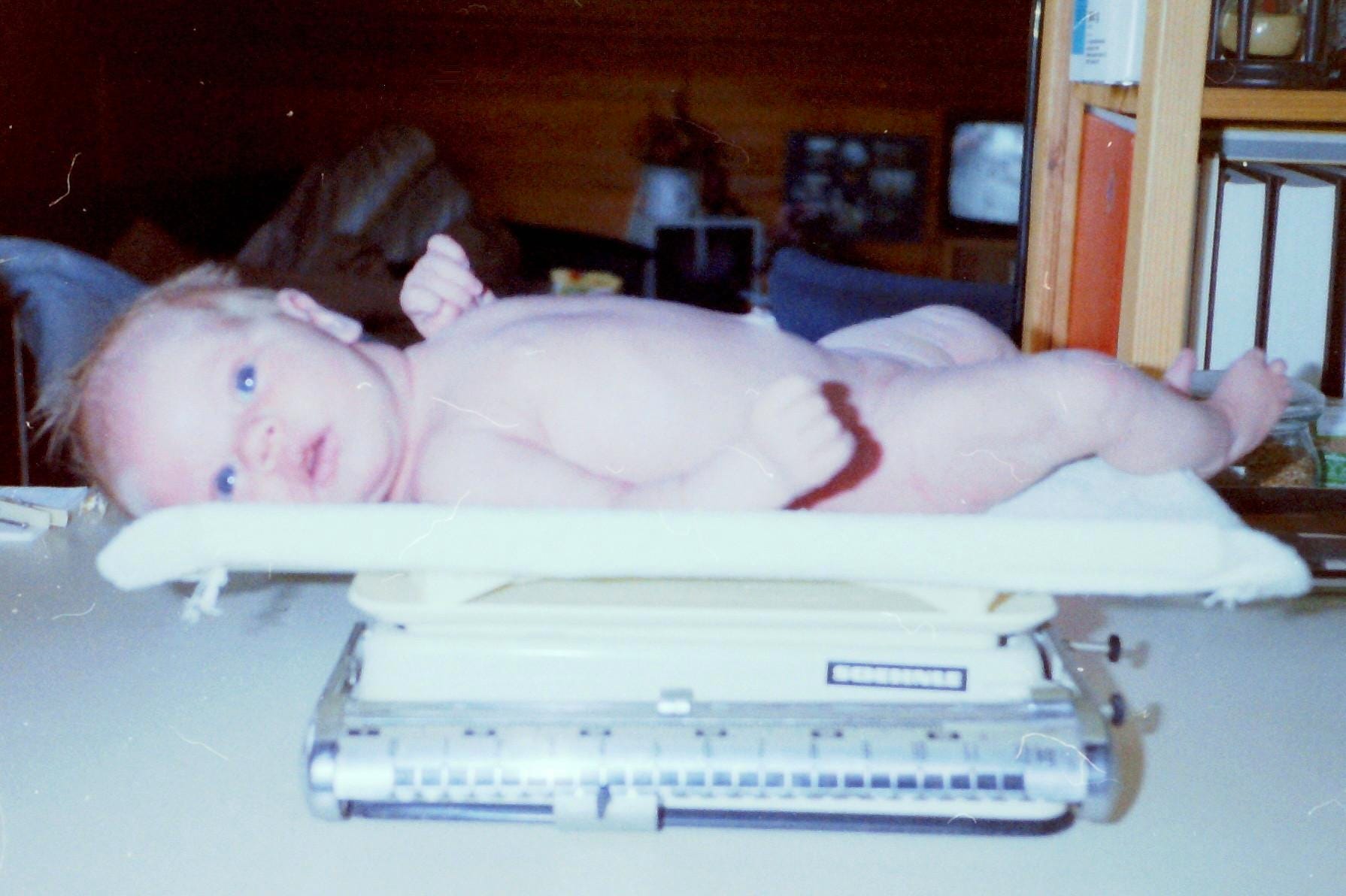
Thank you for reading the birth story of Eo (super woman!). I am learning so much by looking back in order to look forward. And I am grateful that my mother was willing to share her story here today. Knowing so many things about the pregnancy of my mother and my birth explains a lot of choices that I am making on a daily basis. Looking at the birth and childhood of my mother, explains a lot of choices she is making on a daily basis.
Isn´t it crazy how the power of birth is underestimated?
I want to inspire you to ask your mother about your birth next time you get the chance. If you are pregnant or planning to, consider that the choices you are making now and the way you are birthing your children is meaningful for the future.
As a Birth Doula, it is my goal to provide the best start for young families. I would love to talk to you about your experience and answer any questions you might have.
Yours, Johanna
The Power of Birth Stories: Shaping Generations and Healing Wounds
·
October 14, 2023
Birth stories are not merely accounts of labor and delivery. They are a transformative experience that can influence our understanding of childbirth, its societal implications, and its lasting impact on families. Throughout history, across cultures and communities, birth stories have served as a repository of knowledge and wisdom. These narratives provid…
Comments
Nothing yet. Say the first thing.
Sign in to join the conversation.