
Hello and welcome to my newsletter about how football explains global politics, money and power.
I thought I was done with World Cup newsletters, but there’s still so much to say, and I’m conscious that the hyper-relevance of my niche won’t last very much longer… so here’s one last one!
I’ve spent the last few days thinking about Lionel Messi. I’m still glum about his demolition of a cowardly England side in Wednesday’s semi-final. He really might be the best to ever do it. A win in tomorrow’s final would probably cement that case.
I’ve been thinking about Messi a lot this year. Ever since visiting Argentina for the first time in February, I’ve been fascinated by his Italian identity — or lack of it — which tells a deeper story about global migration and economic history.
Just like Messi, I have Italian heritage and an Italian surname. (The similarities end there.)
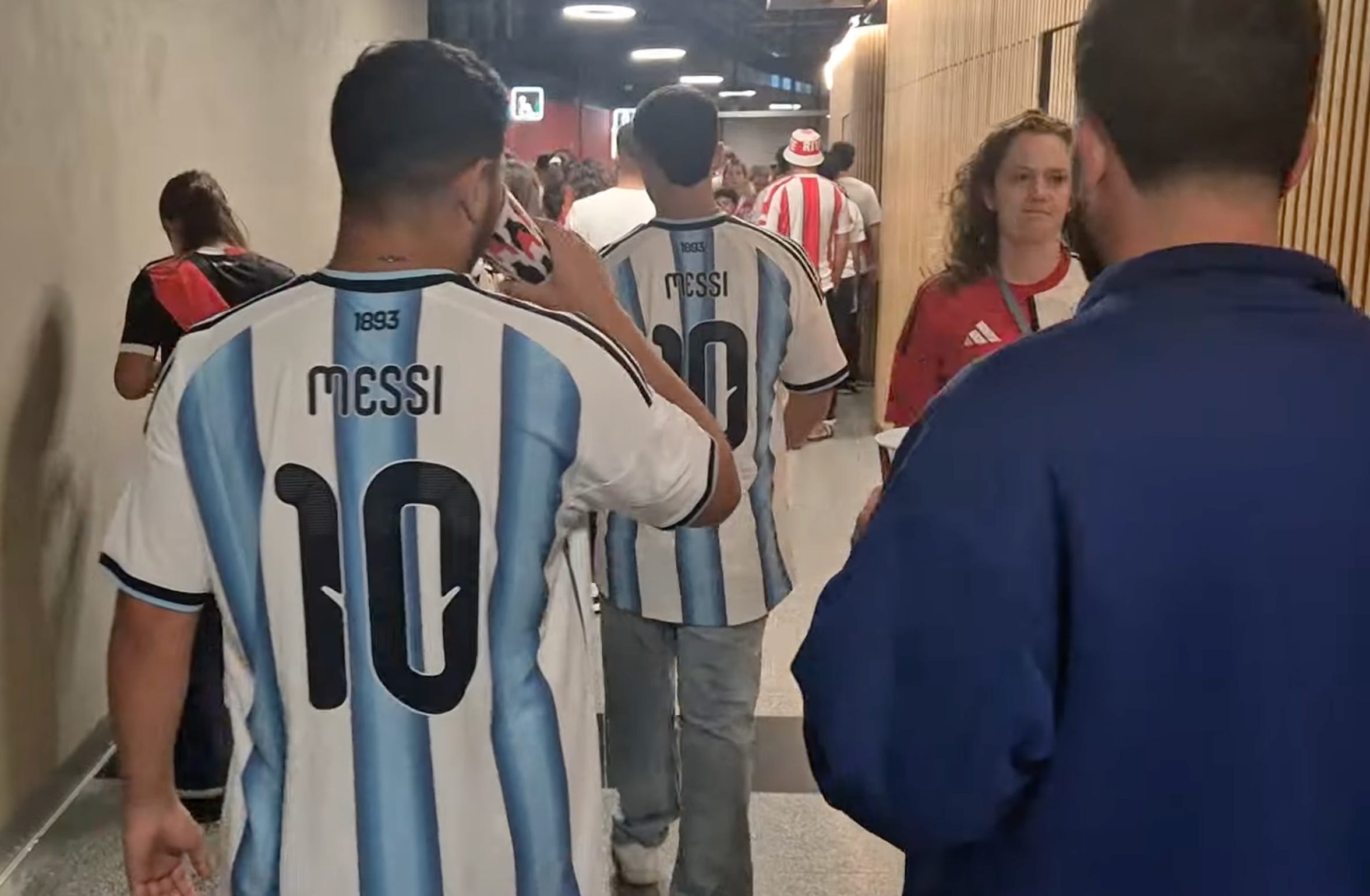
Guillem Balague’s 2013 book Messi describes an interview in the Corriere della Sera newspaper in which Messi is asked about his ancestral hometown by an interviewer who quotes one of the most famous lines of Italian poetry at him:
Q) (Your relatives) were from Recanati, like Giacomo Leopardi.
A) Who was he?
Q) A great poet: Sempre caro mi fu quest’ermo colle / e questa siepe, che da tanta parte / dell’ultimo orizzonte il guardo esclude.
A) I’ve never heard of him. I’m sorry.
Q) Maybe you’ve heard of the Virgin of Loreto. It’s close.
A) No. I’m sorry. Where is it?
Q) Le Marche. Central Italy. Have you never been curious to go and see where your grandparents came from?
A) No. I think my father knows the place. He has been there and has seen our relatives. Maybe one day I’ll go as well.
Q) Have you at least seen the ‘Hotel of Immigrants’ in Buenos Aires? It’s where most of the Italians who first arrived in the country based themselves.
A) No, I don’t know it.
Then the journalist showed him some old black and white photographs of those who’d gone in search of their fortune on the Pampas. ‘Stern-looking women with shawls and long, black skirts. Skinny, barefoot children. Enormous casseroles for food. The men in dark jackets, white shirts and felt hats. The eyes gazing into the void of the unknown, the kind of look that ought to be described in the lyrics of a melancholy song.’ Leo looked at them with some curiosity, but little else. For Leo, everything starts and finishes in Rosario.
The irony is that Rosario, 300km inland from Buenos Aires, might be the most Italian place outside Italy.
Rosarinos speak Spanish with an accent that is said to closely resemble Italian, specifically the Neapolitan dialect, which makes sense because around two-thirds of the city’s inhabitants have Italian ancestry.
Locals famously drop the final “s” from plural words, so “somos todos argentinos” — “we are all Argentine” — is pronounced “somo todo argentino,” not unlike Italian “siamo tutti argentini.” Messi has retained this accent — not just Argentine but distinctively rosarino — even though he left the city at 13.

I’ve been thinking about all this and what it means to the immigrant experience in Argentina compared to the USA and the UK.
The USA is a place where immigrants get hyphenated identities. Italian-Americans, Irish-Americans, Chinese-Americans. People cling to these, generations after their relatives crossed the oceans.
Over time, these do fade somewhat — The Sopranos is a great depiction of that.
In one episode, Tony’s gang visit Naples on business, expecting a homecoming, but the actual Italians see them as Americans with primitive culinary tastes.
In another, mobsters bemoan how Christopher Columbus Day, commemorating the Genoese explorer, is portrayed as an example of colonial exploitation rather than remembering a world-famous Italian.
But the true enemy of distinctively Italian-American culture is not woke, it is gradual assimilation, in children who know nothing of the supposed homeland.
Even so, it is not unusual for American citizens today to say “I’m Italian” despite never having been there and not speaking the language, just as Joe Biden described himself as “Irish” despite reportedly having more English ancestry.
The experience of Italian immigration to Argentina is very different.
The country speaks Spanish, like most of the rest of the continent, because the first European settlers were from there. Plenty of Argentines have Spanish heritage, reflected in the surnames of the two goalscorers on Wednesday night: Enzo Fernández and Lautaro Martínez.
But even more of them — around 60 per cent of the total population — have Italian ancestry. This can be seen in the names of other members of that squad like Giuliano Simeone, Nicolás Tagliafico, Marcos Senesi, Gerónimo Rulli… and Lionel Messi.
Not only does his own surname come from Le Marche, but his mother’s maiden name is Cuccittini and his wife, a fellow Rosario native, was born Antonela Roccuzzo. Messi even holds Italian citizenship.
And yet, none of this means much to Messi, and that indifference is the whole point.
In the USA, these immigrant journeys were preserved in hyphenated identities, but in Argentina they pretty much dissolved.
Part of the reason is sheer volume. Italians didn’t arrive as a minority assimilated into an existing majority, they arrived in such numbers that being Italian became the norm. (There is some sinister history here — the prioritisation of European immigration and the “Conquest of the Desert” in which indigenous people were killed and displaced.)
The introduction of new European arrivals was a state project, and assimilation happened quickly, helped by the linguistic closeness of Italian and Spanish, and the common Catholic faith.
Italian-Americans, on the other hand, faced discrimination, perhaps solidifying their minority identity in the face of hostility.
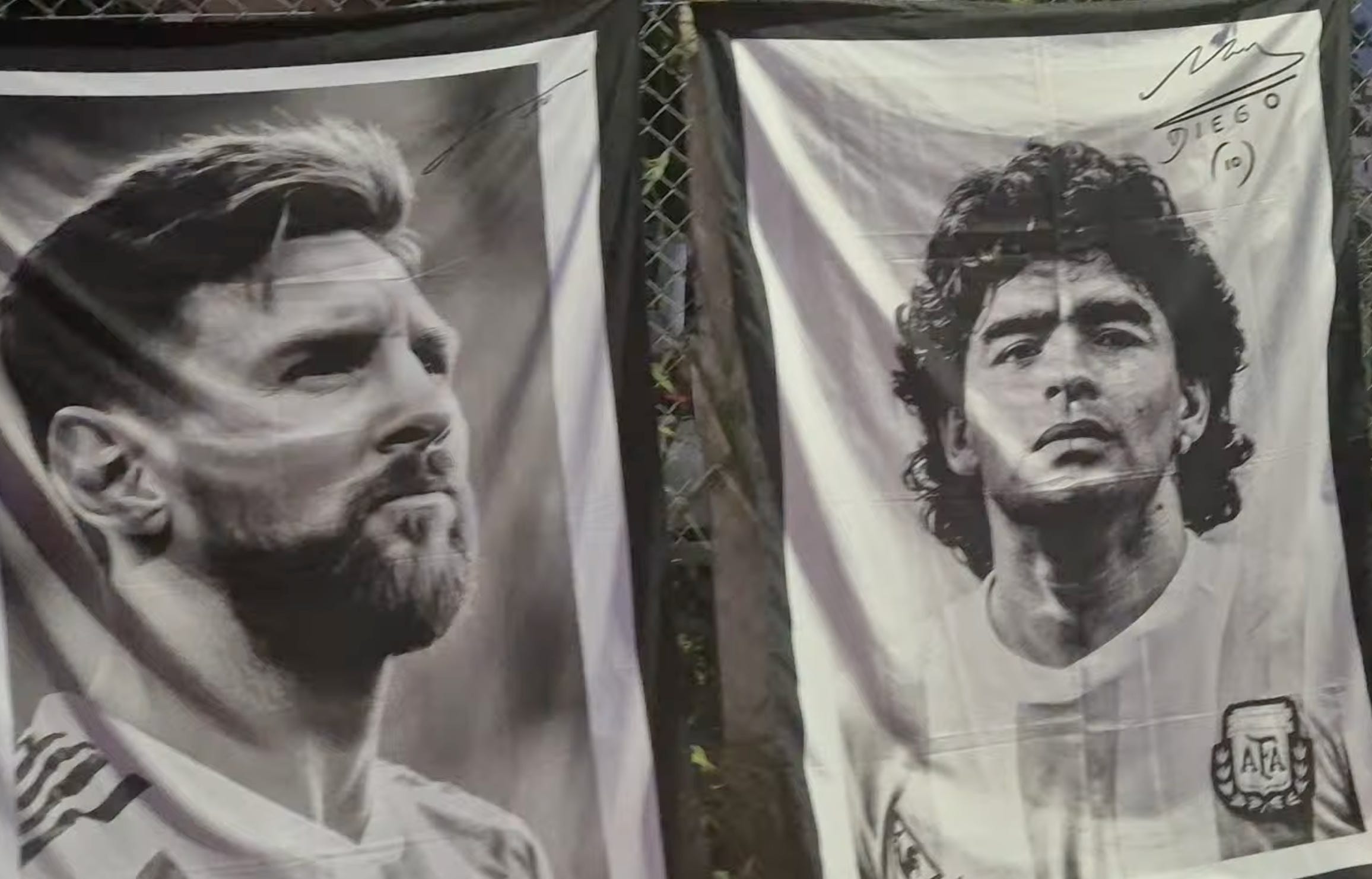
This all means that, while many Argentines are proud of their heritage, knowing their ancestral villages and pointing to culinary and cultural links, there isn’t the same Italian-Argentine identity as there is an Italian-American one.
Then there’s my own experience. I would hesitate to call myself a “British-Italian” because only one of my four grandparents was Italian.
But it is certainly an identity marker, a distinctive name that I often find myself talking about. I have never experienced anything negative.
Like Messi, it was also a route to a passport. For what it’s worth, my ancestral village is the wonderful Minori on the Amalfi Coast, which has transformed from an impoverished backwater to a holiday destination.
Italians in Britain were always a small yet visible minority, and a name like mine still reads as somewhat exotic — but in Argentina it would be as unremarkable as Smith or Jones.
Onwards, to Sunday’s game.
On paper, Argentina against Spain is an old colony against the mother country, speaking the mother country’s language… but there’s another dimension.
New Jersey is not just home of MetLife Stadium, it is home of the Sopranos.
Somewhere nearby, a well-informed Italian-American uncle will be explaining to his nephews that — despite Italy’s failure to qualify — an Italian captain might still lift the trophy.
No posts
Comments
Nothing yet. Say the first thing.
Sign in to join the conversation.