
Hello and welcome to my weekly newsletter about how football explains politics, money and power.
I’m writing this from a cabin in the woods in Scotland, where I’m finishing the first draft of my second book (!) which will be out next summer. I’m being coy about the specifics for now, but here are a couple of fun nuggets I’ve come across while reading and writing this week...
Did you know Thierry Henry and Charlie Chaplin were alive on this planet at the same time? Edgar Davids and Pablo Picasso were too. Well here’s another football-related historical anachronism.
Karl Marx and Friedrich Engels, the intellectual godfathers of communism, spent much of their later lives in London, and each weekend would go for a walk together on Hampstead Heath in the early 1870s.
At the same time, the Hampstead Heathens, one of the capital’s first football clubs, played football there.
Did the nattering German communists ever get interrupted on their strolls by a heavy leather ball rolling across their path? We’ll never know.
Here’s another anachronism. The Russian Empire, ruled by the Romanov Tsars for more than three centuries, once sent a football team to the Olympics.
The Russian Empire’s first-ever match was in 1910 against the Kingdom of Bohemia. Two years later, they sent a team to the 1912 games in Stockholm.
The Russians lost their first game 2-1 to Finland, or more accurately, the Grand Duchy of Finland, an autonomous state within the Russian Empire at the time.
The Russians then lost the following ‘consolation game’ against the German Empire… 16-0. Ten of the goals were scored by Gottfried Fuchs, who was Jewish, and fled to Canada in the 1930s. (This equalled the record for the most goals scored in an international match, before Australia’s Archie Thompson scored 13 in a 31-0 win over American Samoa in 2001.)
Within years, the German and Russian empires would be wiped from the map, as would the Kingdom of Bohemia, while Finland would become an independent country. This was because of the First World War and Bolshevik Revolution that followed it, inspired by the writings of Marx and Engels.
Anyway, this is the sort of stuff I’ve been thinking about, so apologies for having no original thoughts on the Infantino saga or Jeff Bezos’s purported takeover of Liverpool.
On that note, soon I’ll make one of these weekly newsletters a ‘mailbag’ edition where I answer some readers’ questions. Ask me anything by replying to this email or commenting on Substack!
This week I jumped on my first ever Substack Live, with Times journalist Patrick Maguire, who has recently spent time with new UK PM Andy Burnham.

This was a bit of an experiment, any feedback welcome. The two of us are also doing an event at Backstory Books in London (SW12) on Tuesday September 22nd. Tickets here.
In our online chat we spoke at length about how football is core to Burnham’s political identity, and how the new PM is perceived as more of an authentic fan than his predecessor Sir Keir Starmer, who was in fact a genuine Arsenal fanatic.
That is partly due to the two men’s personality and vibe, but also surely due to their respective teams.
Burnham’s Everton have come to represent a sort of earthy provincialism, helped by their distinct lack of recent success. This is despite a flashy new stadium and seven unbroken decades of top-flight football.
And Arsenal?
Well, on that topic, here’s an article I wrote a few months ago for the New Statesman behind their paywall. This is republished with their kind permission — I highly recommend a subscription!
*THIS ARTICLE WAS ORIGINALLY PUBLISHED IN FEBRUARY 2026*
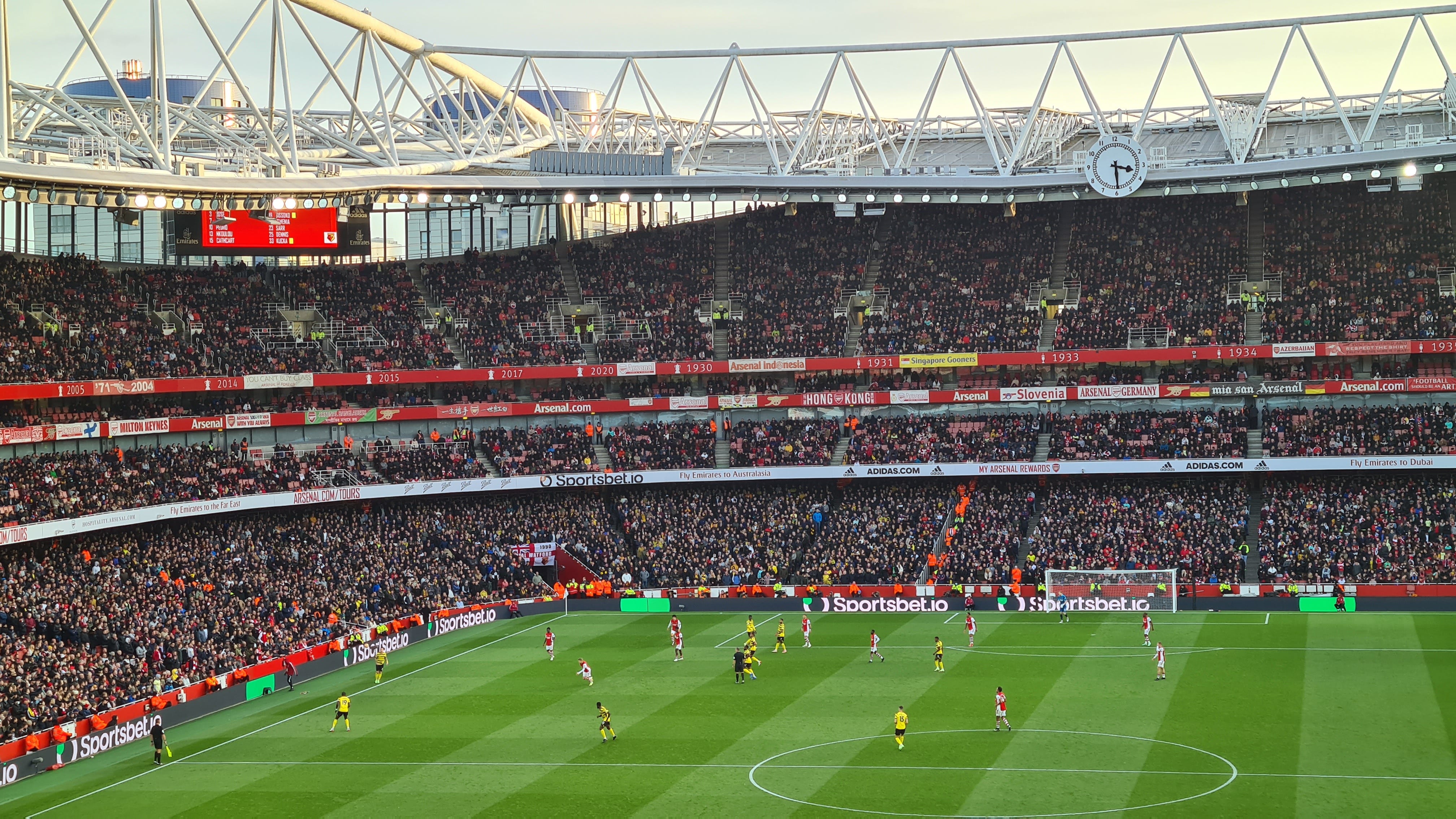
Despite a recent wobble, Arsenal enter today’s North London Derby against Tottenham as the favourites to win the Premier League. The title has eluded Mikel Arteta’s team since the 2003/04 season, and they have finished in second three seasons in a row. At the prospect of victory, emotions are running high, among both players and supporters. The latter camp includes Keir Starmer: the Prime Minister is a season ticket holder and a genuine fan.
The same is true of much of Britain’s liberal establishment and cultural elite – people like Starmer. If you speak to a barrister, senior civil servant or media executive in the capital, they will be more likely to support Arsenal than any other club.
This is not an accident. Over the last three decades the club embraced internationalism, anti-racism and professionalism, values which speak to liberal England’s idea of itself. English football in general has moved in this direction but Arsenal did so earlier and more overtly than rivals, marking a clear break with the violence and decay that English football represented in the 1980s. Being an Arsenal fan gained respectability in polite company before football more broadly did. To outsiders, though, the vibe of modern Arsenal fandom can sometimes come across as a bit smug, LinkedIn-coded, not quite proper – a bit like the PM.
The cultural moment that signifies the shift is Nick Hornby’s Fever Pitch, published in 1992. It was a brilliant book on fandom that marked the first time that football was considered a mainstream literary topic, and its chosen club was Arsenal. In 1992, English football was changing quickly. The Premier League launched the same year as that book, injecting professionalism and money into a game that – following the Hillsborough disaster – needed both. The game had become associated with violence, racism and crumbling stadiums. Its loose connection with Middle England had been severed.
On the pitch, the cosmopolitan turn happened quickly. When the Premier League launched, there were barely a dozen foreign players across 22 teams. By 1999 Chelsea fielded a team without a single Englishman in the starting XI. Arsenal led this trend too, signing Dutchman Dennis Bergkamp in 1995 and Frenchman Patrick Vieira in 1996. Another Frenchman, Thierry Henry, signed three years later, is perhaps Arsenal’s greatest player ever. Finally, Arsène Wenger, also French, at Arsenal from 1996 to 2018, was the first foreign manager to achieve sustained success in England. His sophisticated ideas about diet, tactics and shopping for players abroad changed the domestic game forever. It all worked out on the pitch with Arsenal winning three league titles between 1998 and 2004.
It all chimed neatly with an ascendant liberal-cosmopolitan worldview. In 1997 The Fast Show parodied posh Arsenal fan Roger Nouveau who not only ate from a picnic basket but was obnoxiously ignorant of the rules of the game and how to talk about it without looking like an idiot. Three decades later almost the opposite stereotype is true – Arsenal fans are less likely to be ignorant than irritatingly overeducated, disproportionately data-literate professionals at ease with football’s statistical revolution. Yet in the same way, this can feel one step removed from the traditional blood and thunder of the English game.
Arsenal did have a longer tradition of openness. Before the Nineties, the club had established itself as the best-supported club among black Londoners of all social classes on both sides of the river. And Arsenal, while not uniquely virtuous, was never strongly associated with overt racism, unlike Chelsea, West Ham and of course Millwall. Black people felt comfortable going to games at Highbury earlier than elsewhere. Ian Wright and David Rocastle became terrace heroes at a time when the idea of an English football crowd embracing a black player as one their own was unusual. Arsenal also have the best-supported women’s team in the country and the most successful alongside Chelsea. The big northern clubs are light years behind. This too feeds into the club’s modern liberal identity.
The Nineties transformation was not total. Most Arsenal fans are not posh; unlike areas like Chelsea and Fulham, Islington’s reputation for wealth is relatively recent. For much of the 20th century, North London was rather hardscrabble compared to the West. It is truly ethnically diverse, while Islington has big council estates and some of the highest child poverty rates in the country. When property prices exploded in the 1990s and 2000s, many Londoners moved further out, to places like Hertfordshire and Essex, taking their football fandom with them. This means London football fandom is now less tied to geography. Arsenal are the best-supported team across the capital and you are almost as likely to see shirts in Croydon or Hillingdon as Islington.
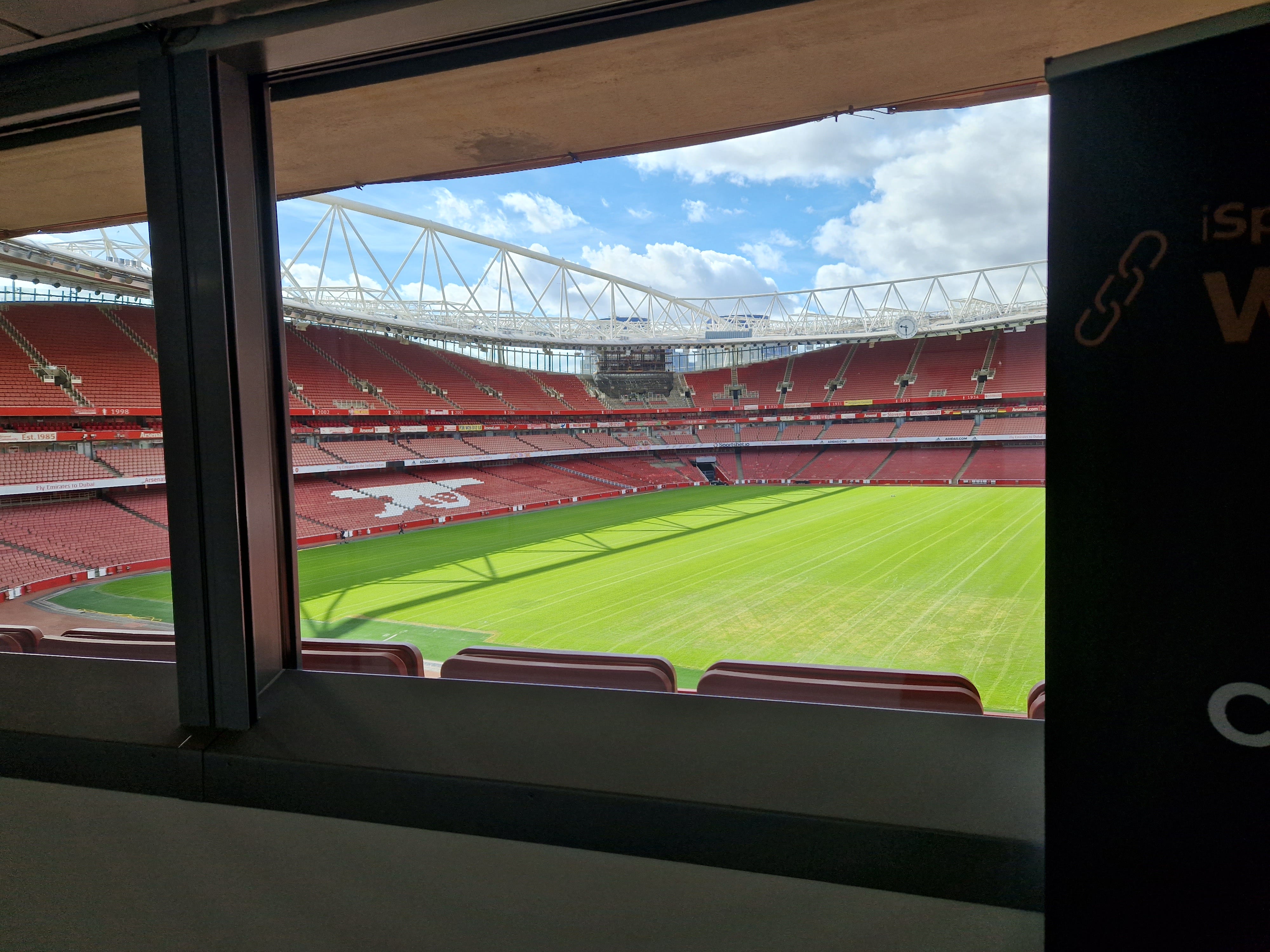
Arsenal were the only sustained challenger to the dominance of Sir Alex Ferguson’s Manchester United for a decade. But the glory years ended when foreign oil money began to splash upon English shores, first in the form of Roman Abramovich who bought Chelsea in 2003, then with Abu Dhabi-owned Manchester City from 2008. It would take more than a decade of patient building, with a new stadium and the dividends of the Premier League’s international TV boom starting to bear fruit, before Arsenal would challenge at the top again.
Despite less success, Arsenal retained their position as the natural club of the liberal establishment. Others represent different Londons – Chelsea the nouveau-riche west, West Ham the gritty east. Tottenham is a less salubrious pocket of the capital than Islington and the club’s recent self-image, despite a spectacular stadium and a European trophy last season, is one of chronic underachievement.
Whatever the result of the North London Derby, that elusive Premier League title feels eminently achievable. If the club does manage it, Mikel Arteta, the human embodiment of a TED Talk or motivational LinkedIn post, will deserve his flowers. That is unless Arsenal drown under the weight of their own neuroses and finish second once again. It would be a very liberal establishment thing to happen.
A reminder that you can ask me anything by replying to this email or commenting on Substack. I will answer questions in an upcoming newsletter.
No posts
Comments
Nothing yet. Say the first thing.
Sign in to join the conversation.