
Hello and welcome to my weekly email about how football explains global politics, money and power.
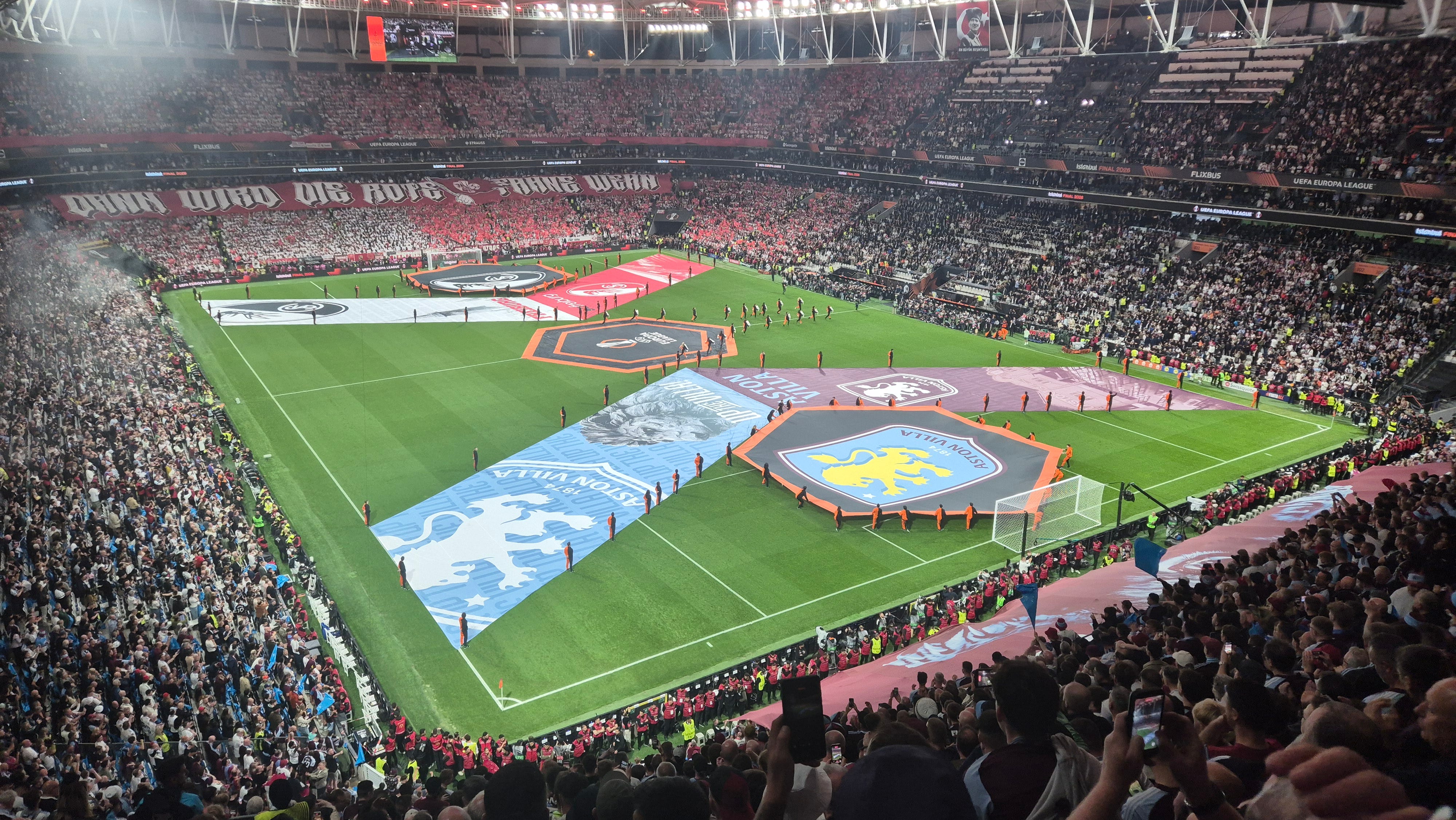
It’s been a rollercoaster summer for Aston Villa fans like me. In May I was in Istanbul to watch my team win the Europa League, a glorious first trophy in 30 years, but that now looks like the end of an era.
Half of that starting line-up have gone, with the added sting of Youri Tielemans, Morgan Rogers and now Ezri Konsa going to Premier League rivals.
There’s excitement about a refresh that has felt needed for a while, and the most important factor — manager Unai Emery — remains.
Still, as a fan it’s frustrating to be constantly thinking about PSR, SCR and FFP, the alphabet soup of financial restrictions that are hampering Villa, as well as Newcastle.
This pair of upwardly mobile clubs have threatened to break up the ‘Big Six’ of Arsenal, Chelsea, Liverpool, Manchester City, Manchester United and Tottenham Hotspur, but are held back by financial rules.
I don’t believe there are any shadowy conspiracies here, but it’s got me thinking — is it actually in the Premier League’s interest to get new title challengers?
I think perhaps not, because while some competition makes a league more interesting, too much competition makes a league hard to follow, which could harm the Premier League’s global pulling power.
A recap on those rules. Premier League and UEFA rules impose spending limits, linking them to club revenue — higher revenue clubs are allowed to spend more.
Selling players for big fees helps in the never-ending struggle against the rules, which are particularly hard for fans to stomach because Chelsea and Manchester City leaped into the elite at a time before these rules came into place in the early-2010s.
But big sales also weaken the team and make it much harder to keep winning on the pitch.
For a long time, from about 2010 to 2022, those Big Six teams usually made up the top six in the league.
That changed from 2022, when Saudi Arabian money was flowing into Newcastle United, and Unai Emery arrived at Aston Villa, owned by an Egyptian and an American billionaire.
These two clubs reached European football in seven of their eight league campaigns, a consistency not seen outside the Big Six for a very long time.
But repeating the trick is difficult. Newcastle, too, have sold Sandro Tonali to Tottenham, Bruno Guimaraes to Arsenal and Alexander Isak to Liverpool.
My book More Than A Shirt is on sale in paperback for just £9.49
It's hard to stay optimistic when your team keeps getting picked apart to strengthen the clubs you are trying to finish above.
Maybe it’s my Villa bias talking, but it’s hard to escape the conclusion that the rules are helping the Big Six at the expense of the challengers.
It’s worth noting though that the rules were voted through by a two-thirds majority of Premier League clubs, not imposed from top down… and for good reasons.
First, to save clubs from themselves. In the 2000s, Leeds and Portsmouth spent money badly chasing Premier League success, and nearly went under.
Second, the rules stop state-owned clubs like Newcastle from blowing everyone out of the water. This is a noble goal because that would trigger an inflationary spiral, with other clubs having to pay higher and higher wages to keep up.
The thing that stings about this, of course, is that Manchester City managed to reach the summit of world football in a way that wouldn’t be possible now.
All this makes more sense, however, when you think of the Premier League as a broadcast product that can only grow by finding new viewers.
That characterisation might sting for those of us who have been spending lots of money on tickets all our life. But far more money these days comes from selling TV rights, and most of the growth is abroad.
And to have a compelling broadcast product, it helps to have a stable cast.
In Miguel Delaney’s excellent book ‘States of Play,’ he quotes a Premier League executive on the aborted plans to create a European Super League.
“We don’t want too many Leicester Cities,” the official said, referencing the club’s 2015–16 title win. “Football history suggests fans like big teams winning. A certain amount of unpredictability is good, but a more democratic league would be bad for business.”
This is obviously in the interest of the biggest teams, but most of the league’s other teams aren’t trying to challenge at the top year after year, in the way Villa and Newcastle are, with owners who can afford to.
The Premier League is, in fairness, pretty competitive. The last 14 seasons have seen six different champions.
This is striking when compared to other European leagues over the same period. In Germany, Bayern Munich won all but one season. In France, PSG won all but two. All pretty dull for a casual viewer.
In Spain, the El Clásico game between Barcelona and Real Madrid is a big event, but it only happens twice a season.
In England, meanwhile, there are 30 fixtures a season that see a Big Six team play a Big Six team – almost every weekend.
England’s mid-table teams tend to be packed full of international players. Arsenal v Brentford, or Chelsea v Everton, is far more enticing than Real Madrid v Espanyol.
But what if Brentford and Everton were a lot better, and routinely finished above Arsenal and Chelsea?
While surprise results are exciting in isolation, if they happen every week, and there are no consistent favourites or underdogs, it all becomes confusing to a casual follower.
Take the example of the USA.
In the last 11 seasons of Major League Soccer, there have been nine champions, with only Seattle Sounders and Columbus Crew winning more than once.
A fan might get into the league because of one particular team who are then nowhere to be seen the following season. They never get the ongoing rivalries and storylines spanning many years that have helped make the Premier League so popular.
Imagine a nine-year-old in Jakarta. Or someone in Atlanta who enjoyed the World Cup. A Premier League with a Big Six, perhaps three or four of them with a chance of winning the league in a given season, and one of them doing terribly, seems like the optimum model for an entertaining product.
So it’s not that anyone specifically wants Villa and Newcastle to fail. Indeed, many fans of clubs outside the Big Six seem to have some sympathy, hoping one day to penetrate the very top as well.
But the system as a whole, financially driven by the invisible hand of wanting a compelling broadcast product, has no particular interest in their recent success going further.
Or maybe I’m just a swivel-eyed Villa loon…
No posts
Comments
Nothing yet. Say the first thing.
Sign in to join the conversation.