
Part 5 (of 7) — The Age of Colonization to the Gilded Age, the Victorian era, the Second Industrial Revolution.
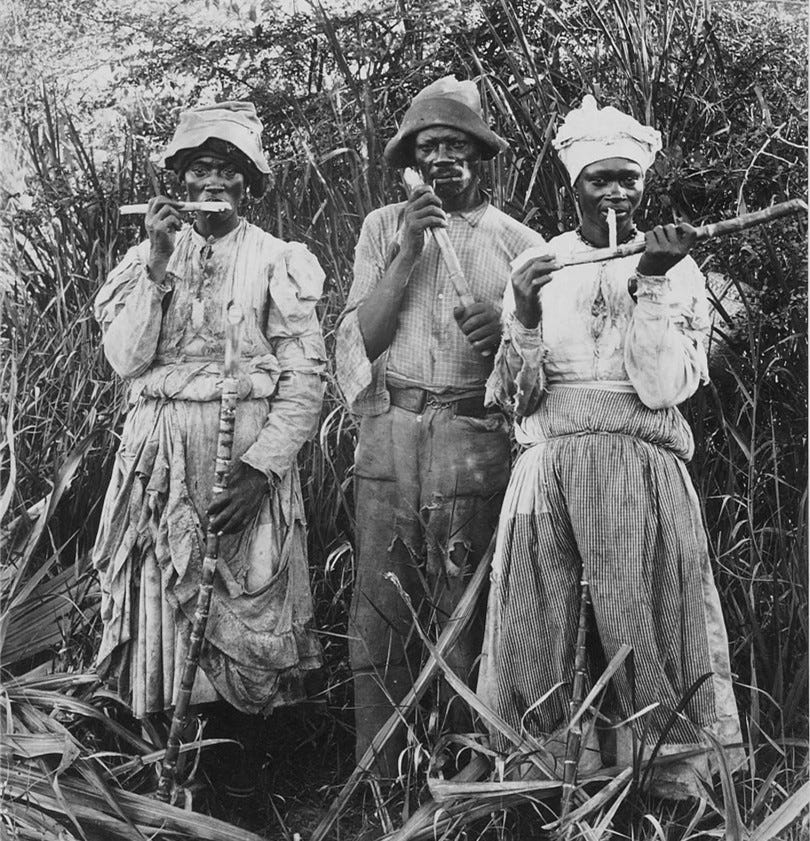
The “Columbian Exchange” (1493 – early 1500s) would open up the world to new trade routes and bi-hemisphere commerce. That was the plan and it would do that remarkably well — at the expense of the Indigenous Peoples of the American continents, as well known. It would lead to intense colonization of worlds already populated by civilizations and agriculture and different foods. It would also lead to the exponentially expanded business model called slavery.
The key profitable crops that followed the CE were sugar and its important by-product of rum, as well as rice, more spices, chocolate, “tequila,” vanilla, and corn. These high-demand crops — grown by slave labor — provided fortunes to a few British and colonial families.
During this same period, potatoes died en masse and somebody thought chewing gum was a good idea. All of this, along with snow peas, wasabi, hominy and grits, popcorn, pumpkin pie, sunchokes, cremini, Welch’s grape juice, chocolate bars, tabasco, and ketchup fruits. And more.
.
1502 CE — Portuguese explorer Gonçalo Coelho planted the first stalks of sugarcane in Brazil. Mills and stills were built along the coast, producing the first cachaças, a distilled spirit made from fermented sugarcane juice; also called “Brazilian rum.”
1640 CE — “Barbadian rum” is created when colonists realized that the sticky syrup (“molasses”) left over from making sugar could be fermented and distilled. Considered the first actual “rum; in British colonies, it was named, simply, rum.
Richard Ligon in his book, the “History of Barbados” writes of an alcoholic beverage served at dinner parties made from the “skimmings” of sugar known as “Kill Devil.”
1664 CE — The first rum distillery appeared on what we now know as Staten Island, NY.
1770 CE — There were over 150 rum distilleries in New England (and more elsewhere). The colonists, collectively, were importing 6 ½ million gallons of West Indian molasses and turning it into five million gallons of rum.
1667 CE — Barbados West India Company Sugar Mill Factory is established. Barbados would soon become the most populated - and richest - country per square mile at the time. It was likely all created by the enslaved people on the sugar plantations.
.
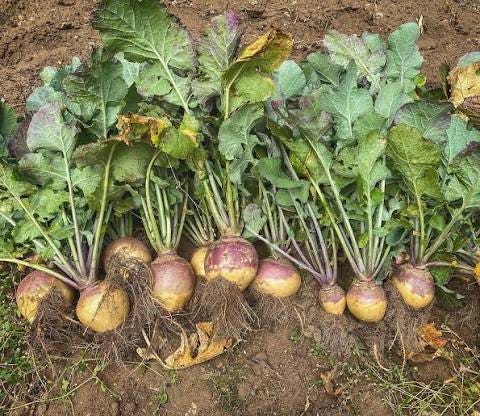
ca. 16th Century CE — Rutabaga (the UK and US name; elsewhere it’s called swede or turnip but not to be confused with the white turnips in the UK and US) (Brassica napus var. napobrassica or Brassica napobrassica). It is a cross between a turnip (Brassica rapa) and wild cabbage (Brassica oleracea), and the new interspecific hybrid underwent spontaneous chromosome doubling to create a new species. Maybe first “discovered” in Scandinavia, Finland, or Russia. Most likely bred on more than one occasion
1620 CE — The first known printed reference was by Swiss botanist Gaspard Bauhin, who noted it growing wild in Sweden.
1750 CE — Arrived in England from Germany.
1781 CE — Arrived in Scotland by way of Sweden.
.
Comments
Nothing yet. Say the first thing.
Sign in to join the conversation.