
One of the questions I get asked quite often, mostly by fellow creators, is what I listen to when I write and draw, and we compare notes. Here’s the thing: when I write, I need complete silence; I can’t even listen to a soundtrack, and I have to have my studio door closed. When I draw, well, that’s a different story altogether. I’ll start my morning by having Speechify read some of my favorite newsletters, and then I’ll blast whatever music I’m in the mood for. Country, Alternative, old school Power Pop, Classic Rock, Classical, Musicals, you name it, every day is different.
The one constant is Rev Greg.
He’s a music historian, broadcaster, and media archivist who’s been behind the mic for nearly thirty years doing what most radio stopped doing a long time ago: playing deep cuts, following the music wherever it leads, and actually talking to you about what you’re hearing. No algorithm. No format clock. Just someone with serious knowledge and a genuine love for the music.
Studio 66 Radio grew out of a Philadelphia FM program and has been carrying the torch for classic freeform radio ever since. The 1960s through the 1980s, the era when radio was actually an adventure. Personal, unpredictable, and driven by the music rather than a playlist. Think pirate radio, but legal. You never know when he’s going to be on, so if you want to catch him, get on his mailing list at Requests1967@gmail.com.
The Reverend has things in his vault that most people never knew still existed. Just five days ago, he posted a clip on his Facebook page of a rare jam session that aired in 1978. Almost overnight, it had over four million views. That’s why I listen; he always plays something that blows me away. He also takes requests!
His next broadcast is Saturday, May 23rd, at 9:00 PM ET. Find it at studio66radio.com. You’re going to feel like you stumbled onto a station you thought didn’t exist anymore.
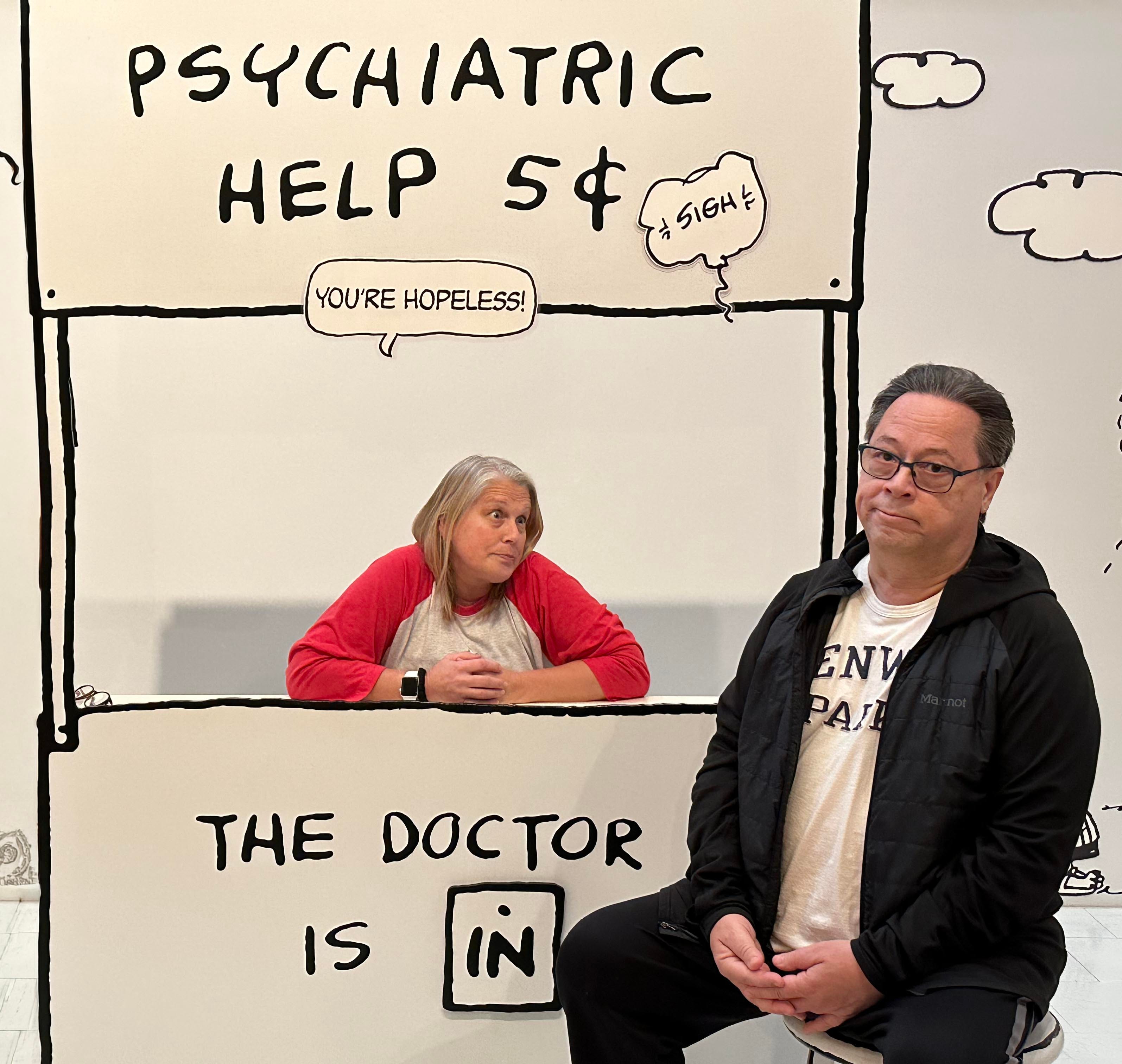
Here’s something that 26 years of marriage has taught me. I can sometimes be wrong, like all the time… even when I’m right.
About two and a half weeks ago, shortly after Lesson 15 dropped, I received an email from my old pal Tom Brevoort, Marvel Senior Vice President of Publishing and one of the best editors in the history of comics.
In that lesson, I showed you two page layouts and told you the right-side layout was the stronger choice. Tom argued that the opposite was true.
And he wasn’t wrong.
But neither was I.
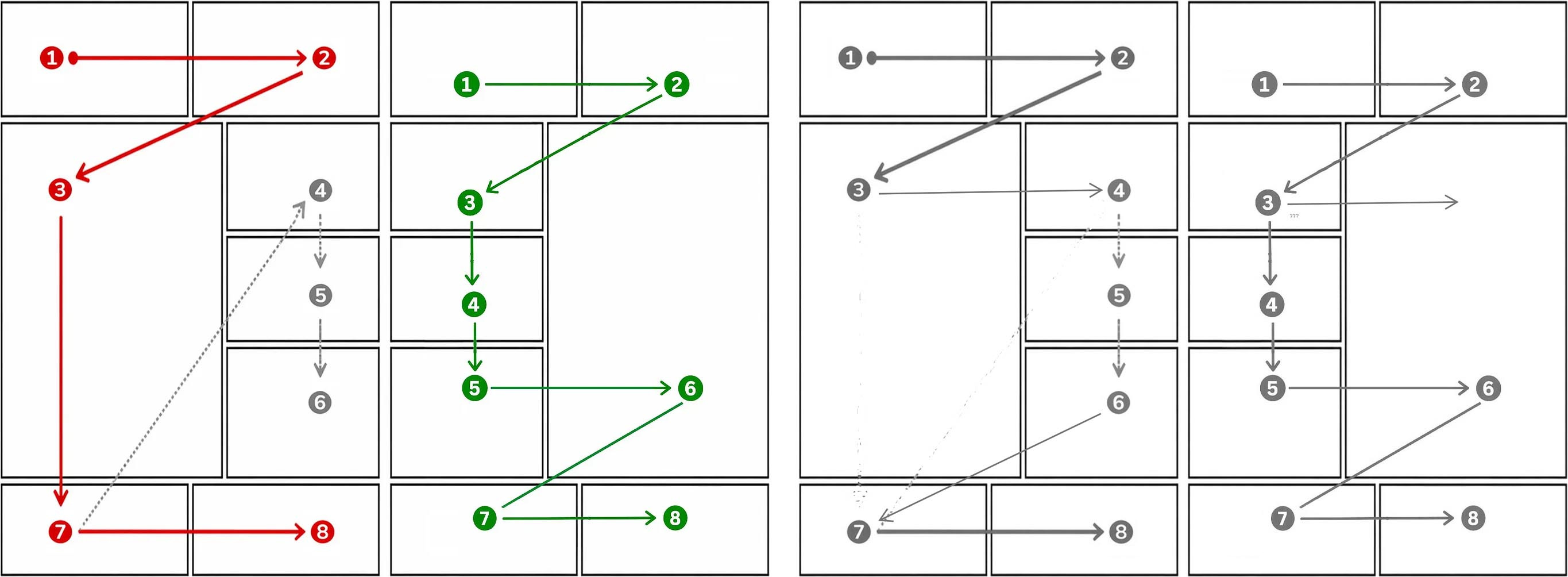
Where I screwed up was that my answer lacked clarification and nuance because the choice depends on what the big panel is doing in the scene. If it’s the setup, the anchor, the moment everything else builds from, it belongs on the left. If it’s the payoff, the consequence, the thing all those smaller panels are building toward, it belongs on the right.
The Z-path still works. The principles from Lesson 15 still hold.
But I missed the caveat.
Thanks, Tom.
It was 1985. I was twenty-three years old, completely devoted to music, and completely broke. Which, as band experiences go, are pretty much the same thing.
The other three members of my band were equally broke, which made rehearsal studio time a constant problem. So I remember it like it was yesterday, the day our bass player, Mike, said, “I think I found us a fantastic place to rehearse for free, but...”
We were all so excited that we immediately said yes, without even considering the “but” part.
We should have.
At that time, Mike was managing Nino’s Studio, a world-class rehearsal facility. On any given day, you could find Joan Jett and the Blackhearts, the Stray Cats, Ritchie Blackmore, and others working in Studio A. The room was large enough to hold a small concert.
But.
It was in Baldwin, Long Island. An hour drive for me. About 45 minutes for our guitarist Tommy and drummer Bobby, both in Brooklyn. Mike lived ten minutes away.
But.
If we wanted to rehearse there for free, it would have to be Sunday mornings. At 8:00 AM.
Ugh. Okay. Sure.
Nino loved Mike. Mike worked weekend shifts without complaint, which in the live music world is basically sainthood. As a reward, Nino told him that his band could use Studio A on Sunday mornings before the first paying act showed up around noon.
Studio A was in the basement. The entire basement. You walked down a steep flight of stairs, made a left, and found yourself in an extremely dark, narrow, long corridor. At the end of it, a single downlight highlighted a heavy soundproof door.
We set up our gear, checked the mics, and settled in for what was supposed to be a solid four-hour session.
But.
Mike said Twisted Sister was prepping for their upcoming tour and coming in earlier than expected, and we needed to cut our time short and clear out so he could get the studio ready. Okay, disappointing, but they were paying customers.
After a truncated rehearsal, we packed it in and headed up, and Mike went right to Twistifying the studio so that when they arrived, everything was set up the way they liked and they could just plug and play.
Before I could leave, Mike asked if I would man the front desk for a few minutes, take any calls, and, when “Twisted” showed up, send them down.
Mike went back down to do his thing, and not too long after, the band strolled in. All I remember is that they were these very tall dudes with mountains of hair. Hey, it was the 80s.
They walked right past me; they knew their way down. I don’t even know if they noticed me standing there. Then the phone rang. It was Mike’s mom. She needed to speak to him. I told her he’d be up in a few minutes and I’d have him call right back. She said it was urgent.
I told her to hold.
I ran back down the stairs and down that narrow corridor and pulled at the studio door. Locked. Odd, so I knocked.
The door opened a crack.
There stood Dee Snider, the band’s lead singer. He’s backlit by the studio lights, so all I can make out is this towering silhouette with the most architecturally ambitious head of teased hair I have ever seen in my life.
“Can I help you?”
“I just need to speak to Mike.”
“Sure, come on in.” He opens the door a bit wider and gestures for me to go through.
I take one step inside.
He grabs the door with both hands…
and drives it into my face as hard as he can.
I flew backward, hit the opposite wall of the corridor, and slid down it like a cartoon character. I cannot recommend the experience, but I will say it looks exactly as funny as you’re imagining.
I was on the floor, dazed, listening to the deadbolt slide home on the other side of the door. Then:
“BWAHAHAHA. Fucking groupies.”
I was out of my mind furious. I was also dimly aware that Mike’s mom was still on hold. I ran up, told her he’d have to call back, then headed back toward Studio A, fully prepared to have what would have been the greatest fistfight of my twenty-three years on earth. I was going to kick a rock star’s ass.
It helped that I didn’t like his music anyway.
Before I got to the stairs, Mike came running up and grabbed me by both shoulders. He could see exactly what was happening. Mike was always a big brother to me, so he walked me outside and talked some sense into me.
“Joey, get in your car, drive home, and shake it off. Yeah, he’s got it coming, but if you touch him, I’ll lose my job.”
So I drove home. Seething.
By the next day, I was over it. I filed the whole thing away and never gave it another thought.
This was one of the greatest convention weekends of my life, and not because of the convention, but because Beatlefest was happening at the same time in the same building. I spent as much time at Beatlefest as I did working my side of the convention hall.
The Hyatt built into that convention center is an atrium-style hotel, and at the end of each con day, kids with acoustic guitars would gather on the ground floor lobby and play Beatles songs. The music echoed up through every floor. I could hear it outside my bedroom door. All those voices singing together, all those songs, the joy, the love, it was heavenly.
On Saturday, the Marvel crew had made dinner plans. I’d arranged for everyone to meet me on the mezzanine. Partly logistics, mostly because I wanted to watch and listen to all those people sing. I got there a half hour earlier, leaned against the railing, closed my eyes, and just listened.
Then I heard the rustling of a paper bag. And chewing.
I turned. A kid, maybe sixteen, seventeen, eating McDonald’s fries out of the bag.
I nodded, gave him a polite smile, and went back to the music.
Then he said, to no one in particular: “I just don’t get it.”
I opened my eyes. Surely he wasn’t saying what I thought he was saying.
“What don’t you get?”
“The Beatles. I just don’t get what the big deal is. I get Elvis, but the Beatles?”
We started up a conversation. He was a really sweet kid, really bright and engaging, a huge fan of comics, and hoped to write some someday. He was most excited to have met his favorite artist, Erik Larsen, earlier that day. He then introduced himself: “Hey, I’m Jesse.” Then he looked at me and said, “Holy shit. Wait! You’re Joe Quesada!”
Once we got to know each other a bit better, I felt it was my duty to school him. Comprehensively. About the Beatles. At one point, he said, “You sound just like my dad. He gets so frustrated that I don’t like them.”
From the corner of my eye, I could see the Marvel crew filtering onto the mezzanine. I liked the kid enough to tell him to keep in touch, and when he was ready, to send me his writing samples. But I told him I would only read them if he promised to take the time to really listen and learn about The Beatles. There would be a quiz.
He was over the moon. Said he’d definitely give the Beatles another shot and that it would make his dad, who was a professional musician, really happy because, like me, the Beatles were everything to him.
“Professional musician. Cool. Anyone I might know?”
“You might. His name is Dee Snider. He played with Twisted Sister.”
I had a genuine, full-sensory movie flashback. You know the one. Where the VHS tape of your whole life suddenly rewinds with that squealing sound.
There I was back in Baldwin, sprawled on the floor of that corridor. Listening to a deadbolt slide shut.
“BWAHAHAHA. Fucking groupies.”
I had not thought about that moment once since the day after it happened. Fifteen-plus years.
I didn’t say any of this to Jesse; he was a good kid. My story didn’t matter.
I could feel the Marvel crew impatiently staring me down. They were hungry, so I gave Jesse my contact info and told him to keep in touch. We said our goodbyes, and off I went.
It turns out that Jesse was a talented jack-of-all-trades. He had his hands in dozens of creative endeavors: journalism, music, acting, you name it. Through it all, he’s remained the same sweet kid and a huge comic book fan. It wouldn’t be until 2008 that he would get to write his first Marvel story.
About a year after I met Jesse, I was doing an interview where I was asked about memorable convention stories. I had many, but the Jesse moment was the first to come to mind. I told this exact story, but left all the names out.
Jesse was a fan, so he kept up with all the comics news and read that interview. He knew I was talking about him and wasn’t surprised by the opening anecdote. Apparently, his dad had a reputation for doing this kind of stuff during his heyday, and Jesse was very well aware of it.
Jesse showed his father the interview. Dee proceeded to contact the reporter, own up to the incident, and ask for my number.
Dee called my office. I didn’t know what to expect, but I certainly wasn’t expecting the apology I received. He also wanted to thank me for not holding his behavior against Jesse. He didn’t remember the specific incident, but he was 100% certain he had done it, because he had a track record of slamming doors in people’s faces, among other things. So much so that he was making a point of apologizing to anyone he had hurt in the past when given the opportunity. He was older now, had a family, and years of perspective behind him. He wasn’t proud of who he was back in the day.
I respected that.
Then he told me it must be such a relief to finally get this apology from him. I asked why. He said because I’d clearly been living with the trauma all these years.
I assured him that wasn’t the case, and that until the day I met Jesse, I hadn’t given it a single thought.
He insisted I was living with the trauma.
It wasn’t a point worth arguing. We were having such a nice conversation. So much so that we made plans for lunch.
And there we were, twenty-some years after the fact, sitting outside at the Bryant Park Grill, talking kids, comics, and rock and roll, and Dee once again thanking me for being so kind to Jesse, over a very good meal that I made absolutely sure he picked up the tab for.
If there had been any trauma on my part, that certainly cured it.
Nanci threw this massive party for my 40th birthday at the China Club. Sadly, it no longer exists, but it was a fantastic live music venue in the heart of Times Square. Ironically, she hired 1964: The Tribute, the best Beatles tribute band on the planet, to perform.
At some point during the festivities, this lovely guy came over to me and said, “I’m sorry about Dee slamming that door in your face. I remember that day. He’s changed a lot, but he wasn’t a nice guy back then,” and then he walked off and disappeared into the crowd.
My buddy came up to me and said, “Hey, that’s cool. I didn’t know you were friends with him.”
“Huh? I just met him. Who is he?”
“Dude, that’s A.J. Pero. Twisted Sister’s drummer.”
That story is the living embodiment of today’s lesson. Three times over.
I broke it into six pages on purpose. Because the page turn doesn’t happen once, it happens three times, each at a different scale.
The first is the obvious one. The micro turn. The classic cliffhanger at the bottom right of your right-hand page. Small. Mechanical. Effective.
The second took sixteen years to complete. The entire 1985 story was the setup. A right page I didn't know I was on. The reveal was six words: "His name is Dee Snider."
The third snuck up on me. Page 5 felt like an ending. It wasn’t.
Three page turns. Three different scales. All working on the same principle.
Back in Lesson 8, when we talked about rhythm, I mentioned page turns as a tempo control.
Here’s the thing about that control. It isn’t yours.
In film, the director decides the cut. The moment of reveal is locked before the audience sits down. Timing is entirely out of their hands.
In prose, the mechanism doesn’t exist. A chapter break can carry some of that weight, but the reader isn’t holding the reveal in their hands, one physical motion away from knowing. That’s just not part of the toolkit.
In comics, the reader’s hand is between you and your reveal. Every time. They turn when they turn. Quickly, slowly, reluctantly, hungrily. You don’t get a vote.
That’s not an advantage. That’s the constraint. The one thing unique to this medium that you have to navigate every time you sit down to tell a story.
What you get instead is a job: give them a compelling reason to turn.
That’s it. That’s the whole lesson.
Everything else is how.
Before any of this works, you need to know your pagination. Which pages fall on the right side. Which on the left. Because the mechanics of the page turn run entirely on that distinction.
A setup planted in the bottom-right corner of a right-hand page does something completely different from the same panel in the bottom-right corner of a left-hand page.
On a left-hand page, the reader can already see the right page from where they’re sitting. No turn required. No reveal. Just the next panel. The membrane doesn’t exist if the reader never has to cross it.
So when you’re building a story, you’re not just designing panels. You’re mapping a sequence of pages and knowing exactly which ones carry which weight.
Here’s where it gets complicated. In a single issue, you’re not always in control of your own pagination. Publishers run ads. Editors may or may not have a say in where they land. An ad can drop exactly where you planned your most important turn, and suddenly, your right page is a house ad for the next big crossover, and your carefully designed left-page reveal is an ad for a candy bar.
That’s not a hypothetical.
That happens.
All the time.
So here’s what I do.
I design for the collected edition. Trades and hardcovers don’t run ads. The pagination is clean and stays clean. That’s where the story is going to live longest, reach the most readers over time, and where the turns I planned will land the way I intended.
Once you know which pages are yours, your argument lives in the bottom-right corner of every right-hand page. That’s the last thing the reader sees before they decide.
Whatever lives in that panel is your pitch. Your last word before the reader rules.
So the question isn’t what happens in that panel. The question is whether that panel gives the reader a reason to move.
Not a reason to pause.
Not a reason to re-read.
A reason to turn.
A question they need answered.
A sound with no source.
A hand reaching for something just out of frame.
Anything that creates a gap the reader’s brain can’t close without turning the page.
The brain hates unresolved gaps.
Feed it one at the bottom-right, and it will pull the reader’s hand forward before they’ve made a conscious decision to move.
When the reader commits to the turn, they’ve made a choice. They believed your argument. The first thing they see when they land on the left page is either the payoff or a betrayal of the trust they just extended.
The reveal goes at the top.
Not the third panel.
Not after setup they should have seen on the previous page.
The top.
The reader’s eye lands there first, always. When it does, the story has to already be delivering.
If the moment is big enough, it gets the whole page. The reader turns, and there’s nothing to look at except the answer. That’s the form working at its highest level.
If it's the biggest moment possible, it gets the full double-page treatment.
Here’s what makes this more than mechanics.
The reader doesn’t just decide whether to turn.
They decide how.
A page that builds dread can make a reader turn slowly, reluctantly, bracing for what’s on the other side.
A page that snaps with urgency makes them turn before they’re ready.
A page that earns genuine curiosity makes them turn carefully, not wanting to miss anything.
None of that is accidental in the hands of a good writer and artist. All of it is invisible to the reader, who thinks they’re just responding to the story.
That’s the mastery.
Not controlling the turn.
Understanding that you can’t.
And then designing around that fact so completely that the reader feels like every choice they made was their own.
The most common mistake is designing the right page as if the turn is guaranteed.
It takes different forms.
Sometimes it's ending on a panel that resolves too much, giving the reader a moment of completion instead of a question.
Sometimes it's letting the reveal bleed onto the right page early, an extra panel, two extra panels, something that closes the distance between setup and payoff before the turn happens.
Either way, the bottom-right panel stops being a question. The reader turns anyway. It's a comic book. That's what you do. But they turned out of habit, not because you gave them a reason, and the left page lands in a vacuum with nothing to release.
Worth noting: this wasn’t always considered a mistake. I talked about this in Lesson 9, in a conversation I had with the late John Romita Sr. In the newsstand era, older artists were often trained to do exactly that, begin the next scene in the last panel of the previous page. Not as an error, but as a deliberate technique. The goal was to show the reader where the story was heading so they’d naturally turn. A visual bridge, not a question. It worked for that format and that marketplace.
Modern storytelling flips that logic. Now we hide the reveal behind the turn. Closer to a film cut. Neither approach is wrong. It’s the format evolving with how comics are sold and read. But if you’re building for today’s reader, in today’s formats, the loaded question beats the visual bridge every time.
Every turn you don’t earn makes the next one harder.
Stop earning them, and the reader stops expecting a reason. They’re just flipping.
Most long-form stories have more than one page turn worth using, which means you also have to think about sequence and pacing.
The first turn teaches the reader what you’re doing. They feel the right page load, they turn, the left page pays off. Now they know what you’re capable of. The second turn carries that trust forward. They’ve been trained to believe the reason you’re giving them. The bottom-right panel has weight it didn’t have before, because the last one delivered.
What you’re building toward is a reader who turns your pages the way the story needs them turned. Because you’ve earned the right to influence a decision that was always theirs.
And that’s not just a trust you carry through a single issue. Do it consistently, and it’s a trust you’ve built with your reader for the rest of your career.
Here’s a seven page sequence where I’m trying to use all the tools available to me to keep the flow of the page turn as I imagine it.
Everything I’ve discussed above assumes a perfect world scenario which doesn’t always exist.
Single-issue comics run 20 to 22 pages. That’s the guardrail. Writers write to it, artists draw to it, and sometimes the pagination simply doesn’t cooperate. The setup lands on the left-hand page. The reveal is on the right. It can’t be helped. The story needs what it needs, and the pages run out.
But even then, the bottom-right corner of that left page still does something. The reader can already see the right page in their peripheral vision. They know what’s coming. You’re not creating surprise. You’re creating readiness. The setup in that corner still shapes how the reveal lands, still primes the reader, still loads the anticipation. That’s not nothing. It’s just a different version of the same principle.
And sometimes the artist is at the mercy of a writer who didn't think about it. That's when you bring it to the table yourself. You know what's needed. Make the case.
But there is one surprising place where, oddly enough, all of what I just talked about works exactly as it should.
In traditional digital comics, there’s no page turn. You’re swiping through individual pages. The physical membrane still exists, but there is no longer any reason to be concerned about left or right pages because the reader is making that physical choice on every page, not just the ones you planned for. Which means the bottom-right panel matters on every page, all the time, without exception.
In print, you have to identify the right moments to load the turn and work within the constraints of pagination to get there. In digital, every moment is a turn. You can’t afford to waste a single bottom-right corner, because each one is sending the reader to the next page.
The principles don’t disappear with the swipe. They intensify.
One format breaks the principle entirely: vertical scroll. Webtoons, infinite canvas, anything built for continuous downward reading. There is no page turn, no membrane, no bottom-right corner that carries weight. The reader never stops to make a physical choice between what they know and what they don’t. The mechanism simply doesn’t exist.
If that’s your format, file this lesson as useful context. It’s not your problem.
The page turn is one of the few places where comics ask the reader to physically participate in suspense. They don’t just witness the reveal. They activate it. That’s one of the medium’s greatest appeals that no one talks about.
The reader’s hand is part of the storytelling.
Perspective geometry lives in every drawing class ever taught and almost never makes it into conversations about storytelling. One-point perspective says something completely different from three-point perspective.
Next week, we'll learn exactly what they’re saying.
Let me leave you with this insane clip from Reverend Greg’s archives. This may be the weirdest thing I’ve seen in years.
Thanks for reading. You’re AMAZING!
JQ
Comments
Nothing yet. Say the first thing.
Sign in to join the conversation.