
Earlier this summer some friends of mine lost a large area of their vineyard to a wildfire. I am not alone in knowing someone like this. Many wine writers have highlighted how these individual stories of loss underline a much bigger problem; how climate change is having very real and devastating consequences for people we know.
And many people in and outside wine have written about it.
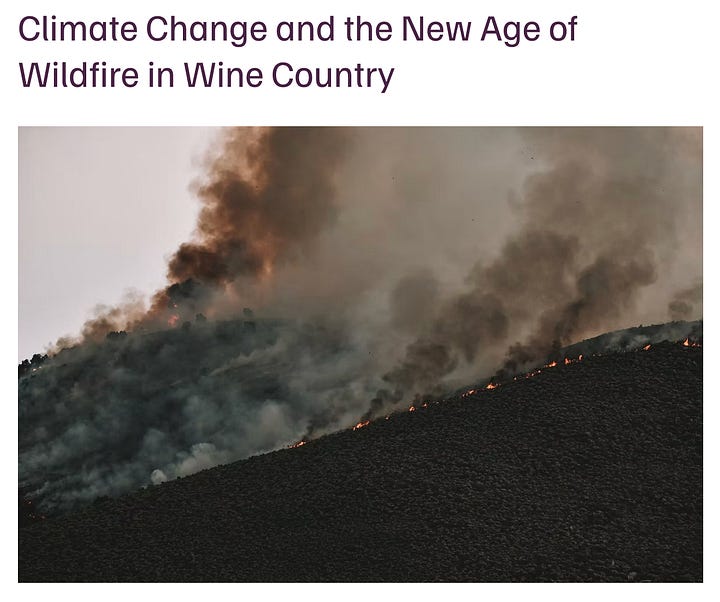
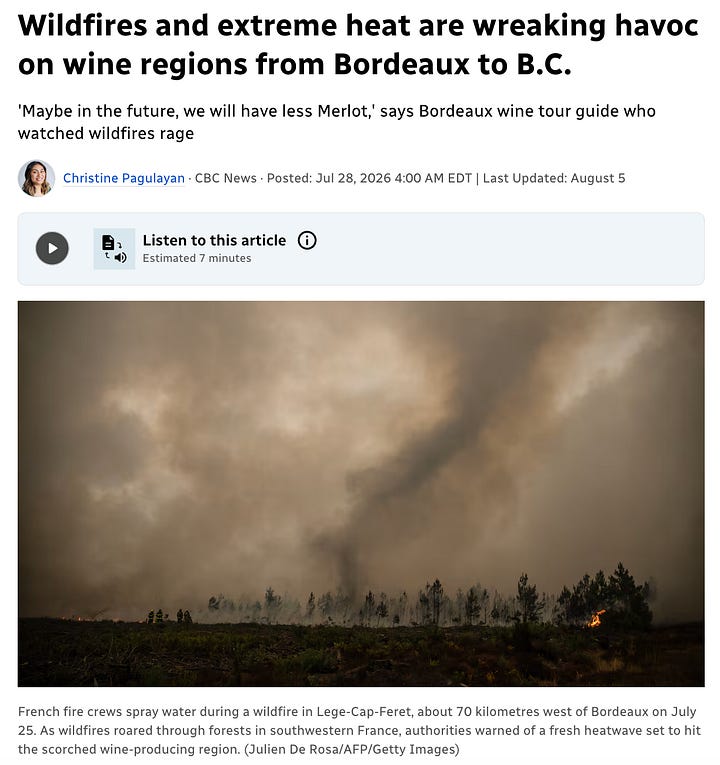
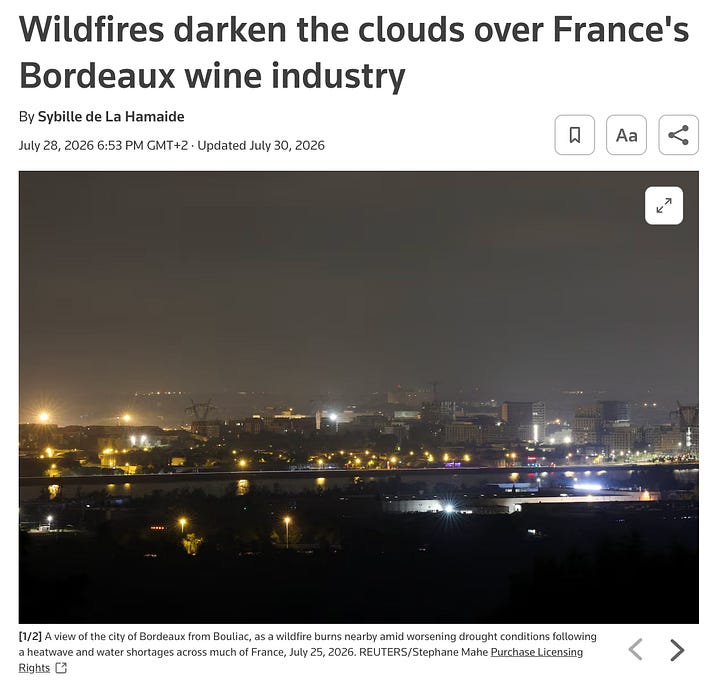

Because we’re writers and we know about the science of reader-attention, these stories usually follow what’s known as the “zoom-out narrative arc”, or the “particular-to-general inductive structure”. You bring the story to life (or death) with a specific, individual story. “My friends have lost everything in a wildfire”. And then broaden it out to the much bigger, and harder-to-grasp general picture. “Climate change is having dramatic impacts on the world of wine.”
So we see how “Wildfires burning outside Bordeaux are underscoring the climate challenges facing France’s largest wine region” (Reuters). And how we have entered “a new age of wildfire in wine country” (Beverley Crandon). As Beverly writes “There’s a particular kind of dread that settles over a wine region when smoke shows up on the horizon. This summer, that dread has become routine across southern Europe.”
Except that that’s not what’s happening.
That “dread” may be true for some individuals. But it has actually become less true for winemakers in general. Not only are wildfires less “routine” across Southern Europe. They’re less routine across Europe and the world more generally.
As it happens, this year has had unusually few wildfires across Europe. 2026 looks like it will bea record-breaking year for wildfires. But the record will be that there were so few. Around the world we have seen the lowest area of land burnt by wildfires at this point in the year since records began in 2012. In Europe the area of land burned is less than half the average for this time of year.1
And this is not a one-off.
Across France, both the area burned by wildfires and the number of wildfires themselves have both decreased dramatically since 2002. As this graph from the Global Wildfire Information System (funded by the European Union, hardly known for being some shadowy, denialist organisation) shows.
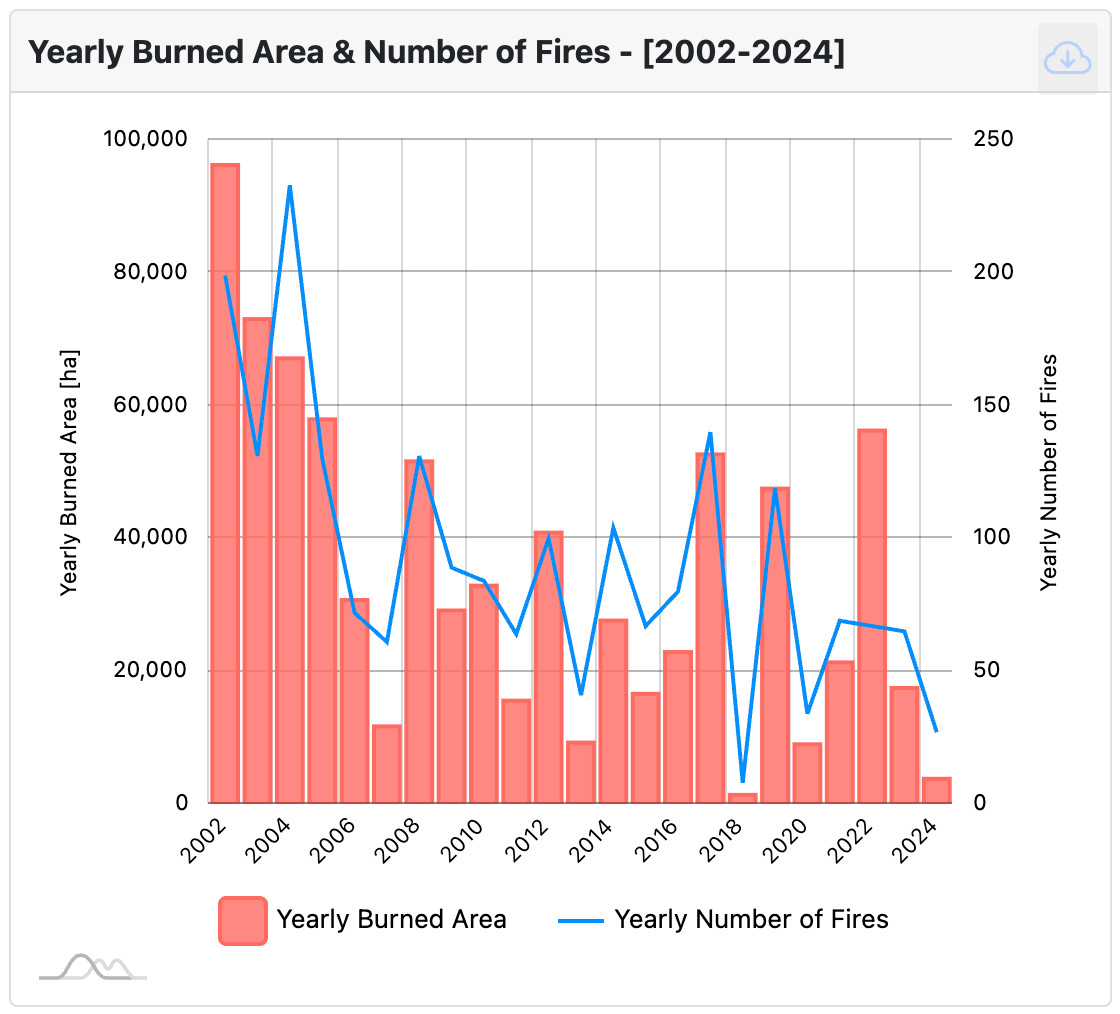
In Provence, where we have seen some of the most dramatic images of fires, the data show wildfires becoming a thankfully rare phenomenon over the last quarter of a century.
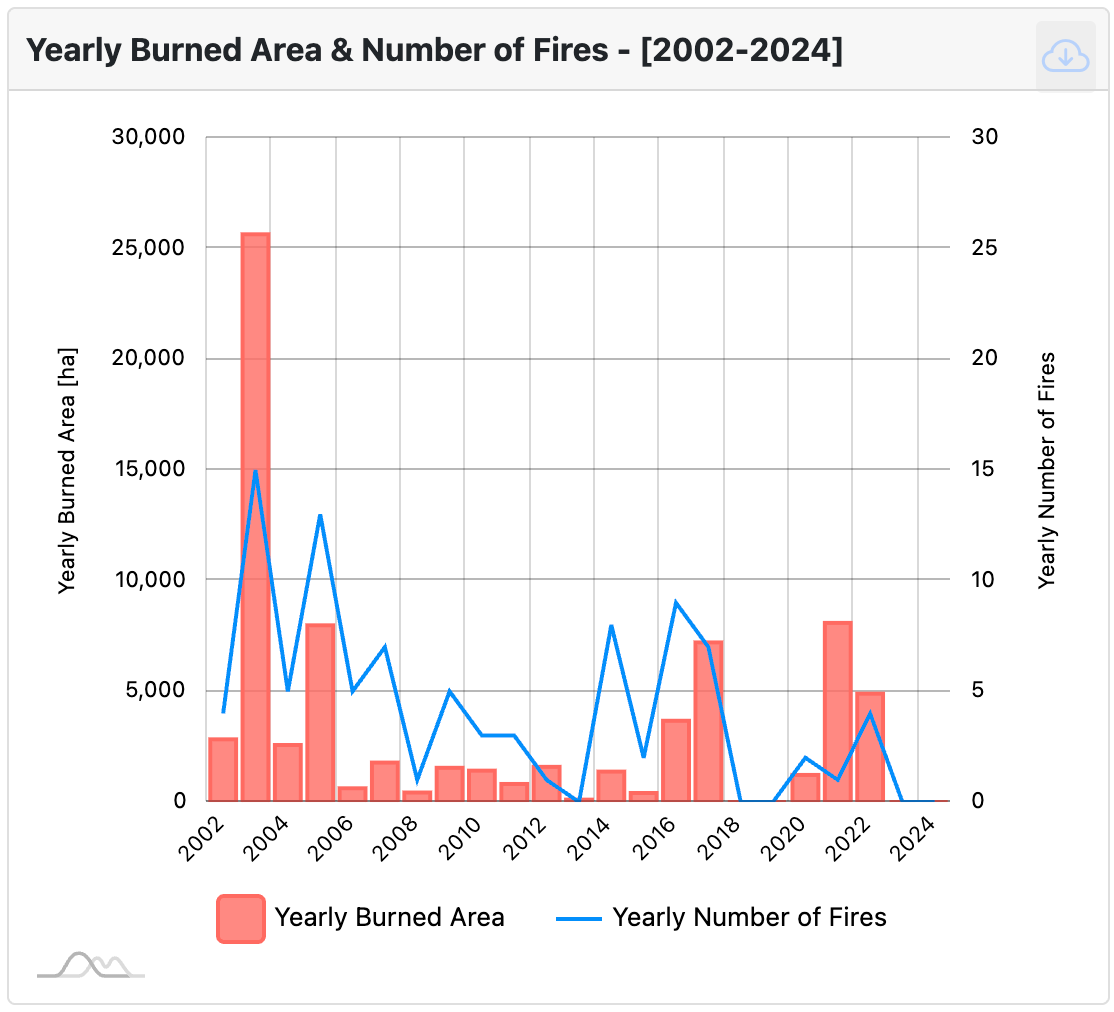
It’s not just France either. Spain shows the same general trend, with outlier years in 2022, 2019, and 2012.
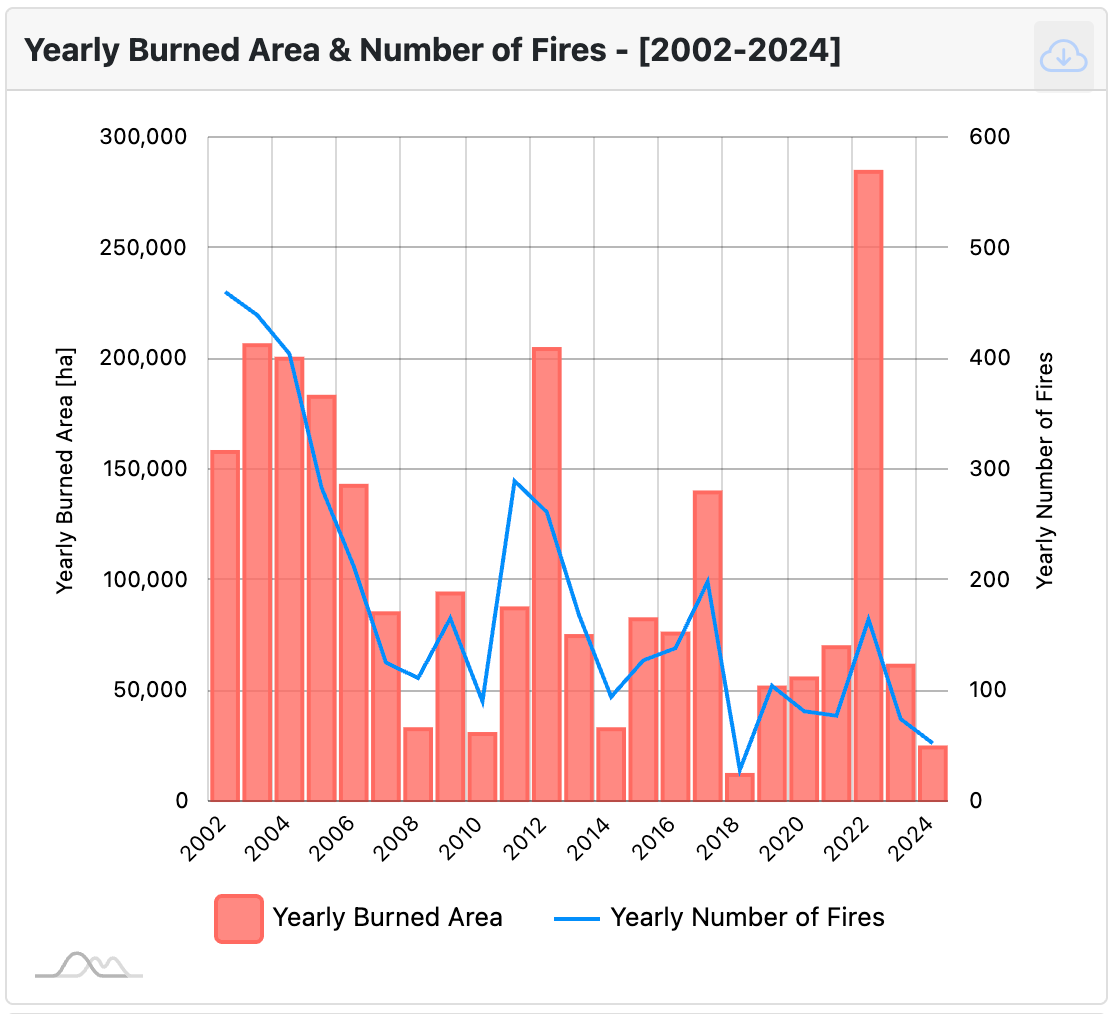
It turns out wine writers know what Stalin recognised; one wildfire is a tragedy. Several thousand wildfires across a quarter of a century is a statistic.
Now there are nuances. And they matter. Although not in a way that supports the headlines above. And talking about these things gets you in trouble. Which is why I’m putting some of this behind the paywall.
Comments
Nothing yet. Say the first thing.
Sign in to join the conversation.