
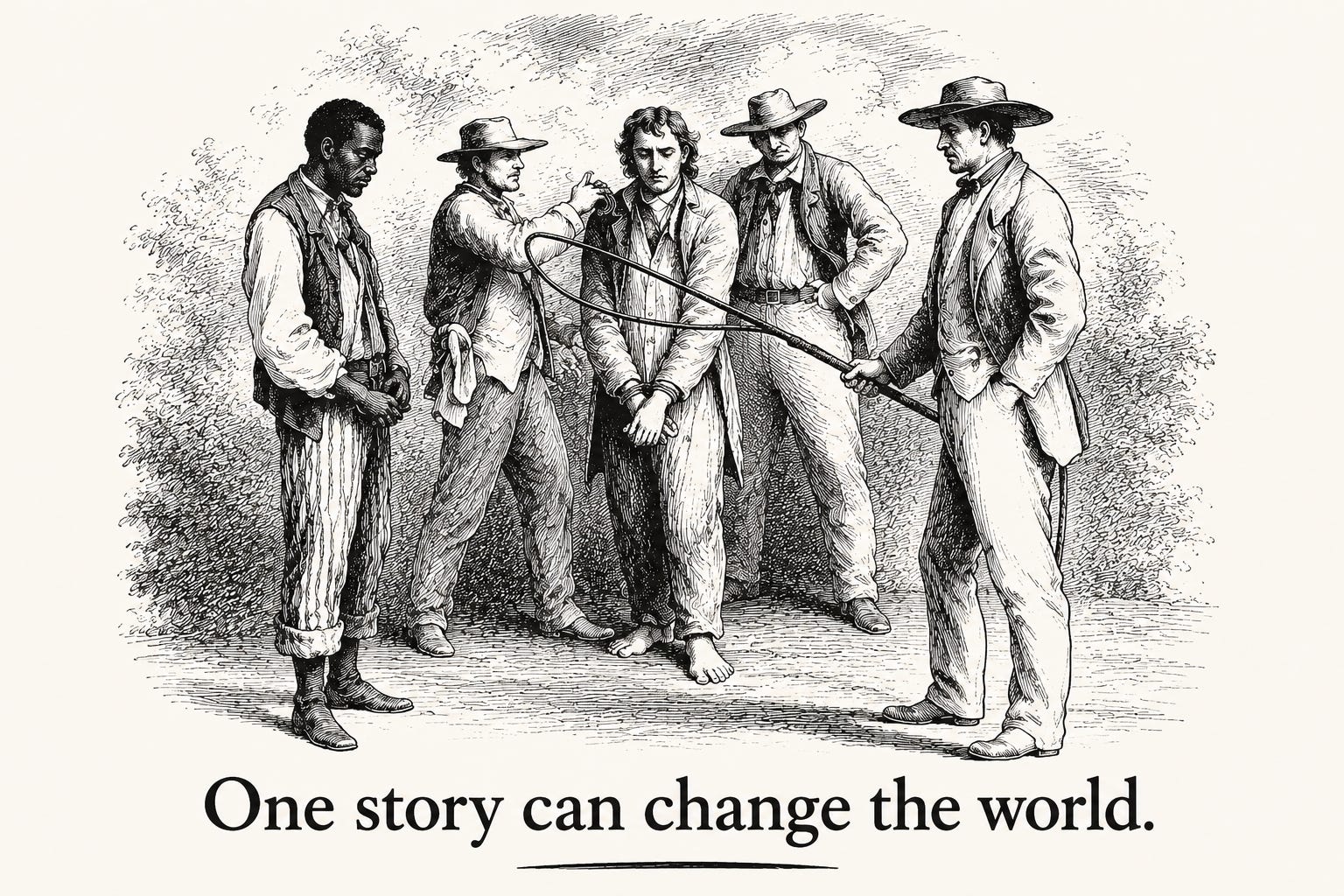
In 1852, Harriet Beecher Stowe published a novel called Uncle Tom’s Cabin.
It was fiction. But it reshaped reality.
The book gave readers—especially white northerners—a visceral, emotional experience of slavery. Not just facts. Not policy. But faces. Names. Children.
It was banned in the South. It sold over 300,000 copies in its first year. It lit a match in the moral imagination of a generation.
Years later, when Abraham Lincoln met Stowe at the White House, he supposedly said: “So you’re the little woman who wrote the book that started this great war.”
Maybe he didn’t actually say it. But it didn’t matter.
The war was real. And the story played its part.
Because great stories don’t just entertain. They activate.
Your best friend comes out to you as gay. He tells you everything—his fear, his shame, his slow journey to self-acceptance.
You’re already a good friend. But something shifts. Suddenly you don’t just support LGBTQ+ people—you understand. You become an ally. A real one.
Or maybe you’re on a plane. The man next to you tells you he hasn’t spoken to his daughter in over a decade—because of a fight neither one can let go. You’ve been letting your own calls to your grown son slip. There’s nothing wrong between you… yet. But that story makes you realize how lucky you are. You make a quiet promise: I’m going to call him more.
Or maybe you’re just miserable in your job. You haven’t done anything about it—until one night you randomly rewatch Jerry Maguire. It’s a made-up movie. You know that. But somehow, you cry through the whole thing. You remember what you used to want. You don’t quit the next day. There’s no manifesto. But you do enroll in night classes. Because you want to be ready when the time comes.
Stories do that. They don’t just make us feel.
They make us move.
When a story hits just right, something happens neurologically.
The amygdala kicks in with emotional intensity. The hippocampus begins storing it as a long-term memory. The prefrontal cortex—your decision-making center—gets engaged.
You don’t just feel the story. You start to imagine yourself in it.
And that’s the moment of transformation.
The story stops being theirs.
It becomes yours.
Most of us don’t change because someone told us to.
We change because we start to see ourselves differently.
That’s the deep magic of story. It doesn’t just give you new information—it invites you to inhabit a new identity. You’re not just a bystander anymore. You’re the kind of person who speaks up. Who forgives. Who risks. Who changes.
And behavior always follows identity.
If you’re a leader, teacher, coach, or communicator of any kind—this is your job.
Don’t just educate. Don’t just inspire. Tell stories that open up new paths.
Stories that aren’t just interesting—but interrupting.
Stories that don’t just inform—but invite.
Because the best stories don’t just land in the brain. They land in the gut. And the heart. And once they’re there, they start to germinate inside us.
Until we can’t help but do something about it.
Great stories don’t just explain. They interrupt. They reframe. They redirect.
They change what we think is possible—about the world and about ourselves.
That’s the final—and most important—reason story matters.
Because when it’s done right?
A single story can change someone’s behavior.
And a changed behavior can change their life.
And a single changed life? Can change the world.
I am dependent on the voluntary support or grateful readers to keep this going.
If you found this series valuable to you, please support my work in one of the following four ways:
In addition to becoming a paid subscriber, you can support my work by preordering my upcoming book, Story Is the Strategy, or by making a one-time gift via Venmo or Buy Me a Coffee.
No posts
Comments
Nothing yet. Say the first thing.
Sign in to join the conversation.