
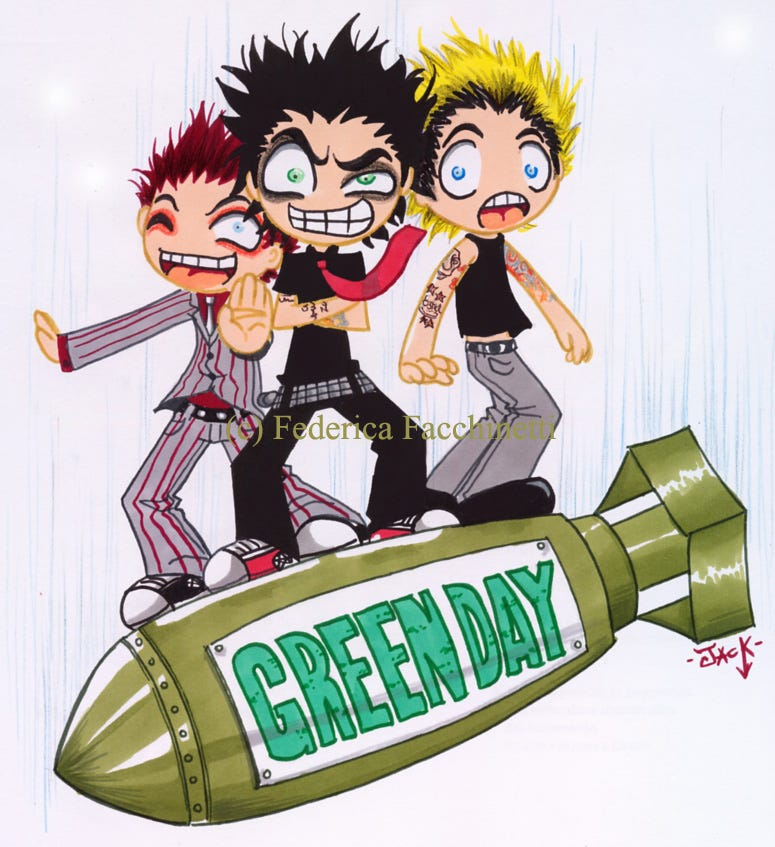
When Billie Joe Armstrong was a teenager, he wrote as song called “16.” Musically, it’s a rough-and-tumble rewrite of the Who’s 1965 single “I Can’t Explain,” a song Pete Townshend claimed “came out of the top of my head when I was eighteen and a half,” explaining the genesis further in his liner notes to the 2011 Quadrophenia box set: “For my first Who recording, I wrote some lyrics—‘I Can’t Explain’—and our fans found themselves in those lyrics, they each came and told me their own story,” he wrote. “They asked me how I could have known how they felt and what they had experienced. How could I have explained what they could not explain, that they could not explain anything at all?” He added, “People who liked my songs were able to put themselves inside them and find their own stories.”
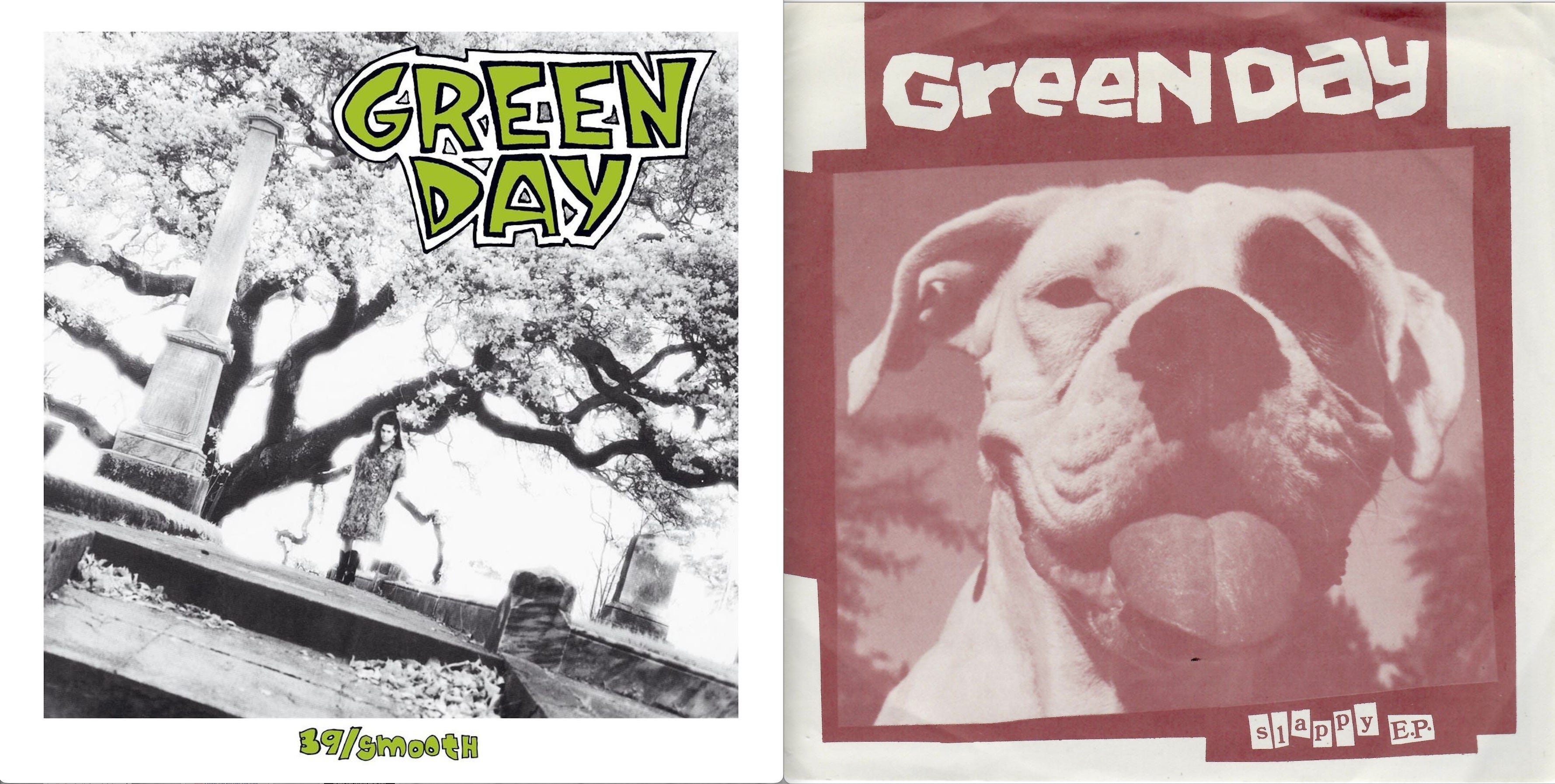
Unsurprisingly, Armstrong’s “16,” which appeared on Green Day’s 1990 debut album 39/Smooth, is a song about being sixteen; also unsurprisingly, it’s a song churning with anxiety, its raw and rough arrangement doing little to stay the angst. In fact, it might be amping it up. “Every night, I dream the same dream / of getting older and older all the time / I ask you now, what does this mean?” Armstrong sings as a literal adolescent, while bassist Mike Dirnt and then-drummer John Kiffmeyer chug along earnestly behind him, admitting in the chorus, “Every time I look in my past / I always wish I was there / I wish my youth would forever last / Why are these times so unfair?”
Asked six years ago by Rolling Stone what some of his favorite songs are that he’s written, Armstrong named “409 In Your Coffeemaker” from the Slappy EP, released just months after after 39/Smooth. “I’d just dropped out of high school, and I was feeling really lost—like a daydreamer who was being left behind,” he remarked to Patrick Doyle. “I didn’t know what life was going to be. I think that’s when I’m at my most honest as a songwriter, when I’m feeling lost.” He added, “This one felt like a different version of who I am.” In one verse, Armstrong sings, “I’m looking back now at where I have gone wrong / and why I could not seem to get along.” Armstrong felt so strongly about the song that he had Green Day re-record it for Dookie, though in the end it didn’t make the cut. He was eighteen years old when he wrote it.
I’m thinking about these and other songs that Armstrong wrote as a teenager—their through line begun by another addled teenager a quarter century earlier—after watching Nimrods, director Lee Kirk’s road movie tribute to Green Day, its fans, and kids eager and willing to follow a fraught dream. Loosely based on Green Day’s early, knockabout, pre-Dookie days, the film tells a familiar—indeed a road-worn—coming-of-age story. Tommy (Mason Thames), Fred (Kylr Coffman), and Chad (Ryan Foust) are dissolute high school loners and trouble makers—well, Tommy and Fred are; the bespectacled Chad’s a buttoned-up and sensible nerd. Barely enduring their hometown of Kansas City and their vexed family lives, half-committed juvees and stoners, they love Green Day and punk rock—they cite the Linda Lindas and Dee Dee Ramone, and idolize the ancient if legendarily dangerous Keith Moon—and are banging around in their own band, the Analog Dogs.
Tommy, Fred, and Chad are convinced that Green Day drummer Tré Cool has invited the Analog Dogs to open for Green Day at a New Year’s Eve show at the Hollywood Palladium in Los Angeles, impressed by “Bored,” the analog-recorded demo that the kids had pushed to Green Day at an in-store event. What follows in the movie’s second and third acts is the requisite road trip, begun in a stolen taxi and, once that breaks down in the middle of nowhere, continued in a ratty Mister Freezie ice cream truck. Along the way, the boys weather time-honored band dysfunction and road frights, and Tommy meets a cute girl, Olivia (Mckenna Grace), who fronts her own band, at a crusty punk show. Meanwhile, Tommy and Wayne’s beleaguered mother (Jenna Fisher) is beside herself; the boys eventually make it to L.A., and end up attending Green Day’s show.
I’ve omitted some of the movie’s plot points and details, not one of which surprised me as they arrived. There are some implausible, unlikely, and yet very funny shenanigans that occur in the movie’s third act that I won’t reveal here. A movie like Nimrods is hard to dislike, which is different from finding fault with it, which is easy to do yet misses the point entirely. I’d feel churlish criticizing a genre movie that does everything that it’s supposed to do. Nimrods is a fun, corny, sentimental flick with a big heart, its intentions entirely good. Thames, Coffman, and Foust have terrific chemistry, with their slouching disregard for conventions bundled with their amped up, adolescent energy, and if their punk poses, punk fashions, and worshipful, idealized punk rock references are predictable, the looseness with which the young actors play it all creates genuine and appealing teen spirit. The pleasures of genre art come in the reliable presentation of relatable character types and in the satisfying of expectations. Would I trash a fun party afterward because I pretty much knew I’d have a good time and I’m chummy with everyone there?
Kirk wrote the screenplay after his and Green Day’s story, and there are a few moments where I wished he’d let in a bit of danger, or explored things further, including the dysfunction between Tommy and his older brother Wayne (Keen Ruffalo), a key thread in the narrative, and between Tommy and Fred. I can report that the details of the punk shows did not strain credulity, a win considering that this is a Hollywood feature film, but I kept wishing that the scenes on the road, in the taxi and the ice cream truck, were more, shall I say, pungent: three desperate, hungry, cash-strapped teenagers stuck in close quarters without showering create quite the vidid tableau, and I wish that Kirk and cinematographer David Robert Jones had made us smell it all a bit more. Twice Kirk had fun playing with the divide between fantasy and reality, one scene involving Green Day, the other involving security at the show, and I couldn’t help but imagine a more daring, indie-leaning movie that split its time between the kids’ delusions and sober truths, a cold water reckoning of a cruel and indifferent world that’s painfully common to teenagers. But that’s not the movie Kirk wanted to make, and I get that.
Green Day had a story they wanted to tell, too, one that reflects the way that they see the arc of their extraordinary career, from 924 Gilman in Berkeley, California to arenas and stadiums—and, by extension, the way they see their fans. “We are a success story, of sorts, so our movie wouldn’t be a tragedy,” Cool remarked to James Hickie at Kerrang. “And it wouldn’t be a slasher film. If you’re going to have someone feel something, then you have to have them feel things we would have felt. I think the human aspect of it came through, just as Billie’s always been really honest with his lyrics, very personal and very vulnerable, telling the story of his life through the songs over the years.”
One aspect that the band and Kirk were keen to play around with was the waning days of the analog era in which Green Day came up. (Hence the fictitious band name in the movie.) Asked by Hickie if he missed “the days when, as the Analog Dogs do in the film, bands could pass demos on to you?”, Cool replied, “I feel like that stuff is easier now. You can easily follow someone on social media, or find out everything about a band via a QR code. Kids are really smart. Demo tapes were really cool and I have nostalgia for them, but the guys now have things figured out. I think it’s cool that Lee didn’t want to have a bunch of cellphones in the movie.” Kirk remarked that while writing the script he was “trying to find, you know, there is an interest in analog that’s really happening with young people right now, so that worked in my favor for sure. But I had to figure out a way to tell this story without cell phones, really,” adding that this came “from me really wanting to have this kind of texture in the movie of this older stuff. I definitely wanted to have the camcorder footage as a sort of nod to ‘90s skate videos and things like that. I wanted to have that texture in the film, but I had to find a way to make it feel organic to the story and not just feel like something I’d laid on top of it.”
My wife Amy and I saw caught Nimrods at a ghost town mall in suburban Chicago where three-quarters of the massive parking lot was empty. We were the only people in the theater. Green Day may have formed in the Mall Era and enjoyed their commercial peaks in the mid-1990s and mid-2000s, but they still sell out arenas around the world. The cognitive dissonance was jarring. During the closing credits, Kirk ran a series of videos and photographs, many of which I’d never seen, from Green Day’s early, rowdy years. Several of the images suggested grainy, real life versions of shenanigans from the movie, a kind of punk rock storyboard. The effect was to recast Nimrods as a quasi-bio film. “I mean, that was something Billie Joe talked about in one of our early conversations.” Kirk said. “He talked about how you have to be a little crazy. You have to have crazy dreams. I mean, to get to where he’s at, they had to dream big and dream crazy and be unreasonable in their dreaming. You know what I mean? I’m sure there were people around them who thought, ‘You guys are just crazy kids. You’re troublemakers.’ But they had a vision for what they wanted to do.
“And, yeah, I would love it if a kid sees this movie and says, ‘You know what? I want to dream big too’,” adding, “I mean, I have kids. My kids are 12 and 14, so hopefully that rubs off on them as well.”
“I’m a teenager, all I have is choices,” Tommy exclaims at one point in the movie. The most ambitious and large-hearted hope that Green Day and Kirk have for Nimrods, grander than box office success or good word of mouth, is that it turns on kids to making music. “Oh man, I hope they talk about the music,” Kirk enthused. “One of the fun ideas to play with in this film is how music brings people together. And there are a lot of moments in there where there’s music playing, people smiling, dancing and having a good time. So I think I would start with that. I would start with the music bringing people together. If they were having that conversation on the car ride home, that would be fantastic.”
Kirk remarked to Christian Zilko at IndieWire that, “Ultimately, I feel like if I’ve done my job, if after the movie ends, a kid turns to their parents and says, ‘Can I get a guitar?’ That would be pretty sick,” Kirk said. “But the personal part of the movie for me was I have kids and they’re not like me. They’re not doom scrolling all the time. You know what I mean? They’re planning their lives. They have hopes and dreams, and they’re thinking about what they’re going to do with their lives. And I wanted to make a movie that just reflected that, that there’s a generation of kids coming up that have plans and hopes and dreams, and I want them to walk away from the movie feeling inspired by that.”
As a feel-good coming-of-age movie, and a bit of a throwback, Nimrods is a tonic for these times. While it smooths the raw, rough-hewn edges of life in an obscure punk band, it manages to capture the sloppy, half-grin spirit of it all.
You might also dig:
Gimme gimme revolution
·
September 20, 2025
On July 11, 2009, Green Day played Target Center in Minneapolis, Minnesota, one gig of many on their lengthy tour promoting 21st Century Breakdown. Before playing “Know Your Enemy,” the album’s lead single, Billie Joe Armstrong announced to the crowd
Castaways, Part 1
·
March 14, 2024
Singles are funny, stubborn things. Introduced in 1949 by RCA Victor as a lighter and less-breakable substitute for the 78 rpm shellac disc, they soared in popularity in the 1960s and ‘70s, grew five inches wider in the ‘80s, were virtually extinct by the 2000’s (but for its eternally cool club-mix cousin, who’s always out late), suffered through poor p…
What it's like living in the '20s
·
January 25, 2024
Because I’m a writer who writes mostly about music, not a music journalist, I regularly need to guard against confusing fandom with critical thinking. Certainly, professional music critics wrestle with this problem too, but I imagine that the best ones, some of whom I know personally, can adopt an objective point-of-view with relative ease, akin to slid…
“+GREEN DAY SD+” by Jack666rulez via Creative Commons
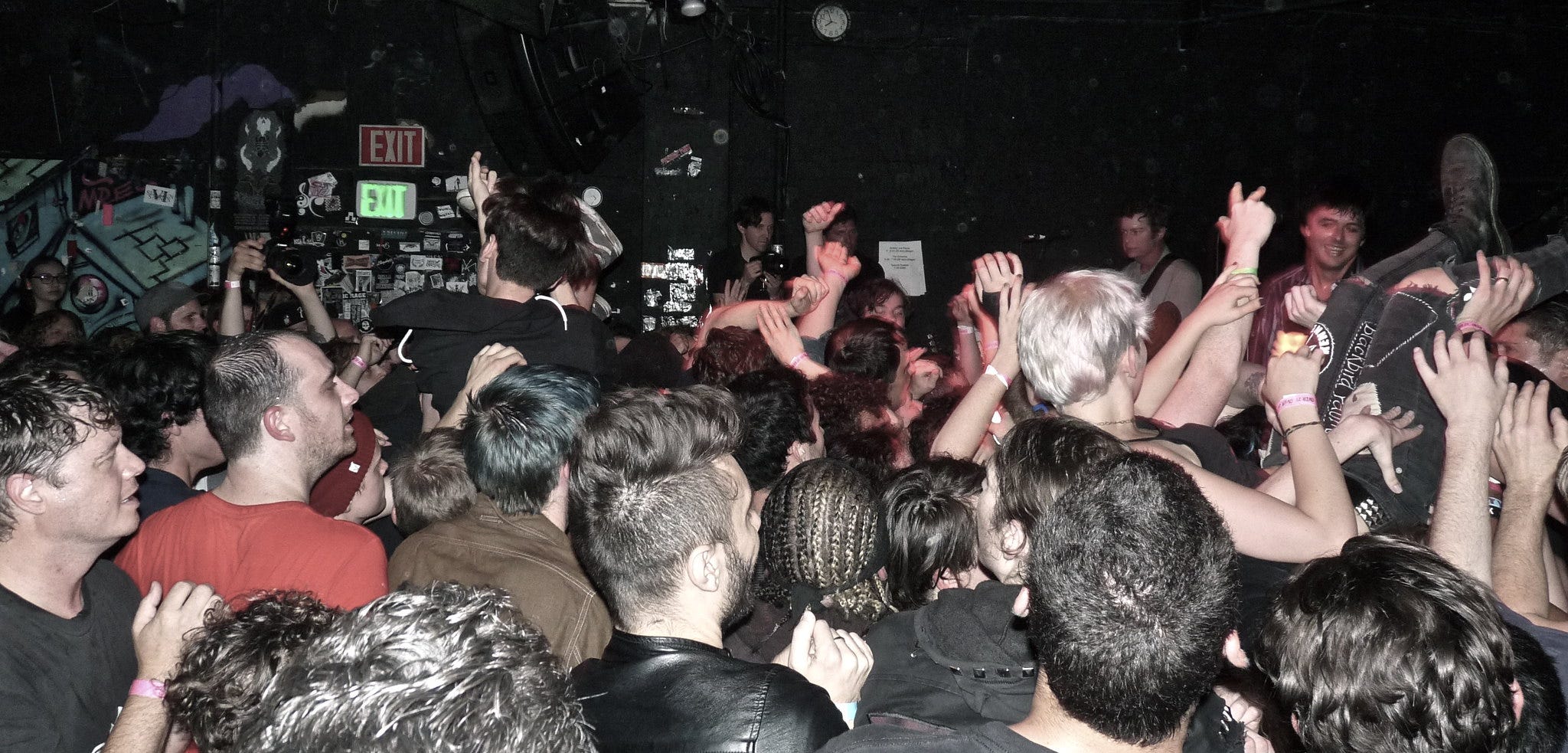
“Green Day @ 924 Gilman 5/17/15” by IngyJO via Creative Commons
Thanks for reading No Such Thing As Was! This post is public so feel free to share it.
Comments
Nothing yet. Say the first thing.
Sign in to join the conversation.