
I don’t know about you, but I haven’t ever found myself consciously evaluating the geometrical intricacies involved in another man’s jib.
I couldn’t tell you the optimal ingredients of the kind of jib that appeals to me, I have no set measurement for a preferred jib circumference, or whether today’s jibs can be considered an improvement on their predecessors of yesteryear.
Yet, when I encounter a jib that I like, it is immediately obvious to me that I like it.
I’ll meet somebody for five minutes. Maybe I will see them present a deck. Or I read something they’ve written. Or sometimes I overhear them talking in the pub. And before I’ve really thought about anything specific to what they have said, I’ll have reached a definitive conclusion.
“I like the cut of their jib”
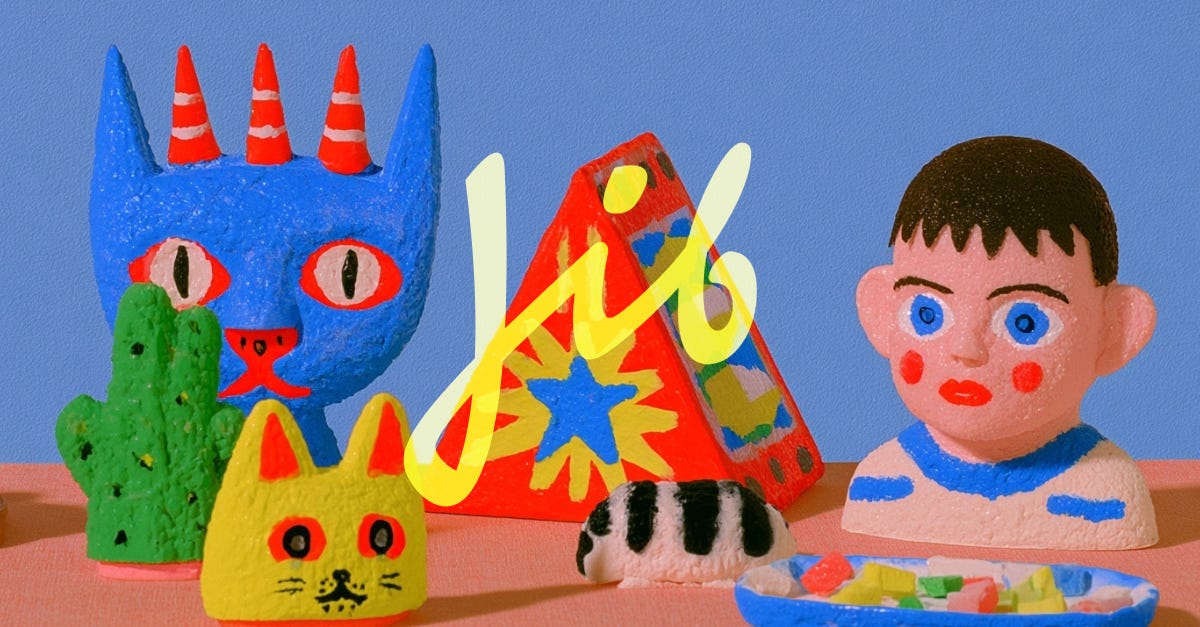
In spite of jib’s self-evidently paramount importance, many rituals within corporate culture are built to reify the pretense that this is not how things work.
We have credentials decks. Procurement processes. Capabilities presentations. Awards. Case studies. Testimonials. Myers Briggs Tests. And sure, there is a point to this stuff, but much of it exists because we would collectively rather ignore that massive importance of jib.
If we’re being honest with ourselves, a lot of our success in work and in life can be explained by the simple observation that people either like the cut of your jib. Or they don’t.
That’s not to say talent doesn’t matter. Of course it does. But jib is up there alongside it.
Now, and this is true whether we’re talking about a person getting hired by an agency, or a client hiring an agency in a pitch. But people hire based on predictions about the future work that person or agency will do. Portfolios matter, but only insofar as they allow us to create hypotheses about what it’ll be like having you in the building every day.
Everybody is trying to infer a whole person from a handful of tiny clues. Portfolios and case studies are some of the clues, but so are LinkedIn posts, conference talks, email etiquette.
There are many little scraps of residual jib to be collected across these many artifacts.
The inexplicable thing is that most people put a fair bit of effort into attempting to reduce the amount of jib that gets into the things they produce.
People strive to make their presentations more professional and their writing more corporate. At a more intellectual level, their subjective opinions start to take a backseat to objective facts. Their jokes become less weird or potentially offensive.
Their jib gets squished.
Maybe that is a sensible thing to do. After all you might consider that some jib varieties are divisive, so then surely a little less jib makes you more broadly appealing. So one might think that it is better to be the sort of person everybody quite likes than the sort of person that a few people really like.
Except that isn’t how people work. The opposite of distinctive isn’t universally appealing. It’s forgettable. There are no NPS scores within the human heart. Jib is all or nothing, and jib can conjure forgiveness for all manner of other sins.
If you removed Wes Anderson’s jib, you would not be left with a filmography that everybody loves. You end up with a selection of films that could have been made by anybody.
His obsession with symmetry is part of his jib. His pastel colour palettes are part of his jib. The deadpan dialogue is a signature move in his jib oeuvre. You could remove Wes Anderson’s name from the credits and most people would still know whose jib they were looking at.
You can spot someone with highly developed jib from a mile off.
Their worldview leaks into everything they touch. It’s in the oblique, idiosyncratic references they make. The style of metaphors they lean into. The threads they get distracted by and pull at. Even their blind spots and their weak backhands are part of the package.
Their jib is intrinsic to them. And that is because style is more than a lick of paint that gets applied to your work after you’ve finished it. It’s a way of looking at the world and thinking about the world as much as a way of expressing something into the world.
As you develop your jib, your work starts looking like you. Which, preposterously, is what most people are trying to avoid.
There’s a general, misguided sense that if you learn how to sound more professional, and more objective then that will endear you and make you more appealing to a greater number of potential clients and employers or what have you.
But creative industries don’t reward that objectivity and professionalism. They massively and disproportionately reward recognisability. Nobody works with Wes Anderson because they hope he’ll make something that doesn’t feel like a Wes Anderson film. Quite the opposite. They’re after his jib.
A strong and pronounced jib doesn’t reduce your opportunities. Yes, there will be people who take one look at your particular arrangement of jib and decide that you’re absolutely not for them. That is splendid.
They’ve saved both you and themselves a significant amount of time. They were never going to enjoy working with you anyway. Meanwhile, the people who do like your jib arrive already halfway convinced.
They’ve seen the work in your book. They’ve read your articles. Or seen your talks. They’ve noticed the strange examples you always seem to use and the weird little intellectual rabbit holes you seem to consistently disappear down. So they don’t need convincing that you’re their sort of person. Your jib has already done it’s job.
This is why I think “be yourself” is, on it’s own, fairly mediocre advice. Yourself isn’t actually the thing people experience. They experience the evidence of you being yourself. The residual jib.
Everybody has jib. Your goal should be to make sure enough of it is imbued into the things you make that tumble out of your brain and into the world. Once that jib is out there then people can recognise the cut of it before they ever meet you.
And once they do… The people who were never going to like your jib will wander off in search of somebody else’s. And the people who love your own special, idiosyncratic variety of jib will come looking for you.
I for one can’t shake the feeling that we’re heading in the wrong direction. That is; away from jib.
Artificial intelligence ought to have been the greatest jib training ground ever invented. A tool that helped us explore strange little tributaries of our own thinking that we’d never have found alone. A cutting edge technology for amplifying jib. For discovering previously uncharted coves and inlets of one’s personal jib.
Instead, many people seem to be using AI as an industrial-scale jib squisher. They feed in their oddities and out comes something smoother, more professional and more indistinguishable from the other ten thousand pieces of AI-assisted writing that appeared on LinkedIn, in emails, in myriad decks and docs that very morning. They have, somehow, used the most powerful creative technology in a generation to manufacture less jib than they started with.
What an own goal. The thing people seem to object to with generative AI isn’t so much that the thing was created with the assistance of AI. People just naturally recoil at anything which signals the complete absence of a human’s jib.
It says that you either couldn’t be bothered to put your own peculiar arrangement of jib into the work, or even worse, that there wasn’t enough jib there to begin with. Ironically, by striving to appear more polished or buttoned up, you may have accidentally communicated that you’re both lazy and boring and worst of all, you lack jib.
No posts
Comments
Nothing yet. Say the first thing.
Sign in to join the conversation.