
Kreg Allison had just come from church. I had not, which meant I was already behind on the morning’s goodwill, but Kreg had a Mercury Topaz and a free Sunday and a willingness to make the drive, so I kept that observation to myself. We were college kids. This is what it took, in Nashville in the mid-1990s, to get to the Loveless Cafe: someone with a vehicle, someone with time, someone whose company was a price you were willing to pay. Nobody drives an hour for an okay biscuit. I made social calculations that year I will take to my grave. The biscuit was worth every one of them.
We pulled off Highway 100 into a gravel lot, and my first thought was that I had the wrong address. It looked like a motel, low and plain, the kind of building that does not announce itself, with a vintage sign out front where half the lights were dark. Not a restaurant. A place someone had been cooking in for so long that the cooking had become the building’s entire purpose, and the building had stopped trying to explain itself.
Inside: linoleum tiles. Mismatched tables. Everybody dressed for church, because half of them had just come from it, the other half headed there after. Strangers smiled at each other the way people do when they are somewhere they all chose to be on purpose. Through one of the windows along the back, a woman stood at a counter making biscuits. Her hands moved through the dough without pausing, without looking down. The smell hit before anything else, butter and bacon and country ham and something beneath all of it, something warm and yeasty. The jams on the table were four different colors. I had grown up in New York and did not know there were places like this in America. I thought I knew what food was.
The biscuit arrived in a cloth-lined basket and did not look like much. You split it, and this is the moment, and the steam rises before your hands do. The inside is a different country from the outside: pillowed and laminated in the way only cold fat worked into flour can achieve, and underneath the butter a faint sour of buttermilk that tells you this is a living thing, or was one very recently. The country ham alongside it was intensely salty, because country ham is not a protein, it is a punctuation mark. I ate in silence. Kreg said something. I didn’t hear it.
* * *
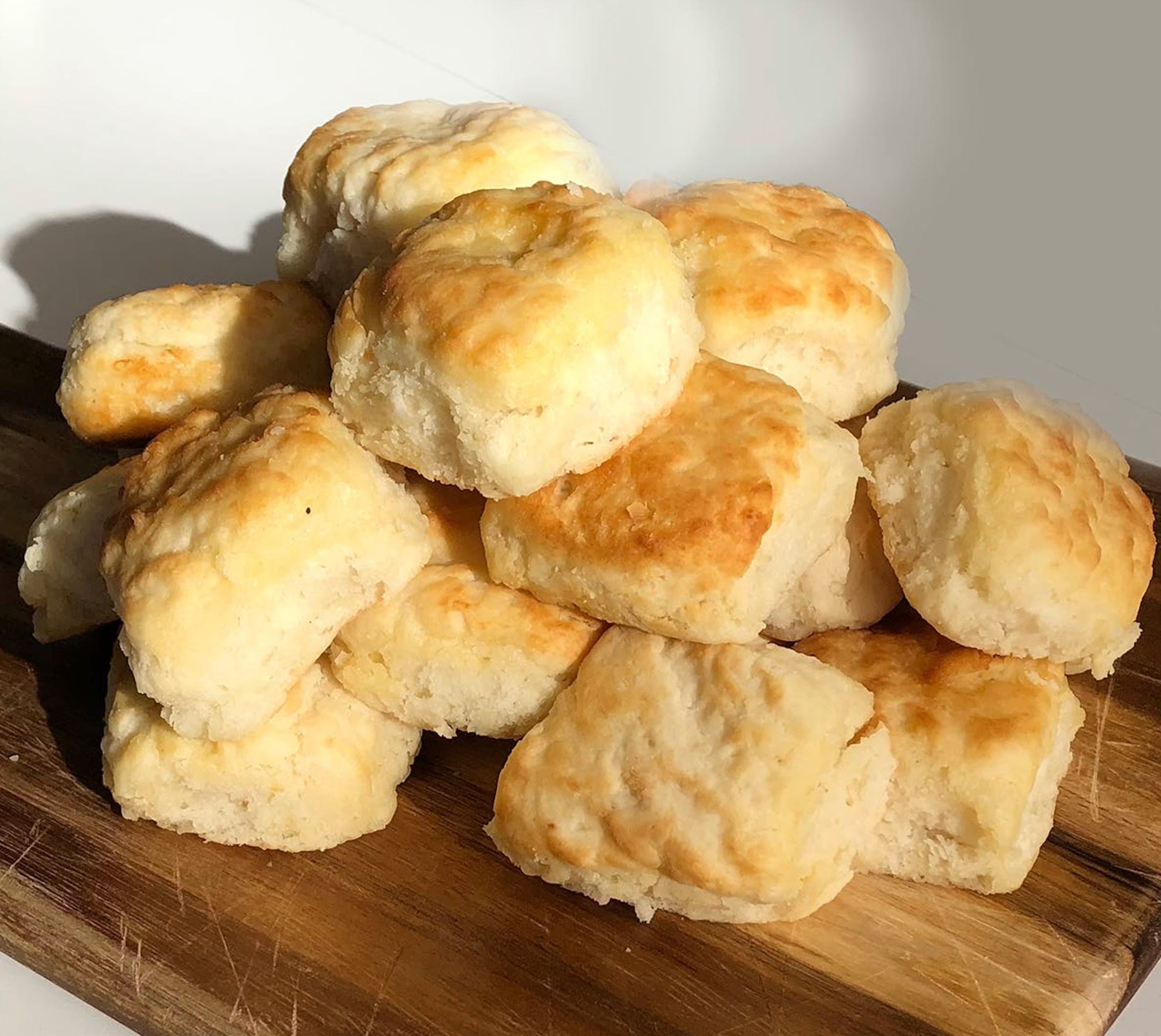
The Scots brought flour-and-fat bread to the colonial South: plain, dense, nothing of lightness in it. The transformation happened in plantation kitchens: buttermilk for acid, soda for lift, cold fat worked fast into flour for layers. The biscuit that made the South famous was built by enslaved Black women, in kitchens they did not own, for families that would never credit them. The knowledge passed cook to cook, mother to daughter, with no paper trail because there was never supposed to be one. It needed hands.
Carol Fay Ellison started at the Loveless in 1979, as a teenager, as a dishwasher. She did not master the biscuit. She became it. The woman I saw through the window that Sunday morning, smiling, moving through the dough without looking down, had been in that kitchen for fifteen years. They said she danced. The biscuits came out the same every morning. Very few restaurants need a specific person the way a lock needs a specific key.
Carol Fay Ellison was not the first woman to carry a biscuit this way. Around 1831, Abby Fisher was born into slavery in South Carolina. After emancipation, she made her way to San Francisco and became one of the most sought-after cooks in the city. Her biscuits were part of the reason. Friends told her to put the recipes in a book. That sounds simple until you remember what country she had just survived. She could not read or write, so she dictated. She spoke the recipes aloud while someone else put them on the page. In 1881, that became one of the first cookbooks published by a Black American, and it included the biscuit. She left a name attached to the knowledge.
Nearly every copy disappeared. One resurfaced at auction in 1984. The recipe was never the secret. The secret was always the woman nobody wrote down.
Abby Fisher dictated the biscuit in 1881. Carol Fay Ellison held it in her body instead. It was a different century and a different woman, but the same job. On April 5, 2010, Carol Fay died at forty-eight years old, and the kitchen did not close. The knowledge moved again. If America does not remember the women, it will keep eating the food and calling the disappearance tradition.
* * *
In late 2011, I called Loveless Cafe and asked them to do me a favor. They packed some biscuits and jams and shipped them to my apartment in Chelsea. I opened the box in my kitchen.
The biscuit, the jam, the grease-stained menu. And then I was not in my apartment anymore. I was back on Highway 100 in Kreg Allison’s car, pulling into the gravel lot. The sign still had the lights out. The linoleum tiles and the strangers dressed for church and the smell of butter and bacon and country ham and something alive underneath all of it. And through a window at the back of the room, a woman’s hands moving through dough without looking down.
I shared it with Vanessa, then Gerard, then a few friends who had heard about this box of biscuits from Nashville that arrived at my door. None of them had been to Loveless. The biscuit was not their biscuit. But every one of them understood.
I had been working on an idea. That morning it became inevitable. Goldbelly.
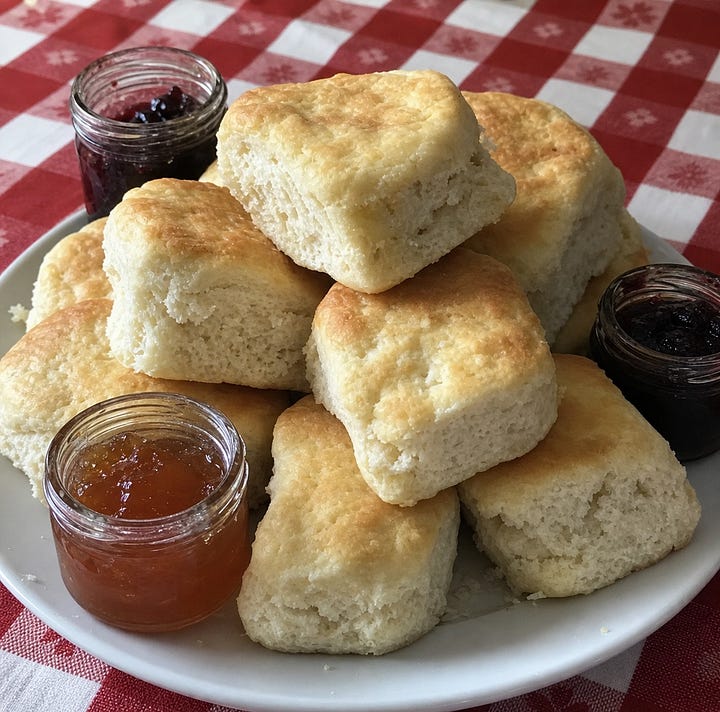
Every Thanksgiving weekend I reenact that moment at my home in Sag Harbor. My favorite weekend of the year. Friday brunch is always me at the stove. Biscuits, ham, scrambled eggs with cheese, sweet tea. I take the blackberry jam. My son takes the strawberry. Vanessa takes the peach. Most of my family has never been to Nashville. It doesn’t change what the meal means to them. They learned it from someone who couldn’t leave it behind, and now they can’t either. That is how this food has always traveled. Not in recipes. In people who refused to let it go.
Carol Fay Ellison’s hands could not cross the country.
Her biscuits could.
Joe Ariel
No posts
Comments
Nothing yet. Say the first thing.
Sign in to join the conversation.