
Words from powerful people are never just words. They set the tone. They draw the boundaries of what is acceptable. And right now, those boundaries are collapsing.
Take Donald Trump’s recent social media post following the death of former FBI Director Robert Mueller: “Robert Mueller just died. Good, I’m glad he’s dead. He can no longer hurt innocent people!”
Celebrating anyone’s death because of politics is grotesque, and a society that tolerates celebrating this is already in trouble. But that principle means nothing if it’s applied only when convenient, as Trump demonstrated after the death of Charlie Kirk. You don’t get to denounce cruelty one moment and model it the next. That’s not leadership, that’s hypocrisy.
He then escalated further, posting: “Now with the death of Iran, the greatest enemy America has is the Radical Left, Highly Incompetent, Democrat Party!”
Read that again. The “greatest enemy” of the United States is not a foreign adversary, but fellow Americans who happen to belong to the opposing party.
These are not slips of the tongue. They are choices to use the language of division in ways that push democratic norms to their limit.
When leaders describe their opponents as enemies, they’re telling supporters that political disagreement isn’t a difference of ideas, but a battle between good and evil. And once politics becomes moral warfare, the guardrails start to disappear. A democracy cannot survive on selective outrage. It cannot remain safe when its leaders normalize dehumanization.
We’ve seen where that road leads.
After Trump’s rise to power, researchers and analysts warned that extremist views were becoming more openly expressed. Violent events from Charlottesville in 2017 to the Pittsburgh synagogue massacre in 2018 didn’t happen in a vacuum. They emerged from a climate that was already charged, already polarized, already primed.
The global impact is just as telling. In a manifesto sent to New Zealand’s prime minister, the attacker who killed 51 people in mosques in Christchurch in 2019 described Trump as “a symbol of renewed white identity and common purpose.” Responsibility for such violence lies with the individual who commits it. But the language of political leaders travels, and it can be interpreted in ways that should give anyone pause.
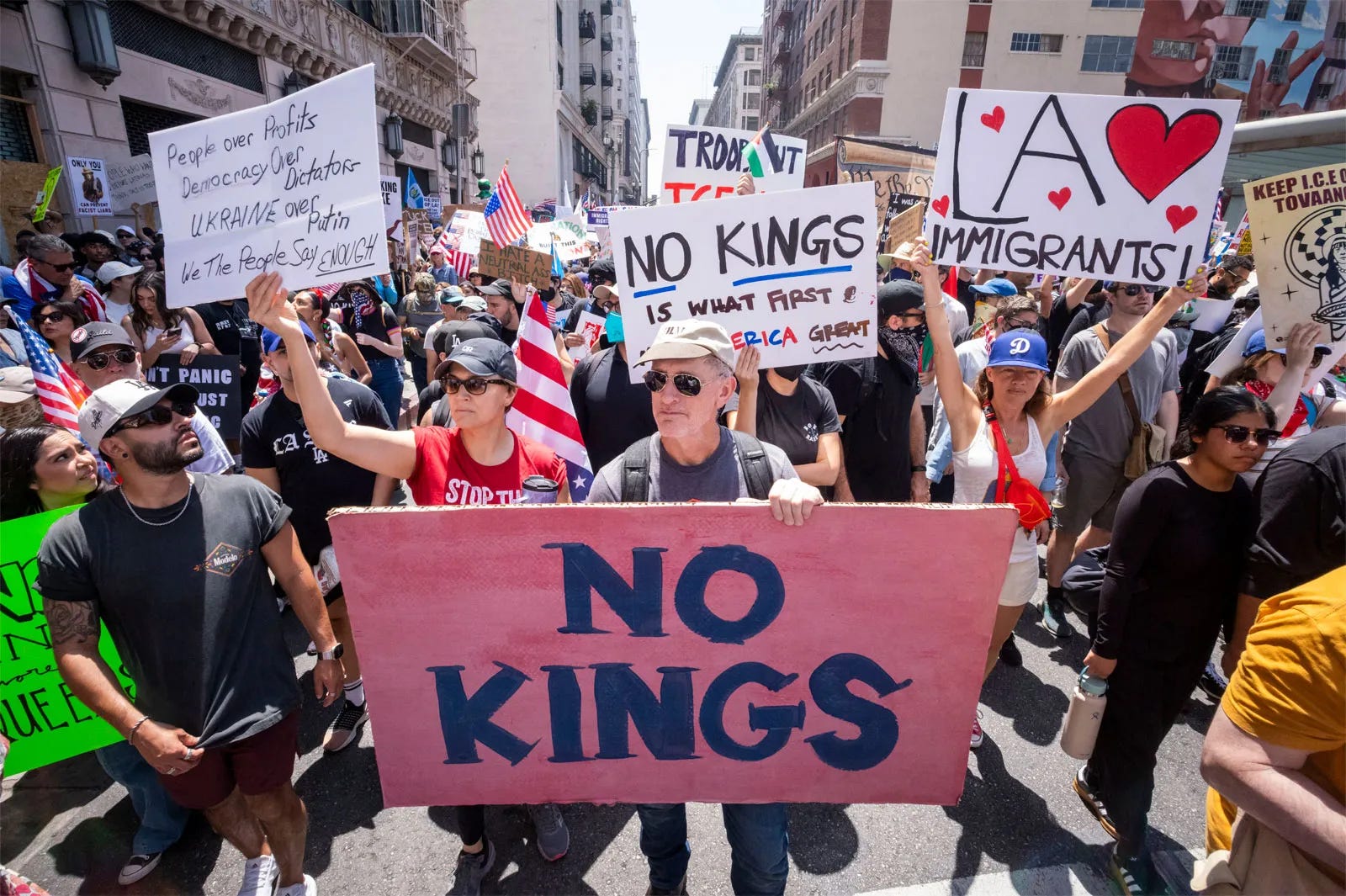
That shift is not theoretical. It is already visible. At protests and public gatherings, the tone has become sharper, more confrontational, more openly hostile. At a recent demonstration I attended, what had once been largely peaceful exchanges gave way to something more volatile, particularly from some counter-protesters. With events like the upcoming “No Kings” march on March 28, there is reason to be concerned that this trajectory is continuing, not stabilizing.
This isn’t about partisanship. It’s about standards. Words matter. Every statement that pushes the boundary a little further, every moment of silence that allows it to pass without consequence, makes violence easier to imagine, easier to justify, and easier to ignore.
Either we believe that celebrating death is wrong across the board, or we don’t. Either we believe political opponents are fellow citizens, or we start calling them enemies. There is no stable middle ground.
What happens next depends on whether the public is willing to pay attention, speak up when lines are crossed, and use the tools of a democracy, from peaceful protest to the ballot box, while they still carry weight.
Don’t give up on decency. Let politicians know their words matter.
No posts
Comments
Nothing yet. Say the first thing.
Sign in to join the conversation.