
When I was young, The Wizard of Oz seemed like a simple story: a girl, a yellow brick road, flying monkeys that were terrifying, and a powerful, terrible wizard who convinced others they lacked a brain, courage, and a heart.
A story, really, about how easily people can be made to feel incomplete.
But it wasn’t until I watched Louis Theroux: Inside the Manosphere that the film’s most important image came rushing back to me: the little man behind the curtain. Small. Frightened. Desperately pulling levers to make himself appear enormous, all-knowing, and powerful.
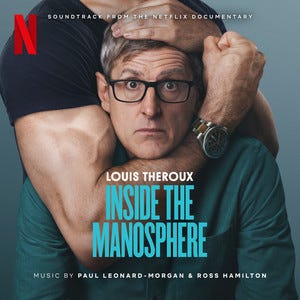
The so-called influencers of the manosphere, the very figures highlighted in Inside the Manosphere, where the acclaimed documentarian investigates a growing ultra-masculine network and its controversial influencers, are that man.
They are not powerful or wise, and they are certainly not the “alphas” they perform for the camera. They are small, insecure men carefully editing their footage, calculating which fears will get the most clicks, which insecurities will drive the most engagement.
The curtain is the editing. The smoke and mirrors are the algorithms. And the message, never stated outright, but unmistakable is that you are not enough. It is the language of modern-day grifters who have learned that fear is profitable, preying on the insecurities of vulnerable boys and young men.
The manosphere is not a new phenomenon, it is simply a modern branch of a much older machine: a profit-driven patriarchy that feeds on insecurity.
For generations, the beauty industry has run the same playbook on girls and women. You are not pretty enough, thin enough, desirable enough. Your skin, your body, your hair, all of it needs fixing. Buy this. Change that. Shrink yourself.
Meanwhile, young boys are told something different, but equally damaging: you are not man enough. Be dominant. Be aggressive. Take control. Never be soft.
Different messages, same strategy: manufacture insecurity, sell a solution, and maintain control. Both systems depend on one thing; convincing people they are fundamentally lacking.
To sell insecurity requires shielding those who exploit it most ruthlessly. That disembodied voice behind the curtain doesn’t stop at influencers or advertising; it extends to the highest levels of power. We’ve seen it in figures like Harvey Weinstein and Jeffrey Epstein, and in the men whose names continue to surface in investigations, accusations, and testimonies. Men who wielded influence over women, over children, and who are protected and enabled by networks of power.
And today, that curtain also protects the everyday cruelty that thrives in its shadow. It allows men to hide behind screens, behind anonymity, to write misogynistic, degrading comments without consequence. The curtain has always made it easier to dehumanize from a distance.
The question is no longer whether we can see what’s behind the curtain—we have and we can see institutions protecting the powerful, money buying silence, and influence masquerading as credibility—all in the name of prioritizing the comfort of abusers over the safety of those they harmed: women, children, the vulnerable.
Now the question is, are we are willing to respond to what we see?
We cannot normalize it or wait for someone else to speak up first. We must be willing to say, clearly and without apology: people who abuse power do not get to keep it. Not in entertainment. Not in politics. Not in media. Not anywhere.
The wizard was never great. He was never all-powerful. He was just a small man with a loud voice and a curtain, betting that no one would look too closely.
The curtains are coming down. Believe what you see. Refuse to look away.
No posts
Comments
Nothing yet. Say the first thing.
Sign in to join the conversation.