
I've started to write a book on how to Productize with workshops. You can help here.
Everything around us was designed by someone.
Even invisible things are created all the time:
The idea that smoking was an act of feminist rebellion.
Edward Bernays was paid by the tobacco industry to increase its market share. Edward Bernays was actually kind of socially progressive, so this might have been a shot in the foot.Diamond rings as the de-facto engagement gift.
De Beers "A Diamond is Forever" campaign in 1947. You are not supposed to sell an engagement ring, so it shrunk the resale market for diamonds. Very smart if you sell diamonds.the expectation that you'll find salmon in your sushi
Norway's had a lot of salmon and in the 1980's made very deliberate moves to introduce it to Japanese Sushi chefs. It worked.
The way you talk about your work is also like this.
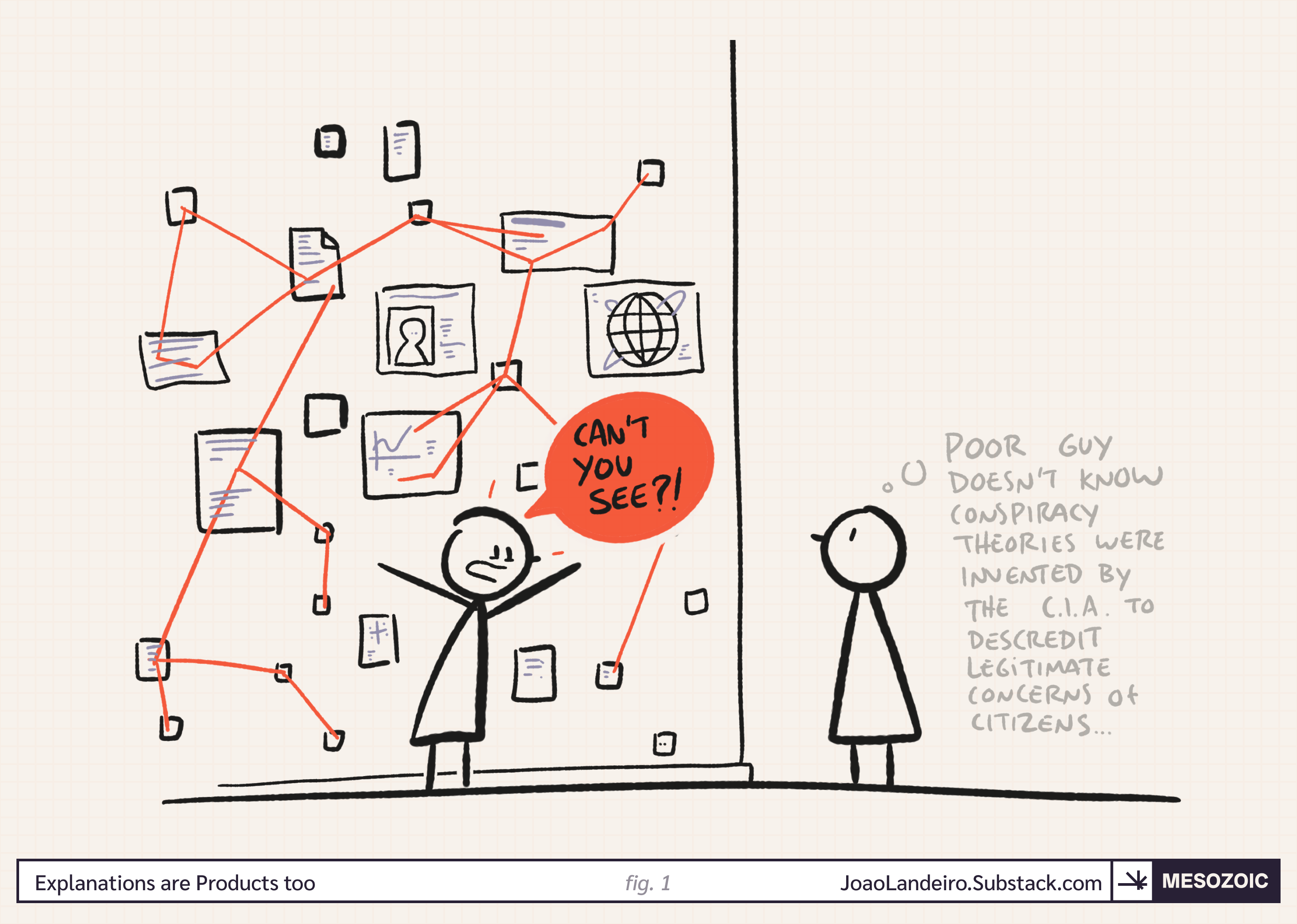
The specific combination of words and pictures that you lean on to describe your way of doing things is, in itself, something you can design. And you can design it the right way.
For businesses that operate in the material world, this is less necessary, since the products themselves can do the talking. Also, most people have a fairly accurate mental image of what a carpenter, car mechanic or a butcher do.
And for businesses that are also mostly about knowledge, but that are very common (e.g. teaching, legal services, accounting) the general public can also pretty much get it.
But you are different.
You own, run or work at a business that is both uncommon and abstract. So for you, having a very good way of explaining what you do is more than essential. It's existential.
There's a list of common mistakes around this, but I'll leave those for some other post.
For now, I want to share how you can apply proven tools to create a different kind of (mental) artifact: the way you describe your work.

The way to do this is to treat it as a product that you're developing, based on what you learn from the market.
So the first thing you need to do is to begin with a simple explanation of what you do that allows you to get feedback from others.
This first version is sure to be clunky and inelegant, but it can be put in front of others that will react to it, and give you input that you can use to improve it.
You must avoid creating an explanation that is long, tedious and uninteresting (be honest: you can probably tell if the way you talk about your work is uninteresting).

Why? Not because that's a poor product (it is a poor product) but because it is a poor product in the worst possible way.
By being boring, your explanation fails test 1, which is to make people pay attention. If nobody pays attention to how you describe your thing, it's impossible to get decent feedback on it. You might realize it isn't good, but you won't know what should be improved.
The primary purpose of your work's description is not to fully explain what you do. What you do is too unique for that. To include all the nuance in the description would mean a huge barrage of words. And those get ignored.
The v1 has one goal: to test if people care.
A useful format for this is the Fishing Line, which I've learned from my friend Nate Jebb1. David A Fields has a great video on it.2
I really recommend you watch David's video, but the gist of it is this:
I help <market> do <solve a problem they have>.
So now you have this initial version of the product that is “the way you describe your work”.
When people ask you what you do, you use it.3
As you test out your v1 of the explanation you use, these are some things you can look out for:
do people get it?
do people seem intrigued?
do people ask for more details?
do people try to summarize it and get it right?
do people try to summarize it and get it wrong?
do people think of someone they know that could use your services?
do people think of someone they know that they think does what you do?

Points 1 to 3 are about the basic usefulness of your explanation.
Use these to validate.
Points 4 to 7 are about useful information about how others create a picture of what you do, based on what you tell them.
Use these to explore other ways of describing your work.
Before starting to use the “I help X do Y” format, I tried all sorts of things that didn't land at all.
Here's a collection for your amusement
João-as-a-Service
Visual Strategist
Independent Strategy Consultant
Notice that all of these said neither what I do or who I do it for.
The only ones that hinted at what I did, did so by using the emptiest of words ("Strategy” 4).
All of them were self-centered and not at all relating to clients or their needs.
People would ask me what I do, I'd say these things (always with a hint of self-consciousness) and they'd have nothing to add. These descriptions (more like labels, really) were opaque and because of that, not conducive to a broader conversation.
Crickets or worse, snide remarks.
Without that broader conversation, I couldn't get the repetitions and the feedback in and was stuck with something that felt cool (sometimes) but was ignored all the time.
As I changed this into versions of “I help experts productize with workshops”, I started to get more attention and with that, data on what worked and what didn't.
This helped me notice important things:
Not everyone knows what workshops are
Some people think of workshops in different ways
“experts” a was still a bit of a vague market (it spoke only of level of knowledge but nothing of actual occupation)
Then I started to experiment with using “workshopper for niche consultancies”:
still, some did not know what is a workshopper (very valid point)
it became easier for prospects to decide whether they were in or out of the target market
But some people still did not know what workshoppers do. It was easier for them to decide if they were part of a niche consultancies or not, but the object of what I did was not yet too clear for all.
I'm not sure what the next variation will be, but I want it to be short (always), descriptive enough and something that positions my work a few steps above pure implementation work.
There's still work to do.
Looking at this, there are three things that become evident:
The success of your business is tied to the quality of your description. It affects sales, referrals, feedback and other opportunities.
The quality of your description is defined by how the market takes it.
To create a description that works, you need to test it with the market.
Set a timer and make a list of the different ways you've described what you do.
Try to get ballpark dates on it and what you remember from that time.
Optional: go back to previous posts, emails and content and see how that looks.Can you see the impact of small adjustments?
I've just finished reading Write Useful Books and I'm very excited. I've always wondered about writing a book and this was very encouraging.
I've started to write a book. You might have seen links to:
https://joaolandeiro.com/book/This was a week filled with good chats from all over the World: Tash (UK), Jamie (UK), Lyndon (Canada), Peter (US), Oren (Portugal), Vanildo (Brazil), Henrique (Brazil), Abbey and team (Norway). I love how this a normal part of what I do.
In the land of matter and atoms, I'm tearing down my previous deskt/worktable. I've designed it and built it around a decade ago and it served me well. But I've learned more about how I work best and is time for a new thing. Probably simpler.
On LinkedIn, I've missed my goal of posting every business day. But I still got these out:
How to differentiate on knowledge work, if all knowledge is available, free and instant? I suspect it's all about the experience of working with you.
4 things that Experts tend to struggle when they try to productize

I've started to write a book on how to Productize with workshops. You can help here.
David's video is less than 20 minutes and well worth it. Link to Vimeo
The more you nail down what you do as a specialist, the less people outside your market tend to understand it. You might have a phenomenal way of introducing what you do to your clients (which is what matters) but your cousin at the BBQ will think you're crazy.
This used to really get to me, but not so much anymore.
I'm at that stage that I think having “Strategy” on your description is almost always an anti-signal.
At least it's a market for lemons: you never know exactly what you're going to get.
Comments
Nothing yet. Say the first thing.
Sign in to join the conversation.