
Hello from my sandwich generation years. In the online MSW program I’m doing, recent lessons were on menopause, caregiving during middle adulthood (when some people end up caring for both kids and older parents— sandwich generation) , and biospychosocial changes during older adulthood. Meanwhile, this week I was over here sweating my head off during the 8th grade open house and slogging through a three-day migraine, after having just returned from my second trip to Florida in July to check on family members dealing with sudden, alarming medical conditions. It’s the kind of few weeks that makes you think, “Oh, no. We’re all really inextricably linked. My life could change completely,” And also, “I’m glad we have each other. Caring for one another is what we’re meant to do.”
In short, my mom had some alarming complications following knee replacement surgery. Mom is still feeling the effects of her complications, but is doing much better. But the same week she had to be re-hospitalized after the surgery, my sister, Chelsey, was diagnosed with breast cancer. It’s an aggressive kind, and she’s already started chemo and will then need surgery and radiation. I’ve decided to only take one grad class in the fall, so I can be available to travel to Florida and help out. And I’m finishing teaching my current writing class, planning my next ones, and getting ready to usher The Child through the beginning of 8th grade. “Life moves pretty fast,” as Ferris Bueller said. I feel a little dizzy.
I don’t know. What else? It’s hot. The astrologers I follow online say there’s a basket in the sky of planets lined up a certain way that supposedly hearkens the dawn of a new era, in a good way. Everything’s always falling apart, and it’s always being rewritten. What story comes next? Here we are, writing. Being written.
I wrote in my notebook one night when I was in Florida and couldn’t sleep that the world felt lacking in magic lately. The next day I went out for a walk with my kid following an afternoon rainstorm, and we saw two deer crossing the street in my mom’s neighborhood. Note to self: If the magic goes away, remember to go outside and walk around.
When I returned home from Florida, I had a birthday package from my friend Ethel, whose real name is Sara, so that was a bit of magic, a bit of delight. (Ross Gay got that word from me.) A bright spot.
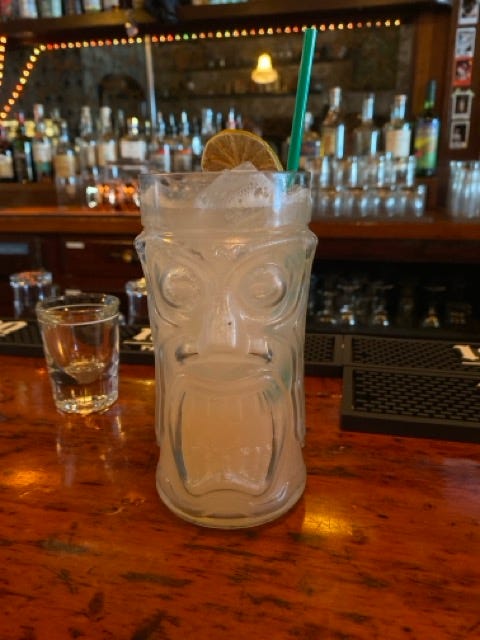
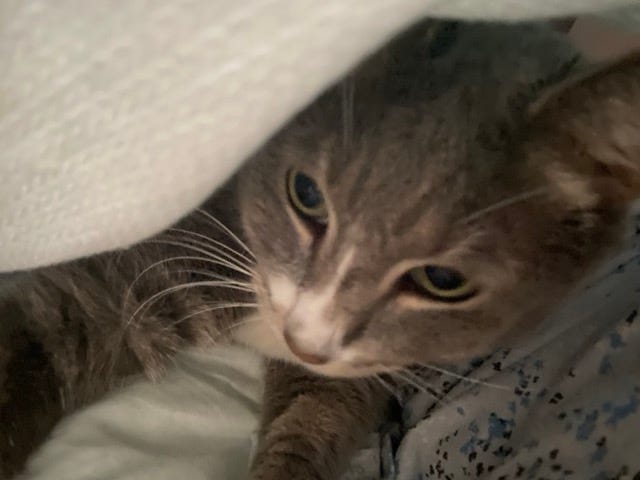
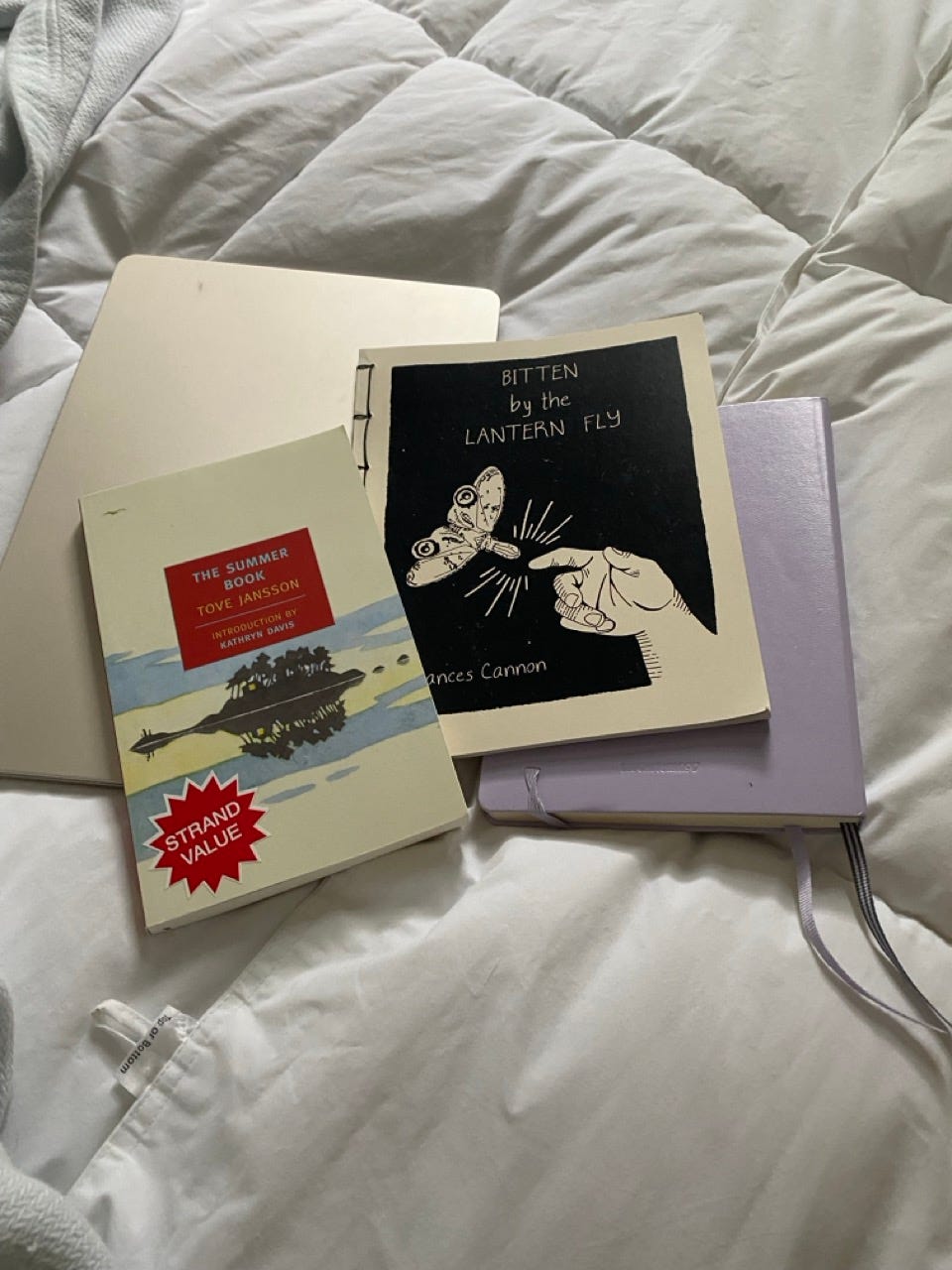
A couple other bright spots: I went for cocktails with my friend Chance, and my paloma was served in this tiki glass. (The shot glass, by the way, was not for a shot, but to taste another drink.) I’ve had time to take some naps with my cat. And today I sat in bed and wrote, with a couple new books next to me, Frances Cannon’s chapbook from Ethel and The Summer Book by Tove Jansson, which I bought on the trip to New York I took with my kid for my birthday— during which all hell broke lose, in terms of family medical stuff. (Other highlights, though, were going to the Met and seeing the Costume exhibit, and Annie Potts being seated next to us during my birthday dinner in Chelsea— !!)
Upcoming Workshops
There is still space in “Estranging the Familiar: A Prose Poem and Lyric Flash Workshop,” which will take place over Zoom. Saturday 8/8, 1-3:30PM Eastern. $60 early bird price ends on Monday 7/20! (More information at the link.)
I will also be teaching a five-week workshop, “Framing Experience: Flash Nonfiction for Self-Discovery,” through writers.com. That one begins 8/18. There are two days left on the sale price of $340.
A Writing Exercise/News
My next full-length book of prose poems and flash memoir, When We Were Fearsome, is forthcoming from Ethel Micro-Press in May 2027. (I’ll let you know when pre-orders are available!) Here’s the title poem from the book.
One of the first pieces in the book is below. It’s an example of how we might “estrange the familiar” details of our lives, viewing them from a bit of a slant, in order to see them afresh. Here I use the third person (“she”), and I begin the piece with something my mom said, casting my own narrative as unexpected— defamiliarizing it.
Writing prompt:
Read the piece below, and then write your own piece about a distinct period in your life.
Try to incorporate the following elements: (1) Announce the situation toward the beginning. (2) Use the third person. (3) Provide some details from that time. How does that time compare to another period in your life? (4) Jump to a scene from further in the past— or compare the distinct period to the present!
Middle Age
She had had a child in middle age, a fact which, when she was pregnant, had caused her mother to exclaim, “It’s like we’re in a parallel universe!” And it was true— it was like that, like another possible narrative leaking into the more familiar, more probable narrative of childlessness. Her son was now over a year old, and every day, he exhibited more and more preferences, tendencies, and markers of his character. Some of these markers of character might persist into young adulthood, might be part of the person he would become, as had happened with her younger brother. One day he exhibited a preference not to listen to “Islands in the Stream,” but then he exhibited the quality of tolerating “Jackson.” She was still young enough that she could take him to the park and hold on to him as they went down a slide, then walk around behind him for forty minutes as he walked in circles and toddled up to older children to screech at them with excitement. But she was not so young that this activity didn’t make her fall into a deep sleep as soon as her son was asleep for the night. She would wake up two hours later, confused about whether to stay in bed or not, then get up to eat a little something. Occasionally, she would pick up a book of poems or short stories, then look up after a while to see that it had become much too late.
Sometimes over the course of the day, the idea of “strength” would occur to her. She would think in a desultory way of the different kinds of strength or fortitude she could exhibit. Her idea was that it was a strength of character she needed now, but she thought about how physical strength and endurance would come in handy, too. Then she thought about how in her mid- to late-twenties she had experimented with becoming physically strong at various times. One memory was of being in a dim, small yoga studio at the 12th Street gym in Philadelphia and being led through a class that involved holding the crow pose for a long time. She balanced on her hands with her knees on her upper arms while a yoga instructor around her own age at the time talked about fortitude. But she can’t remember how much emotional fortitude she actually felt, despite being able to balance the weight of her entire body on her arms like that. She may have felt a sense of accomplishment, a shadow of youthful arrogance even. Probably some hunger. Those classes always made her so hungry.

No posts
Comments
Nothing yet. Say the first thing.
Sign in to join the conversation.