
As a scrappy songwriter, I’ve played my fair share of lonely bars, weddings, and birthdays. They’re usually fun. I recently played my first funeral, and let me say, it was not fun.
The funeral was for a dear friend of ours, Karl, whom we met about five years ago. Once upon a pandemic, we’d told ourselves that we’d attend our nearest church here in Manhattan so as to avoid “shopping” for one that met our expectations, instead trusting that real growth would come from learning how to worship alongside our neighbors, regardless of who they turned out to be. (The truth is that we’d skip a lot of Sundays if we had to take the subway.)
It was early in the morning when we walked into Church of the Epiphany, thereby doubling the attendance—yes, just us and one other couple. Still, I liked the church from the start, probably because it was appropriately gothic and creepy, with the walls stripped of vestments and the light tempered by the mosaics. The associate rector, Mother Elise, led every element of the service all on her own, offering the four of us communion at the end and inviting us to stay for coffee hour—yes, still just us and that one other couple.
And so, the four strangers sat down to eat.
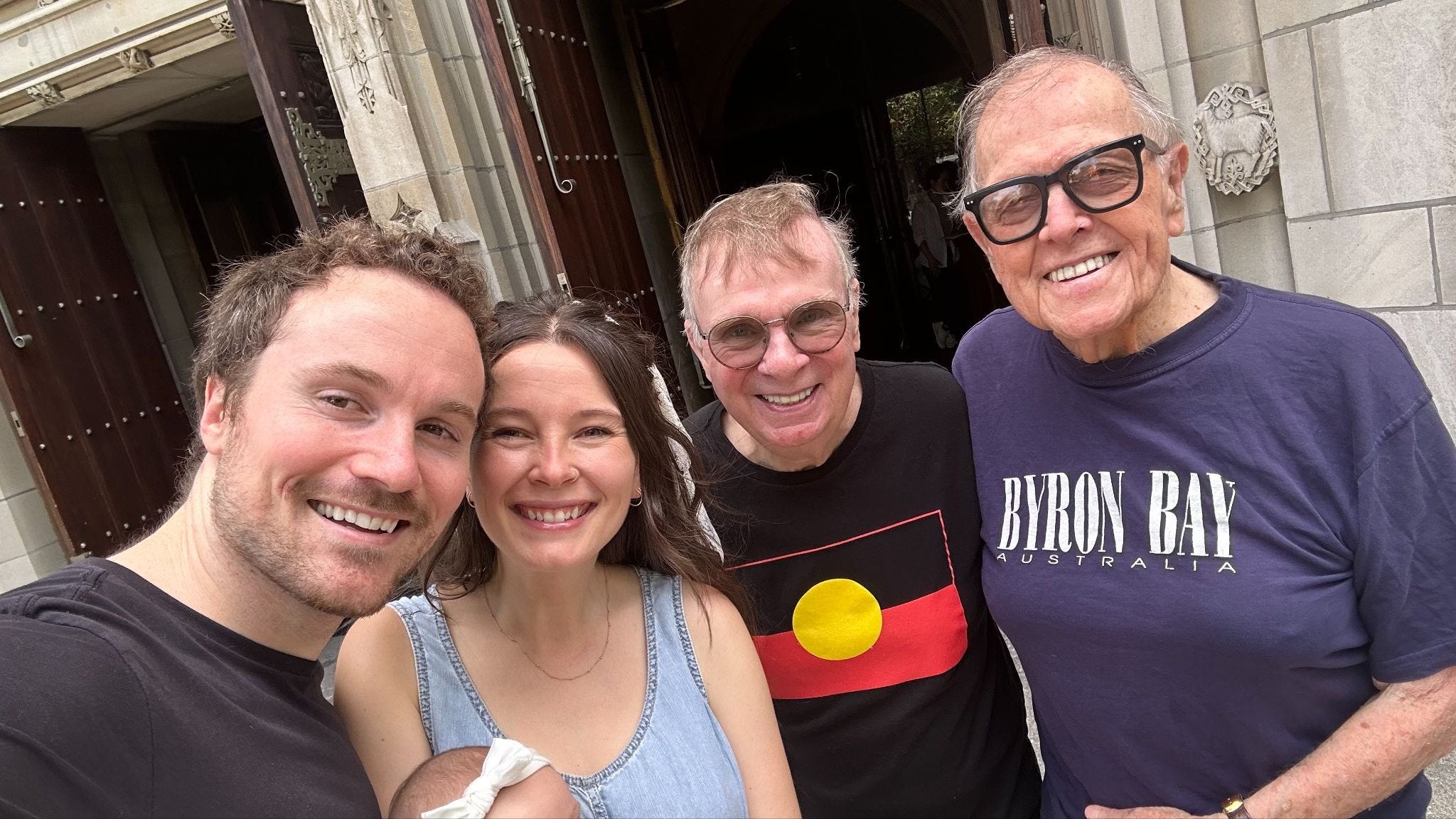
We broke Ritz and prosciutto, with Karl greeting us over a cup of bad Folgers in his refined Australian accent. He introduced us to his husband of what would now be forty-seven years (or ten, at least, by law), Edward. Karl was almost ninety years old at the time, but you’d never have known it, with his square-framed glasses, dapper shoes, and resilient puff of hair. I don’t remember the gist of our small talk, but I do remember that there was something magnetic about the couple, like they carried the wisdom only afforded by age while nourishing a sense of culture that surpassed some of our peers. We came back to that church every Sunday for a year, gradually learning over the course of our many coffee-hours that there were dozens more church members and that the building’s tombiness was due to the fact that it was about to be demolished—Church of the Epiphany was buying the former shell of a recently shuttered church just down the road, scurrying into it like an exposed hermit crab.
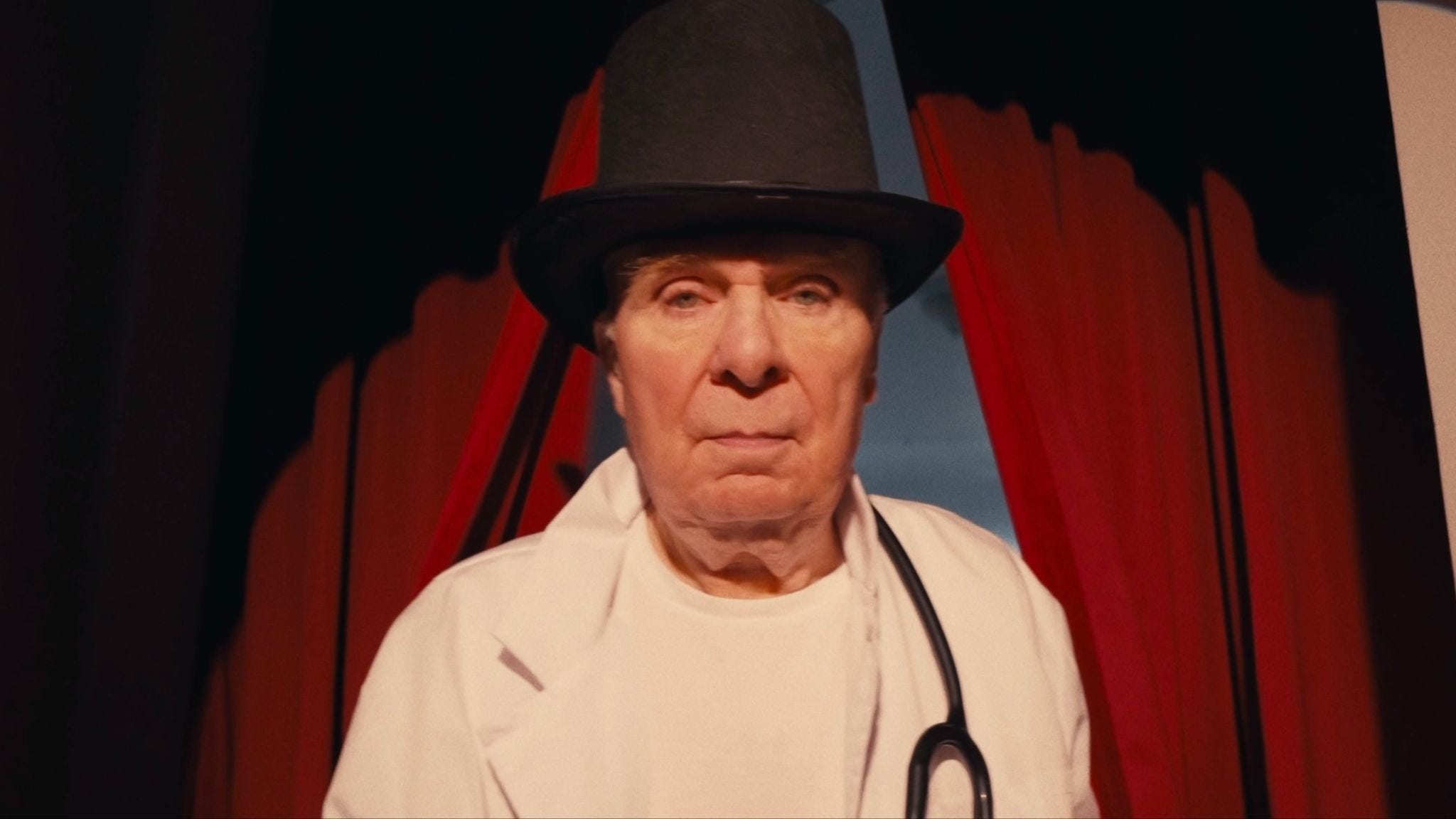
As the old building continued to hollow out (now even the lectern was gone), our friendship with Karl and Edward continued to become more substantive. We’d meet for coffee at our nearby French café, or join as their dinner guests at the old National Arts Club across from Gramercy Park. Karl had hilarious stories about teaching kids in the Outback, and Edward’s commentary on Karl’s storytelling kept pace. One of my favorite memories was Karl’s 90th birthday, which finally put a face to the names of some of the characters we’d heard all about. Edward, for his part, agreed to be the main character in one of my own music videos. These excursions became less frequent after our daughter was born, but between church and brunch and tea parties at “Le Jungle” (their apartment, which was stacked with books on the history of theater and plants from Home Depot), we still saw Karl and Edward more often than just about any other couple in Manhattan. We’d become genuine friends.
There’s a dozen more important things that I could say about my friendship with Karl and Edward, but here I’ll focus on the one that tends to catch the eyes of my fellow churchgoers: they’re gay. For context, I didn’t grow up with any of the “gay is okay” rhetoric, more of the “hate the sin, love the sinner” verbiage. My earliest memory of interacting with a gay man involved me hiding in the bathroom, worried that I’d become gay by being near him. As I got older, the fear persisted, with me praying to God that my love of art and music wouldn’t destine me to become gay. By high school, I coped with the discomfort by intellectualizing it, debating classmates about the ethics of same-sex marriage and the biblical basis of my pre-prescribed beliefs, sharpening my arguments even as I precluded myself from the transformative power of any deep friendship with my gay peers. I remember my heart racing and my face flushing in some of these conversations, consoling myself with the notion that I was the one being persecuted for my beliefs. Looking back, I think the fear was less about being gay or losing my salvation and much more about being cast out from the communities and relationships that meant the most to me, namely, my church family. Fear loves to parade as certainty, and when fear trumps faith, the church can become a very inhospitable place.
Christ has been patient with me in my slow journey toward sobriety from that former certainty. To this day, if I had to name the single most spiritually influential person in my life (besides my parents or someone from the Bible), it would be my high school youth leader, Matt. Matt was probably the most involved volunteer in the church’s ministry, leading the largest “small groups” in both the junior high and high school teams. Beyond Saturday and Sunday services, he’d host book clubs at his house, where we’d chew on works by Tim Keller, Oswald Chambers, and C.S. Lewis. He’d even volunteer for full weeks at a time, co-leading church camps in the mountains. He was there for me when my dad’s addiction became overwhelming, and he helped me figure out how to level up my wardrobe for college, with that same Banana Republic dress shirt hanging in my closet to this day. And for all this, and during my senior year, he was asked to step down from his volunteer ministry after a co-leader unceremoniously outed him as gay.
I met with Matt several times after his dismissal, and with each meeting I became more concerned. He went from down to depressed to almost suicidal. It was agonizing to watch someone whose faith I so admired being abandoned and isolated in the name of Christian love, leaving him so terribly alone. Before I’d graduated, he’d more or less left that church entirely. That was a breaking point for Matt, and for me, another important step in the breaking open of my own faith. In some ways, it felt like his last and most strenuous lesson for me on the unfathomably sacrificial love of Christ.
I’m aware that there are plenty of thoughtful Christians who would strongly disagree with my position—maybe you? If you’re on the fence, I appreciate the trust you’ve granted me in reading this far. If we were neighbors, maybe we’d get coffee and have nuanced conversations about where we disagree; we could discuss how such an ethic could cohere with the spirit of Scripture, whether the Bible is univocal on the arrangement of marriage, the import of church authority and tradition, what Jesus and Paul said and didn’t say about it, the relevance of semantic drift in “hot-button” verses, what to do with the fact that most Christians who have ever lived thought differently, how to imagine the church making a definitive shift on the issue without compromising its mission, and so on. I’d certainly prefer such a conversation to some of the ones I’ve had to date, which, at their worst, have felt less like an honest inquiry and more like a cultural inquisition. Some of those conversations have left me feeling very alone. But before I get too down about it, I have to remind myself that this loneliness isn’t comparable to the loneliness endured by friends like Matt, Karl, and Edward.
The only argument I care to put forward here, if you can even call it that, is the living sacrament that is my friendship with Karl and Edward. Karl had to practically flee his hometown in Australia for a time to escape the web of shame and stigma, returning to his faith late in life when it was safer to do so. Edward likewise grew up in Irish Catholic schools and never formally came out to his family, instead simply bringing Karl to Thanksgiving one year and letting the chips fall where they may. Their faith journeys are so radically different from mine, and yet I’ve been deeply moved by their commitment to each other and their grace for the church. They met the loneliness of their pilgrimages with courage and, ultimately, with one another.
So no, I wouldn’t describe performing at Karl’s funeral as “fun.” Performing at Karl’s funeral instead left me with a heightened sense of comfort and of courage. For as personable as he was, Karl understood what it meant to be alone, like another man of many sorrows we’ve all heard about. But Karl didn’t want his friends to wallow for long. He called out to us through the words he asked me to sing for his last service, a Broadway number sandwiched between Anglican hymns and scripture readings. I sang his song and sat down, feeling the weight of his absence and the consolation it offered—truly, no one is alone.
No posts
Comments
Nothing yet. Say the first thing.
Sign in to join the conversation.