
One afternoon in June (26) I found myself sitting at a festival on the Yorkshire Wolds. Above us stretched that huge dome of sky that anyone who knows the Wolds will recognise. Around me people chatted over pints, children chased each other across the grass, and somewhere beyond the canvas colourful flags snapped in the stiff breeze.
It was the Moonbeams Folk Festival.
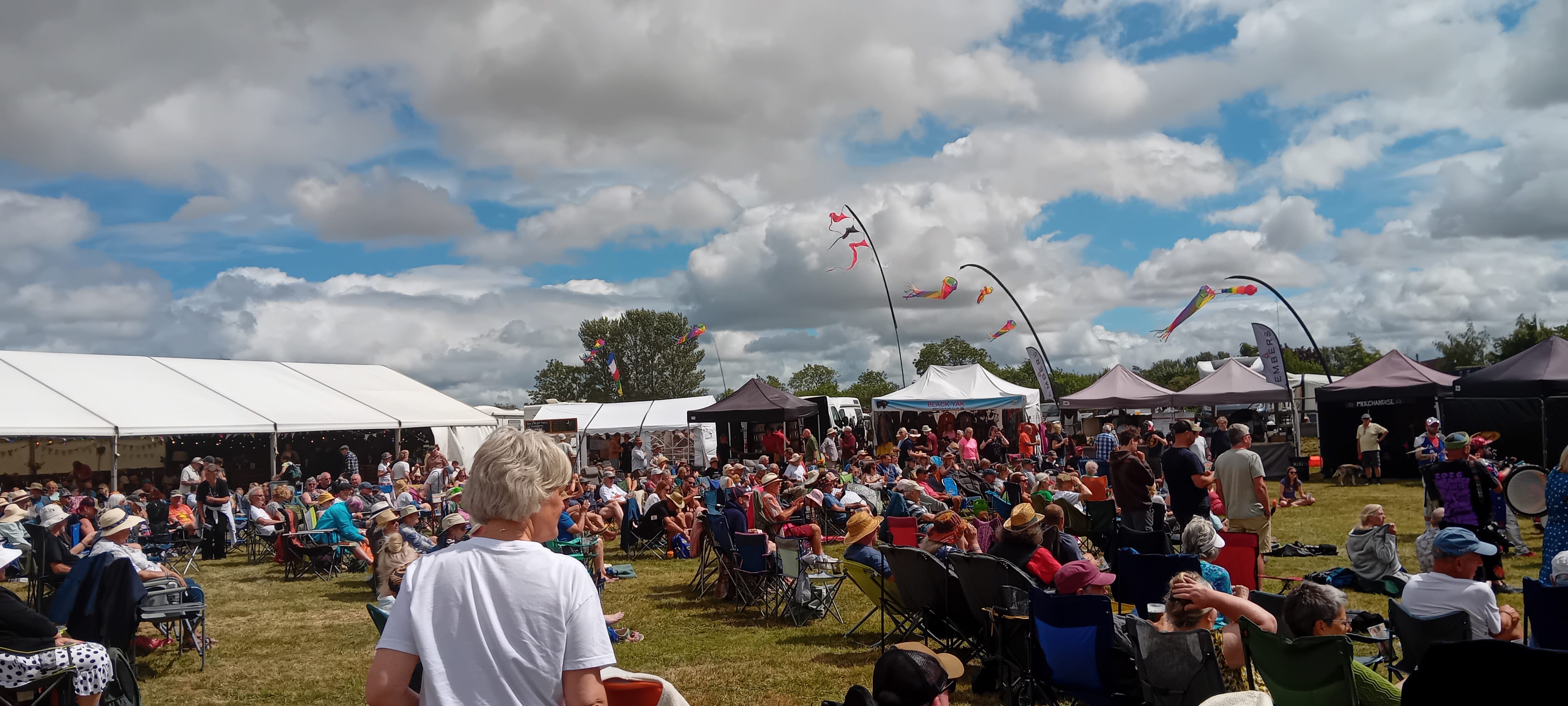
One of the performers, singer Nick Rooke (on stage below) and his band introduced a song he had written after moving from the enclosed streets of West Yorkshire to the open landscapes of the Wolds. What struck him most, he explained, was the sky. Up here it seemed enormous.
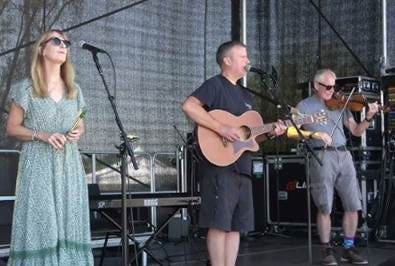
The Nick Rooke Band (Moonbeams, 2025)
As he sang about fading light, rain running down your face and the vastness of the sky above, I realised my thoughts were wandering—not to modern Yorkshire—but back more than two thousand years.
The stage remains
Archaeologists spend much of their lives trying to reconstruct lost landscapes.
The Yorkshire Wolds that we see today are not the Yorkshire Wolds of the Iron Age.
Today’s landscape is dominated by huge arable fields stretching to distant horizons. Iron Age pastures and post enclosure hedgerows have disappeared. Modern roads slice across the chalk hills. Tractors have replaced livestock. Villages have grown where isolated farmsteads once stood.
Yet for all these changes, one thing has remained almost untouched.
The sky.
Stand on the highest parts of the Wolds and the horizon stretches for miles in every direction. The weather arrives long before it reaches you. Clouds cast moving shadows across the hills. At sunset the light seems to linger forever before slowly dissolving into grey.
That was as true for Iron Age communities as it is for us.
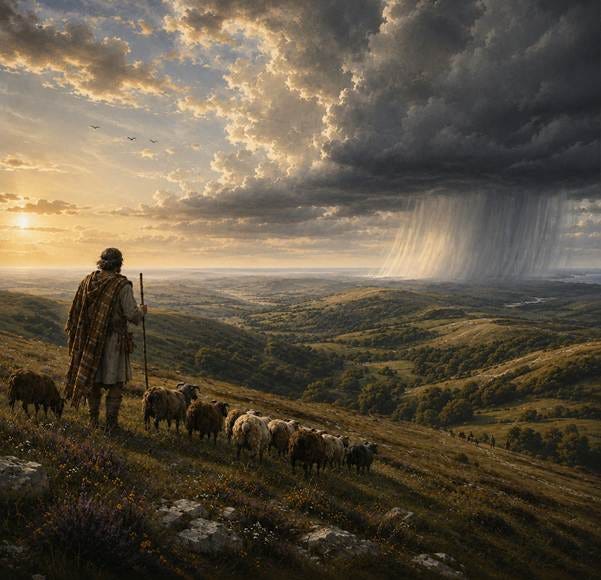
An Iron Age shepherd watches a summer shower sweep across the Yorkshire Wolds. While almost every detail of the landscape has changed over the last 2,500 years (for example more trees in the valleys), the sky remains the same. (Artist’s reconstruction.)
A theatre beneath the clouds
The archaeologist Mel Giles has argued that Iron Age life on the Yorkshire Wolds was something of a performance. Communities did not simply occupy the landscape; they lived their lives publicly within it. Herding animals, gathering for feasts, mourning the dead and celebrating the seasons all became performances played out beneath that same great sky.
Not theatre in the modern sense, but lives lived publicly within a landscape.
People gathered.
Animals were driven across the hills. Communities celebrated. Children grew into adults. Lovers found each other.
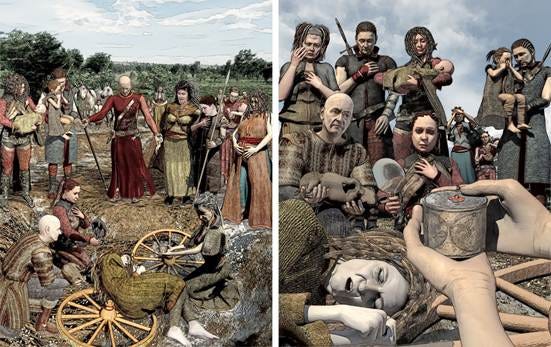
Imaginings of a Parisi Funeral on the Wolds.
From “A Forged Glamour” (Mel Giles, illustration by Aaron Watson)
Families mourned their dead. Funerals became carefully choreographed ceremonies.
The landscape was not simply somewhere people happened to live.
It was the stage upon which life unfolded.
Reading her work, I began to think again about Nick’s song. Perhaps it isn’t really about scenery at all. Perhaps it is about what a landscape makes us feel.
The same light
Nick’s song begins with light fading into grey. It did so yesterday at Moonbeams.
It did so for Roman soldiers marching along the edge of the Wolds.
It did so for Iron Age shepherds bringing animals home.
The colours change. Gold becomes amber. Amber becomes grey.
For thousands of years people have paused to watch that transformation. We know almost nothing about the songs Iron Age people sang. But surely, they watched the same sunsets.
The same rain
Anyone who spends time on the Wolds knows how quickly the weather changes. One moment the chalk hills lie warm beneath the sun. The next, rain sweeps across the ridges in great curtains.
Nick sings of rain running down your face. I smiled when I heard it. Every archaeologist has experienced exactly that while trying to finish a survey or excavation before the weather finally wins.
Then it struck me.
So had Iron Age farmers. So had shepherds. So had children running home.
Rain has always been one of the constants of this landscape.
Different clothes. Different languages. The same drops of water.
Archaeology often encourages us to think about what was different. Different houses. Different beliefs. Different crops. Different tools. Yet perhaps we sometimes overlook what remained constant. Every generation that has lived on these chalk hills has watched clouds build on the horizon, wondered whether the rain would reach them before they reached home, and looked upwards into the same immense sky.
The same sea
The song also speaks of watching the tides. Nick reminds us that tides continue their endless rhythm. Although the Wolds stand inland, they have always looked eastwards towards the North Sea and south towards the Humber.
For prehistoric communities, the coast was a place of travel, fishing, exchange, and imagination.
The tides still arrive. They still retreat. Like the changing light, they remind us that some rhythms are older than history itself.
The same embraces
One verse describes being held beneath that immense Yorkshire sky. That line stayed with me.
Archaeology often deals with the grand stories—Hillforts, burials, chariots, and weapons.
Yet those things only matter because of people. Someone loved. Someone grieved. Someone laughing around a fire. Someone held another person’s hand.

Body Adornments from Square Barrows on the Wolds. (British Museum).
When archaeologists uncover a necklace carefully placed beside the dead or the remains of a great funeral ceremony, we are seeing the traces of relationships rather than simply objects.
Love leaves almost nothing behind for archaeologists. But that does not mean it was not there.
Beneath the same sky
As darkness settled over Moonbeams, the applause faded and people drifted back across the fields.
Musicians packed away their instruments. Friends embraced before heading home. Couples disappeared into the gathering darkness. Families herding tiring children and family pets towards tents, caravans, and motorhomes. Not roundhouses as Iron Age people did.
For a moment I wondered whether, on an evening more than two thousand years ago, another gathering on these chalk hills might have ended in much the same way.
The songs would have been different. The language would have been different. The gods would have been different. The fields would have looked unfamiliar.
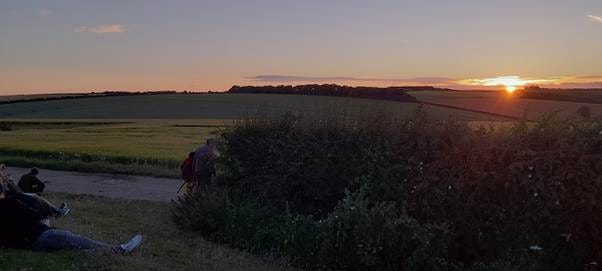
But the light still faded.
The rain still fell.
The tide still turned.
And above them all stretched the same great Yorkshire sky.
No posts
Comments
Nothing yet. Say the first thing.
Sign in to join the conversation.