
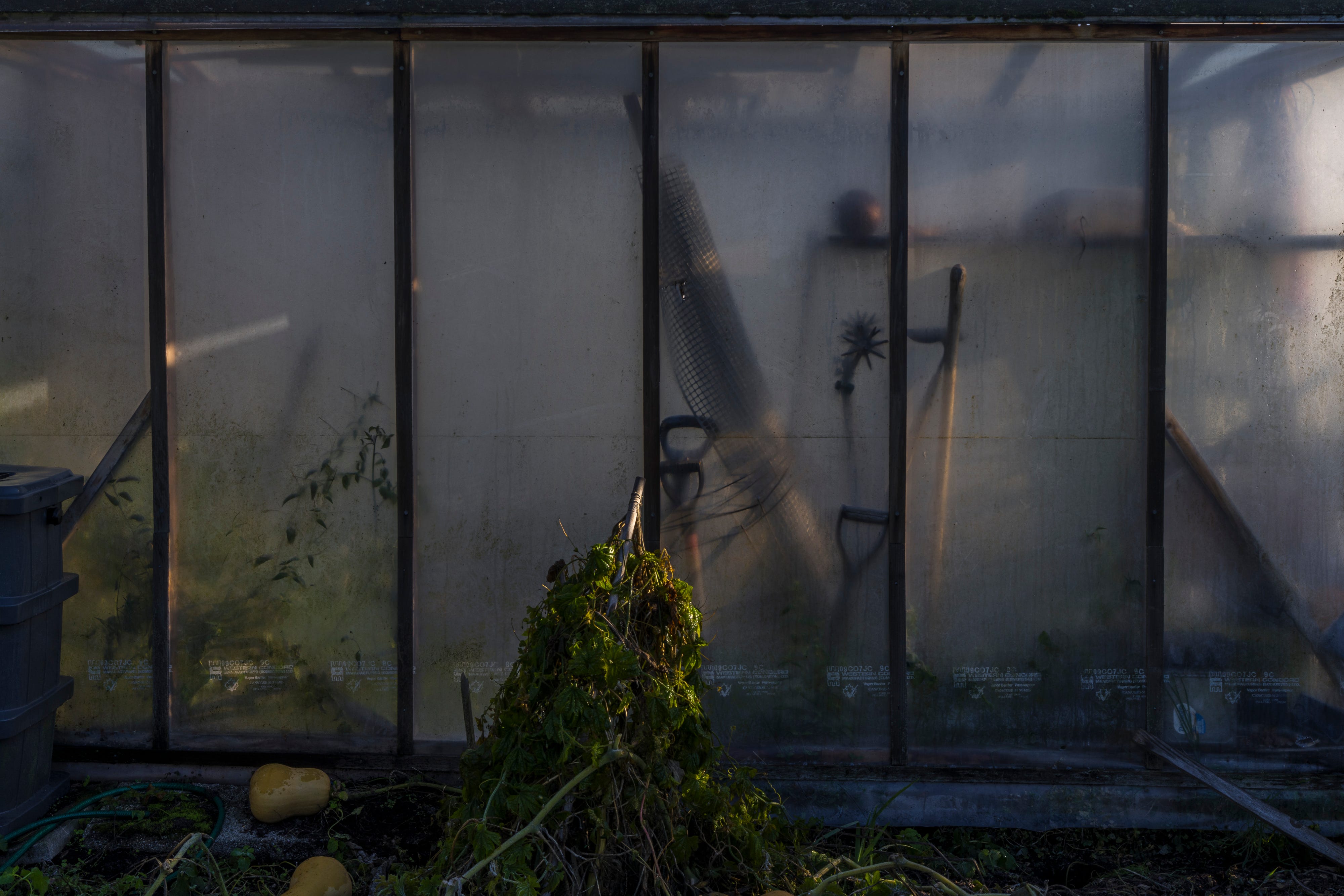
All photos are taken in the garden by Jim Roche
I’m listening to Joey Alexander, the jazz pianist, while I try to write. I don’t listen to Joey often. Not my favourite. He seems too well rehearsed, rehearsed to death. I know most jazz fans would disagree. Sometimes I get the feeling he’s still a student who has memorized how to be playful, and practiced being unique. Still, I listen, because it makes writing easier when there’s noise in the room, but not voices. I put on my noise-cancelling AirPods. Truth is, I’d rather have Philip Glass to listen to. His work is rehearsed too, but it’s supposed to be. Very, very rehearsed.
Lately, when I try to play my own music on my iPhone, music I have paid for, I get a greyed-out title and an explanation: “Not available in your country.” It's the kind of message that makes you feel caught doing something wrong, though all I wanted to do was listen to music I already own. These are not the problems I want to spend my time solving. Some days there is more frustration than others. Today is one of those.
My third choice for music, not third in affection, just third in the rotation, is a jazz trio called The Bad Plus. Piano, bass, and drums. For years this group took grief for building pieces around pop, rock, and classical themes. They once recorded a cover of “Everybody Wants to Rule the World,” the Tears for Fears song, and people acted as if this were some kind of shortcut, a way of skipping the hard work jazz is supposed to require. Or just outright stealing. But I spent my college years listening to music like Charles Ives, listening to him fold old hymns and strange marching band tunes into his own work, whole and recognizable, not disguised. I guess a real musicologist would call this borrowing, not covering. The Bad Plus does the same thing with Tears for Fears, keeping the actual melody and building around it instead of replacing it. Everything is made of something else. Jazz included.
To my untrained ear, Joey is playing a deck of clichés now, one after another. Maybe he’s the best jazz pianist there is, but he still sounds like a student to me, still practicing being heard. Something about the end product just bother’s me. As far as jazz goes, I grew up listening to a guy named Pharoah Sanders, and just felt like he never had to practice being heard. I want Pharoah Sanders right now, but he’s, you guessed it, “Not available in your country.” Sanders has always been a favorite and I have to remember to take all my music with me next time I go to the US. They tell me if I load it on my iPhone while I’m there, everything is forgiven.
I wait for the piece to end. Joey seems to be quickly showing all his cards, one cliché-sounding intervention after another. I wait, and the ending is worse than what came before it, a drum roll, good God. I’m listening on my AirPods, but I’m embarrassed. Just a tiny bit. I know I’m embarrassed because I put my head up and look around. Anyone notice?
Just last night I was looking through Robert Adams’s little book, Art Can Help. If you don’t have it, get a copy at the library, it’s a single-day read. I had picked this book from my bookshelf because I wanted something small and easy to carry while I went out to eat. Turned out, by chance, it was just the right book. At the start, Adams quotes a letter Keats wrote to J. H. Reynolds on February 3, 1818: “Poetry should be great and unobtrusive, the thing which enters into one’s soul, and does not startle it or amaze it with itself, but with its subject.” Joey’s drum roll, was so eager to amaze. Trying to startle you with…technique… It wants you to notice the drum roll, the drum roll isn’t even for itself; it’s to celebrate Joey’s victory. Someone trying to make an artful photograph notices that kind of noise right away, because it is the first thing you learn to edit out.
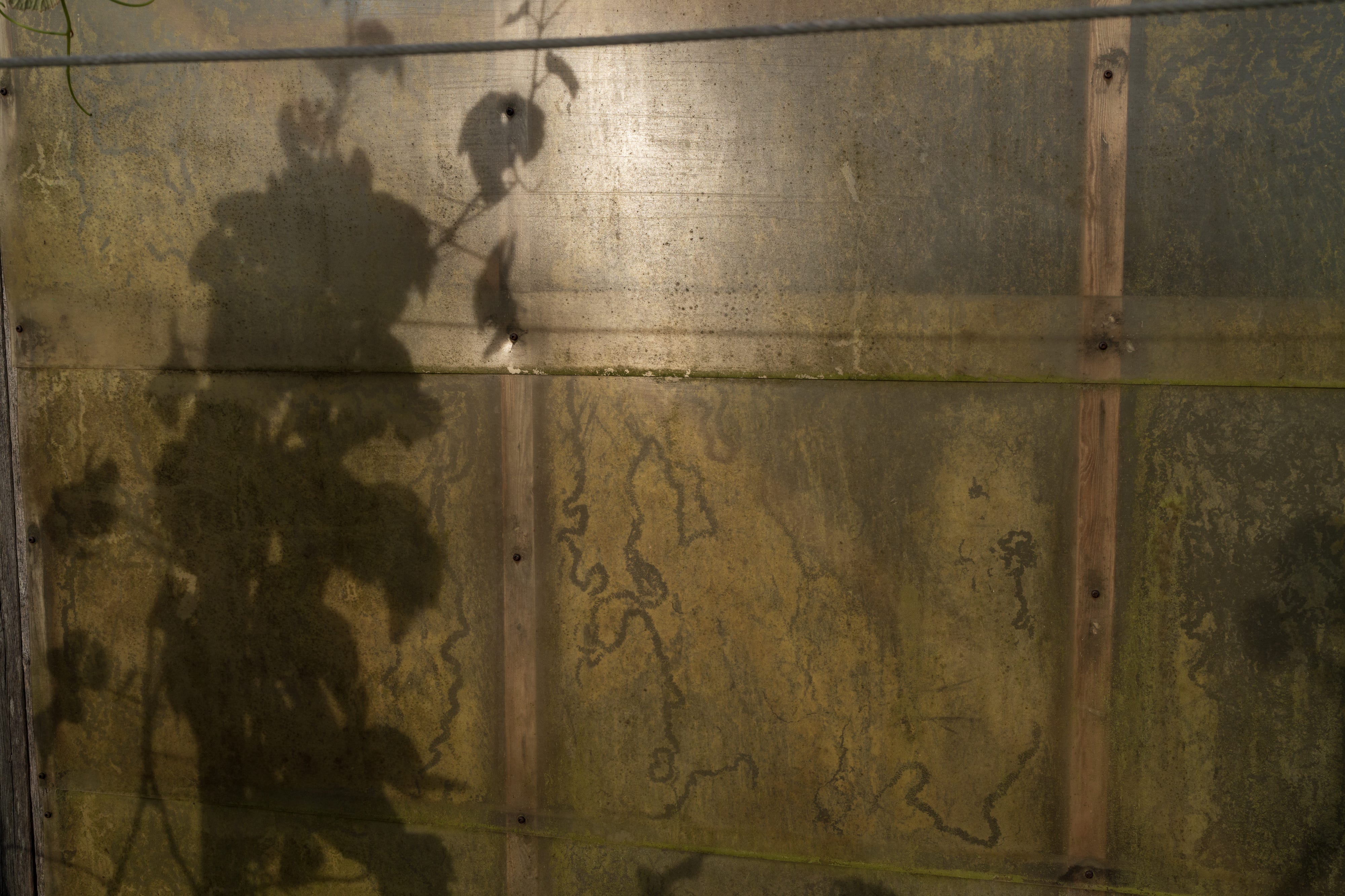
The next morning, when leaving the house to take photos in the forest, my plan got sidetracked. You can tell by the photos I’m sharing. Driving there, a few raindrops hit the windshield, and in response, at the major intersection, where decisions have to be made, I turned left instead of right. I didn’t think about giving up on the forest. I thought about the color the garden takes on when it’s wet. How different it looks. How the overcast sky and light rain create an atmosphere. So, I go with the flow, a phrase I would mock if Joey used it. I plan, but I’m more flexible than that.
Alec Soth plans his photo trip in more detail than I do. He puts pins in a map on the wall, he finds out when some dance class two states over is meeting up, he checks if there’s a city council meeting in the town he’s going to stay in, and makes sure he’s there. He writes ahead to a college he’s going to visit and offers to trade a few days sitting in on classes for a few days shooting on campus. He is, by his own account, obsessive about these things. But he can still leave the plan behind the moment something better, or at least unexpected, happens on the road. The planning was never the point. The planning got him standing somewhere different than he was, where the perspective, the experience, is different.
The rain, besides changing the way things look and smell in the garden, has a magic in it, it keeps people out of the garden. They stay at home, thinking tomorrow will be a better day for digging. That gives me room, some leeway to take pictures I don’t usually get to take. And a little rain is perfect; I might get wet, but my camera will be ok.
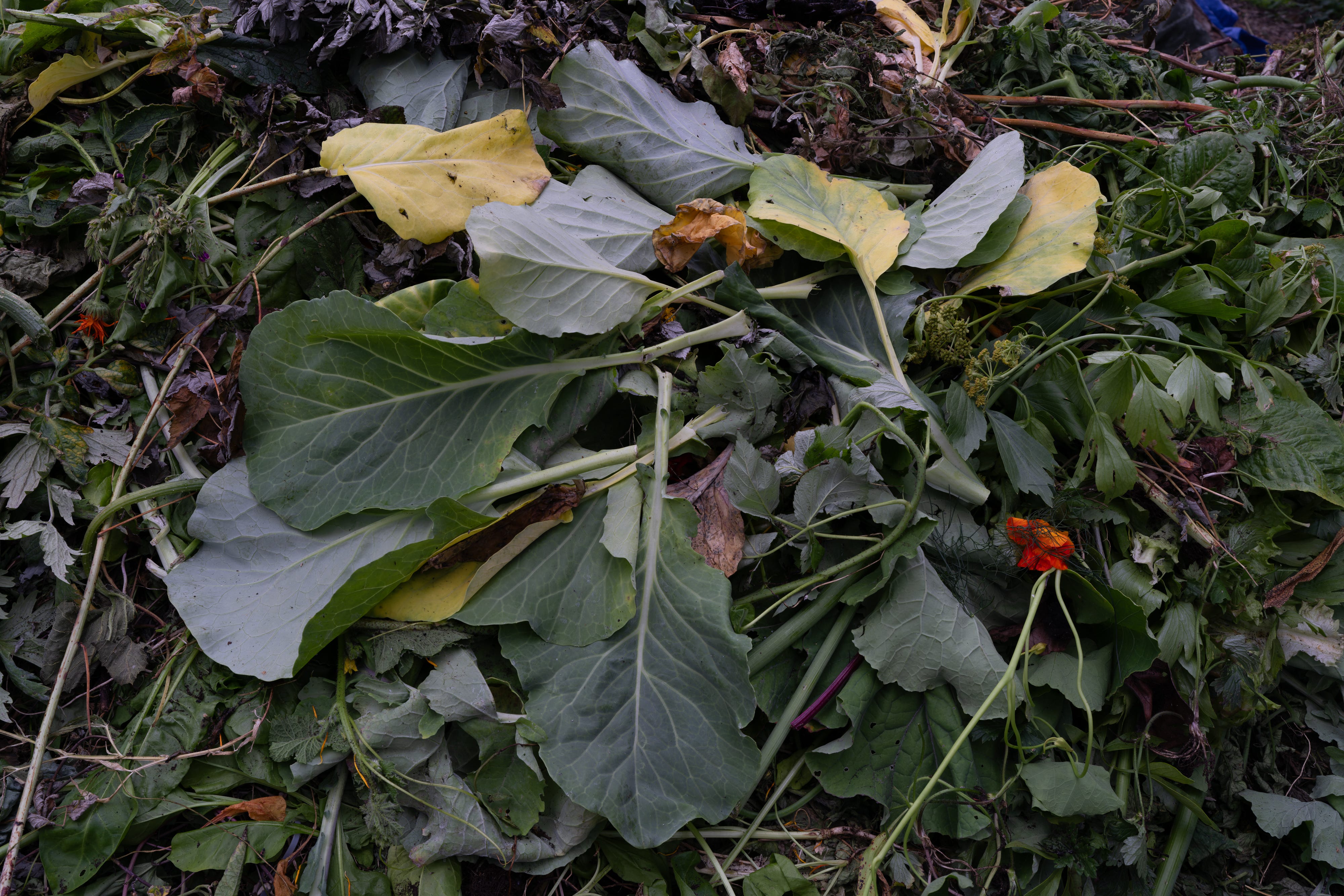
I got to the garden and gathered my gear fast, grabbing an extra lens I meant to test. I never got to that. What I did get to was stepping over the rope that marks the edge of the compost pile, the rope that normally separates where you’re allowed to stand from where you aren’t. Then I looked around, saw no one, and stepped right into the pile. I hoisted my camera up near the top of the mound. It wasn’t easy; turns out rotting garbage is slippery. Signs with arrows tell gardeners to throw their waste at the top of the pile, and now, in the rain, with no gardeners around, I could see a different view. I could see the top of the pile. Usually my pictures are of the older compost, the stuff already rotted down, one thing made of something else, same as the jazz, same as everything. The newer stuff goes on top, except for what the lazy gardeners drop on the ground beside the pile instead.
I climbed three or four feet up the side of the compost to take pictures. I was shooting five stacked frames per set, meaning I take the same shot five times, shifting the focus point slightly each time, so I can merge them later into one image with everything sharp from front to back. I’ve been doing that manually but turned on auto-focus stacking. Up on a shifting pile of compost, this gets complicated.
I have to stop writing for a minute. Joey is still playing in my headset, the piano insisting “look at me, look how good I am at this”. I have to stop it. I find The Bad Plus on my iPhone and switch. I just can’t listen to Joey anymore. Yes, there are moments in a Bad Plus tune when one player or another takes the lead, but they hand the music off from one instrument to the next like they are following some kind of code. With Joey, everyone gets a solo, and his is always the most important one. With The Bad Plus, what matters is the integrity of the piece, start to finish. The song’s the point, not the player.
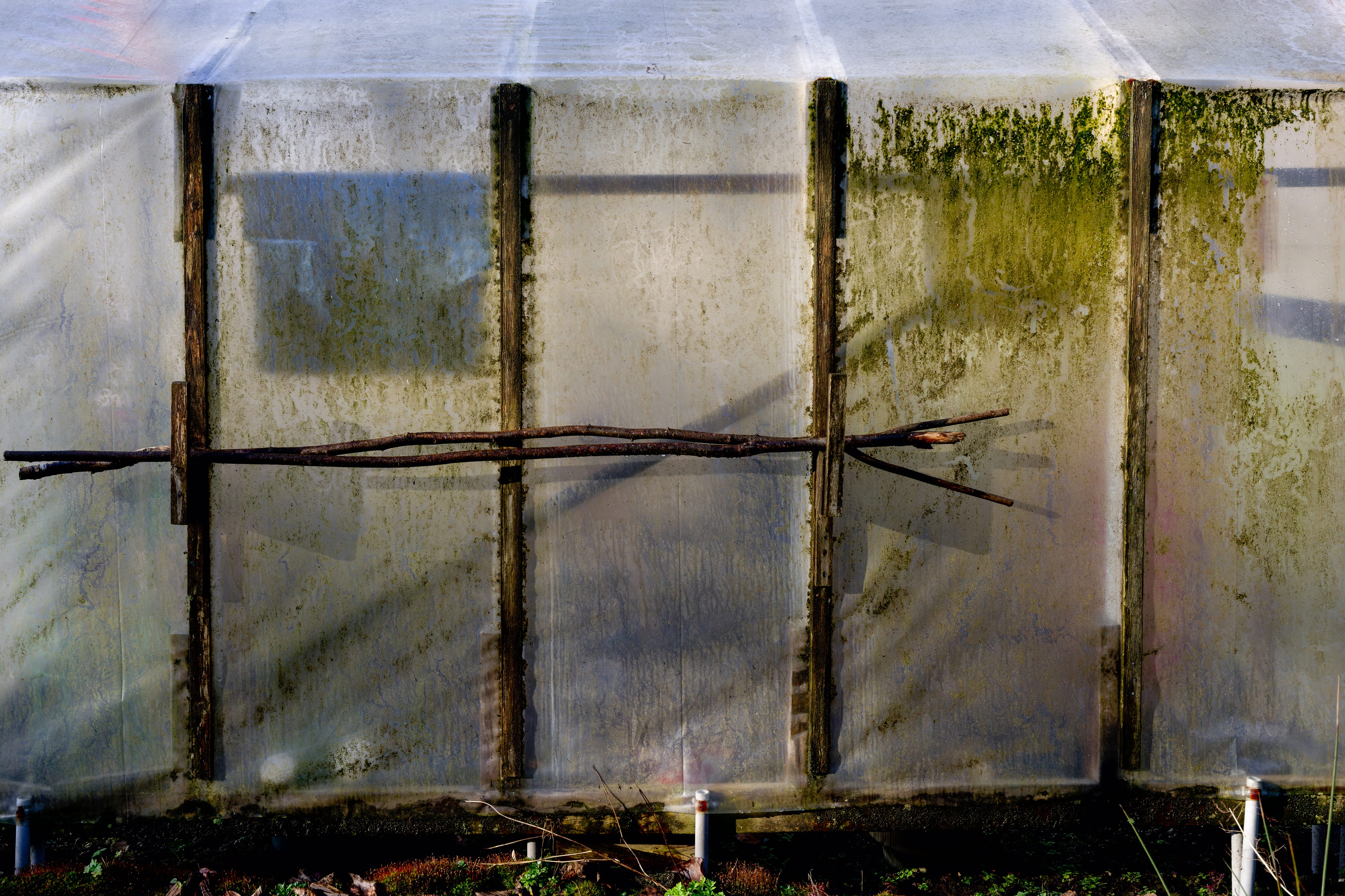
If I had known what I would end up doing today I would have worn boots. My sneakers are soaking through already. By the time I get them home, they smell terrible. In the middle of the night I have to get up and stick them outside the door. The cost of following the flow, the cost of staying focused on the piece and not on my feet.
Back at the compost pile: I hold the stack to five images. My tripod is sinking slowly into the pile anyway. I watch it before I take each shot, because sometimes the tripod is still sinking even after I’ve taken the image. I shoot the sequence, one through five, and the tripod is still sinking, tilting left. I straighten it. Now it tilts right. I wait a long time between setting up the camera and taking the next shot. I extend the tripod as far as they go because I can’t see the edges of the frame on the screen from where I’m standing below the camera. I notice that someone cleared out a cabbage patch yesterday and threw the leaves near the top of the pile. They catch what little light there is: green-blue, with a shifting white underneath. The yellow is starting to come in, and slugs and snails have chewed holes that give the leaves texture. I take ten sets of images total and adjust the camera, then take five more. I adjust the camera again, a new angle. Five more. Despite all of it, I get seven or so sets fairly quickly, three good images in the end. Like writing, photography is mostly about editing. Out of ten, maybe two survive. Three is actually a triumph. When I’m writing, I figure thirty percent of a first draft gets cut, and there can be eight or nine drafts after that. When I edit photos, sometimes sixty percent or more goes in the trash. My delete button is the most frequently used button on my computer.
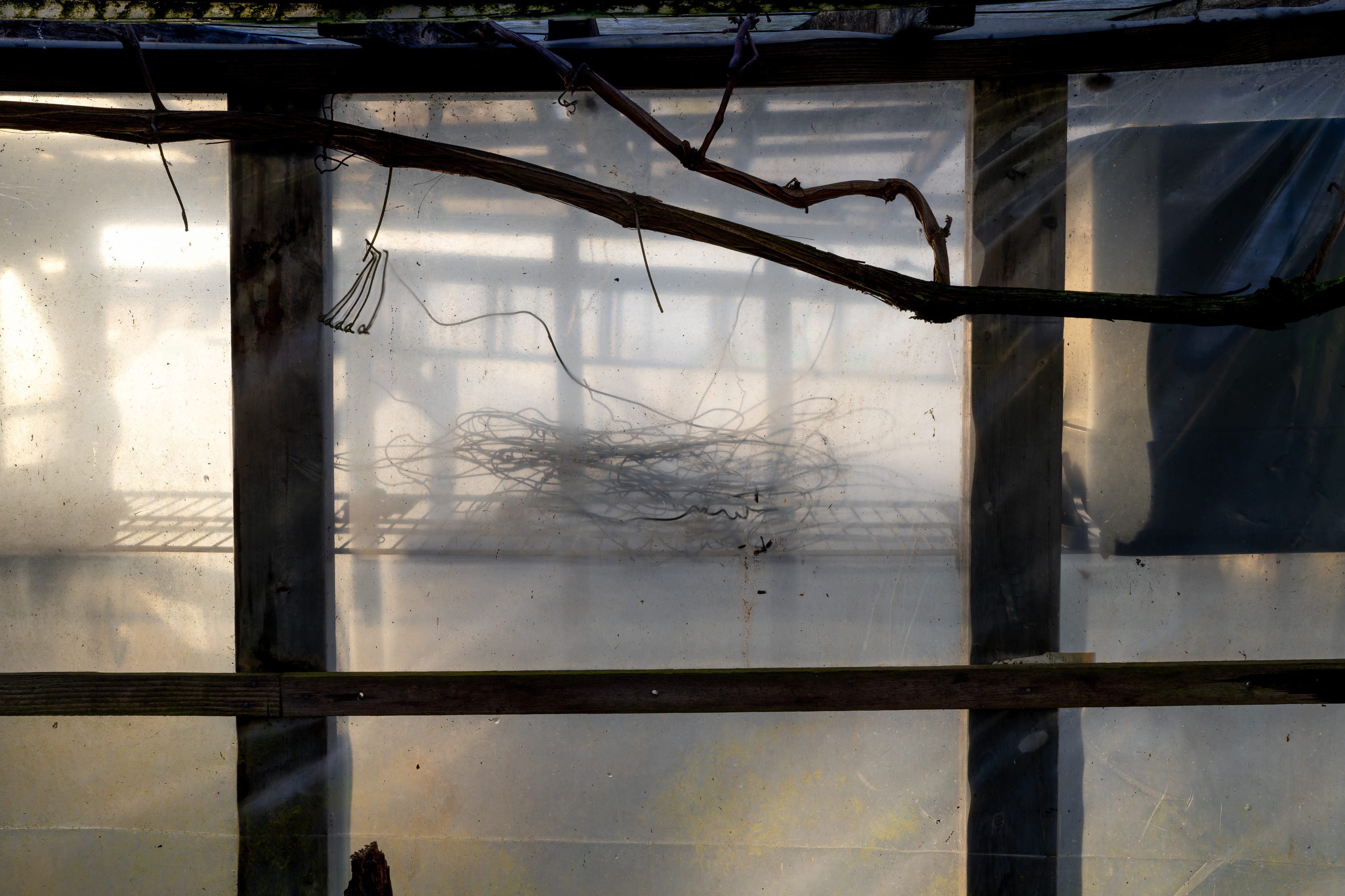
I took an odd path back to the car, heading away from the compost pile toward the farm at the back of the gardens. A brown animal about the size of my hand ran across the path. I couldn’t guess what it was. Brown ruled out a rat. Too compact for a weasel, built more like a small tank. Whatever it was, the extra walking had already paid off. I enjoyed seeing whatever the animal was. I searched my book of local mammals, but found nothing. Now I realize it may have been a juvenile of something. I’ll have to go through the book again.
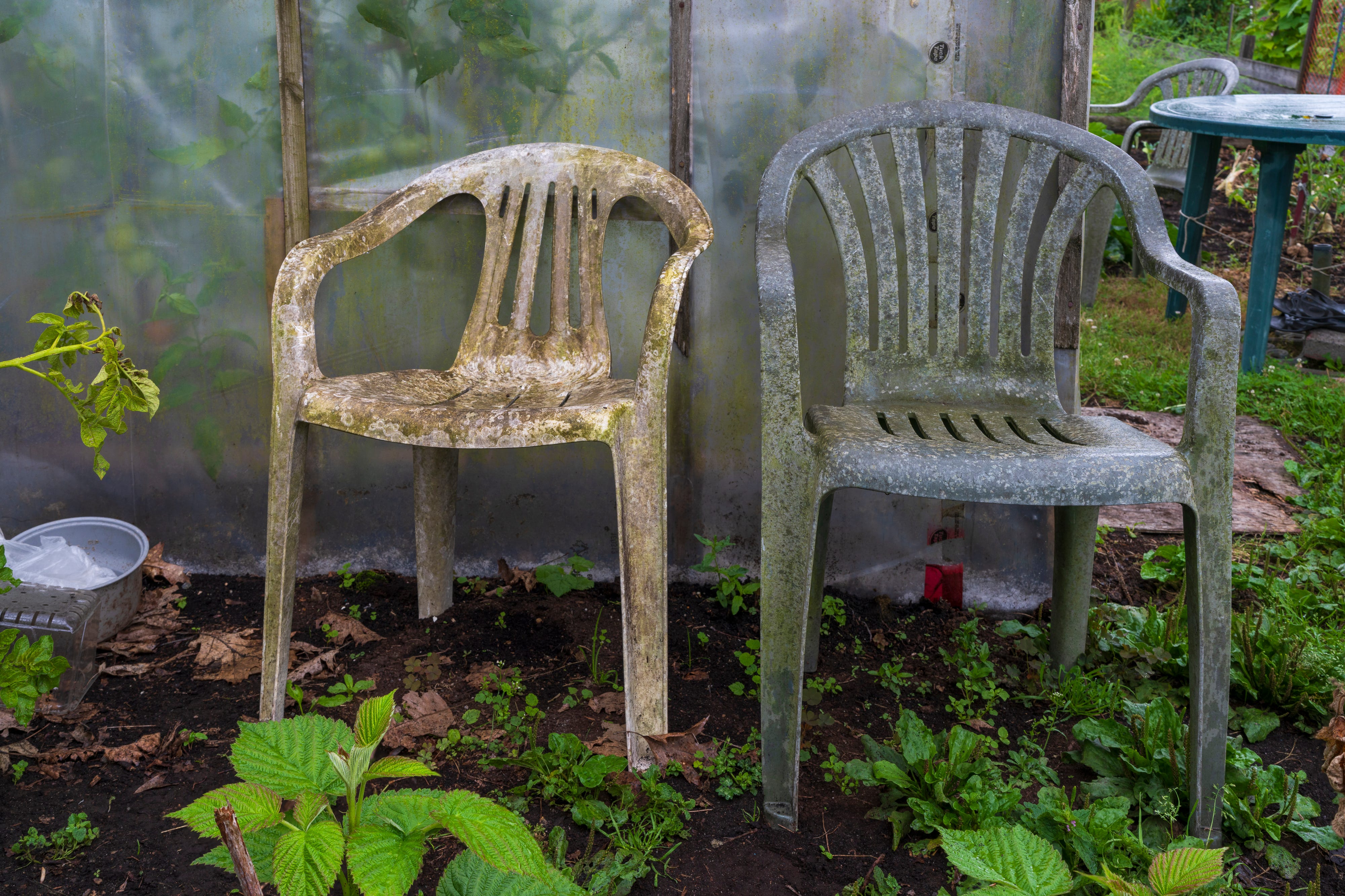
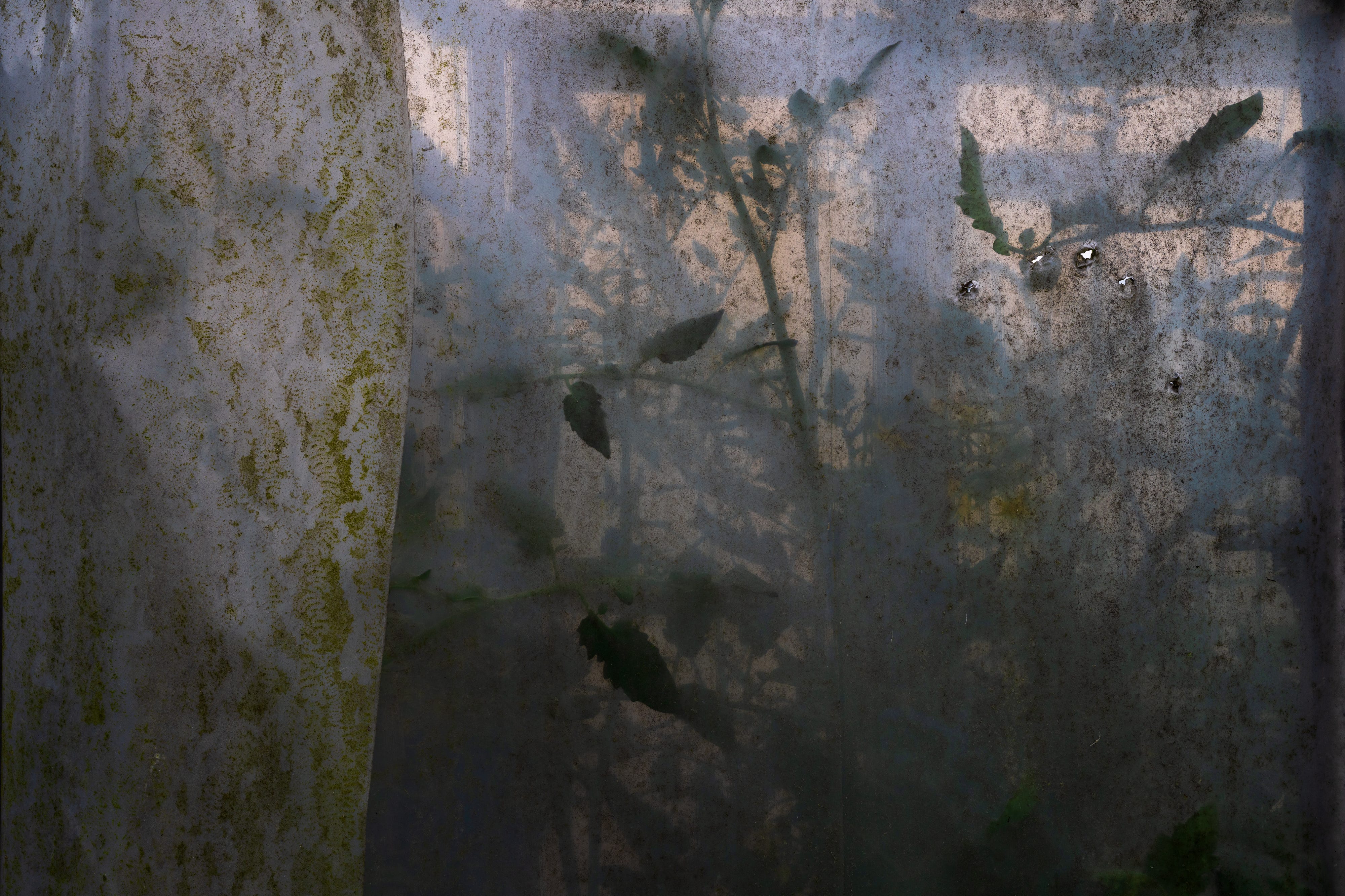
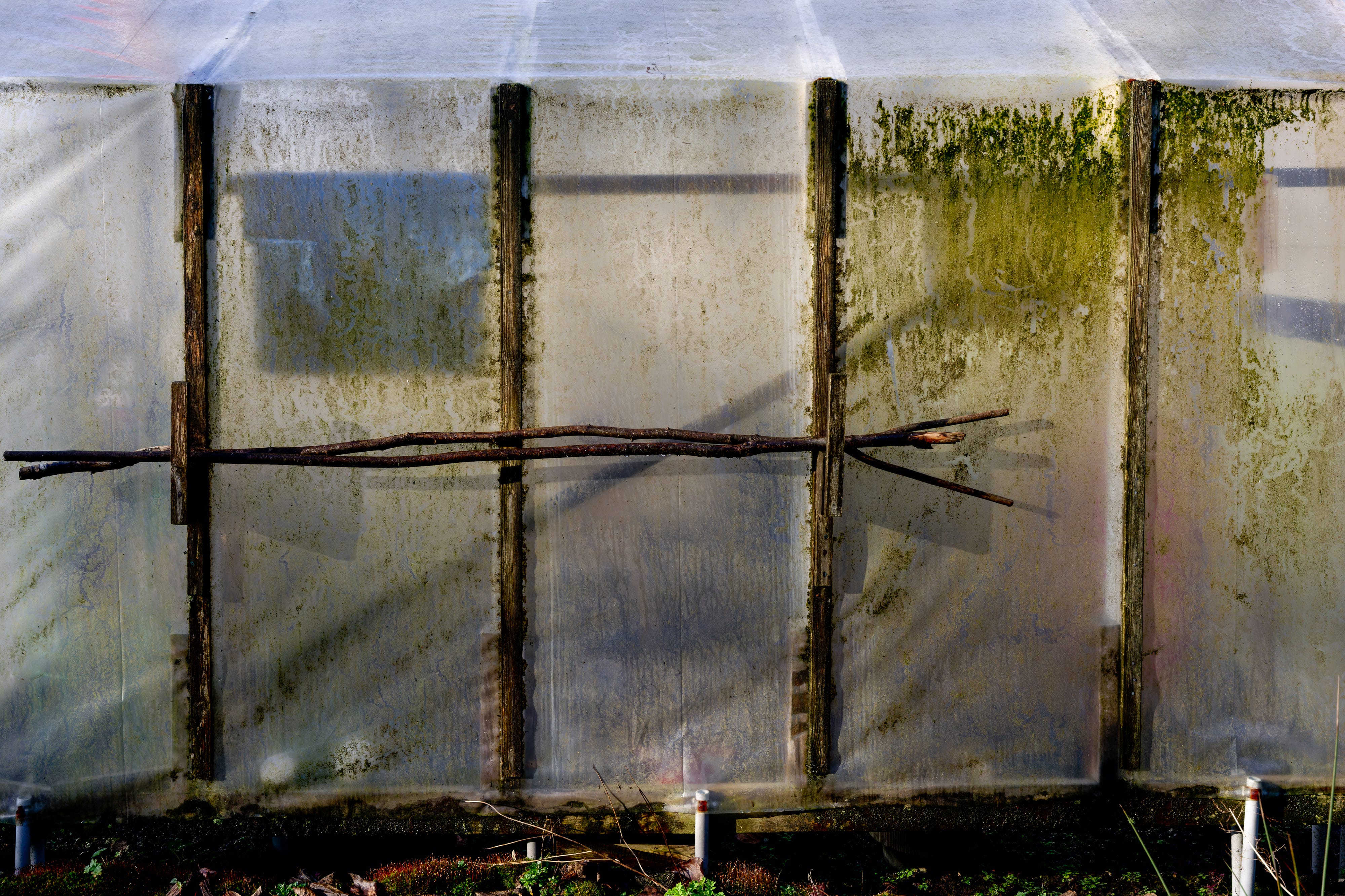
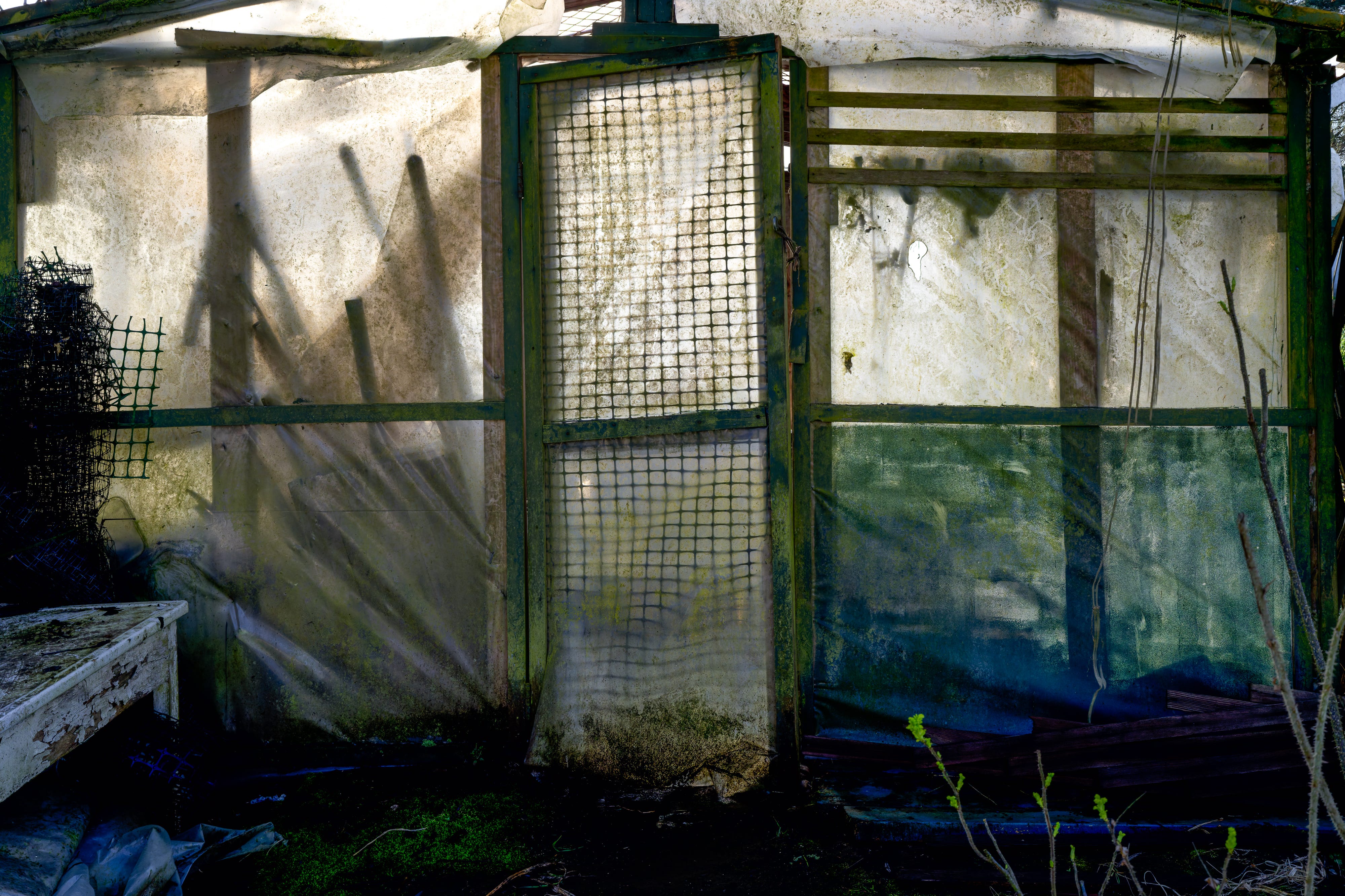
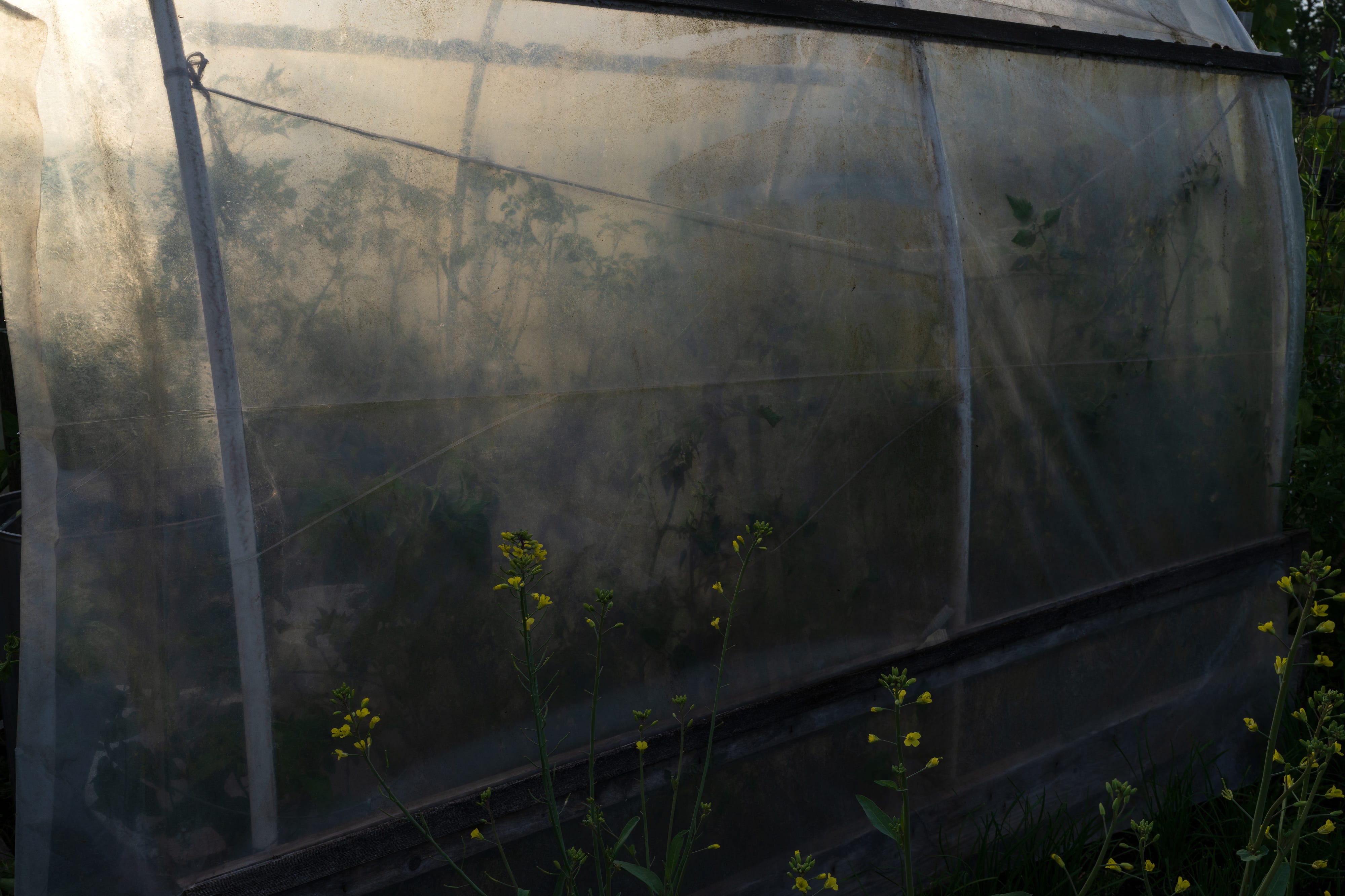
Coming from this direction, I was seeing the temporary garden structures, the hoop houses and lean-tos gardeners build over their plots, from the opposite side I usually see them. I got three more pictures, not of compost, but of the structures themselves. The clouds had turned very dark, and I moved between the structures, skirting the trees, taking advantage of the plastic sheeting that hangs loose at the edges of many of them. Some even have what amount to porches. Here and there I found new views into the insides, half hidden. Through the heavy plastic I could see moss, green slime, algae, and I wondered about the trails left by slugs and snails and whatever else moves through there. I have been working on a project for a few months now, focused on these half-hidden things inside these hoop-sheds and greenhouses. I laughed quietly, thinking about how those trails and shadows got made by snails slowly scraping off the green goo. Then I also felt a touch of anxiety about being alone. I took a couple more images and moved towards the parking lot.
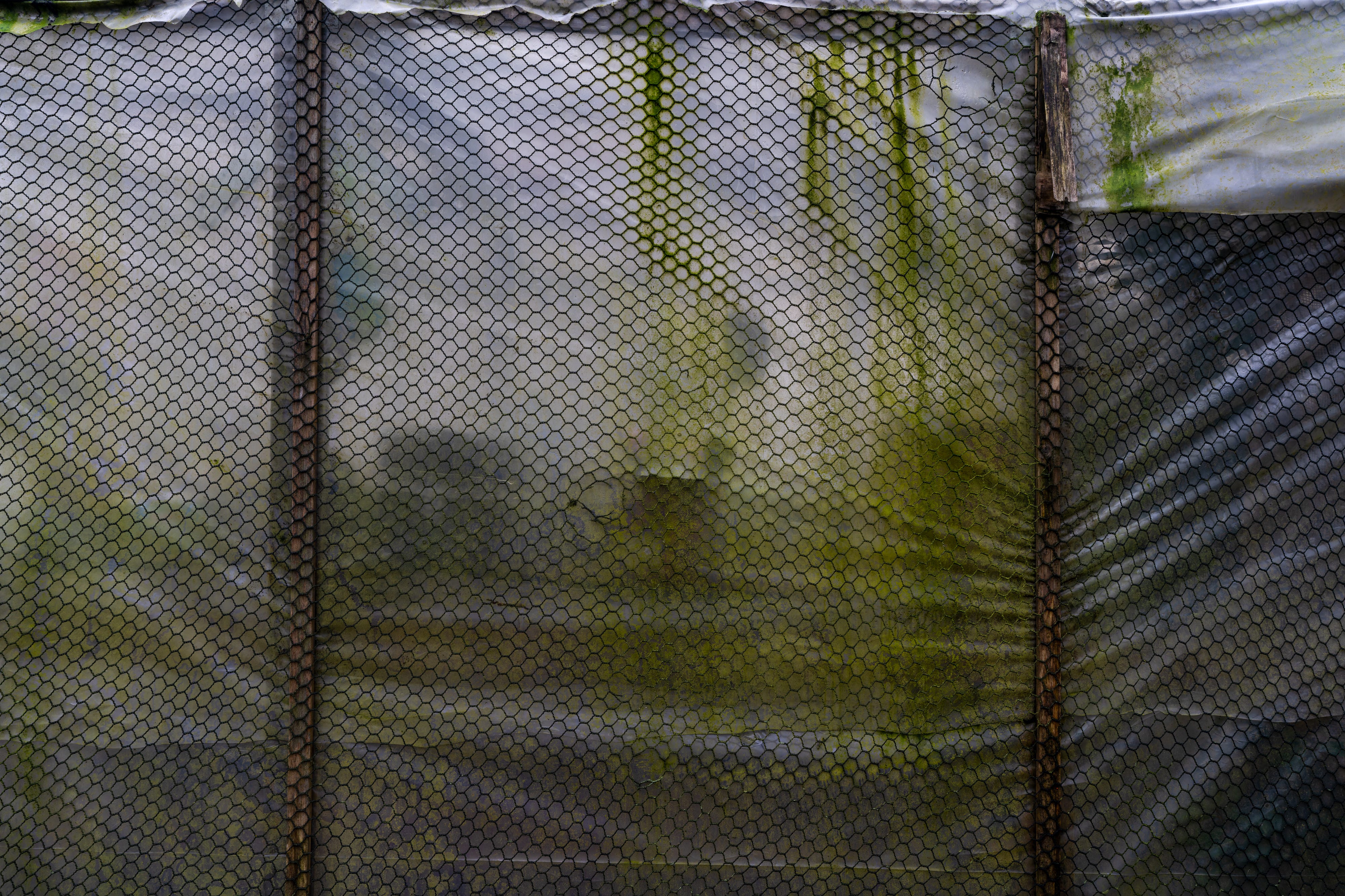
The parking lot was empty. The garden can be very empty and quiet, especially once the growing season winds down. I thought of the movie “The Thing,” the same feeling of isolation. The short story it was based on is called “Who Goes There?” It’s a story about mutation, about things changing, out of control. The monster was played by James Arness, who went on to play Matt Dillon on Gunsmoke, a hero of my childhood, a man of ethics and caution. In the movie, though, he turns out to be nothing more than a giant carrot man from outer space, killing people and feeding on their blood in a greenhouse at the North Pole. Sorry, that’s sometimes the kind of thing I think about when the garden is empty. I’m very isolated here. I think about it most when the garden is empty and dark and quiet, and there is no one else around. I’d even play Joey, but it’s not safe to wear headsets this near the edge of the garden and forest.
………………………………
Thanks for reading and looking at my images. You're welcome to share your thoughts and images in the comments. I’d greatly appreciate it, greatly, of you could recommend my Substack. There’s a little button to do that on your home page. Or, just share my post.
Thanks for reading Jim Roche On Photography! This post is public so feel free to share it.
No posts
Comments
Nothing yet. Say the first thing.
Sign in to join the conversation.