

“What we call the beginning is often the end. And to make an end is to make a beginning.”
- T. S. Eliot, Little Gidding
Over the past thirty years, I have worked with people leaving religion and witnessed a recurring pattern. Enormous energy goes into deconstruction. People study the doctrines that shaped them, name the harm they endured, challenge former authorities, and dismantle beliefs they can no longer sustain. Far less attention is given to the life that must be built afterward.
Deconstruction naturally dominates the post-religion space. It speaks to the anger, urgency, and anti-religious fervor many people carry when they first leave. Critique offers clarity and solidarity. It gives language to experiences that may have remained unspoken for years. Yet the work can remain fixed on religion long after belief has ended, leaving the old system at the center of one’s life through the energy required to oppose it.
I have seen the consequences when reconstruction never receives the same depth of attention. Freedom from religion does not automatically provide meaning, restore self-trust, create belonging, or offer a way of living with mortality and uncertainty. The old world may be gone while no inhabitable life has taken its place.
This is one of the central motivations behind my work in existential health. After deconstruction, people need more than arguments against what they have left. They need language, practices, relationships, and forms of accompaniment for becoming fully present to the life that remains.
Yesterday I posted a brief note on Substack:
Dear Substack,
Connect me with people who have moved beyond organized religion but haven’t stopped asking the deeper questions.
People thinking seriously about meaning, purpose, identity, mortality, belonging, spirituality, and what it means to be human.
People who aren’t looking for another belief system, but are still interested in exploring what it means to be fully alive.
The response told me something I have sensed for a long time: there are many people living beyond religion who have not stopped caring about the questions religion once claimed to answer.
They may no longer believe the doctrines they were taught. They may have left the church, rejected its authority, or recognized the harm it caused. But they have not stopped wondering what makes a life meaningful, how to live with uncertainty, where belonging can be found, how to face mortality, what spirituality might mean without supernatural belief, or how to trust themselves after years of being taught not to.
Leaving religion does not make these questions disappear. In many cases, it makes them more visible.
This is where the conversation about religious deconstruction often becomes thin. We have developed a substantial language for taking religious systems apart, but much less language for what it means to build a life after they have been dismantled.
I believe existential health can help us name that work.
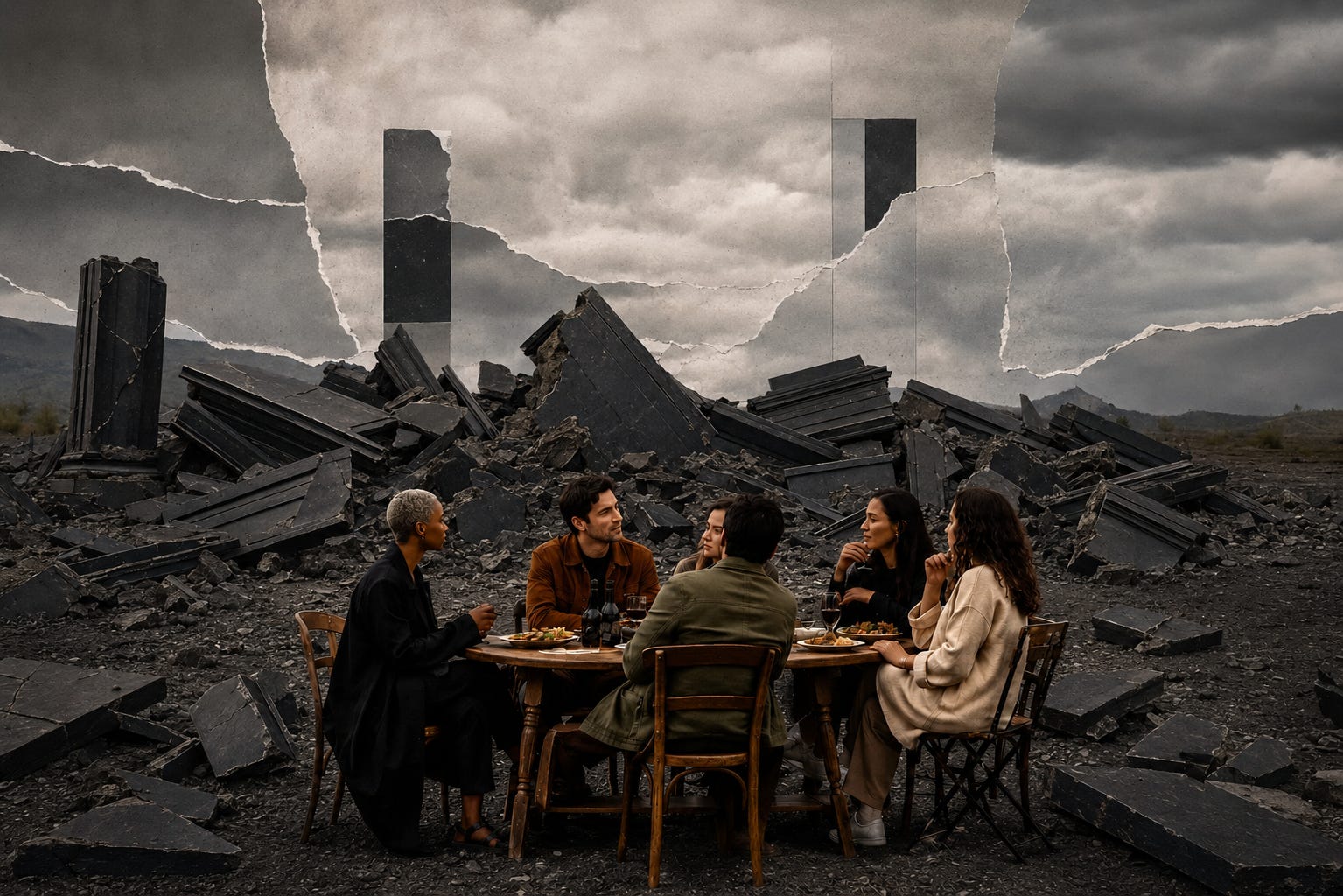
Religious deconstruction can be an act of survival. It allows people to examine teachings they were once forbidden to question, recognize manipulation and spiritual abuse, revise beliefs that no longer seem true, and reclaim authority that had been surrendered to scripture, doctrine, clergy, or community.
Deconstruction clears the ground that freedom requires, dismantling structures that cannot be redeemed, questioning beliefs that no longer deserve our allegiance, and refusing forms of obedience that estrange us from ourselves. For many people, becoming a person again begins with the courage to disobey.
But religion is rarely only a collection of beliefs. It is an architecture of life, shaping one’s sense of identity, worth, purpose, and belonging while providing a story through which suffering, morality, and mortality can be understood.
When that architecture collapses, a person loses more than theology. Identity, community, moral orientation, purpose, transcendence, and even the future they once imagined may collapse with it. Leaving can be liberating and profoundly disorienting at once.
This is why deconstruction cannot be reduced to changing one’s mind about God. It is often a reorganization of the self.
Religion does not live only in the ideas a person consciously affirms. It becomes embedded in habits of perception, emotional reflexes, bodily responses, relationships, and identity. Belief in hell may be gone while the terror of questioning remains. Religious authority may be rejected while the need for someone else to determine what is true persists. Freedom can be affirmed while personal agency still feels dangerous. The doctrine of human depravity may no longer be intellectually credible, yet its deepest lesson endures: the self cannot be trusted.
Leaving a religious institution does not necessarily mean the institution has left you. Authority can linger as an internal voice, while moral formation survives in the inability to choose without permission. Suspicion of the body persists as shame around desire, pleasure, sexuality, anger, and self-assertion. After years of certainty being treated as faithfulness, ordinary ambiguity can feel intolerable.
This is not evidence that someone has failed at deconstruction. It is evidence that human beings are formed through more than propositions. We are shaped through repetition, attachment, ritual, fear, reward, belonging, and the need for safety. What was learned through years of formation is rarely undone through a few correct conclusions.
Deconstruction may begin with ideas, but reconstruction must reach the places those ideas occupied: the body, the imagination, relationships, moral agency, self-perception, and one’s felt relationship with reality.
The problem is that many people are left alone at precisely this point. They learn how to identify what was false, harmful, or coercive, but receive little support in developing the capacities needed to live without the old structure. They know what they no longer believe, but not yet how to inhabit the life that remains.
One of the most useful questions after religion is not only, “What harmed me?” It is also, “What was religion carrying for me?”
Religion may have carried your sense of identity. It gave many people community, moral language, rituals for grief, a structure for time, and reasons to hope. Life felt held within a larger story. Recognizing what the system provided neither diminishes the harm nor calls us back to it. It reveals what now needs attention.
When religion once held your belonging, intellectual freedom alone will not answer the loss. New relationships must offer the possibility of being known without performing agreement. Purpose, once received as a divine assignment, can take shape through the life you choose to inhabit and the commitments you make within it. Moral certainty gives way to the slower work of discernment: meeting complexity without retreating into dogma or surrendering to the belief that anything goes.
If religion taught you to distrust yourself, reconstruction will include repairing that relationship. This is not a small part of the work. It may be the center of it.

The weakness of much reconstruction is that it becomes a search for a more acceptable set of answers. People leave one rigid system and are quickly offered another theology, ideology, spiritual authority, or community that promises to restore certainty.
But reconstruction worthy of the name cannot be the replacement of one form of dependency with another. It cannot ask people to surrender the authority they have only begun to recover.
Reconstruction is not primarily about finding a new belief system. It is about developing a new relationship with being human.
It means learning to create meaning without requiring a cosmic explanation and forming an identity no longer dependent upon religious approval. Belonging must be discovered beyond conformity, and mortality faced without assurances about what comes next. An ethical life can then take shape through compassion, consequence, interdependence, and responsibility.
It also means learning to trust yourself, accepting your fallibility while recognizing that no healthy life can be built upon permanent estrangement from your own mind, body, experience, and judgment.
Self-trust is sometimes misunderstood as believing that every thought, feeling, or impulse is true. That would simply replace external infallibility with personal infallibility. Healthy self-trust is more demanding. It is the confidence that we can remain in relationship with ourselves while we listen, question, test, reconsider, and choose. It includes the humility to recognize our distortions and the agency to refuse interpretations that violate our experience.
For people formed in high-control religion, this capacity may be underdeveloped. If obedience was praised above discernment, certainty above curiosity, and submission above agency, ordinary decision-making can feel dangerous. The question “What do I want?” may produce guilt. The question “What do I think?” may generate anxiety. The possibility of being wrong may feel morally catastrophic.
Reconstruction creates a different relationship with error. Being wrong is no longer proof that we cannot be trusted. It becomes part of how trustworthiness develops. We make choices, attend to consequences, revise our understanding, repair harm, and learn. Authority becomes less about possessing certainty and more about accepting responsibility for how we live.
Self-trust does not mean that we never lose our way. It means we no longer have to abandon ourselves when we do.
This kind of reconstruction does not produce final answers. It develops the capacities by which we can live honestly and meaningfully without them.
Religion has often claimed the deepest human questions as its own. It placed our lives inside a sacred order and gave that order the final word. Meaning arrived as divine purpose; morality carried the force of command. The church offered belonging, while the promise of an afterlife softened the terror of death. Even suffering was drawn into the system and made to serve a larger design.
When people leave religion, they may assume that rejecting the religious answer requires abandoning the question. But the question remains because it did not originate with religion. It originated in the conditions of being human.
We search for meaning while living beyond the reach of complete explanations. Our identities change with time, shaped by histories and circumstances we did not choose. We need one another, though no one can ever know us completely. Freedom is real, yet always bounded by the body, by circumstance, and ultimately by death. We make consequential choices without certainty, desire more than life can give, and love what we cannot keep.
These are not defects that a correct belief system will eliminate. They are enduring features of human existence.
Religion can provide ways of engaging them, and for some people it continues to do so in life-giving ways. But no religion owns mortality, wonder, grief, belonging, moral responsibility, or the search for meaning. These belong to the human inheritance.
The end of religious certainty can therefore become the beginning of a more direct encounter with the human condition. The questions are no longer resolved in advance. They become realities we must learn to inhabit.
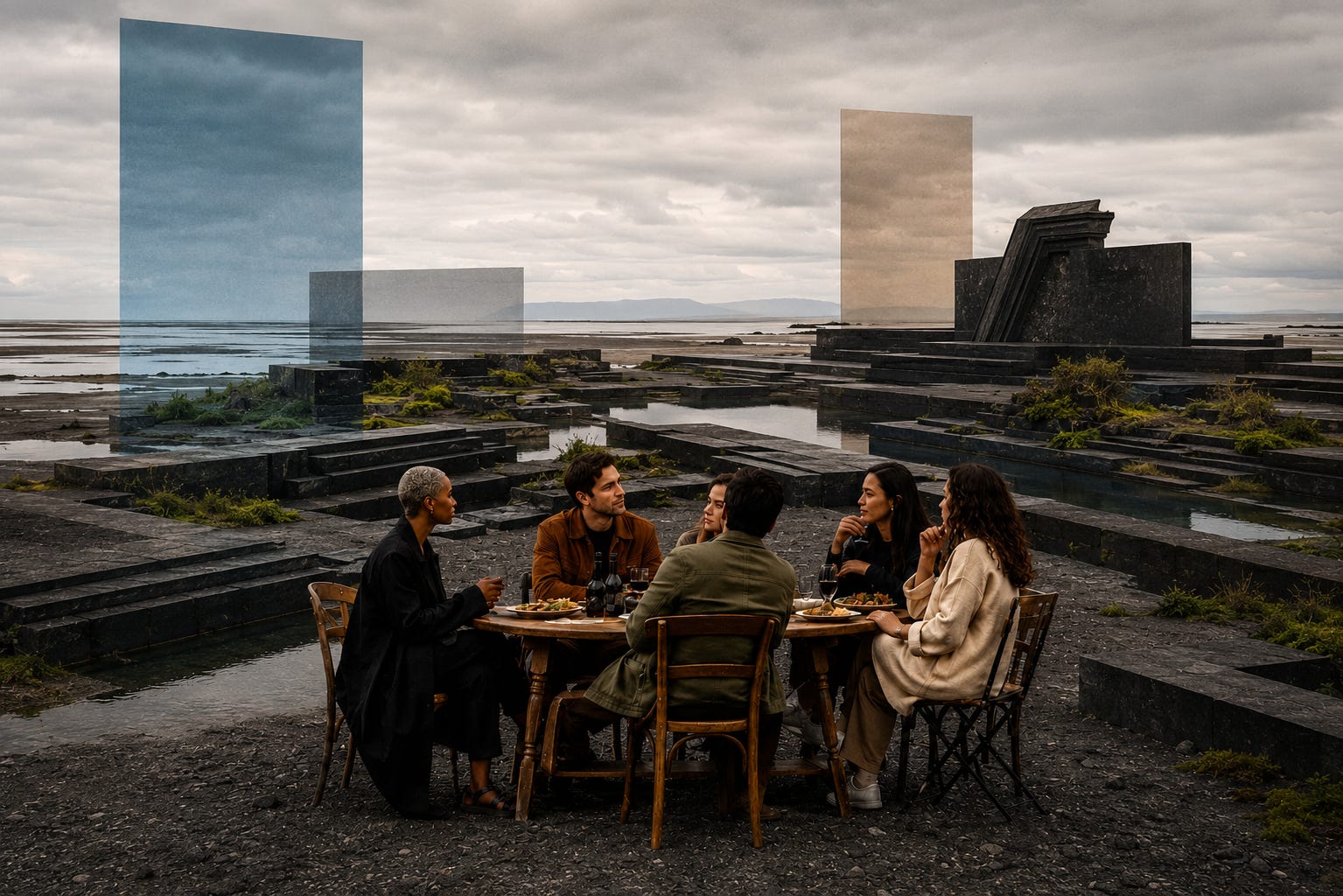
Existential health concerns our relationship with the basic realities of being human: meaning, purpose, identity, freedom, limitation, uncertainty, mortality, belonging, suffering, responsibility, and self-trust.
It asks not simply, “What do you believe?” but questions such as:
What gives life meaning when inherited answers no longer hold?
How do we remain open to uncertainty without becoming paralyzed or reaching for false certainty?
Is belonging possible without disappearing into the group?
What would it mean to face mortality without asking death to explain life?
When identity changes, can the relationship with oneself remain intact?
Where does guidance end and the surrender of personal authority begin?
How fully can we participate in a life that will never be completely explained or controlled?
These are not religious questions, though religion has often organized itself around them. They are human questions.
Existential health does not offer a creed to replace the one someone has left. It does not prescribe belief in God, disbelief in God, or any single understanding of spirituality. It does not tell people what their lives must mean. Its concern is whether people have the inner, relational, and cultural capacities to engage these questions without abandoning themselves.
This is what makes existential health especially relevant to religious reconstruction. It shifts the focus from finding the correct answers to developing a healthier way of relating to the questions.
Existential health is not the achievement of permanent clarity, emotional calm, or unshakable purpose. It is not a state in which uncertainty, grief, or disorientation disappear. It is better understood as capacity: the ability to remain in meaningful, coherent, and relational contact with life even when life cannot be mastered.
Treating existential health as an ideal condition would turn it into yet another measure of personal deficiency. Capacity develops differently. It grows as ambiguity becomes more bearable, mortality more honestly faced, and our choices more deeply our own. We learn to belong without erasing ourselves and become more present to the life we are actually living.
The aim is not existential perfection. It is a less estranged relationship with reality.
Meaning is no longer handed down from above; it takes shape through participation. Identity becomes a living relationship with ourselves, open to revision as experience changes us. We discover forms of belonging that preserve our personhood instead of rewarding conformity. Spirituality, where the language remains useful, draws our attention toward depth, connection, wonder, and aliveness. Self-trust grows through listening, discernment, reconsideration, and the humility to be wrong.
The aftermath of religious deconstruction can include anxiety, grief, anger, depression, loneliness, and disorientation. Therapy can be indispensable, particularly where there has been trauma, coercion, abuse, or significant psychological distress. Existential health is not an alternative to mental healthcare, and it should never be used to dismiss conditions that require clinical attention.
But not every struggle after religion is best understood as a disorder.
A person may be grieving the loss of an entire world, confronting mortality for the first time without the promise of an afterlife. Identity must be rebuilt after years of shaping the self around compliance. Moral choices now carry the weight once assigned to external authority, while the loss of family and community leaves belonging to be found again.
These experiences can produce genuine distress without necessarily indicating pathology. Sometimes the pain is not evidence that a person is malfunctioning. It is evidence that something consequential is being faced.
Mental health and existential health overlap, but they are not identical. Mental health is concerned primarily with psychological functioning, emotion, cognition, behavior, and psychopathology. Existential health concerns how a person relates to meaning, identity, mortality, freedom, belonging, and the basic conditions of existence.
A person can be psychologically stable while existentially empty, highly functional while absent from their own life, or free from diagnosable disorder while lacking purpose, belonging, or a coherent sense of self. Conversely, someone can live with a mental health condition while possessing profound meaning, strong relationships, moral agency, and existential depth.
We need both languages. Otherwise, we risk medicalizing the human struggle to reconstruct a life—or romanticizing distress that needs professional care.

If existential health is the aim of reconstruction, what is actually being developed? I see at least five interconnected capacities.
Many religious systems provide an ultimate foundation: an infallible text, a divine plan, a fixed moral order, or a sovereign being who guarantees that reality is meaningful. When that foundation no longer seems credible, groundlessness can feel like catastrophe.
Existential grounding does not mean discovering another foundation immune to uncertainty. It means developing enough contact with reality, embodiment, relationship, and one’s own values to live without metaphysical guarantees.
Ground is no longer an answer beneath everything. It is a trustworthy way of meeting what is here. We listen to the body, speak truth within relationships, and make commitments that give shape to time. Practices of attention return us to the life before us, while our values are tested through consequence and care. The natural world places us within a web of life and interdependence larger than our private narratives.
We do not overcome groundlessness. We develop the capacity not to be destroyed by it.
Religion often gives meaning in advance. Every event belongs to a plan, every suffering has a reason, and every life has an assigned purpose. The loss of that structure can feel like the loss of meaning itself.
But meaning and explanation are not the same. An event does not have to be cosmically arranged to matter. A relationship can be meaningful because of how we participate in it. Work can matter because it serves something we value. Grief can reveal the depth of attachment without being justified as part of a divine design.
Meaning is not always something hidden in the universe waiting to be discovered. It is often generated through attention, commitment, interpretation, creativity, care, and participation. This does not make meaning arbitrary. Some meanings deepen reality contact, responsibility, and relationship; others require denial, domination, or self-deception. We can evaluate meaning by what it asks us to see, how it shapes our conduct, and whether it enlarges or diminishes life.
Reconstruction involves moving from meaning as an answer we receive to meaning as a relationship we practice.
Religious certainty can function as protection against ambiguity, mortality, isolation, and the limits of control. When that certainty collapses, the resulting distress may be interpreted as evidence that something has gone wrong.
Anxiety belongs, in part, to being human. Every choice carries consequences we cannot foresee, and no relationship can be secured against loss. Death remains beyond intellectual mastery. Regret, change, and uncertainty leave us vulnerable because vulnerability is woven into the fabric of being alive.
Existential tolerance is the capacity to remain present to these realities without immediately fleeing into denial, numbness, compulsive certainty, or another totalizing system. It is not passive resignation. It allows us to act responsibly when no choice is guaranteed, to love despite loss, and to participate in life without first demanding that life make itself safe.
The aim is not to eliminate uncertainty but to become less governed by our need to escape it.
Religion often places a person inside a complete narrative: creation, fall, redemption, purpose, destiny. Leaving can fragment not only belief but biography. A former identity no longer fits, years of devotion may become difficult to interpret, and the future once imagined may disappear.
Reconstruction involves learning to tell the truth about one’s life without forcing it into either testimony or tragedy. The religious past does not have to be declared entirely false in order to move beyond it. It may contain love and harm, sincerity and illusion, belonging and self-loss. Maturity allows these realities to coexist.
Narrative coherence does not mean producing a final story in which everything now makes sense. It means developing an account of one’s life spacious enough to include contradiction, revision, grief, and unfinishedness. The past is neither erased nor permitted to dictate the future.
We become capable of saying: this formed me, this harmed me, this mattered to me, this is no longer mine, and my life remains open.
For many people, the greatest loss in leaving religion is not God but community. Religious belonging can be intimate, intergenerational, embodied, and woven into everyday life. Its loss cannot be replaced by agreeing with strangers on the internet.
Yet belonging that depends upon doctrinal conformity may require people to trade authenticity for inclusion. They learn that they can remain connected only if certain questions are silenced, identities concealed, or parts of themselves disowned.
Existentially healthy belonging preserves personhood. It makes room for difference, change, disagreement, and the possibility that no one person or group possesses the whole truth. It provides connection without demanding self-abandonment.
This form of belonging is harder to build because it cannot rely upon uniformity. It requires mutuality, boundaries, repair, curiosity, and the ability to remain in relationship without controlling one another. But it offers something conformity cannot: the experience of being accompanied as a person rather than retained as a member.
Some people leave religion and want nothing further to do with spirituality. That choice should be respected. The language may be too compromised, too vague, or too entangled with experiences of manipulation.
Others discover that although they no longer accept supernatural claims, they still need language for depth, awe, inwardness, connection, reverence, mystery, and the experience of being part of something larger than the isolated self.
Non-religious spirituality can offer one way of naming this territory. It does not require belief in a separate spiritual realm. It can begin with lived experience: the felt depth of relationship, the arresting beauty of the natural world, the transformation of grief, the experience of wonder, the ethical claim another person places upon us, or the quiet sense that life exceeds our ability to explain it.
This form of spirituality does not ask us to turn mystery into doctrine. It allows mystery to remain mystery. It is less concerned with supernatural certainty than with the quality of our attention and participation.
For some, this will be an important dimension of reconstruction. For others, existential health will be cultivated through humanism, philosophy, art, nature, friendship, activism, therapy, or forms of community that make no use of spiritual language. Existential health does not require everyone to name depth in the same way.
The point is not to preserve spirituality at all costs. It is to ensure that leaving religion does not require us to become estranged from dimensions of human experience that still matter to us.
There is no single path of reconstruction because people do not leave the same religion, carry the same wounds, or desire the same future. Some retain a belief in God. Some become atheists or humanists. Some understand themselves as spiritual but not religious. Some have no interest in spirituality at all. These differences do not prevent us from sharing a common human task.
We still have to learn how to live.
The work of being human remains. We grieve what was lost and learn again what deserves our trust. Relationships must be formed, choices made, suffering endured, and limits accepted as we slowly create lives we can inhabit. Reflection, wisdom, and honest community help us find our bearings. We also need ways of honoring the experiences that exceed explanation—the awe, love, grief, beauty, and mystery woven through our existence.
Reconstruction takes many forms. Therapy and trauma recovery may accompany study, creative expression, embodied practice, and time in nature. New relationships slowly restore trust, while ethical reflection and community help life take shape again. The work also carries grief for what religion did to us and for everything we once hoped it would become. Along the way, we may discover that parts of our former life remain meaningful, even though the system that held them no longer can.
Most of all, reconstruction requires time. We live in a culture that turns every transition into a project and every wound into a demand for rapid transformation. But a self reorganizing after the loss of its world cannot be rushed into coherence. Some questions must be lived before they can be answered. Some capacities develop only through repeated experiences of choosing, belonging, grieving, revising, and discovering that uncertainty did not destroy us.
The end of religion is not the end of the human questions. It is the end of religion’s exclusive claim upon them.
For those who have moved beyond organized religion but have not stopped asking the deeper questions, existential health offers a field of exploration rather than a new system of belief. It gives us a way to take reconstruction seriously without deciding in advance what anyone must reconstruct toward.
Reconstruction does not return us to certainty or place life beneath another totalizing explanation. It develops our capacity to inhabit reality as we find it—unfinished, uncertain, fragile, relational, and alive. Within that openness, a life of depth, coherence, agency, and meaning can still take shape.
This is the deeper work after deconstruction: learning to inhabit our humanity without waiting for another structure to tell us how.
The questions remain.
We become more capable of living them.

The Center for Non-Religious Spirituality was created for people whose religious lives have changed while the deeper human questions remain. It offers community and a growing network of resources for those moving through deconstruction, reconstruction, and the uncertain territory between them.
The Center is neither another church nor a replacement belief system. It is a place to explore meaning, identity, belonging, mortality, spirituality, and self-trust without pressure to arrive at predetermined answers. Through conversations, workshops, support groups, discussion circles, and shared practices, people can examine what they have left while giving equal attention to the life they are building.
Reconstruction rarely happens through ideas alone. It needs relationships in which honesty does not threaten belonging, resources that deepen agency, and companions who understand the complexity of life after religion. The Center exists to help create those conditions.
Paid subscribers ($50 annually) to my Substack receive a complimentary membership to the Center for Non-Religious Spirituality, including access to its community, gatherings, and resources. It is one way your support of my writing also becomes participation in a wider community devoted to the work beyond religion.
This article opens into two larger collections for those who want to continue exploring the terrain beyond religion.
📄 What Comes After Religion? Essays on Losing Your Religion, Reclaiming Your Authority, and Learning to Inhabit Your Life follows the movement from religious departure toward self-trust, meaning, belonging, and a life no longer governed by inherited authority.
📄 Ten Articles to Understand Existential Health offers an introduction to the field itself. Together, these articles explore the human questions that remain after certainty falls away and the capacities needed to live meaningfully within them.
People who understand the terrain of religious deconstruction and reconstruction often bring valuable insight to the work of existential accompaniment. Their lived experience can become a foundation for helping others navigate lost certainty, changing identity, disrupted belonging, and the recovery of personal authority.
The Existential Health Practitioner Training and Certification Course prepares practitioners to support people through these transitions without imposing answers or replacing one authority with another. For a deeper look at the practitioner’s role and the people forming this emerging field, read:
To learn more or enroll in the fall training, visit this link.
Comments
Nothing yet. Say the first thing.
Sign in to join the conversation.