
Previous segments:
Forged by Death – Prologue, Chapter 1, Chapter 2, Chapter 3, Chapter 4, Chapter 5, Chapter 6, Chapter 7, Chapter 8, Chapter 9, Chapter 10, Chapter 11, Chapter 12, Epilogue
Chained by Fear – Prologue, Chapter 1, Chapter 2, Chapter 3, Chapter 4, Chapter 5, Chapter 6, Chapter 7, Chapter 8, Chapter 9, Chapter 10, Chapter 11, Chapter 12
This is the 28th installment of a Substack series where I share the opening paragraphs from each chapter of The Death Wizard Chronicles, followed by my author’s breakdown of the context, themes, conflict, and the choices that shaped the scene.
The Death Wizard Chronicles is an adult epic fantasy set on the world of Triken, where death is not an ending but a source of magical power—one that can be harvested, controlled, and weaponized. The series follows an ancient wizard whose long stewardship has preserved centuries of peace, until a greater power emerges and forces him toward choices that carry irreversible cost. This story is written for mature readers and includes graphic violence and explicit sexual content.
This project continues a format I’ve used before with Dark Circles, my teen fantasy adventure trilogy, where readers experienced each chapter in stages—through selected opening paragraphs—alongside commentary on how the book was built.
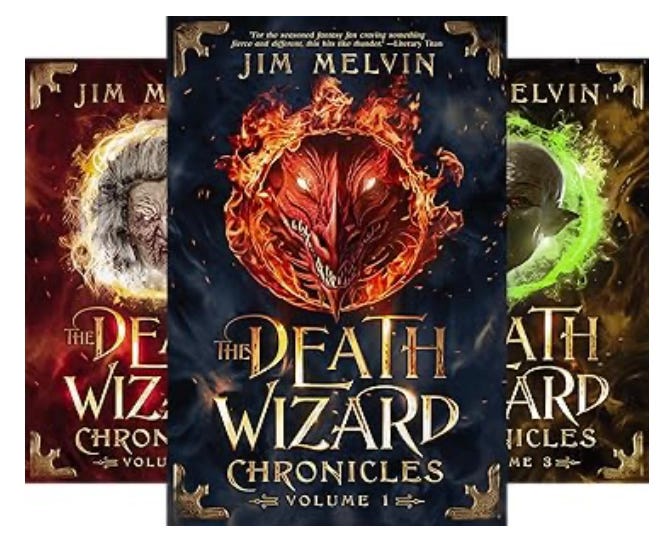
The Death Wizard Chronicles is a trilogy, with each of its three volumes containing two complete novels.
Volume 1: Forged by Death and Chained by Fear.
Volume 2: Shadowed by Demons and Torn by War.
Volume 3: Blinded by Power and Healed by Hope.
Below are the opening paragraphs of the Chapter 13 of Chained by Fear. My author breakdown follows.
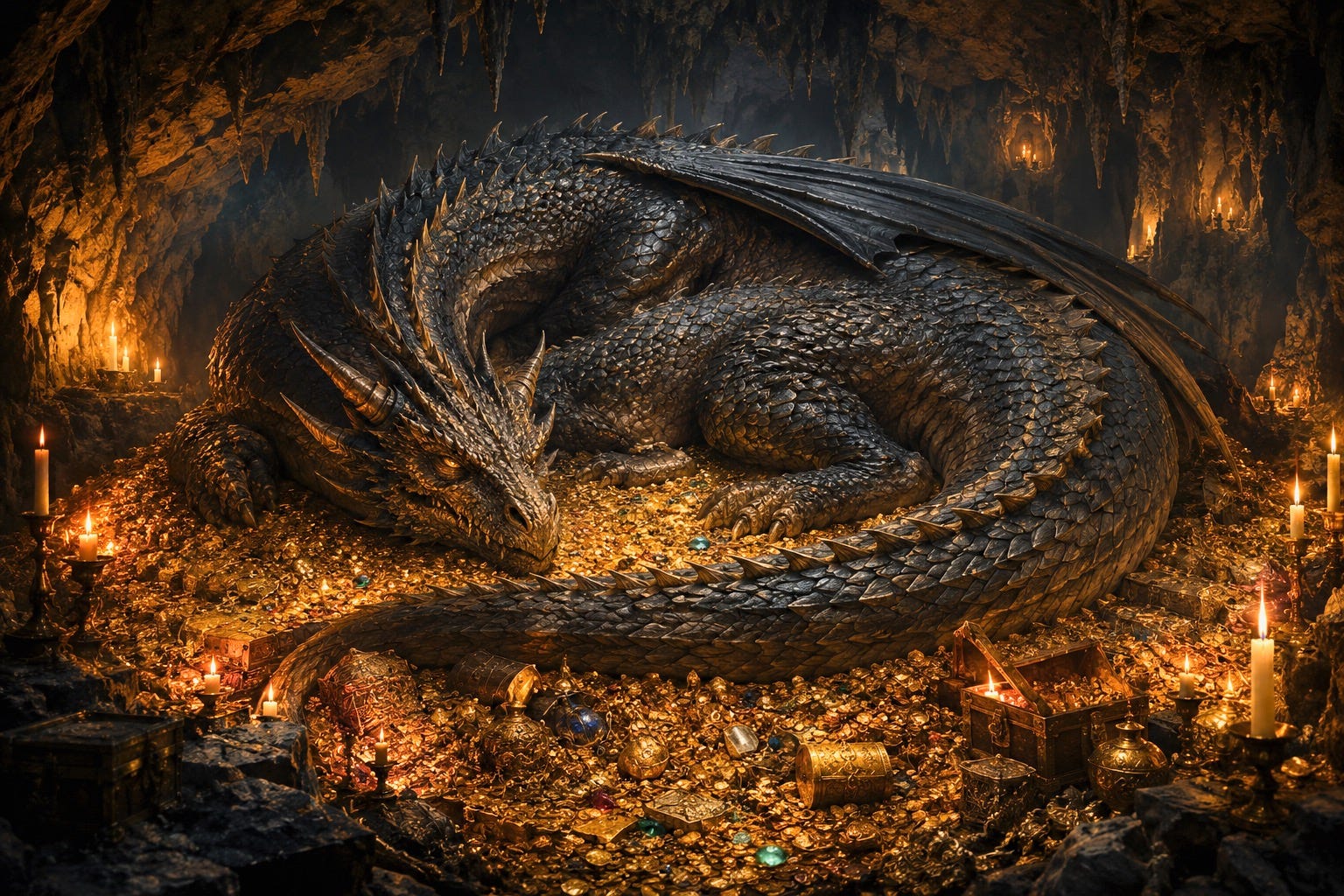
Context: The great dragon Bhayatupa has survived a massive battle against an army of Invictus’ monsters, but he suffered injuries to both his oversized body and pride. Now hidden and healing, Bhayatupa returns to obsessing over Torg, the Death Wizard, and how Torg might help him achieve immortality. Later in this chapter, though not shown in this opening excerpt, Bhayatupa and the evil monster Mala have an epic duel that you shouldn’t miss.
CHAINED BY FEAR ||||| BATTLE OF TITANS
As Bhayatupa lay in half-sleep, his titanic mind replayed all that had occurred since Invictus had woken him from dragon-sleep twelve years before: his conversations with the sorcerer, which had become more and more disturbing; his brief interaction with the Death-Knower, which confused but enticed him; his traitorous partnership with the female Asēkha, which resulted in monumental failure; and the fateful moment Invictus turned against him, which nearly ended his long life.
As he examined these thoughts in minute detail, he knew he was missing something. He was there the day Asubha blew itself apart—just a speck in the sky flying in air so thin even he could barely breathe. After watching the destruction from above, he had believed the Death-Knower was dead; and the next day Mala confirmed it, bragging like he had killed Torg with his bare hands. Adho Satta were such disgusting creatures. But without them to use and abuse, life would be far less amusing.
Nothing amused Bhayatupa right now. He had several lacerations beneath his scales that wouldn’t stop bleeding, the broken talon on his hind foot was aching, and his ribs remained sore. The Mogol servants he kept imprisoned on the mountaintop attended to his every need, rubbing salve on his wounds and sliding chunks of ice beneath the scales that protected his ribs. But it wasn’t the physical injuries that kept him in such a foul mood. It was mental anguish that tormented him. Tanhiiyati, the insatiable craving for eternal existence, ate at his sanity like a cancer. He obsessed over it every waking moment—and wallowed in it even in his dreams.
Bhayatupa didn’t fear pain. Or darkness. Or even retribution from some higher power. He simply couldn’t bear to die. His existence was too precious. He wanted to extend his life until the world fell to ruin—and beyond. A million millennia weren’t enough. He wouldn’t settle for anything less than eternity. And the Death-Knower who had perished on the peak of Asubha was the one being capable of teaching him how to achieve endless life.
How strange it was, however, that Bhayatupa had not sensed the wizard’s demise. In certain ways, all the great beings of Triken were magically linked. If Vedana, Invictus, or even another dragon perished, Bhayatupa would know it. So why hadn’t he felt the death of The Torgon? Why did it still seem unreal?
He was missing something.
Then he remembered the shattered carcass of Dukkhatu. He had sniffed it, studied it, and then eaten it. The spider had been much smaller than a great dragon, but she was similar in mass to the mammoths he devoured when he felt the urge to fly to Nirodha. Dukkhatu had been a powerful beast, almost invincible when compared to mortals. He could have easily killed her, of course—but who else was capable of such a feat? When he first discovered her remains, he assumed that the ruin of Asubha had caused her to fall. But why had she been unable to save herself? She could climb as well as he could fly. Besides, her lair had remained relatively intact. Why hadn’t she waited there until the eruptions ran their course?
Bhayatupa raised his head and opened his eyes. The Mogols gasped and fell on their faces.
What if the Death-Knower had found Sōbhana—and with her, the Silver Sword?
I know something you don’t know. I know something you don’t know.
What if?
End of excerpt
Themes
Fear of death
Obsession with immortality
Wounded pride
Thirst for vengeance
For all his size and power, Bhayatupa has found the one enemy he can’t defeat.
The Death Wizard Chronicles has existed in various forms for many years and has been read by thousands. I’ve received a lot of reviews and comments—good, bad, and ugly—about my epic fantasy series. But one common thread is that most readers especially enjoyed Bhayatupa, an 80,000-year-old dragon with a dragon-sized fear of death.
Bhayatupa’s fear of dying is driven by his ego. He is the ultimate narcissist, loving (and hating) himself so deeply that the concept of non-existence is simply unthinkable. It haunts his every moment, every thought, every breath.
Most of us fear death to some degree, but for the majority of our lives, the specter remains buried in our subconscious, only rearing its ugly head from time to time depending on our circumstances. If humans were like Bhayatupa, we would go mad long before our physical lifespans gave out.
In reality, Bhayatupa has gone mad. But his greatness resists its deteriorating effects enough to keep him moving forward.
Ironically, an obsession with death can ferment into a destroyer of life.
Epic fantasy writers face a list of challenges: world-building, magical systems, physical power versus magical power, and believability versus ridiculousness. I could go on and on about this, and throughout this Substack series, I’ll do just that.
For instance, is it believable that a wizard can wield great magic that is both tangible and fantastical? Not that I’m aware of. But fans of this genre don’t seem to mind. It comes with the territory.
How about something more specific? Let’s use Bhayatupa as an example. He is 300 feet long and weighs a thousand tons. Is it physically believable that he could fly? No. Does that bother readers? Probably at least some. So how does a fantasy writer handle something like that? In my case, a dragon’s wings assist in its ability to fly and maneuver, but for the most part, it’s their innate magic that lifts them skyward.
Here’s something else: Is it realistic that a dragon could talk in human fashion, given the structure of its jaw? Again, no. So how does a writer get around that? In my case, I tried to make what the dragon had to say so compelling that the reader didn’t care whether the physical dynamics were realistic or not.
If you make enough things feel real, readers will forgive the few that don’t.
Comments
Nothing yet. Say the first thing.
Sign in to join the conversation.