
Previous segments:
Forged by Death – Prologue, Chapter 1, Chapter 2, Chapter 3, Chapter 4, Chapter 5, Chapter 6, Chapter 7, Chapter 8, Chapter 9, Chapter 10, Chapter 11, Chapter 12, Epilogue
Chained by Fear – Prologue, Chapter 1, Chapter 2, Chapter 3, Chapter 4, Chapter 5, Chapter 6, Chapter 7, Chapter 8, Chapter 9, Chapter 10, Chapter 11
This is the 27th installment of a Substack series where I share the opening paragraphs from each chapter of The Death Wizard Chronicles, followed by my author’s breakdown of the context, themes, conflict, and the choices that shaped the scene.
The Death Wizard Chronicles is an adult epic fantasy set on the world of Triken, where death is not an ending but a source of magical power—one that can be harvested, controlled, and weaponized. The series follows an ancient wizard whose long stewardship has preserved centuries of peace, until a greater power emerges and forces him toward choices that carry irreversible cost. This story is written for mature readers and includes graphic violence and explicit sexual content.
This project continues a format I’ve used before with Dark Circles, my teen fantasy adventure trilogy, where readers experienced each chapter in stages—through selected opening paragraphs—alongside commentary on how the book was built.
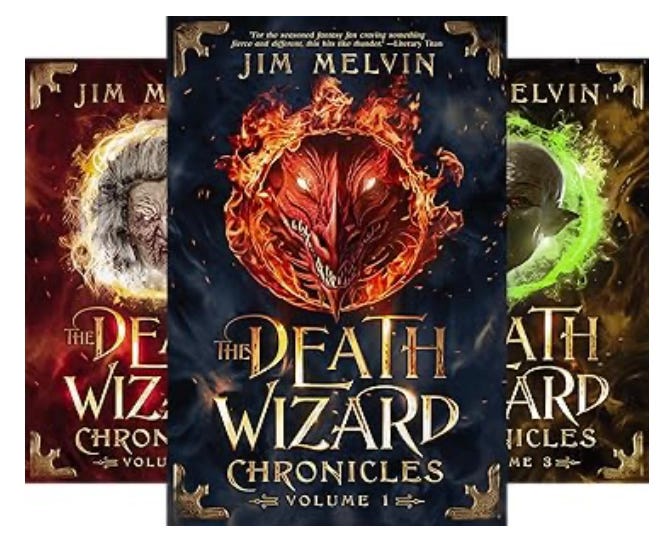
The Death Wizard Chronicles is a trilogy, with each of its three volumes containing two complete novels.
Volume 1: Forged by Death and Chained by Fear.
Volume 2: Shadowed by Demons and Torn by War.
Volume 3: Blinded by Power and Healed by Hope.
Below are the opening paragraphs of Chapter 12 of Chained by Fear. My author breakdown follows.
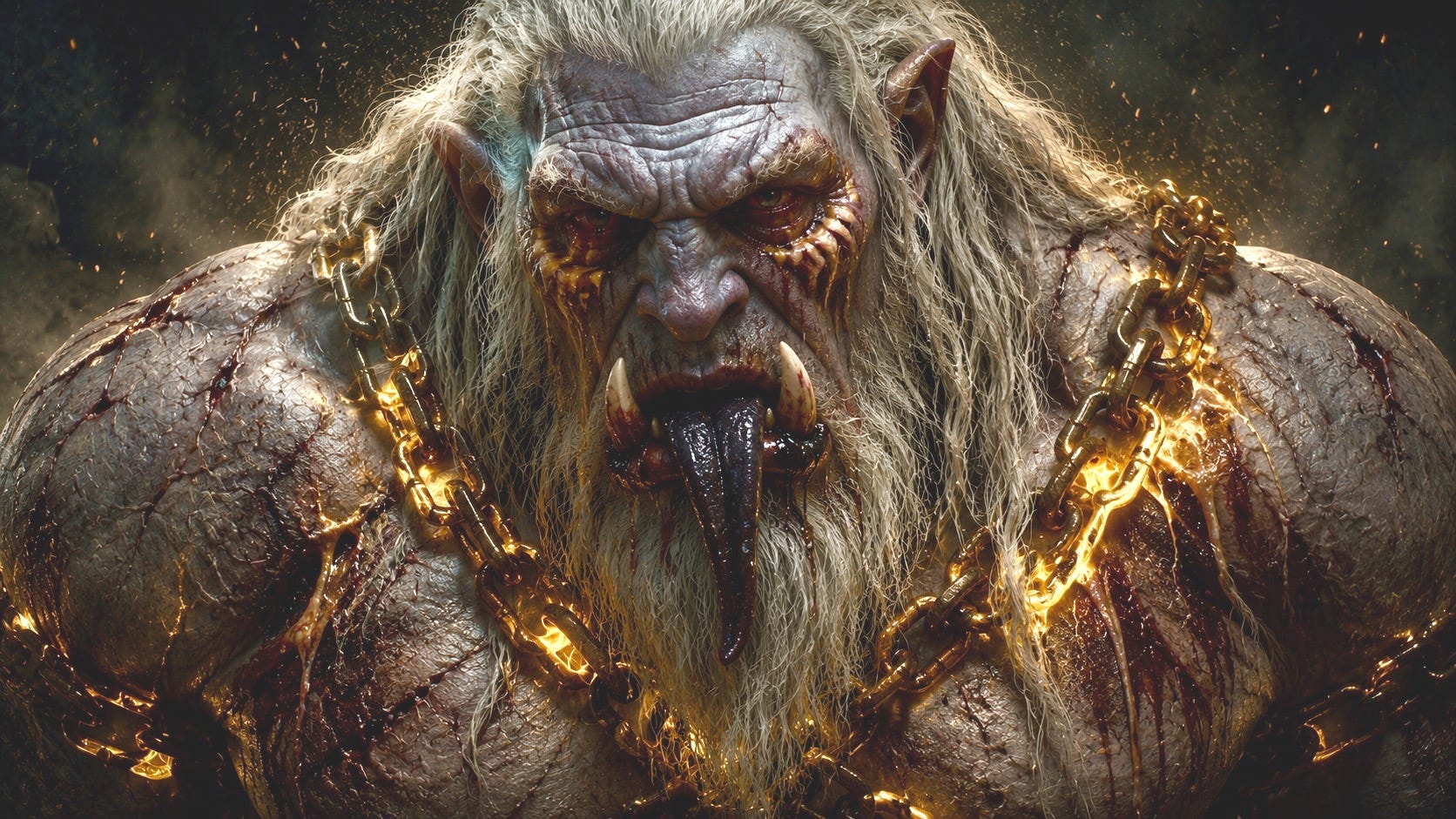
Context: After escaping Kamupadana, Torg and his companions rush into the western wilderness hoping to avoid Invictus’ detection. But they’re too late. The king has sent his servant—the monster Mala—and his army of minions to hunt down the traitors.
CHAINED BY FEAR ||||| ON THE RUN
The mouth of Gamana was a rushed two-day journey from Avici. A thousand wolves, 500 Mogols, 100 druids, several cave trolls, and a Kojin accompanied him. The dracools were able to spare ten from what remained of the flock in Avici, and they flew ahead as scouts. Ravens joined them.
Mala marched northward along the left bank of the Ogha until late afternoon before veering westward. By nightfall, he had reached the shore of Lake Ti-ratana where he rested until midnight while waiting to hear from his airborne spies and messengers. When none came, he continued his march. By morning, he had reached the northernmost point of Ti-ratana and there was still no word from Invictus. This perplexed Mala, so he chose to wait until further orders came from his king.
Just before noon, a lone dracool approached from the southeast. Mala stomped about impatiently until the baby dragon landed a few paces away. The dracool, a female, had been flying hard and was out of breath.
“Speak quickly,” said Mala, towering over the dracool as he did most other beings. “What have you to report?”
“Izumo has gone to the Whore City,” she said, hissing through the round holes in her snout.
“Kamupadana … what the hell?” Mala said, his chain glowing ominously. “And where are Laylah and Lucius?”
The dracool shrugged. “We know naught. But the king wants you to go to Kamupadana, meet with Jākita-Abhinno, and hear her report.”
Mala thought that was a stupid idea, but at least he had a clear destination. His army moved again.
Although Kamupadana was twenty leagues away, most of that distance was across a grassy plain that was easy to traverse. To avoid outrunning their masters, the wolves slowed their pace, but the army still covered ground abnormally fast. By late afternoon of the following day, Mala came within sight of the ninth wall.
Fifty Sāykan soldiers raced out to meet them and then escorted Mala, the Kojin, one dracool, and one Porisāda inside the walls. At dusk, the hideous version of Jākita-Abhinno greeted them inside the ziggurat and led them to the scene of the carnage.
“Lord Mala, your arrival pleases us,” the new queen of the Warlish witches said. “As you can sssee, a terrible thing occurred here this very morning. We were outmatched—and the marvelous undines were destroyed.”
“This is the work of the Death-Knower,” Mala growled as he tromped around the bloodied chamber. “The bastard has as many lives as a Tyger. So where is he now, you witless whore? How did he escape when thousands of Sāykans had him surrounded? Are you harlots that incompetent?”
Jākita was aghast. “I won’t be spoken to this way!”
Mala swept out his hand and sent her flying against the wall. She crouched on all fours and hissed. Sāykan guards rose to defend her, but they retreated when the Kojin pounded her chest.
“I will speak to you however I choose,” Mala said. “Do you dare oppose the might of Invictus? Answer my questions like he was asking them—for I am his eyes and ears, and I speak for him in all ways. Compared to me, you are nothing.”
As if accepting the truth in his words, the witch crawled over to him, whining and submissive. After an explosion of fire and smoke, the beautiful version of the queen rose and stood before him, her voice as intoxicating as the milk of the poppy.
“My lord, I meant no offense. It’s just that I’m still upset over this morning’s incident. My city and sssoldiers are at your command. As for the Death-Knower, he escaped through a passageway that runs beneath the walls. We sssearched for him everywhere, but he hasn’t been found.”
“I’m not surprised. Women can’t do anything right.”
Jākita’s anger rose again. A single strand of her auburn hair curled and turned gray. But she regained control before another transformation took place.
“As you sssay, my lord. What will youuu do now?”
“The Death-Knower is not the reason I’m here. He can be dealt with later. I search for others: Queen Laylah and General Lucius. Where are they?”
“There are tensss of thousands within the walls. Until now, the assassin has been our only concern.”
“It’s believed a dracool accompanied the woman and the firstborn.”
“There are no dracoolsss in the city, other than the one that accompanies youuu.” She turned to a Sāykan captain who stood nearby, nervously eyeing the Kojin. “Have there been any reports of baby dragons?”
“None that I am aware, my queen,” the captain said nervously. “Though it’s not unusual to see them in the skies.”
“You twats are worthless!” Mala said. “Nothing ever gets done unless I do it myself.”
“As you sssay, my lord,” Jākita sneered, her green eyes glistening.
“Out of my way, you smelly slut. I have work to do.”
When Mala and his companions passed through the ninth gate and rejoined his small army, it was deep into the evening. But one of the Porisādas was waiting for him with news.
“Master, the wolves have picked up the queen’s scent,” said the cannibal, who bore skull tattoos on both sides of his face. “And Lucius’ too. They have headed southwest toward the foothills—and the gap.”
Mala stomped around angrily, spitting globs of mucus that sizzled in the gray grass. “How long ago? How far ahead? Was it just the two of them?”
“We believe their lead is less than a day,” the cannibal said. “But there is more you should know, master. They are not alone. We count others.”
“How many?”
“There are strange signs and scents. Is it possible there are Tugars among them? Maybe even Asēkhas? The desert warriors leave no marks when they walk, but the wolves can sometimes sense their presence. Our mounts are acting strangely, growling and snapping at each other.”
A loud screech startled Mala and the others. The Kojin had walked into the field and was on her knees, sniffing the ground. Then she stood and pointed all six of her index fingers toward the southwest.
“That’s all I need to know,” Mala said. “Let’s move! Take fifty Porisādas and ride ahead on wolfback. And spread out the dracools. The woman must be taken alive, but feel free to kill the rest, whoever they might be, including Lucius and Izumo.”
Another dracool waddled forward. “Izumo is no longer,” she said. “I have sensed his demise. His life is ended.”
“Good riddance,” Mala said. “One down, two to go. Make that three. I want the Death-Knower’s head, too. If he and his ratty Asēkhas have joined the queen, I can get rid of all of them at once.”
End of excerpt
Themes
The hunter and the hunted
No victory comes without pursuit
Strength found in unity
Hope against impossible odds
There comes a moment when running is no longer about escape, but simply survival.
Not all villains are simply servants of evil. Some have their own agendas such as revenge or even personal hatred. Mala is consumed by hate, and he believes he wields the power to enact whatever revenge he chooses. His strength alone gives him the right to command, and his casual cruelty is further evidence of his worldview.
Torg and his companions have achieved what seemed impossible by escaping Kamupadana, yet freedom is most often a temporary thing. The farther they run, the more determined their enemies become. In some fantasy stories, the escape itself is the climax. Here, it begins yet another trial.
Finally, the pursuit highlights one of the novel’s recurring ideas: that evil possesses larger numbers, while good survives through loyalty and perseverance. Mala commands armies, wolves, dracools, and monsters. Torg’s small band is united by something far more difficult to conquer; each one of them contains power that can’t be measured in numbers alone.
The chase is more than a contest of speed. It is a test of whether courage and fellowship can endure against seemingly impossible odds.
One of the challenges of fantasy is making travel feel meaningful. Characters often spend chapters moving from one place to another, but movement alone rarely creates tension. Here, I wanted the pursuit itself to become the story. Rather than cutting back and forth between hunters and hunted, I devoted this excerpt entirely to Mala’s point of view so readers would understand exactly what kind of force was bearing down on Torg and his companions.
Mala also serves as an interesting contrast to Invictus. Both are ruthless, but they express power differently. Invictus manipulates kingdoms, politics, and long-term strategy. Mala solves problems through intimidation and overwhelming force. He rarely questions his orders because he believes strength alone determines who deserves to rule. That certainty makes him every bit as dangerous as his master.
Finally, I wanted readers to experience dramatic irony. Torg’s group continues westward believing they have gained valuable time, while readers already know the wolves have found their trail. That knowledge creates suspense without requiring constant action.
Sometimes the most effective tension comes not from what the characters know—but from what they don’t.
Comments
Nothing yet. Say the first thing.
Sign in to join the conversation.