
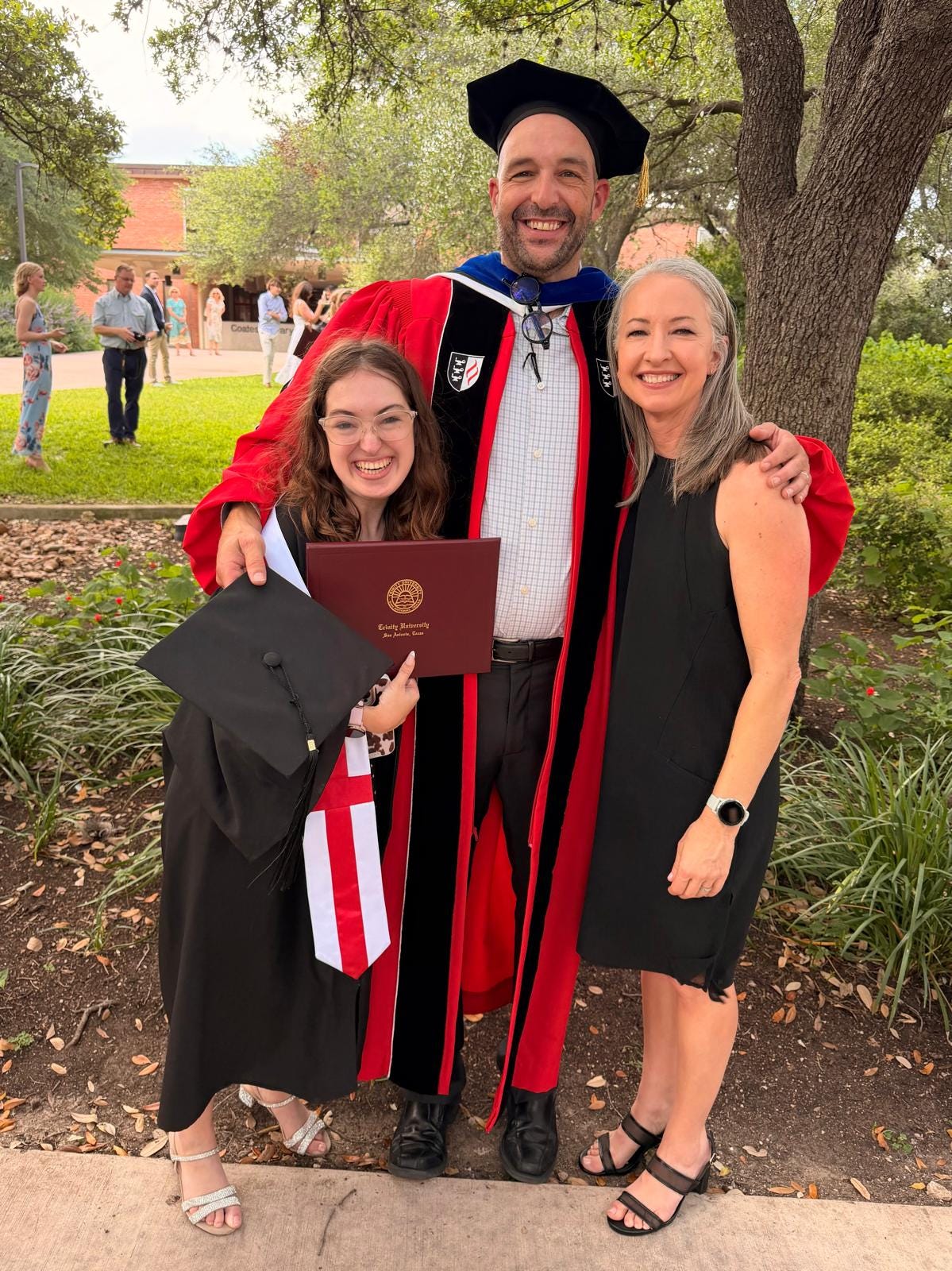
This feels like a big one. Our oldest child has graduated from college. These milestones are important for parents, because this nudges us to step back and reflect a bit on the journey we are on. On the one hand, this milestone is our daughter’s, but on the other hand it is also something for us to celebrate as well. She’s done the course work and put in the studying, but we have paid the tuition and provided the emotional support all along the way. It’s a big day for all of us.
As I was sitting in the squeaky red velvet chairs of the auditorium this past Saturday, waiting for the graduates to process down the aisle, I completely understood the phrase: “The days are long but the years are short.” And as I kept hearing this phrase in my head, I felt a mix of grief, joy, relief, pride, and anxiety flow in my body. I sat there, replaying the movie of our daughter’s first years of life, the ones where I was exhausted, stressed, and constantly worried about her development and about my ability to meet her basic needs. Then, to her preschool and elementary years, where she and her little brother were busy learning in school, trying different sports, practicing piano and her dad and I felt like the “roadies” to the show that was their lives. And then the middle school years, those years that none of us ever wish to return to once we have finally escaped. Those years for both my daughter and I were socially brutal, leaving scars that she and I continue to heal in our own ways.

And then there were the high school years, filled with the highs and lows of puberty. During her freshman year, my daughter and I both went through major hormonal shifts simultaneously; she with the onset of menses and me with what I came to realize was perimenopause. Somehow the two of us managed to claw our way through that year with our relationship still intact; but it wasn’t easy, and much of my dignity was lost along the way. As the high school years progressed, she blossomed into a thoughtful young woman, excited about her future, and eager to attend college when the pandemic turned her senior year into a miserable homebound virtual educational experience. I watched her become more and more withdrawn while I tried to juggle my own virtual private practice with other people’s anxious and depressed children who were going through the same thing. As I straddled the two worlds of helping other people’s kids, my own, and trying to manage what was going on inside my own brain and body, her senior year passed and she became more depressed and disillusioned about her future. And yet, somehow she managed to do virtual college tour visits (those were bizarre), applied to and got accepted into several excellent liberal arts colleges across the country, and then picked the one that she’d always wanted to attend. She did all of this, with the help of an antidepressant, some virtual psychotherapy, and as much support as we could give her while respecting her boundaries. It was brutal for everyone.
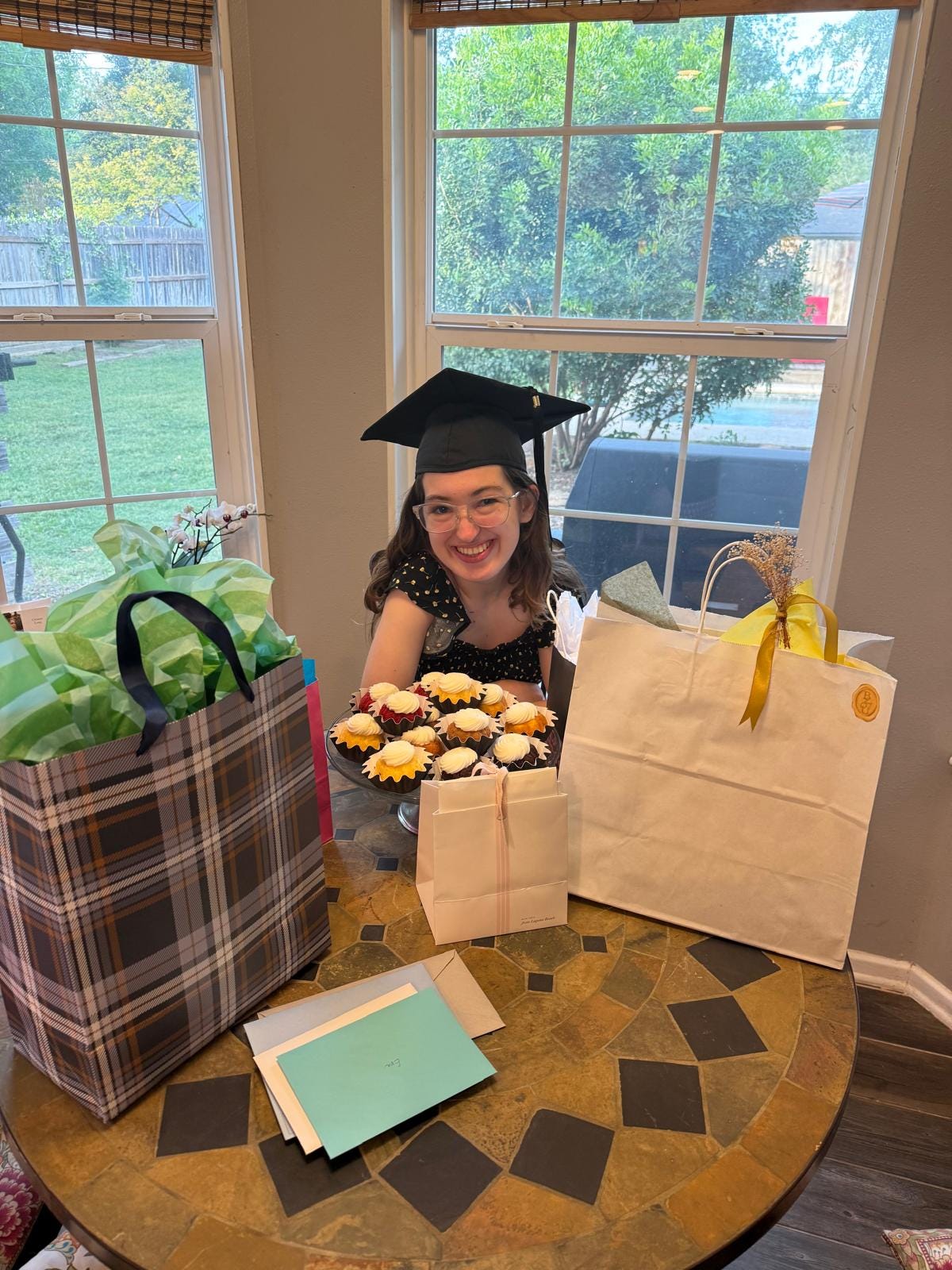
She decided to take a gap year between high school and college, deferring her acceptance to her dream school so that she could be completely mentally, physically and emotionally prepared for the rigors of college life. This was one of the best decisions she has made in her young life so far. She got a job at an artisan ice cream shop where she worked many hours while taking a college class to get ahead on some college credits. She continued with therapy, though now able to go in person. And once the year was over, she was ready to begin her college career with the eagerness and excitement that she deserved.
I really thought the four years of college would feel very long and slow for me, as her mom. Or, maybe more specifically, I was hoping they would go by more slowly than the other stages. But, just like every other stage in parenting, it didn’t. I grieved her leaving us, though I celebrated her stepping into a new chapter in her own life as a young adult. I cheered her on from the sidelines, trying my best not to parent like I did when she was in middle or high school, but sometimes falling back on old habits just the same. She found her major, it fit perfectly, and she did her college experience in her own way.
And now, she’s done. WTF? The weekend is over, the extended family is gone, and the robe is put away. She’s home and we are back to life as usual. She has work plans for the summer, but nothing permanent set up after that. The idea of graduate school is floating around, but we are all still “in talks”. And this, of course, is where I am again pushed to expand myself as a parent. My daughter and I share many similarities, but we differ in many other ways. How we approach academia is one area in which we differ. When I was her age I already knew I wanted to be a child psychologist, was already admitted to a graduate school program, and had picked out a painting that would hang on the wall of my future office when I had my own private practice (can you say perfectionistic with a tinge of OCD?). So watching her graduate without “a plan” is challenging for me. I feel my own anxiety rising. What will she do? How will she support herself? Have I, as a family member insinuated, made her “too comfortable” in my home? Will she now live with her dad and me forever?
Here’s where I have to remind myself that I am a psychologist, and so I do have access to my own brain and to the research on child development. What I tell myself now are the following true things that the field of psychology is saying about young adulthood in 2026:
Development is no longer linear. This means that the transition into adulthood and full independence often happens in stages rather than all at once. Many graduates need time to establish financial security, pursue additional training, and will change jobs many times early in their careers.
Independence develops through responsibility, not geography alone. A young adult can live at home and still grow substantially if they are:
working
contributing to the household
managing their schedule
handling finances
making decisions
moving gradually toward autonomy (conversely, someone living independently may still be emotionally and financially dependent on their parents)
Temporary dependence can support long-term independence. A stable home base can help graduates launch more effectively. Living at home for a period of time can allow a young adult to:
pay off debt
save for housing
explore career paths
build emotional confidence
or recover from setbacks without becoming financially overwhelmed

Here’s what helps the most for me and possibly for other parents who have are worried about launching their kiddos:
Maintain warmth and connection
Hold respectful expectations
Encourage contribution and responsibility in the home
Avoid shaming comparisons, like “The Smith’s son is starting law school soon.”
And, learn to tolerate some uncertainty. This one, is for me, a lifelong goal - but so worth the effort.
You’ve got this!
No posts
Comments
Nothing yet. Say the first thing.
Sign in to join the conversation.