
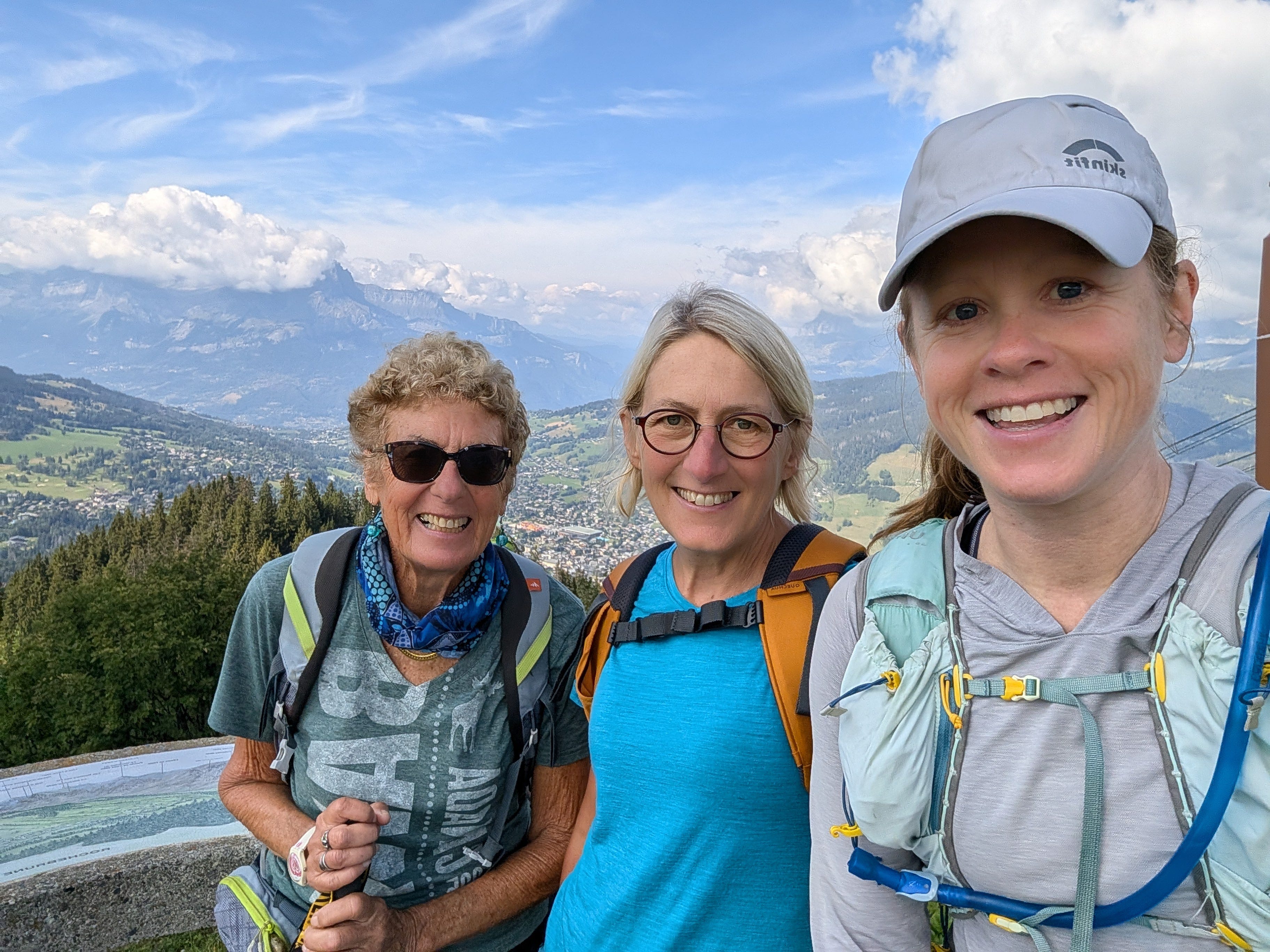
Have you heard of the “Happiness Curve?” The U-shaped graph was popularized in 2008 by two British economists who researched patterns in life satisfaction. Their math consistently revealed that even when controlling for income, marriage status, and employment, happiness levels were naturally high in youth, dipped in midlife, and then began to climb again. In 2020, economist David Blanchflower expanded his research to more than 1 million surveys across 132 countries, concluding that “the happiness curve is everywhere.” The data revealed that the timeline for life satisfaction is remarkably consistent, regardless of a person’s status or where they live. Blanchflower calculated that the curve bottoms out at 47.2 years old.
While the data can’t show “why” people hit rock bottom at age 47, popular theories point to typical midlife difficulties that span economic and cultural divides: Unfulfilled expectations, a narrowing of potential, the mundanity of routines, generational responsibilities (children and aging parents), and the biological realities of aging. For women, 47 is the typical peak window for perimenopause, but men also experience drops in testosterone. Interestingly, wildlife researchers have observed a nearly identical curve in chimpanzees and orangutans, suggesting that midlife changes in brain chemistry and emotional processing are hardwired in primates, independent of human constructs.
Anyway, Aug. 20 was my 47th birthday. So I am nearly there. The bottom.
I’ve been open about struggling through my 40s despite my privilege and the many positive things I have going for me. It’s just (waves arms wildly at the sky) all of it: The pandemic, U.S. and world politics, climate change, air pollution, wildfires, geopolitical stress, global crises, the backward slide of women’s rights, war. I mean, the 2020s, amiright? But the strife is also coming from within. This is the decade I experienced deep personal losses, sharp declines in both mental and physical health, grief, and more than one significant injury. But I acknowledge that I only have this one wild and precious life, and it’s up to me to climb out of my midlife strife. So I take heart in this idea that I’ve reached the statistical bottom of the curve. Life doesn’t get easier for anyone, anywhere. But somehow, we rise.
And that’s what’s most interesting about the “Happiness Curve” — why is it a curve, rather than a straight downward line? Why do people generally become happier as they age? As losses of friends and loved ones accumulate and biological aging accelerates, how can overall contentment increase?
Most theories can be summarized by a single word: Wisdom. As people endure more loss, more pain, and more disappointment, they develop the skills to process and cope. They become more comfortable with complex emotions — such as the dynamic between love and grief — and gain an appreciation for the full spectrum of life experience. They recognize the limitations of time and turn toward what they hold to be most meaningful in their lives. They begin to shed the burdens of expectation and ambition. They shift their focus to the little joys in life, the small moments that pass us by when we’re still grinding away at the hedonic treadmill.
Of course, the “Happiness Curve” is just a statistical model, not the map of every individual’s life. But I think that’s the gist of it — in youth, we’re wild and hungry. In midlife, we digest our choices and every positive or negative consequence therein. And later in life, we begin to let go.
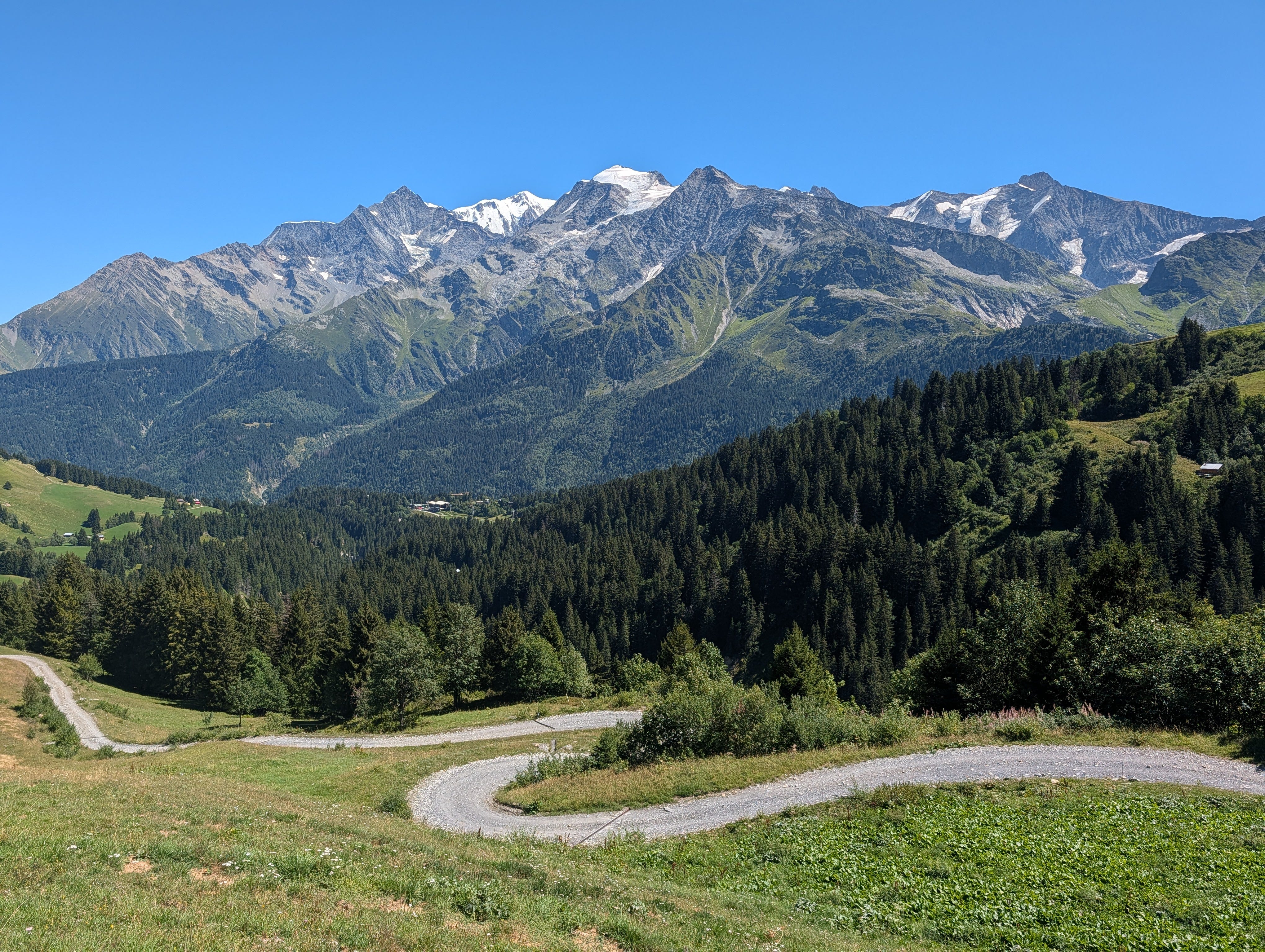
This thread of “When will I grow up?” dominated my thoughts as I set out on my big birthday ride on Wednesday, the last day I was 46. I timed my excursion to take advantage of a clear and sunny day before several days of storms, even though the high was forecast to reach 34C (93 degrees F.) Another hot summer day after an endless string of hot summer days that seemed to start back in March. As a child, I disliked the date of my birthday, at the dog-eared end of my least favorite season. Now, in midlife, I think it’s appropriate that I arrive like this: Sunburned, brain-baked, lungs ragged after months of allergic inflammation, eyes unable to focus on anything but the increasingly distant relief of autumn. I earned these scars. Punch my ticket; I’m ready for my next trip around the sun.
I drew up a route that I knew would be punishingly difficult and well beyond what I’ve achieved in my recovery so far. On paper, it was right around 100K (63 miles) with about 10,000 feet of climbing (3,000 meters, but it’s still hard for me to think in metric when it comes to elevation gain, even though I’m well-versed in kilometers now, so I’ll probably mix my statistics forever.) Why so hard? I wanted to explore new valleys, and there’s no easy way to reach them, I reasoned. But the older, wiser version of me (who is still struggling to make herself known) was annoyed that I’m still like this — so eager for the ego boost that comes with pushing my physical limits, so unwilling to hold onto the hard-earned lessons of my recent prolonged injury.
Still, I was pretty sure I could achieve my plan. Unlike my more measured return to hiking, my knee hasn’t lodged any complaints about cycling, at least not yet. Much earlier in my recovery, when I was still wearing my bulky brace locked at 90 degrees and struggling to log a few hundred steps around town, I could generate a decent amount of wattage while riding for an hour or more on my indoor bike. My ongoing walking difficulties after I could ride reasonably well were a source of deep frustration. I would complain to Beat that “Cycling fitness isn’t real fitness.” But honestly, I think I’m just built for bikes. As though this type of motion were preordained in my DNA. I can ride almost any bike of any size for hours and not feel pain, except for my big toe on my right foot, which I keep refreezing, so now it suffers from frostbite neuropathy that is an ongoing source of pedal pain. But yes, I have irrational confidence about bikes, as though I can’t be injured on a bike, even though I absolutely have been injured on a bike, many times.
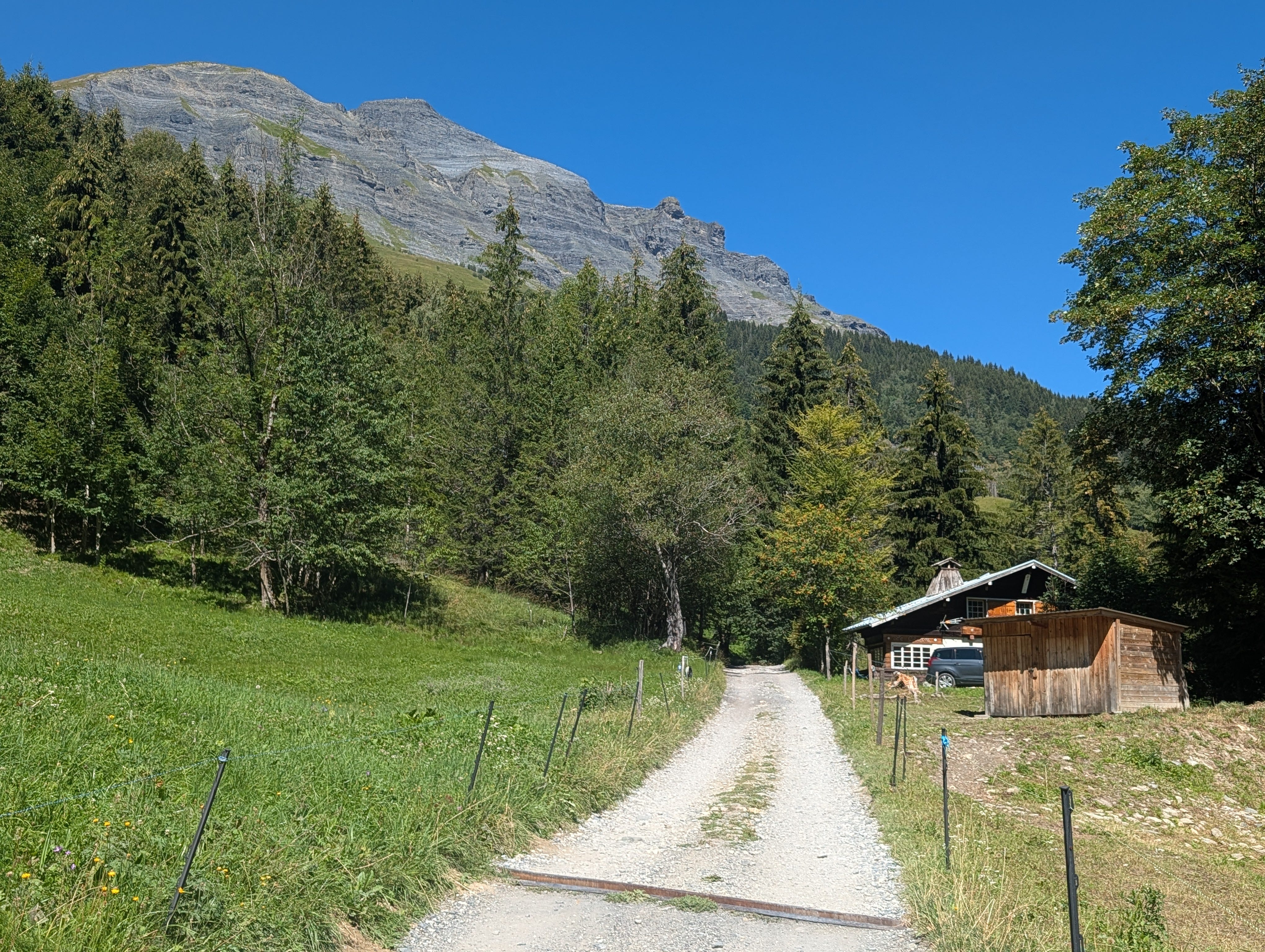
Everything started well. I pedaled my mountain bike along the rolling hills toward St. Grevais and knocked out my first 2,000-foot climb up the Route du Bettex like it was nothing. A fun trail traverse awaited me at the top, followed by a steep descent on a single-lane strip of rough pavement covered in ball-bearing pebbles. I was listening to David Sedaris’s latest book of essays, “The Land and Its People.” I started and finished this book on this ride, perfectly timed with the battery life of my earbuds. I enjoyed it. Sedaris is such a curmudgeon now; some of it is a little eye-rolling. But he’s also in a reflective stage that I relate to — memories of his mother, some forgiveness for his father, a touching reflection about the loss of a childhood friend. There’s also an essay about Duolingo that was one of those “I’m in this photo and I don’t like it,” moments. But really, is there anything better than pedaling a bike in the sun-drenched mountains while a narrator is reading a good book to you? The happiest of birthdays.
The climb out of Les Contamines gained 3,500 feet in nine miles. What I didn’t glean from my research, although I could have easily guessed based on what I know of the Alps, was that 1,700 of those feet came in the final three miles, largely on 20%+ grades with almost no relief. The slope soared above my head, and my momentum was holding onto the loose gravel by a thread. I knew if I dabbed the bike, I was done pedaling until the top. Because hiking still demands a lot from my knee, and because there was still so far to go after this climb, I forced defiant pedal strokes to my detriment. My eyes clamped shut against a stream of sweat, and my glutes burned. I had the desire but not the endurance, and it wasn’t long before an intense wave of nausea washed over me, forcing my aching frostbite foot to the ground.
The next hour of hiking with my bike was almost unbelievably tough and equally silly. I am accustomed to having a certain level of strength and endurance; I spent more than two decades building it. Just 20 weeks of injury and restrictions were enough to undo most of it. Of course, the muscle memory is still there. But that’s just about all it seems to be … memory. I used to be able to do this thing. But now? I’m all sweat, hot blood, hard breathing, and old, weird habits pulsing through a body that has clearly changed a lot since I last tried something like this.
I tried to be kind to myself. I took breaks. I squinted at the summit building I could almost reach out and touch, but it was still hundreds of feet higher. I told myself reaching the top didn’t matter, I could just give up, go back the way I came. I believed this with all of my heart, and still I kept striving. Old habits. Weird, old habits. Such habits are the hardest to kill. “Why are you like this?” the wizened, happy elder I hope to become prodded me.
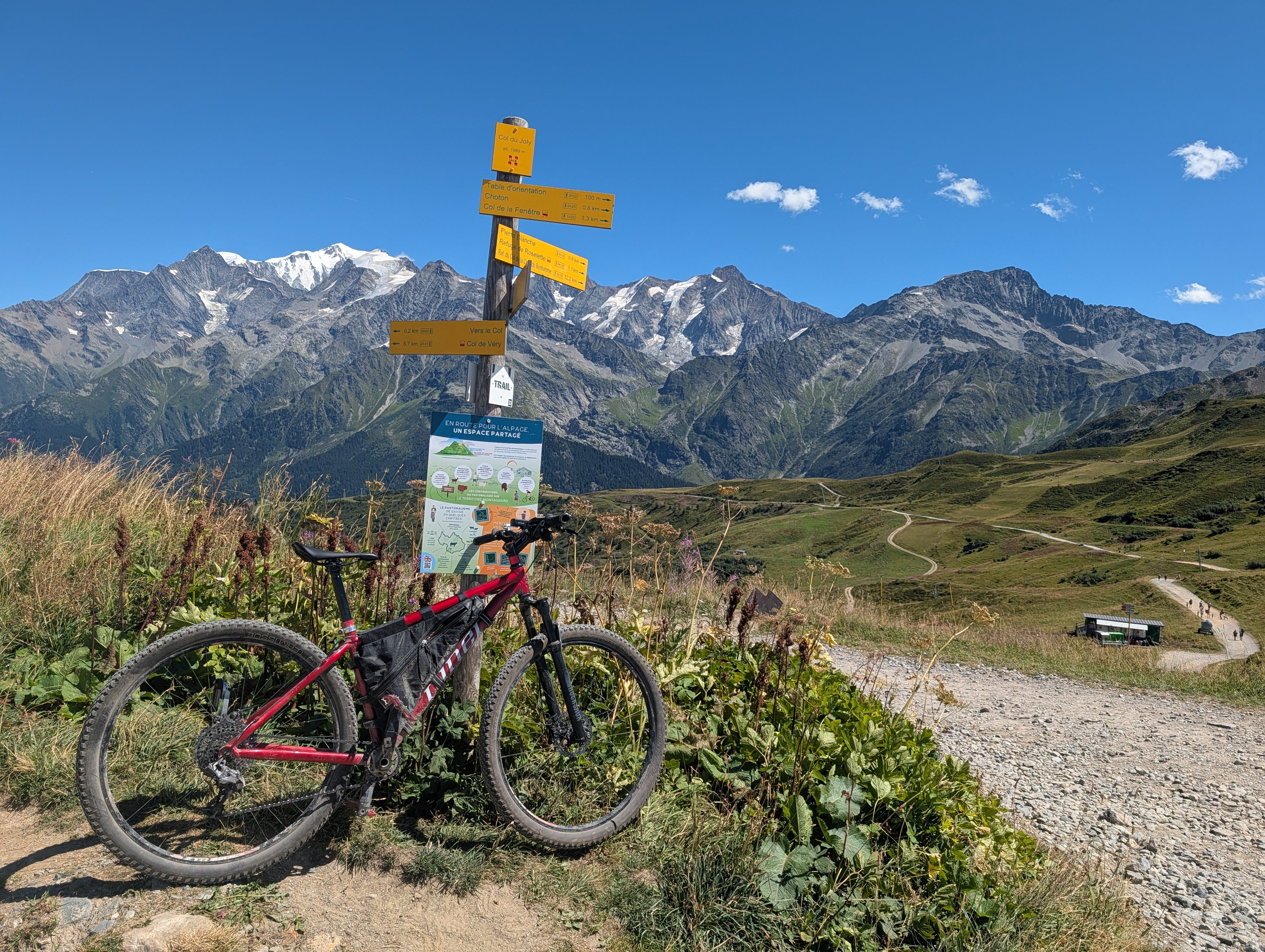
Then I was in a thick brain fog, and suddenly I was there. Col du Joly. The parking lot and summit were teeming with life, packed to every edge with cars and people. It’s an experience typical of the Alps: You can spend hours burying yourself on a tough trail and not see another soul, only to reach the top to find chaotic civilization that arrives by gondola, or in this case, a paved road up the other side. I actually enjoy this dynamic. All of this staggering beauty, open to anyone. I could come here if I were still on crutches; being able-bodied for the moment does not make me special. That can change in a heartbeat. But it is something to cherish, to breathe in, to be grateful. I stood in the crowds, feeling lightheaded and a little bewildered. I gnawed on a protein bar, waited in line for two roadies and a hiker to take photos next to the summit sign, then took a photo with my bike doing the posing.
Flying down the road on the other side was a breathtaking, joyful experience that truly is best had after “earning” the view, though. The narrow road dipped into an equally narrow gorge. Down there, the temperature was so hot that I was having a hard time breathing while I was still descending. My bike computer said it was 105 degrees. Probably it wasn’t that hot, but at least that was the “feels like” heat three feet off the pavement. Two roadies passed, and I shadowed them for a few miles until we reached a “Route Barrée” sign and a big chain-link fence. The roadies must have climbed up from another way, but we were all stuck behind that fence on the wrong side of where we wanted to be.
A construction worker approached us and did his best to explain that we absolutely could not pass. They’d dug up a switchback over a cliff. I do not know the nationalities of the roadies, but it was clear they also did not know much French. The construction worker, bless him, really tried to use English to explain a complex detour that I could see on my map climbed at least seven topo lines, taking us well over the cliffs on a nameless path. Not ideal. But such is life.
I could tell, as I started climbing again, that my legs had forgiven me for the punishment up Col du Joly. Despite the crushing heat, they felt, dare I say, peppy again. Such is the nature of a big effort. The “Happiness Curve” of endurance, so to speak. You can push yourself into the depths of a pit you think you’ll never climb out of, but then you do, and you realize the views on the other side just keep getting better. I suppose this is what keeps me coming back. I may have the experience to recognize the risks, but it’s wisdom that tells me it’s worth it.
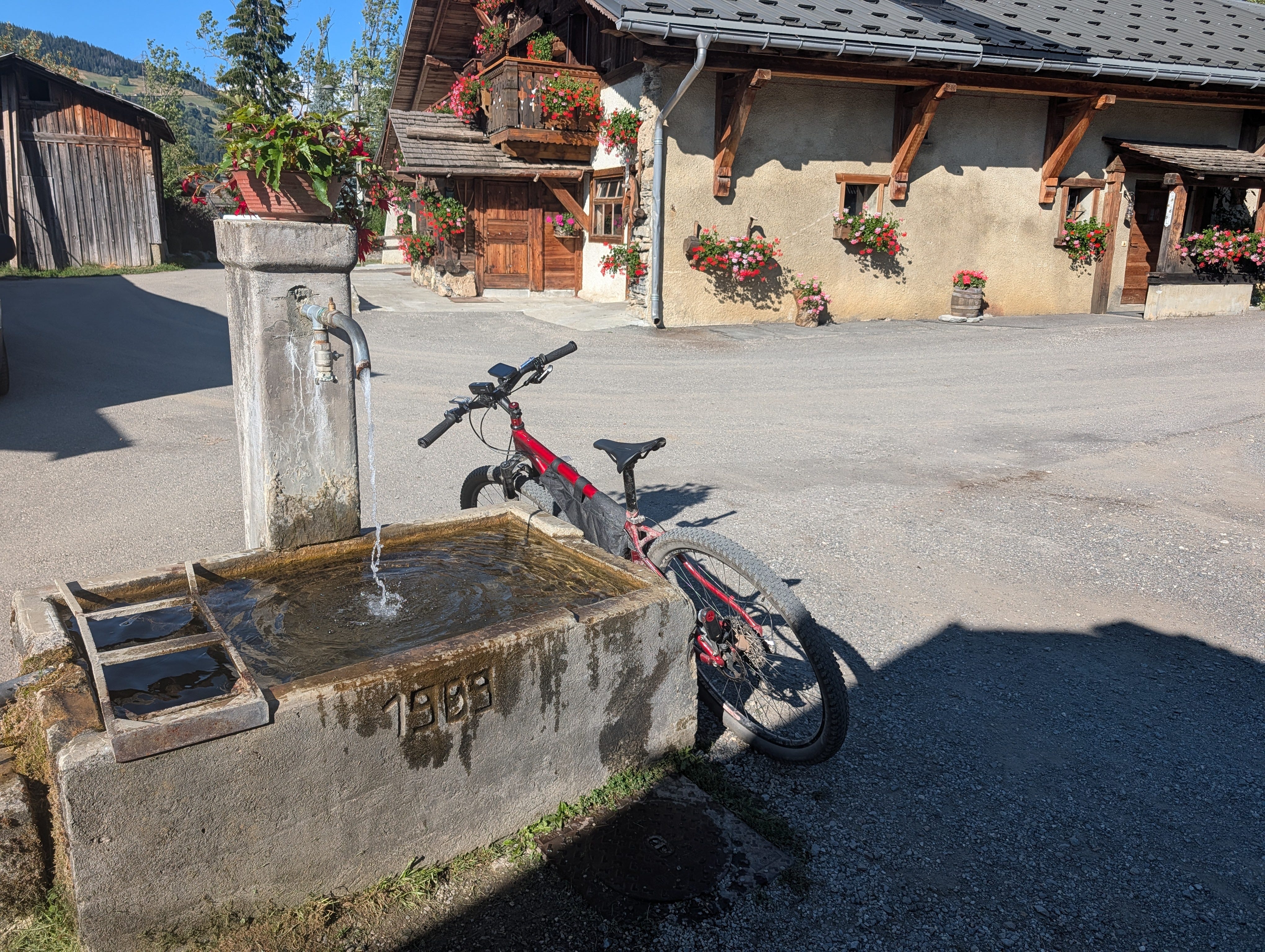
Anyway, I very much enjoyed the rest of my ride, even through another 2,000-foot climb to lovely Saisies, and even though there was more rolling than descending after that, the 90-degree heat persisted, and I ran out of water. Providence put a fountain in my path just in time. I returned under the rich evening light and managed to click off an exact 10,000 feet of climbing as I rolled into the driveway, after 67 miles. Clouds were beginning to move over Mont Blanc, portending the damper, cooler weather that would welcome me into my 47th year, along with a relaxing afternoon followed by drinks with friends. In other words, a more normal birthday. Perfection, all around.
Now I’m in the statistical pit of my life. And I’ll say, the view forward from here looks pretty good. Sure, I’m currently enjoying a bit of practice retirement in one of the most beautiful spots I’ve visited in this world, so it’s easy right now to say that life is good. But I think, too, that I can see beyond this moment, toward all of the difficulties, strife, and loss that lie ahead. I still see a compelling path climbing toward an unknown summit. Wisdom, I think, is knowing I’ll never reach this summit. The path will stay forever in flux, and I’ll grow weary and old as I make my way up it. But I’m no longer racing ahead, tunnel vision fixed on a summit I now know I’ll never find. I’m pedaling slowly, deliberately, giving myself the space to look all around, to glimpse the entire panorama. And it’s endlessly beautiful.
Comments
Nothing yet. Say the first thing.
Sign in to join the conversation.