
I’ve started to have a recurring dream about running. It’s strange; even as I venture back into my old race enthusiasm while scrolling through UTMB coverage, my subconscious doesn’t conjure mountain-running talent — a dream I let go a long time ago. No, it takes me back to a time and place I never wanted to be the first time around. The time and place where I sort of, reluctantly, “became” a runner — although running didn’t stick and wouldn’t return to my life for another six years.
It happened while I was living in Tooele, Utah, during the summer of 2004. My story is the most mundane of running stories. I was going through a difficult period in a difficult relationship, and I smothered a lot of my feelings with Fire Sauce at the local Taco Bell. After seeing an alarming photo taken at a friend’s wedding, I decided I needed to lose some weight. My recurring dream meets me there, just as the blue light of dusk falls over the Oquirrh Mountains. It finds me plodding miserably along a cracked sidewalk in my drab neighborhood, barely beating the darkness home.
In my real past, I had this cheap Casio watch that I’d glance down at constantly, forcing myself to jog at least a half hour out the road toward Middle Canyon before returning. But in my dream, I’m looking at my old orange Garmin 310. This was my first GPS watch, which I acquired early in my second foray into running in 2010. The display shows 10:10, as in 10 minutes and 10 seconds per mile. I feel a jolt of excitement and pick up my pace. My feet seem to lift off the ground, barely touching the pavement as I fly down the street. The mountains blur. The neighborhood fades to shadows. When I look down again, the watch says 6:10.
This narrative is hilarious to my waking self: that my subconscious cares this much about pace and conjured such a seemingly random one. I’ve never been a pace-focused runner. In 2004, I barely owned a working watch. By the time I started running again, I was more interested in extreme conditions and long distances. Speed work and pavement running were never a part of my running journey 2.0. And even at my best, I’ve never held a 6-minute pace for an entire mile. But my dream self wants this. She’s thrilled. The hot summer air tears at her lungs; she puts her head down and runs faster.
This is usually the point where I wake up, feeling both bemused and elated. After what I went through with that knee surgery, I’d let myself believe there wouldn’t be a running journey 3.0. Already, I’m not so sure.
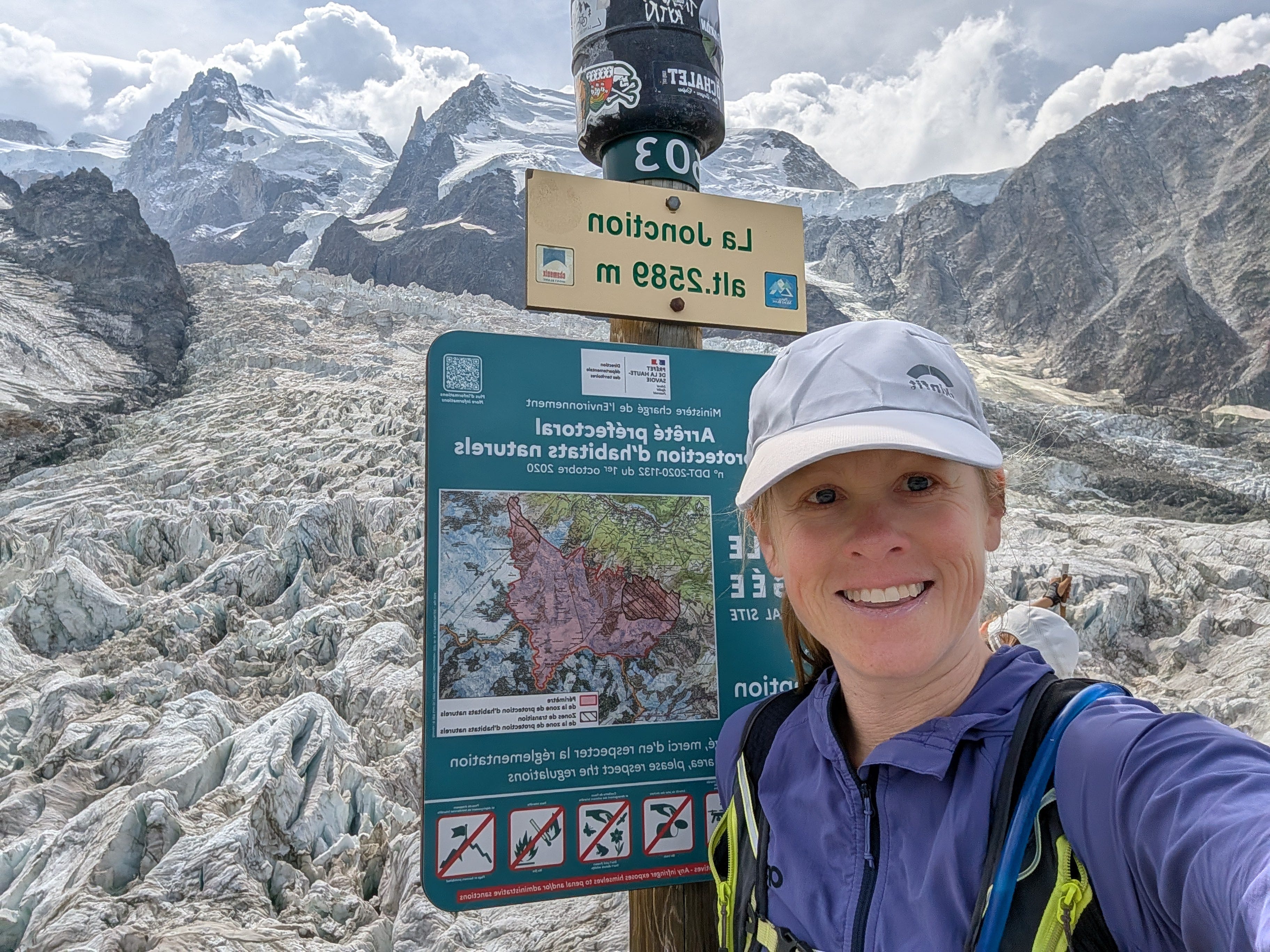
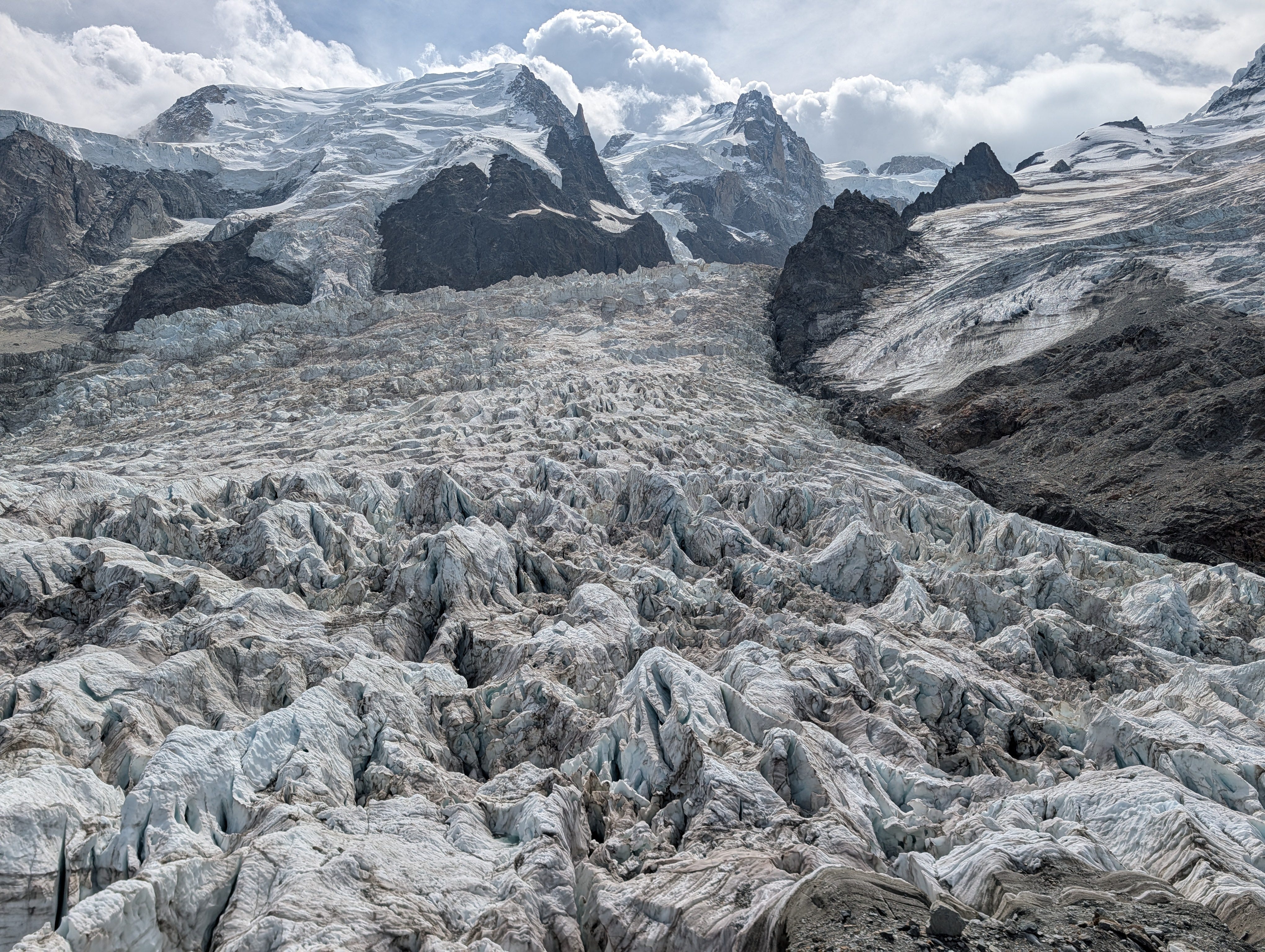
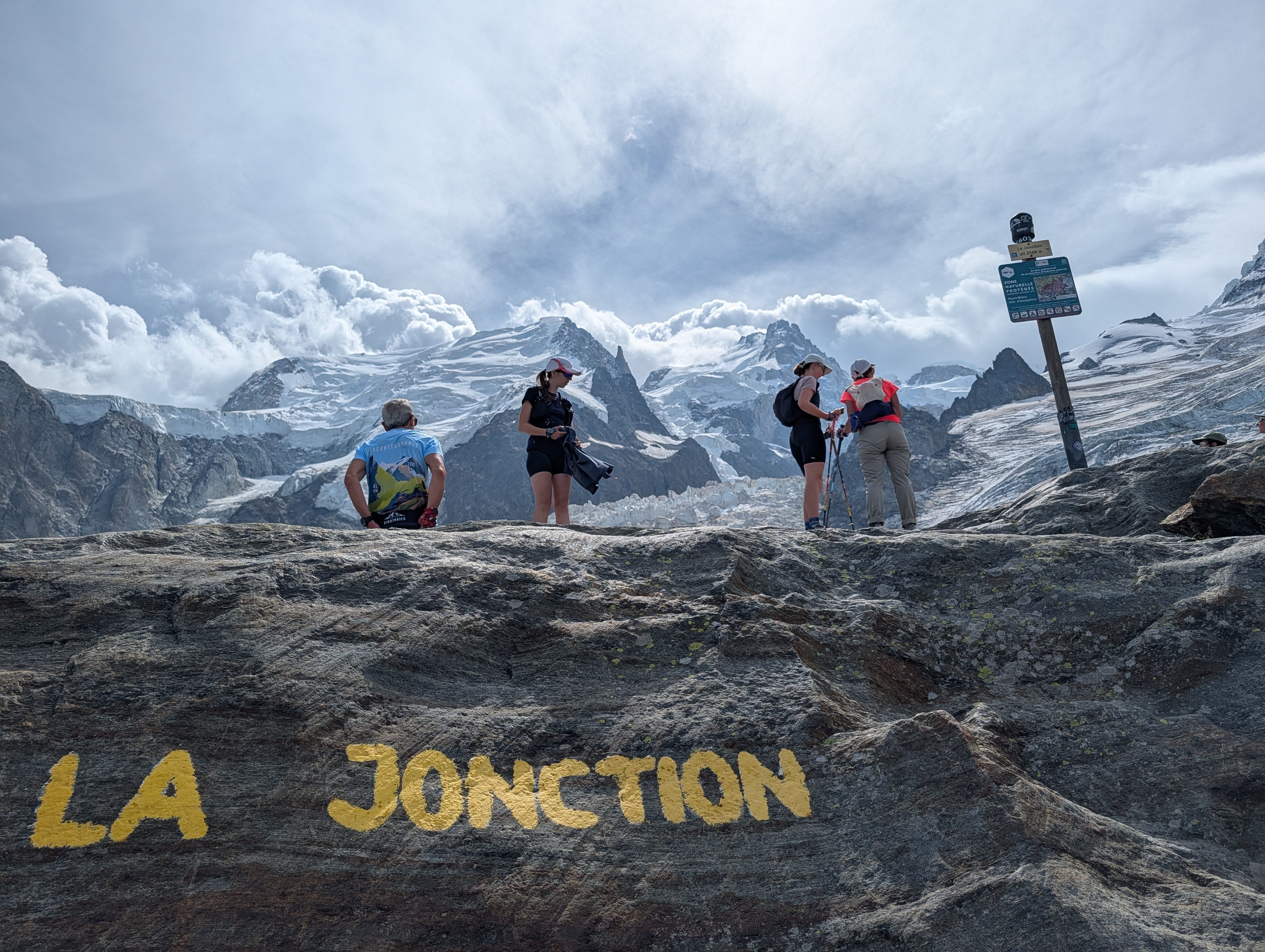
Last Monday, I completed my toughest post-surgery hike yet. I joined friends on a trek to La Jonction — a narrow rock fin dividing the Bossons and Taconnaz glaciers. Nearly 5,000 feet of elevation gain and 6 hours of moving time (at a relaxed pace), but on real class-two-plus scrambling. The type of scrambling where I needed to reach for grips while balancing on a few toes, and occasionally had to go into a deep squat to lower myself down to a foothold. The experience was both disconcerting and completely natural, as though my body barely missed a beat over the past six months. I was with new friends who had no expectations of me, either about my past as a “mountain athlete” or my present as a person still relatively early in recovery from major knee surgery.
I spent most of the climb chatting with a French woman who grew up in Paris and now teaches at a private school in London, where she lives with her English husband and son. Her father lives with Alzheimers in a care facility in Sallanches, my little “home city” in France, so we’re neighbors by proxy. She’s about my age and very sports-focused in a way that reminds me of my sister — into weightlifting and gym/pool sports with a bit of hiking thrown in. Several miles into the hike, after I’d gone much more deeply into my health woes of asthma and knee surgery, we started talking about UTMB. I admitted that I’d run UTMB before. She was fascinated. She did not have me pegged as a past UTMB runner by any stretch. I had to admit that the race I’d finished was a version that had been shortened due to bad weather. My second race in 2015 ended in a DNF, cut for time at kilometer 115 due to the aforementioned health woes. Now UTMB is so far out of my reach that it doesn’t even show up in my dreams.
“How old were you at your first UTMB?” she asked.
I had to pause to do some math. “33,” I answered. “It was 2012. It was a lot easier to get in back then. Before they had the point system and … whatever they do now. I was barely a runner at the time. I’d only been running for a couple of years.”
As I said this, I was thinking about how “old” the race seemed in 2012 — UTMB was celebrating its 10th anniversary — and how a decade seemed like such a long block of time back then. I was a bright-eyed hopeful in a well-established sport. But time continued to pass me by. Now the de facto World Series of trail running has become so prestigious and enormous that I can’t fathom how there was ever a place for someone like me.
“33 is a good age for running,” she said. Before we started talking about UTMB, she had told me a long story about her back surgery and the French doctor who told her at 40 that she was “beautiful on the outside but very old on the inside.”
“Yeah. 47, for those of us who maybe should have never started running to begin with, maybe not so much,” I replied.
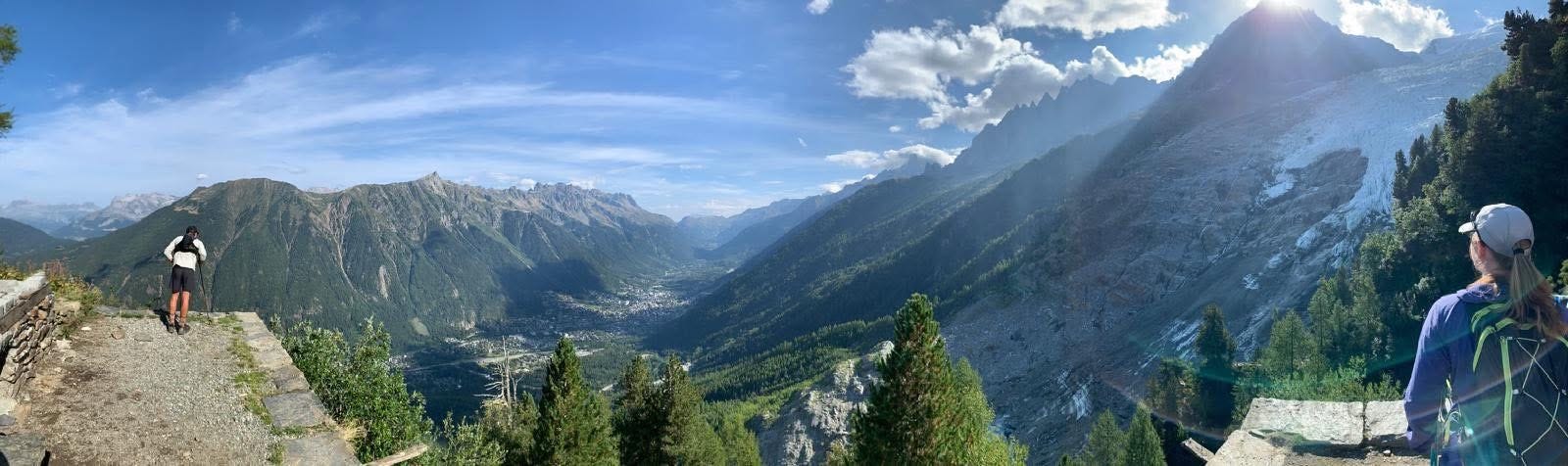
Earlier, as we were starting up the trail, I’d promised my friends there was a perfect spot for a midway break, a century-old chalet where we could order Orangina and fuel up for the hard part of the climb. The Alps are famous for these high mountain huts, some of which predate the internal combustion engine. Like other huts on the flanks of Mont Blanc, the Chalet des Pyramides clung to a cliff. I had fond memories of having drinks there with Beat and our friend Pieter on a trip that seems like barely a blip in time and also a lifetime ago — perhaps 2019. Built in 1904, the chalet was a popular snack stop for Mont Blanc mountaineers and hikers viewing the Bossons Glacier.
As we emerged from the forest near the sharp edge of the ridge, we arrived to … nothing. Just a concrete slab overlooking a gray moraine where a river of ice once flowed nearly all the way to the valley. I was confused. Maybe I was wrong about the chalet. Maybe I dreamed it. But later I learned that the building was permanently demolished in 2025 due to erosion and rockfalls. The “perma”-frost that holds this mountain together is melting, pulling down human-built infrastructure with it. The municipality opted to remove the chalet before it collapsed on its own.
Two days after our hike to view the melting mass of Bossons Glacier, a massive chunk of ice peeled off a glacier in Nepal, triggering a landslide that careened into a catastrophic debris flow and flooding. Thousands of people are missing, likely dead. Entire villages were wiped away. I haven’t been able to stop thinking about the tragedy, the scale of it. Meanwhile, thousands of runners descended on the Chamonix Valley to circumnavigate a mountain covered in melting glaciers. They would run on trails surrounded by miles of steep, unstable slopes. They would cross beneath couloirs that have been actively crumbling amid one of the hottest summers on record. We heard rockfall from both sides as we scrambled the final slope before La Jonction. The clatter was so constant that it began to sound like background noise.
I wondered how many UTMB runners looked up at the glistening ice over their heads and thought about this reality. I wondered how long we’re going to be able to maintain the illusion — doing our little hobbies as we’ve always done them; living our lives as we’ve always lived them.
I was going to watch the race after it started on Friday night, but my plans fell through. What happened was a forecast for a typical late-August thunderstorm, bringing a potential deluge and the risk of lightning and flash flooding. Race organizers decided to postpone the start by two hours. We had planned to meet friends in St. Gervais and have drinks in the center of town as the runners came through. But the town was closing all roads in and out. It wasn’t clear that we could even ride our bikes through the closure. And the late race start meant we wouldn’t get home until after 2 a.m. That and the rain lulled all of us into staying home.
At first I was disappointed, but gradually I was glad I hadn’t ventured back into “the scene” just yet. This was the same quiet reason I hadn’t been excited to join Beat at his 250-kilometer race in Switzerland earlier this month. I’m not quite ready to face that mirror — all of those bright, loud, constant reminders of the athlete I used to be. Reminders of a passion we might not be able to follow into the future. Not me, uncertain of whether I should run again. And maybe not most of us, given how quickly the future is coming at us. A landslide of change.
It only took one more day to start dreaming again. That day was today, Saturday, while I tried to squeeze in a morning hike before Beat’s dad and his wife were set to arrive. We have a local “vertical kilometer” surrounded by gorgeous views that starts out the front door. It’s not a true VK because you have a leisurely 4 miles to climb those 3,200 feet, but the first 2,200 feet are done by mile 2, so that section has become my post-injury fitness test. During my first test on July 26, I was barely able to hold 1.6 mph. But today I was already up to 2.2 mph as I crested the ridge. I boosted my average pace to 2.5 mph by the end of the climb, and still had reasonable quad strength as I began the descent.
I’d let myself believe that when I started running again, I’d do it how everyone rehabbing from a meniscus root repair is supposed to do it. On a treadmill, starting with 0.1-mile segments at a time. I should have known that running would probably force its way in as soon as I started to get impatient with my walking pace. When I reached the final bit of steep descent, I decided to take the longer but less-steep road the rest of the way and test my knee with a little jog. It was the most minimalist of jogs — a ginger ultrarunner shuffle where my steps were so tiny that I was barely moving faster than walking pace, followed by slightly faster brisk walking, then more ultra-shuffling. But I maintained the pattern for nearly two miles at a 15-minute-mile pace before my knee started to do that squeaking thing that I’ve come to view as a warning that it’s time to back off.
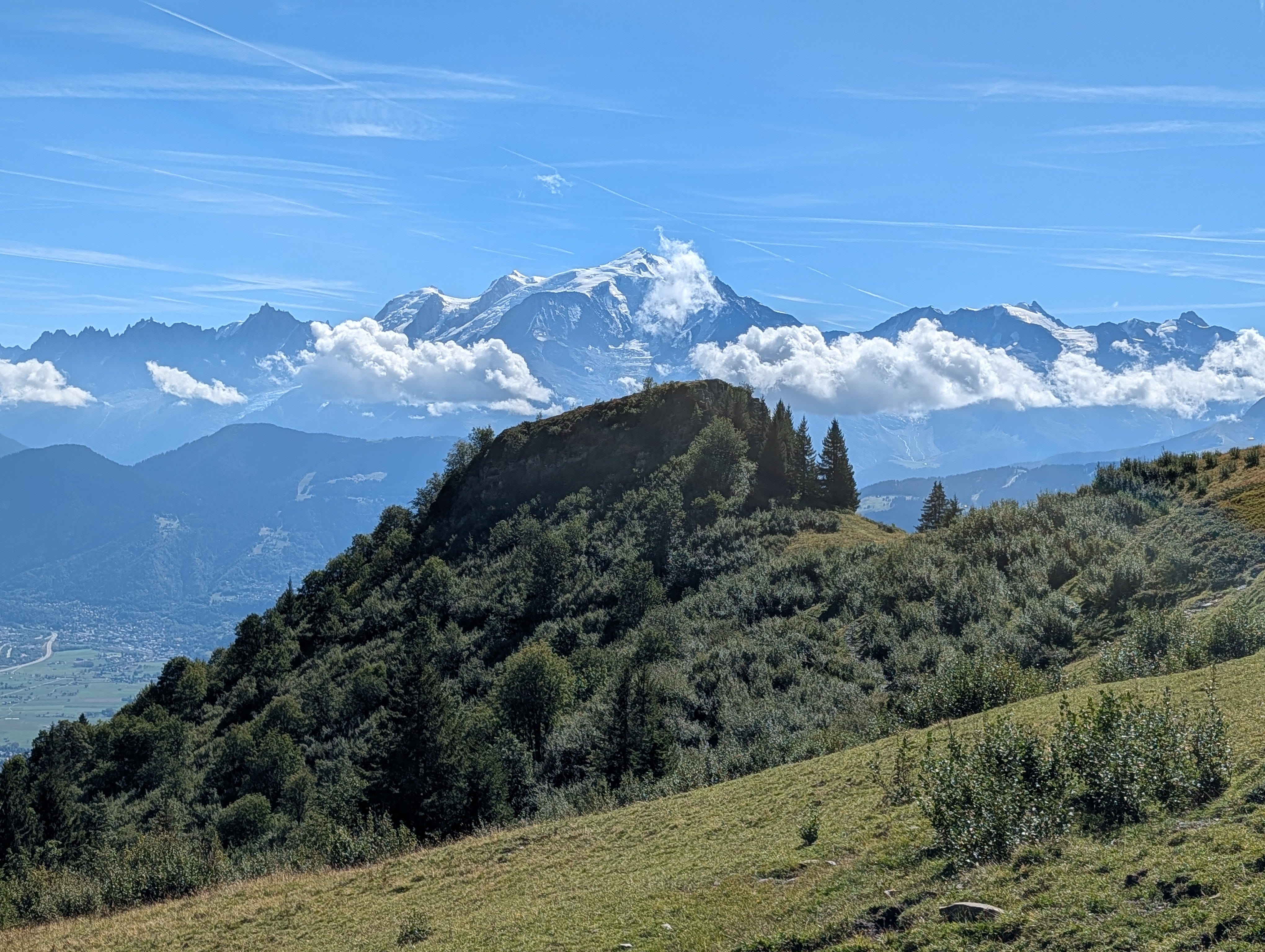
As you might expect, I was chuffed. No, I was more than that. I was elated. Perhaps as much as I had been in my dream. Because in spite of what you might have observed if you saw me doing it, I was running. I didn’t expect this of myself today, not even eight weeks beyond my clearance to start hiking again, while thousands of runners in a community that belongs to a faraway version of a past life circled a mountain I could see over my shoulder.
The lesson, as always, is that I can’t know what the future holds. The only constant is change. Change can be rapid, violent, and devastating. But it can be also be astonishing and delightful. The lesson, as always, is to keep my heart and mind open and keep moving forward.
Comments
Nothing yet. Say the first thing.
Sign in to join the conversation.