
My goodness, how long is a month? I’ve missed you! Switching my newsletter from weekly to monthly for the first six months of 2026 has been a boon while I tackle a few work projects. But after five years of regular weekly posting, I notice I’ve been getting a bit twitchy every Thursday, as if something is missing from my life.
Never mind, for I am back with a lovely late-summer fruit galette that seems just right to take us from ditzy January to a more focussed February.
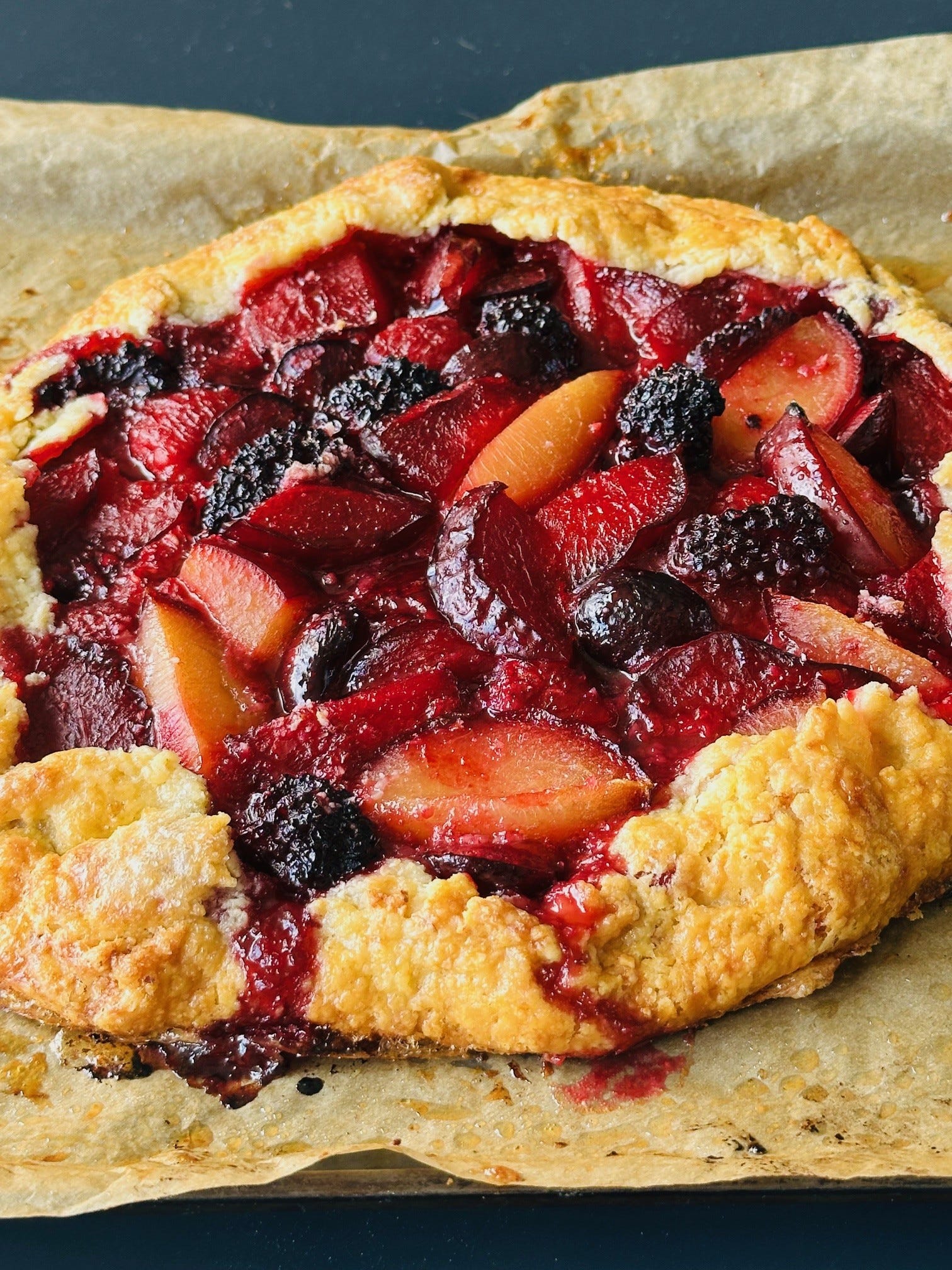
Love a galette. Rough-as-guts pastry, no trimming, no fiddling. You drop the fruit on top any which way – we are not going for Instagram spirals here, let’s leave that to the amazing French patissier Cedric Grolet. Then you bung it in the oven until it looks adorable.
All that means it’s easy on the cook, because the more rustic it looks, the better.
It’s also easy on the fruit, which is allowed to retain its shape and colour and not be covered up by pastry and get all steamy and pale.
And it’s very easy on the eye, because the pastry border – just lifted up-and-over to form a rim – frames the fruit like a portrait, leaving room for the steam to escape in the centre.
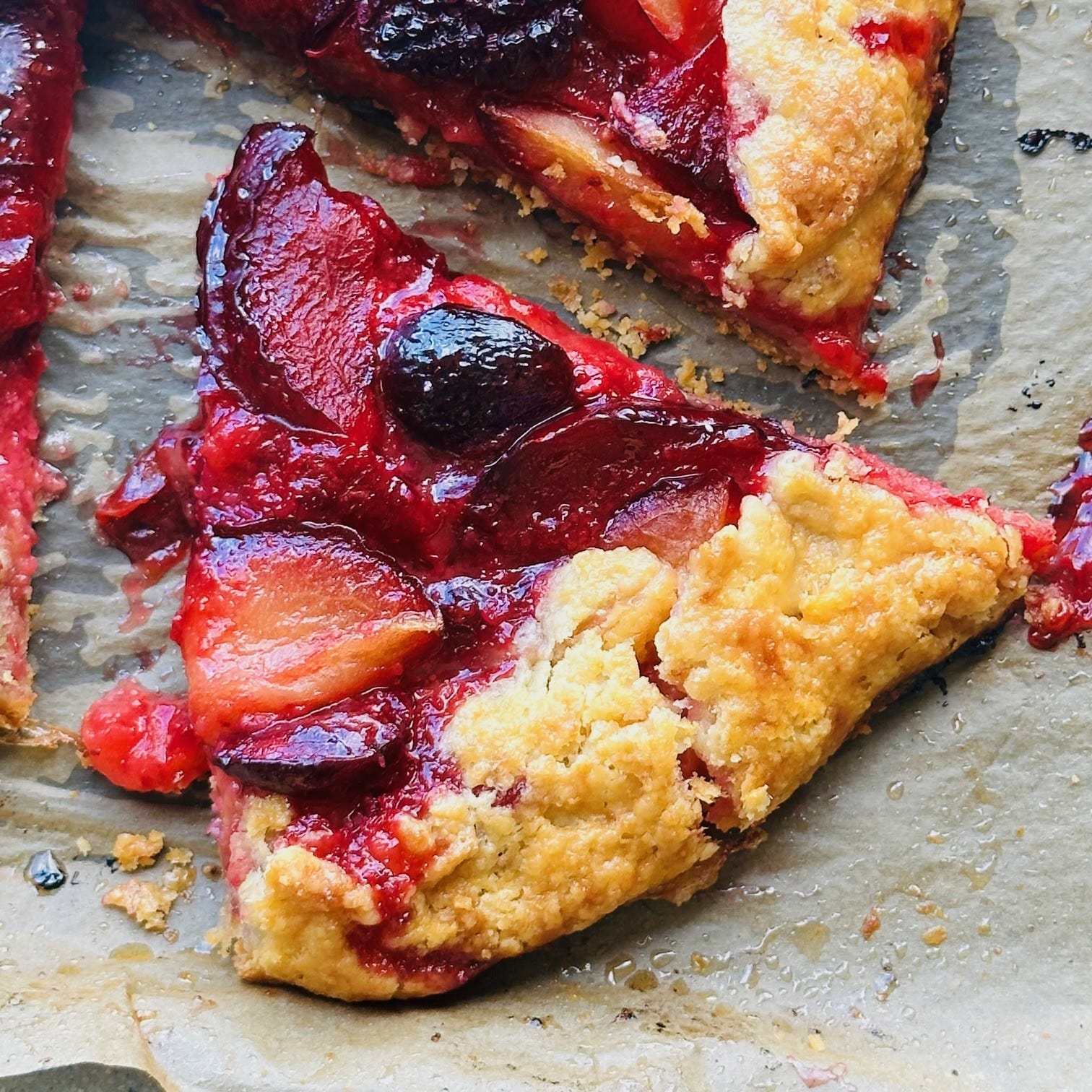
The pastry is a technique I learned from Jacques Pépin, author of my vintage copy of La Technique (a ground-breaking book for the 1970s that illustrated the hands-on foundations of cooking with photography; no recipes), and one of the most enduring and celebrated of America’s classic cookery teachers.
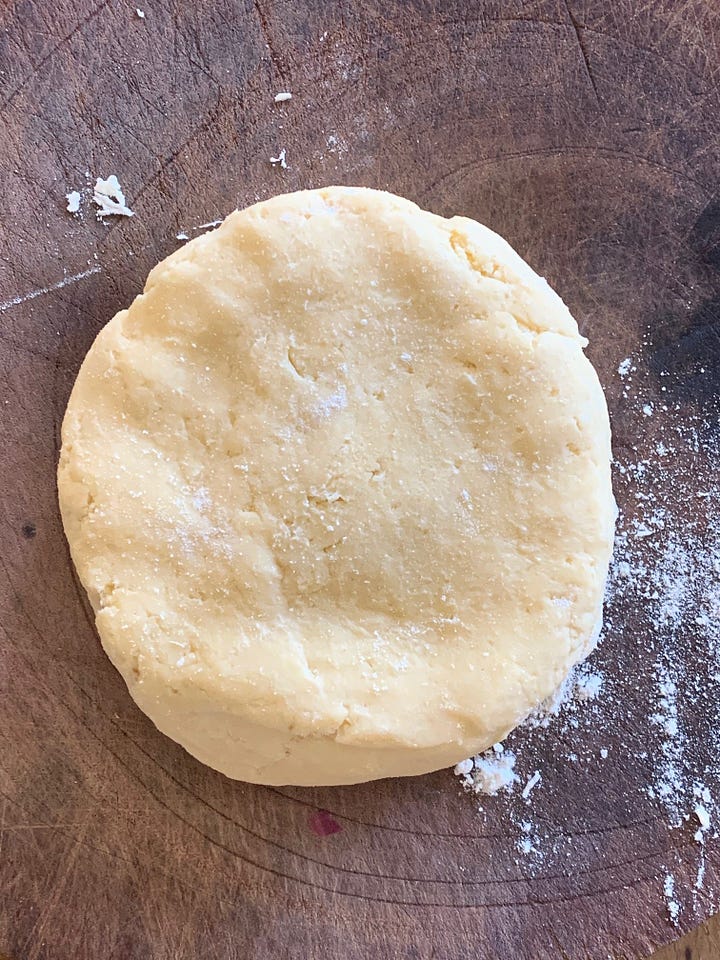
It literally takes 10 seconds to bring it together - five seconds to whiz the flour, salt and butter, and another five seconds to incorporate icy-cold water. The speed also ensures you don’t overwork the pastry and hence make it tough. The end result is biscuity to the bite, with an almost cobblerish quality, if you know what I mean.
There is a lot that this galette doesn’t need, that other recipes call for. The fruit does not need to be dotted with butter – there’s enough in the pastry, for heaven’s sake. The base does not need to be spread with jam– there’s enough sugar already. Nor do you need to garnish with toasted almonds or nuts, unless you want.
My favourite little trick is to first scatter the pastry base with a mix of ground almonds and a touch of flour; an almost-frangipane mix that succeeds in soaking up the fruity juices as they seep from the fruits.
The fruits? Use what you have – peaches, nectarines, plums, figs, berries, cherries. A mix is best.
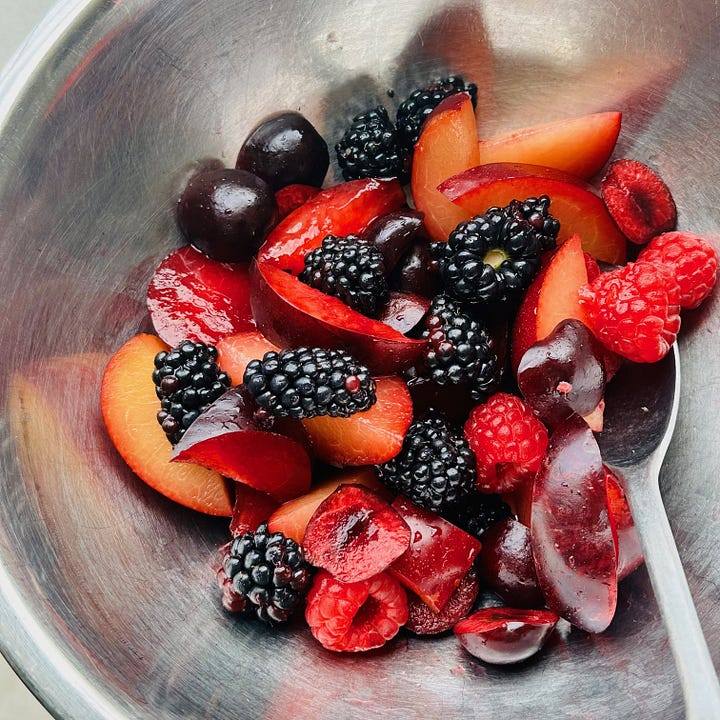
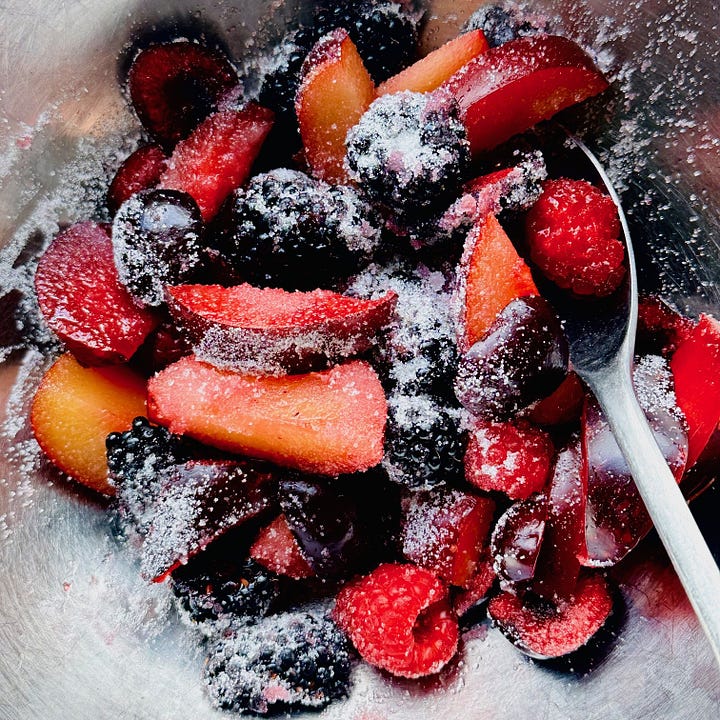
I went for the romantic beauty of dark red stone fruits and berries (France’s fruits rouges) to transition us from late summer to early autumn. In winter, use apples and pears.
Or if you’re feeling more savoury than sweet, go for one I did earlier - this zucchini and cheese galette from Good Food.
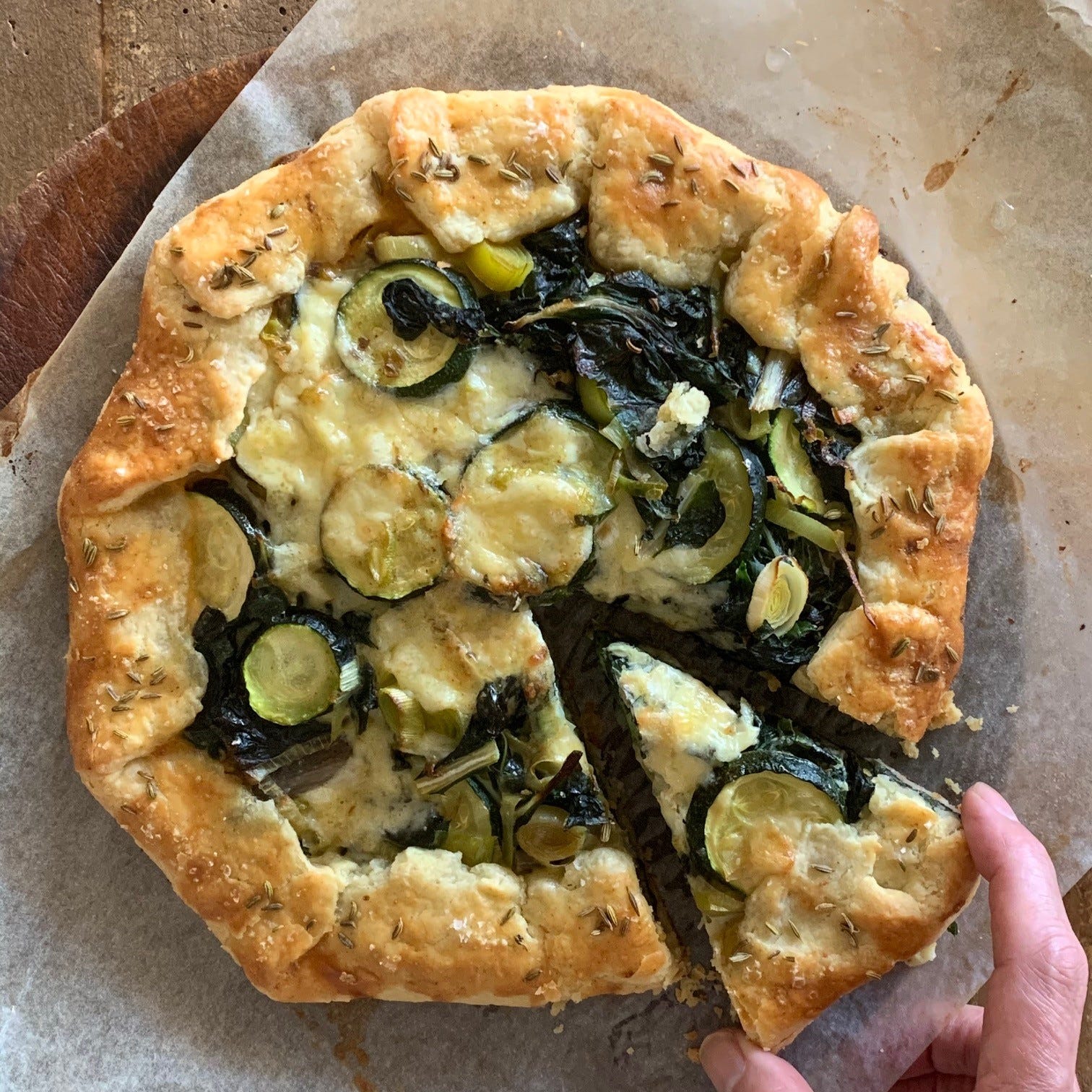
The rustic nature of this galette is, of course, a metaphor for how to go through life in 2026.
It is free to be itself. It does not compare itself to others. It does not struggle to be perfect or consider itself a failure for being a bit different. It’s a bit rough around the edges, open to new ideas, and embracing anything that might come along.
It admires and respects the skill, craft and paranoia behind technically perfect tarts and pies, but it is for people with better things to do. Which actually makes it perfect.
Serves 4
4 or 5 red plums
Punnet of blackberries or raspberries
Handful of cherries if around, halved and pipped
2 tbsp granulated sugar
3 tbsp ground almonds (almond meal)
1 tbsp plain flour
1 egg, beaten
Pastry:
200 g plain flour, sifted
150 g butter, chilled and diced
Half tsp salt
75 ml icy-cold sparkling water
To make the pastry, place the flour, diced butter and salt in a food processor and whiz for 5 seconds.
Add the icy-cold water and process for another 5 seconds – you should still be able to see bits of butter. It won’t be pretty.
Tip the contents onto a large sheet of baking paper on the bench and gently shape into a ball, then cover with cling film and refrigerate for 1 hour.
Heat the oven to 220C (fan-forced 200C).
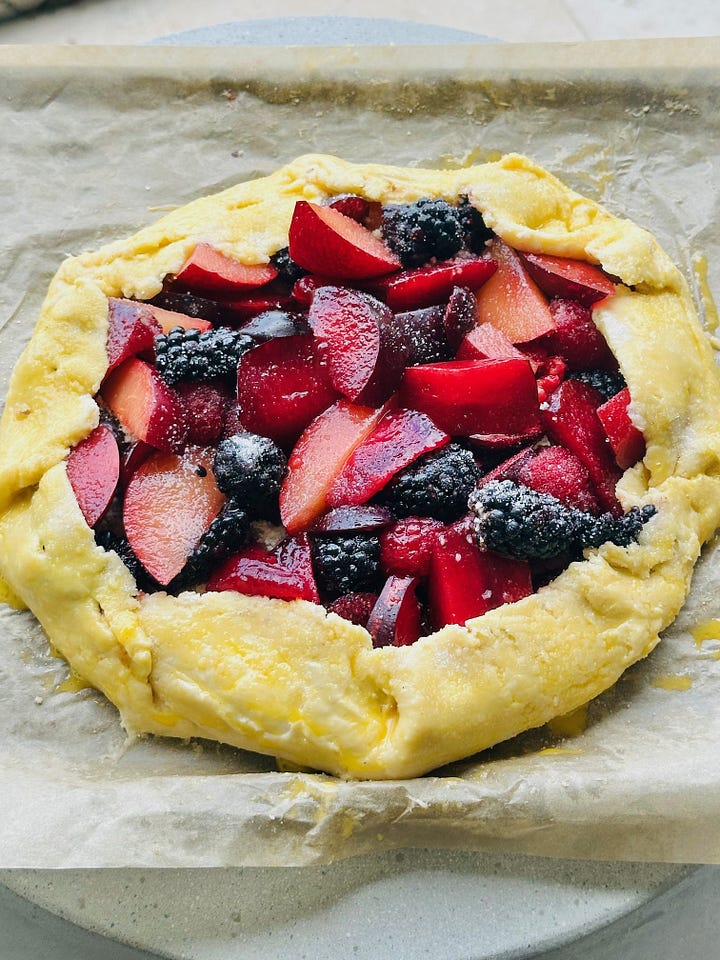
Cut the plums into wedges or rough chunks (ditch the stones) and cut the berries in half or leave whole. Toss them all in 1 tbsp of the sugar.
Unwrap the pastry and place on a floured bench or a big sheet of floured baking paper.
Using a floured rolling pin, roll out to a rough round or oval shape about 23 cm wide.
Mix the ground almonds with 1 tbsp flour and a pinch of sea salt and scatter over the base, then arrange the fruit on top to within 5cm (2 in) from the edge.
Use a spatula knife to help you lift the pastry edges up and over – fold and crimp, fold and crimp - to form a border of about 5 cm (2 inches), as rough as you like.
Place the galette on a baking tray lined with baking paper.
Brush the pastry border with beaten egg and scatter both fruit and pastry border with remaining 1 tbsp sugar (if the pastry has softened, bung it in the fridge for 10 minutes to chill).
Turn the oven down to 200C (fan-forced 180C) and bake the galette for 40 to 45 minutes or until the fruit is bubbling and the pastry is tanned.
Remove to a wire rack (use the baking paper to help slide it off) and cool for 15 minutes before serving, because the juices are super-hot.
Serve warm or at room temperature with cream, ice-cream, yoghurt.
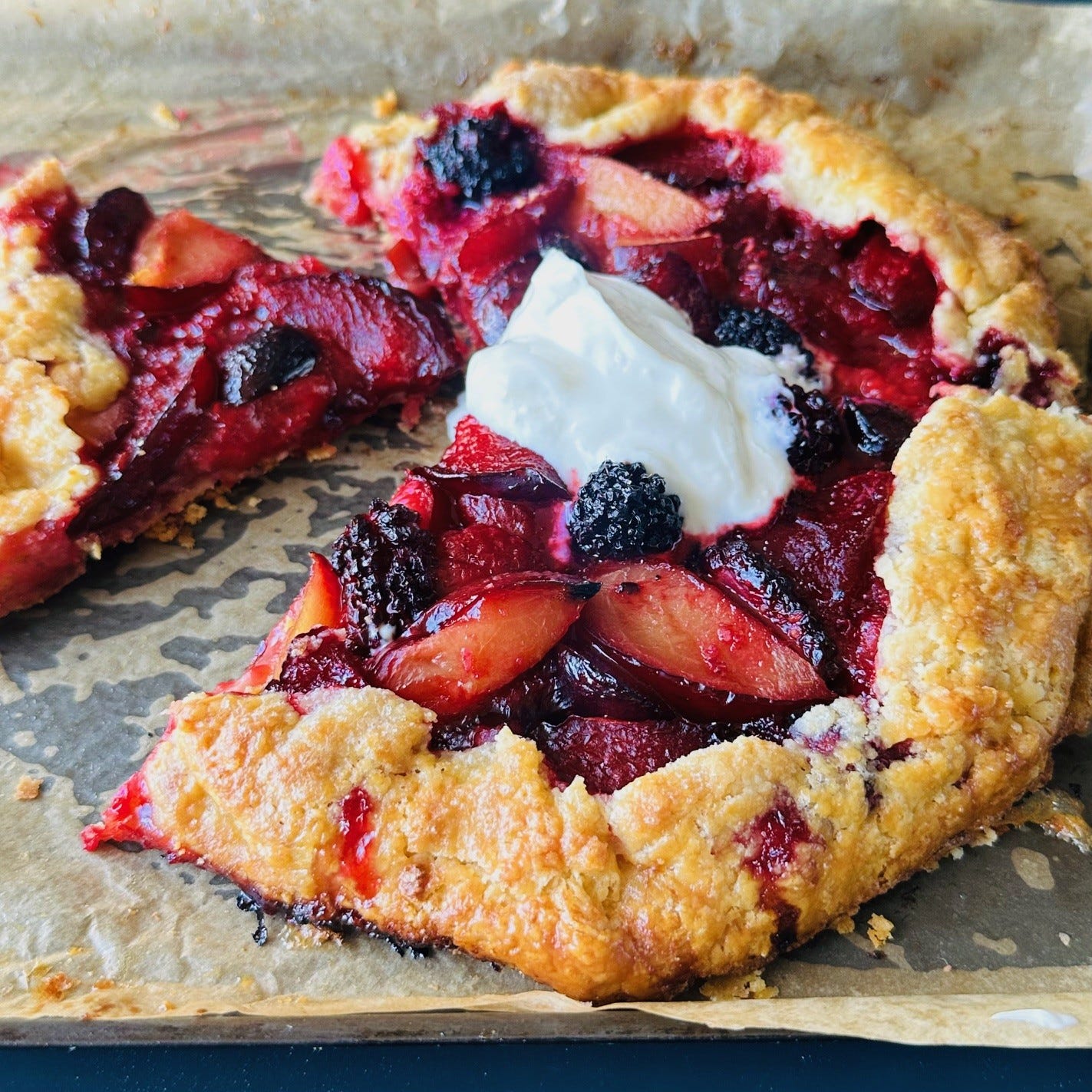
The secret to great pastry is to keep the butter as cold as you can, because it’s those tiny pockets of butter in the flour that makes the pastry flaky. I accidentally froze my diced butter for half an hour before whizzing it with the flour, and it was perfect.
For the same reason, if the pastry gets warm at any time – you might be constantly shooting it for your newsletter? – just put it back in the fridge for ten minutes. It should enter the hot oven as cold pastry.
The butter in the pastry might ooze out onto the tray as it melts in the heat of the oven – just blot it with paper towel. The fruity juices might also ooze out – let them, unless you think they might burn.
You may not have ground almonds (almond meal). No problem – just whiz whatever nuts you have, from almond flakes to hazelnuts, walnuts or macadamias – to a powder and continue.
No real need to make your own pastry. Buy puff pastry and cut it into a rough round and go forth. It’s not perfect, and nor are we.
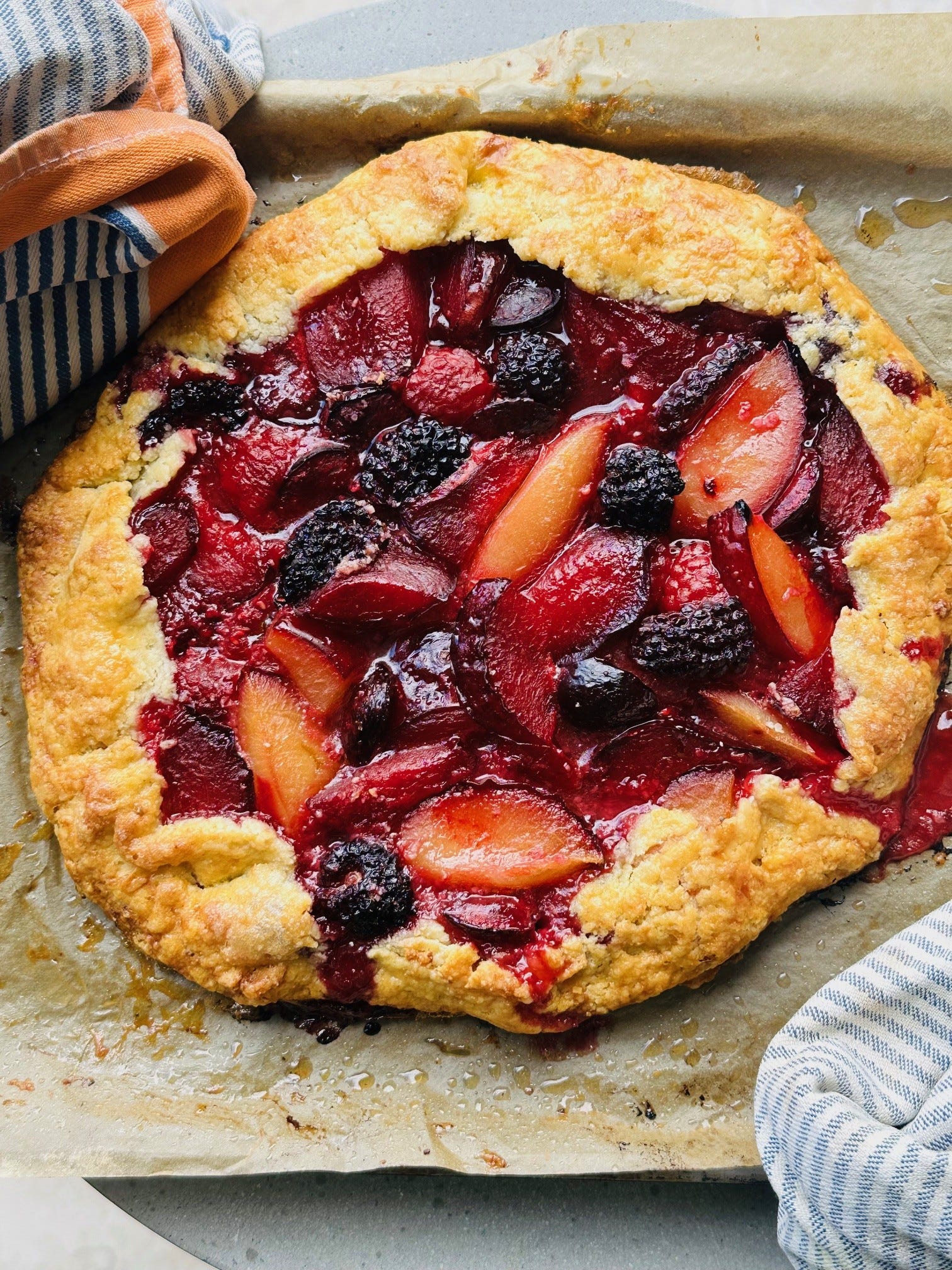
Thanks for dropping by! And thanks for your comments and suggestions. Special thanks to Terry for the fruit sleuthing. Under strict instructions to buy anything dark red, he came back with the most divine plums, cherries and blackberries, as well as – against orders – the brighter pink of raspberries and golden-fleshed plums, which actually added a lot of charm.
I would like to acknowledge the traditional owners of the lands and waters upon which I work, live, cook and play; the Gadigal people of the Eora Nation. Thank you for sharing your culture, traditions, knowledge, spirit, art, music, humour and food traditions, allowing us all to experience a sense of belonging in this ancient land.
Comments
Nothing yet. Say the first thing.
Sign in to join the conversation.