
Like many, I must have lamb at Easter. It’s an emotional imperative. A big shoulder of lamb, cooked for hours until it falls off the bone, turned into a feast with a few strategic accompaniments.
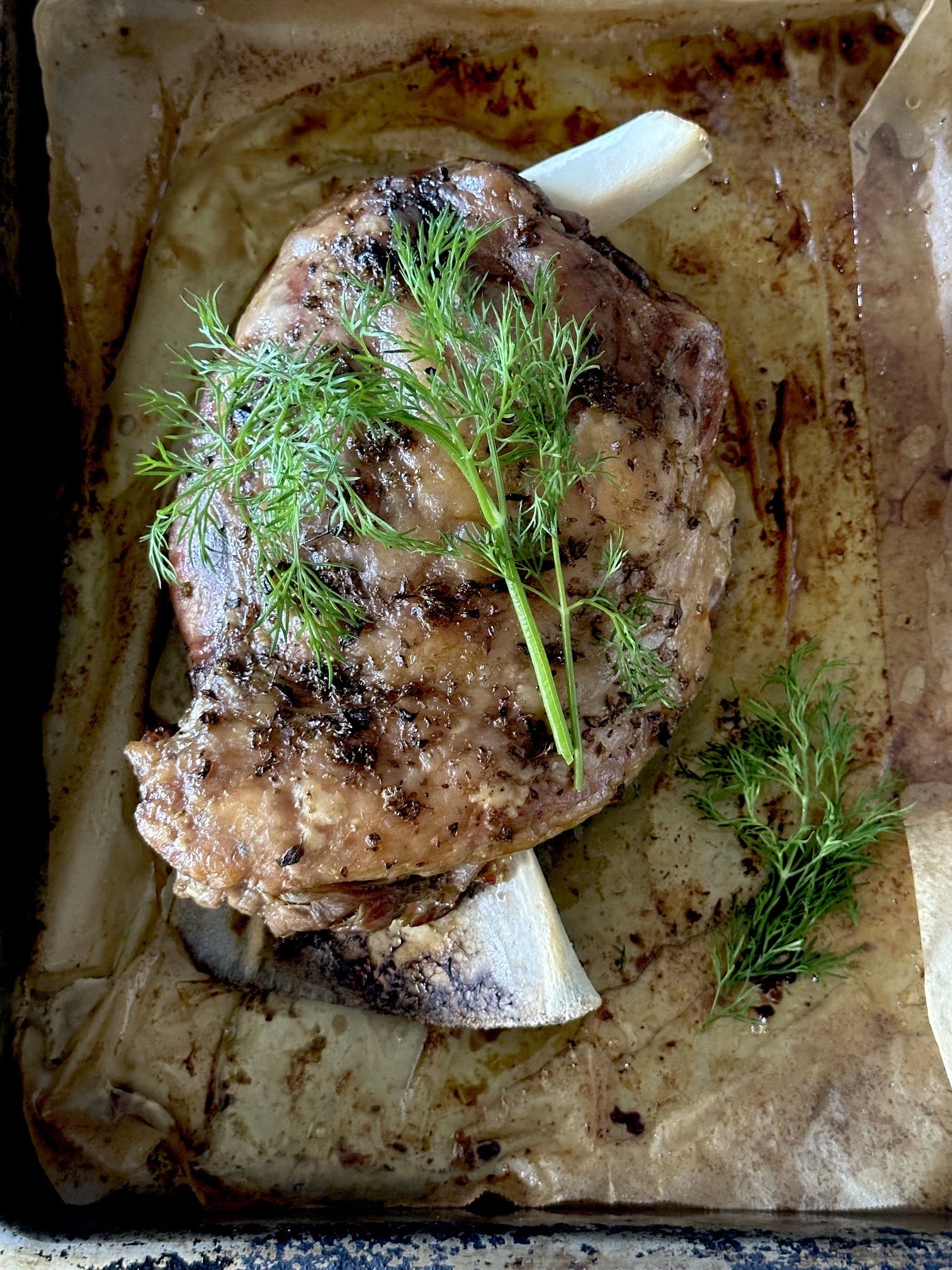
It says Easter, it says the weather is turning and the nights are drawing in and the leaves are turning golden. That might suggest a warm, dark autumnal sauce, but no.
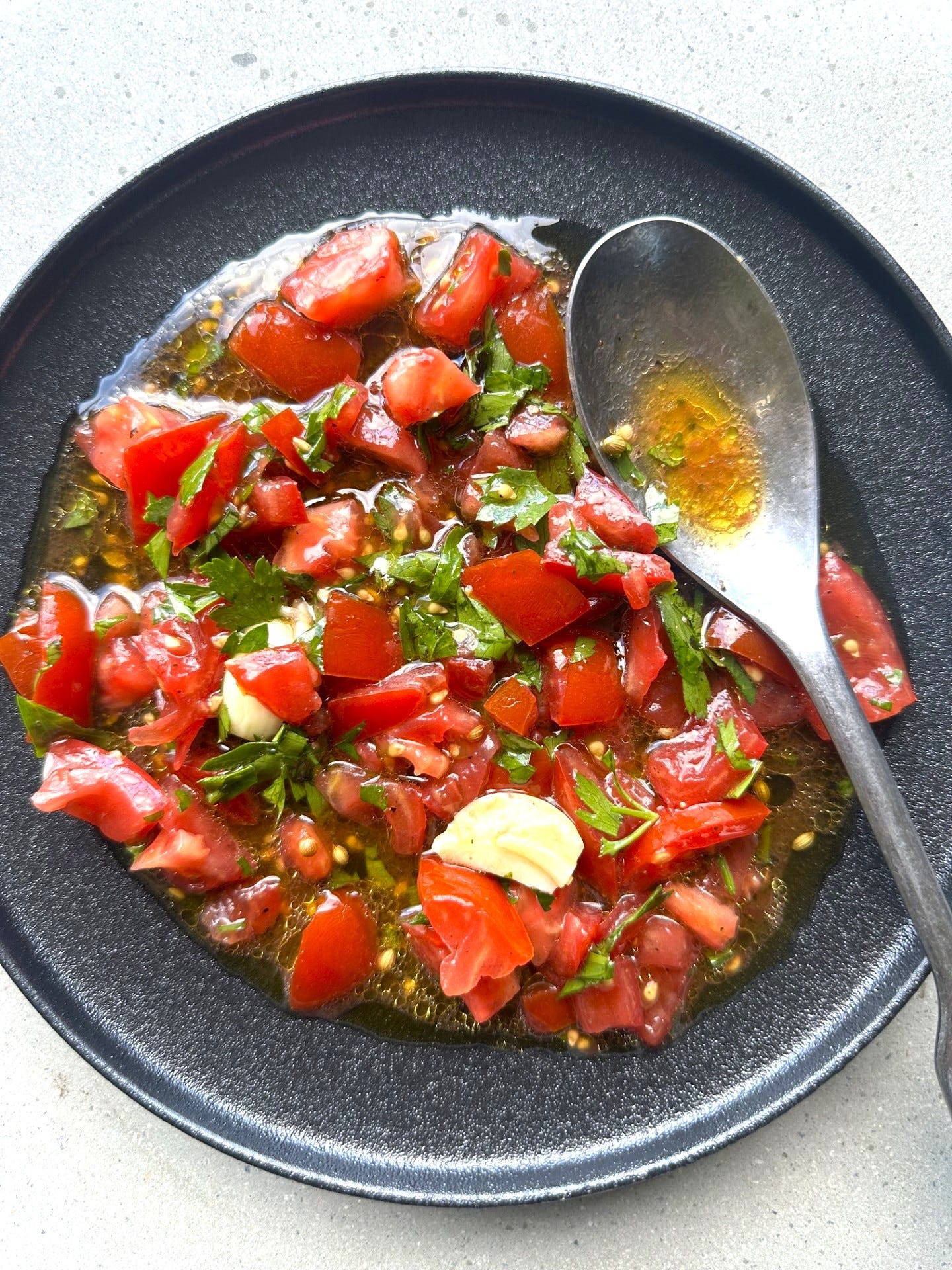
This is also my farewell to summer; so I want something lighter and brighter; a deeply vibrant sauce vierge that uses the last of the summer tomatoes, gently nudged with garlic.
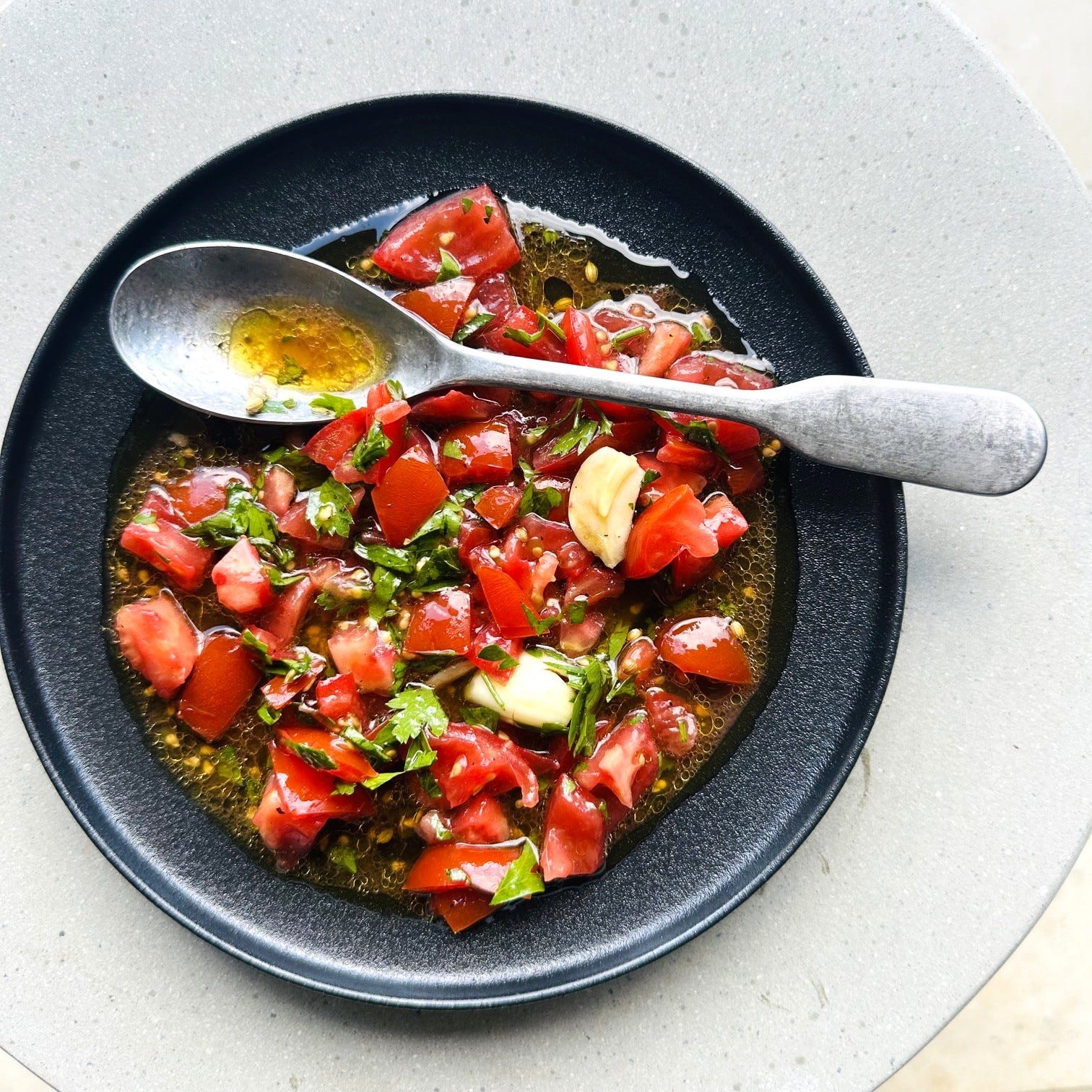
This boldly simple sauce was created by chef Michel Guerard in 1976 as part of his endeavour to lighten classic French cuisine. It calls for just tomatoes, garlic, olive oil, and fresh herbs, left to ripen and mature before serving.
I think it’s the garlic that makes it go so well with the lamb. Usually the lamb itself is loaded down with garlic and strong herbs such as rosemary. This leaves the lamb as lamb, and brings in the scent of garlic later, at the table. A more subtle move.
In my ancient copy of Michel Guerard’s Cuisine Gourmande, the tomatoes are both peeled and seeded. Not necessary; every part of a tomato is great. I even save the juices so they can mingle with the olive oil to create a more spoonable dressing. His herbs of choice are chervil, parsley and tarragon, and he adds a pinch of ground coriander, which is charming.
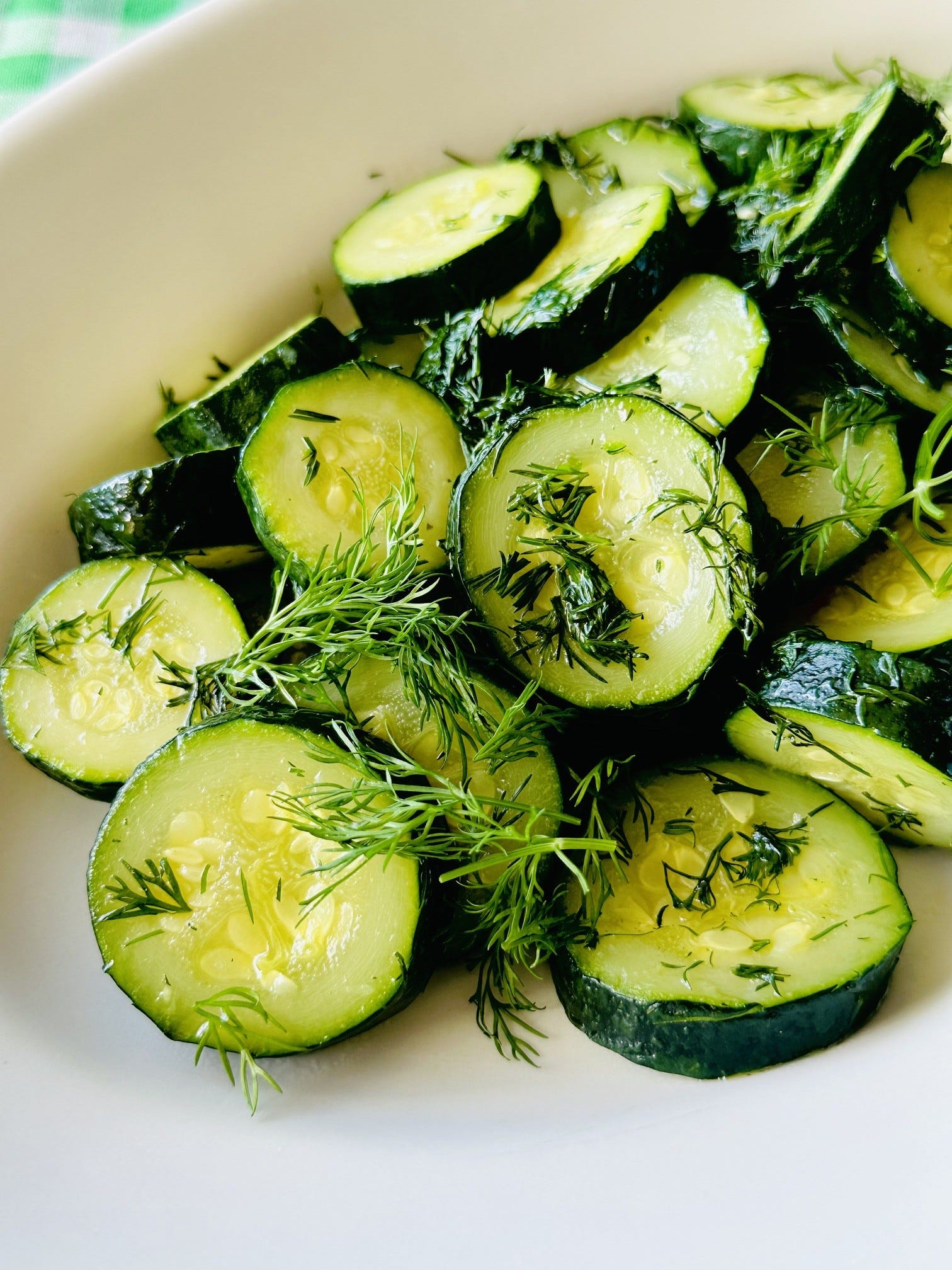
Zucchini has pushed its way into this feast as well, because there is so much of it about. Okay, so HERE’S where I said never to cook zucchini in water, because they are 94% water to begin with and you will only end up with sog. And here, today, is where I ignore my own advice and cook them in water for just 2 minutes, before tossing them into a dressing of olive oil, lemon juice and a bucketload of dill. Simple, effective, still-green, and tasting almost buttery.
There we have it.
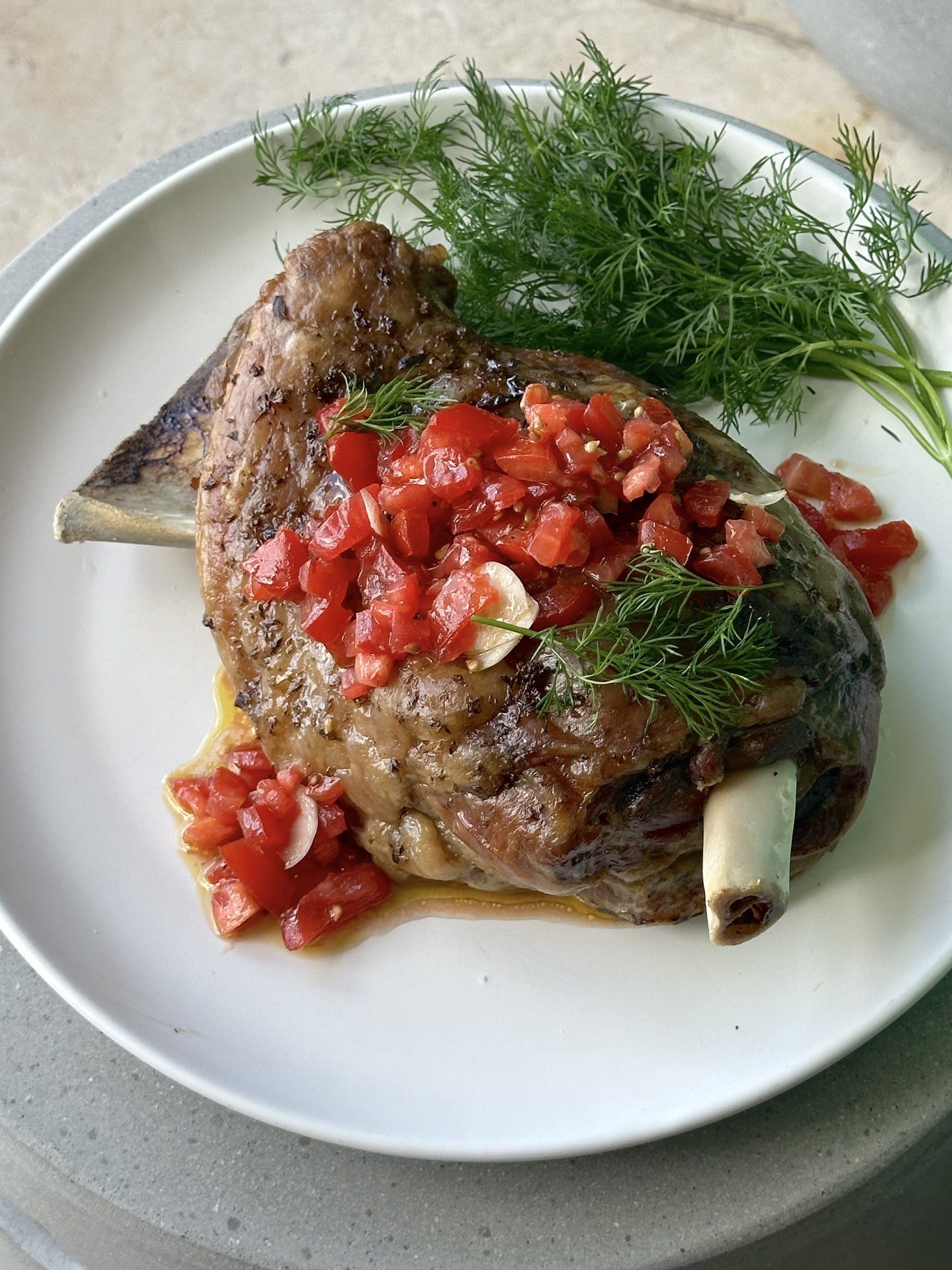
Slow-cooked lamb shoulder. Bowl of sauce vierge. Platter of zucchini with lemon and dill. And another bowl of creamy whipped feta, which you can deploy with the lamb, the tomatoes and/or the zucchini at will. And lemons, you must have lemons.
1.8kg/2kg bone-in shoulder of lamb
2 tbsp olive oil
1 tsp dried oregano
200 ml white wine or water
Heat the oven to 150C (fan-forced 130C).
Bring the lamb to room temperature, and rub it all over with olive oil, then rub with the oregano.
Place lamb in a roasting tray lined with a sheet of baking paper, add wine or water to the base and drizzle the lamb with extra olive oil.
Completely seal the roasting pan with kitchen foil, and bake for 2 hours.
Reduce the temperature to 120C (fan-forced 100C) and bake for a further 3 hours.
Remove the foil and carefully tip the pan juices into a bowl.
Raise the temp to 200C (fan-forced 180C) and bake uncovered for 20 minutes until the fat on top has browned nicely.
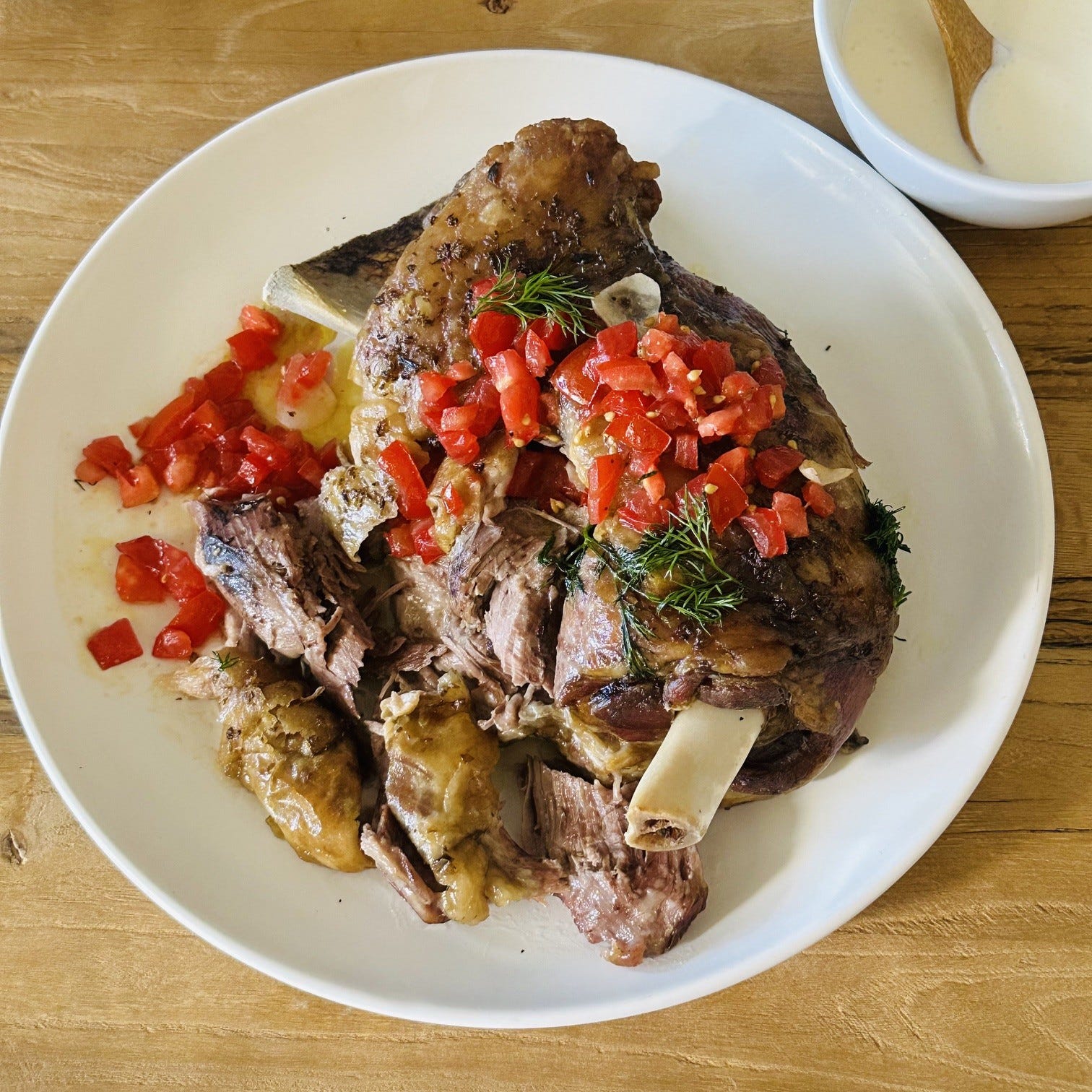
Rest the lamb in a warm place, covered, for 10 minutes, then use two forks to pull the meat from the bone; it should fall away as soon as you look at it.
Serve with sauce vierge, zucchini with lemon and dill, and a bowl of whipped feta. Serves 4.
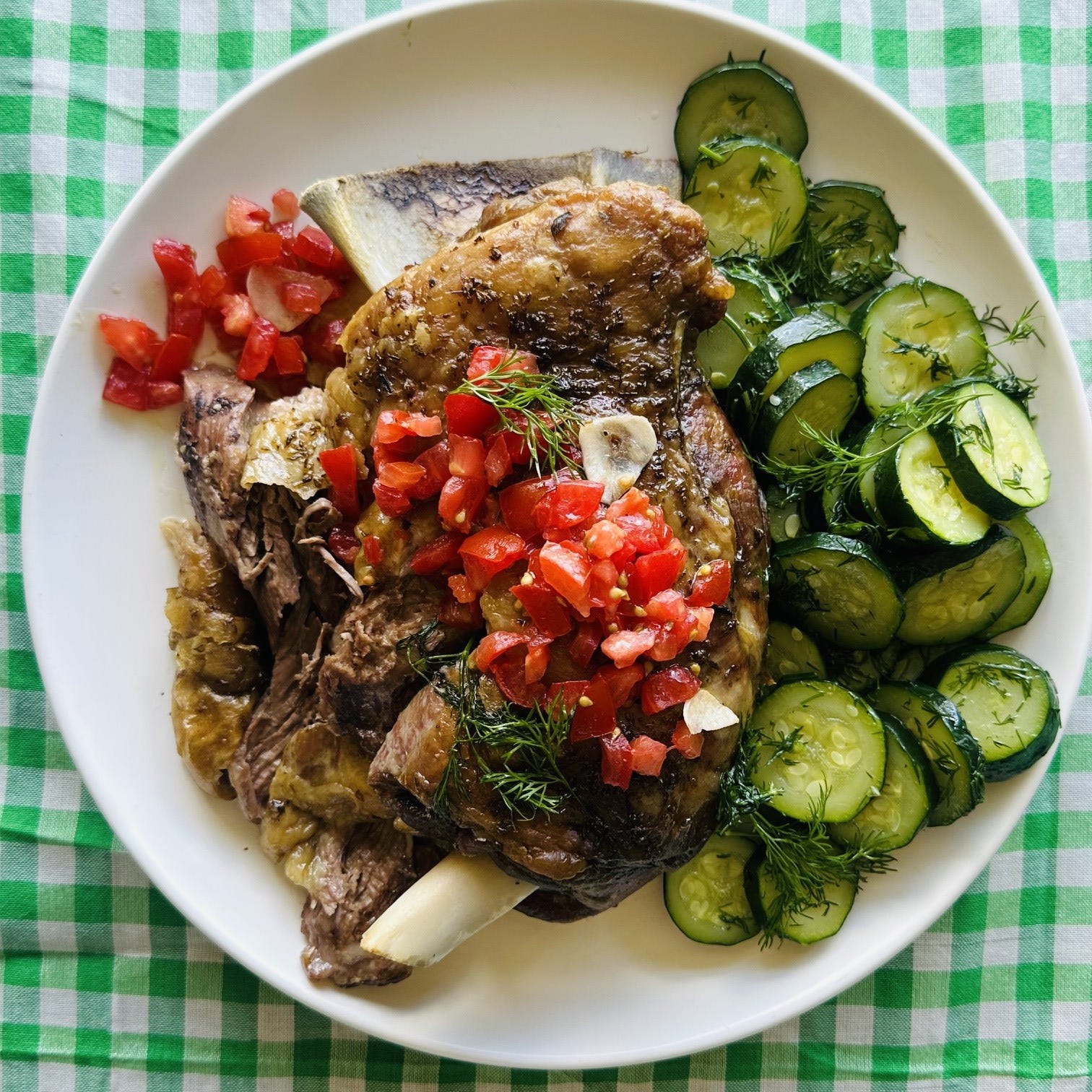
# Look for oyster-cut or banjo-cut lamb shoulder, which keeps the shoulderblade (scapula) intact. If you find only square-cut bone-in shoulder, no matter, still great.
#The lamb cooks for 5 hours, plus 20 minutes at a higher temperature to brown the top. If you’re doing this for an Easter weekend lunch and want to serve around 1.30pm, put it on by 8am. If you’re doing it for an evening meal, feel free to bake it earlier and reheat to finish; it’s pretty forgiving.
# Potatoes will never go amiss. Boiled chats, in the skin. Baked red-skins. A bowl of mash.
# If you can’t cope with the idea of non-garlicky lamb, then chuck a few smashed cloves in with the lamb before you seal it in foil.
# That bowl of pan juices you poured off? Put it in the fridge overnight until the fat comes to the surface and sets. Discard the fat and freeze the lamb stock for making gravy next time.
# Tip: the following night, take the cold hunk of lamb out of the fridge and thickly slice it while cold, when it holds together. Then gently pan-fry the slices in a single layer – no oil or butter – until they start sizzling. Turn once to warm through, and serve with lemons for squeezing, and maybe some lemony baked potatoes.
# Make more sauce vierge and whipped feta than you need and serve all weekend. Great with any form of barbecue, and rather excellent with fried eggs for brunch.
6 small to medium vine-ripened tomatoes
1 tbsp fresh parsley, basil, chervil or chives
2 garlic cloves, peeled and smashed
4 tbsp extra virgin olive oil
1 tbsp lemon juice (to taste)
Sea salt and pepper
Finely chop the tomatoes (keeping the juices) and chop the parsley or herbs.
Place in a large bowl with the garlic, olive oil, lemon juice, sea salt and pepper and toss well.
Leave at room temperature for a couple of hours, give it a big swirl, and serve alongside the lamb.
4 or 5 medium zucchini
2 tbsp extra virgin olive oil
1 tbsp lemon juice
2 tbsp chopped dill, or more
Trim the zucchini, and thickly slice about 1 cm.
Cook in simmering salted water for 2 to 3 minutes – softened but still green.
Drain well and toss in olive oil and lemon juice, sea salt and pepper.
Add half the dill and toss, then scatter with remaining dill.
150 g block of feta in brine, drained
1 tbsp extra virgin olive oil
2 tbsp natural Greek-style yoghurt
Place the yoghurt in a fine strainer and hang over a bowl to drain for an hour or so.
Break up the feta and whiz in a mini food processor until crumbled,
Add the drained yoghurt (discard the whey) and whiz briefly until smooth.
Add the olive oil and whiz briefly.
Scrape into a bowl and refrigerate for an hour or two until using; it will thicken up.
Thanks for dropping by! And thanks for your comments and suggestions. Special thanks to Terry for heading out into gusting winds and stormy rain to get the lamb; he would have made a good shepherd.
I would like to acknowledge the traditional owners of the lands and waters upon which I work, live, cook and play; the Gadigal people of the Eora Nation. Thank you for sharing your culture, traditions, knowledge, spirit, art, music, humour and food traditions, allowing us all to experience a sense of belonging in this ancient land.
Comments
Nothing yet. Say the first thing.
Sign in to join the conversation.