
In the eponymous song, The Naming of Things, Andrew Bird says the line, “you weren’t there that day for the naming of things.”[1] And this, beautiful metaphor aside, is quite literally true. Modern taxonomy was kicked off in the 1700s by Swedish biologist Carl Linnaeus (being born nearly three hundred years later, I was…not there). In his 1735 book, Systema Naturae, Linnaeus began the system of using Latin to name organisms, to classify and categorize the world around us. He came up with systems for plants, animals, and even rocks (that one didn’t take off).
Given my obsession with clouds (I used to run a cloud Instagram – aka cloudstagram – before it got hacked), my good friends gifted me a book on cloud observation. Cloud Spotting by Casey Schreiner, it walks through both the mindfulness benefits of and proper names for cloud spotting. As it turns out, there’s a lot more than Cirrus, Cumulus, Nimbus, and Stratus. Those clouds can also be described with modifiers like Fibratus, Calvus, Castellanus (a literal castle in the sky), and more. And guess who invented that? My boy, Carl Linnaeus.
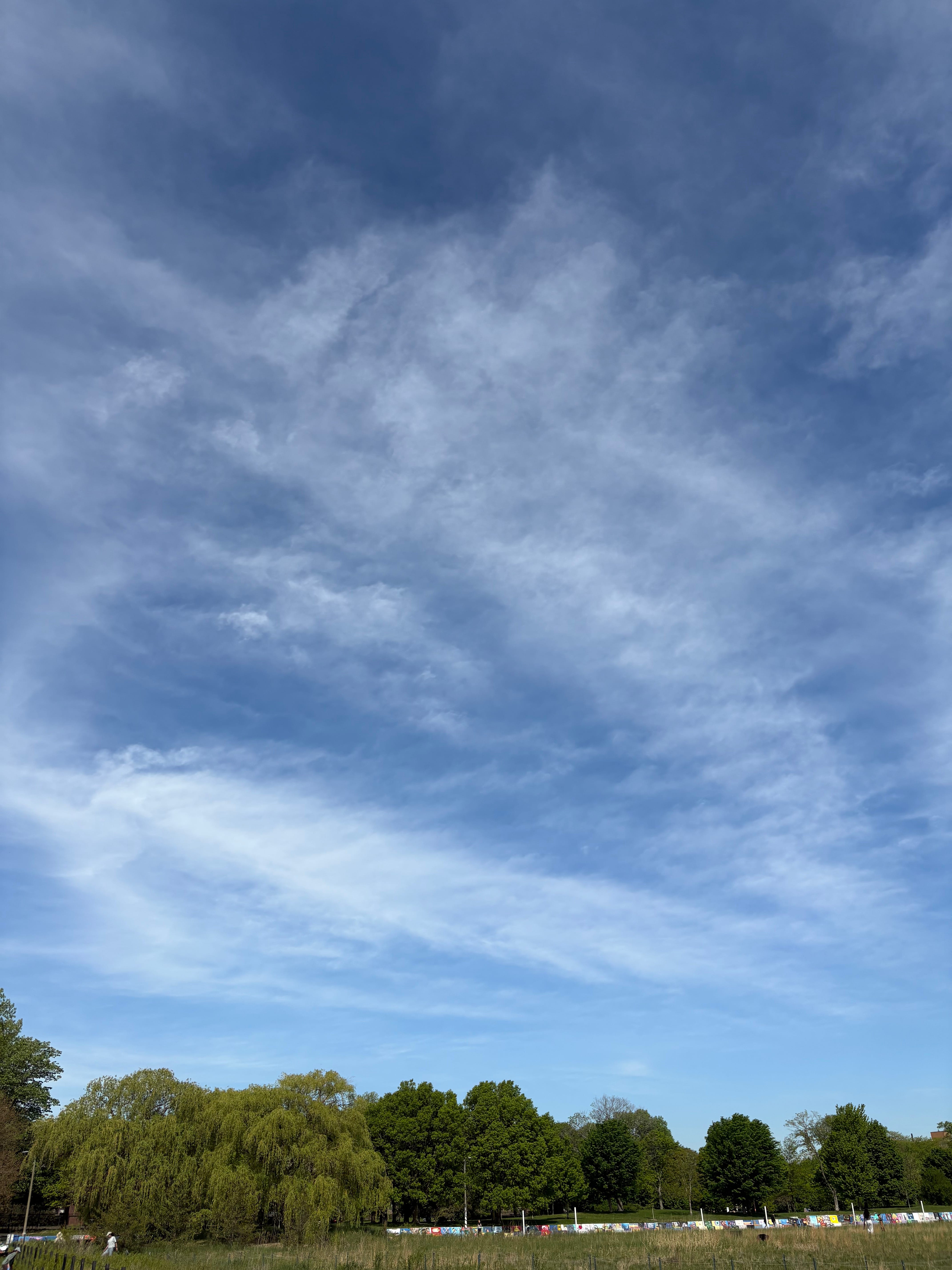
But the naming of things goes back much further than that. Since humans could speak, we’ve been creating names for the things around us. In fact, in linguistic studies that try to trace the origins of speech, they’ve found that words like bark could be 15,000 years old. From the beginning, as we hominids wandered the world’s pre-historic forests, we wanted words for nature.
This has all become far more relevant for me as I’ve taken up birding. In case you missed my last post, Everyday Magic, I’ve been trying to seek more joy in my life, to find more rest for my spirit in these frantic, utilitarian times. And I’ve found a lot of it in the woods and parks of Chicago, surrounded by islands of nature in the bustling city.
However, as I admitted last time—angering a ‘gotta catch em all’ birder in the process—I basically don’t know anything. Even as a former Boy Scout (who reached the literally-bird-named Eagle rank), I have nearly no knowledge of names. Not of birds, or trees, or rocks. The world collapses into abstraction, the idea of a thing more reachable for me than its purest, most brilliant self.
I could take my usual shame-based, self-flagellating approach to this deficit of mine, forcing myself to learn these wonders as quickly as possible. But that, I think, would be entirely missing the point. Too often, we use knowledge as a means for control, a way to define a thing purely by its limits. And as useful as latin names are, you can miss the awe within a thing when you relegate it to the easily defined. (If you want to be theological about it, you could call this kataphatic knowledge or “positive knowing,” limited by affirmative definitions. This is different from apophatic knowledge, embracing the mystery of what is by defining things through what they are not.)
Instead, I’ve chosen to treat each name as a wondrous discovery. On every walk, I’m choosing to look at the world with renewed curiosity; to question the hidden depths of the many plants and animals I’ve shared this city with for years. And best of all, given that I am a bit of an *idiot*, I know I’ll likely never fully grasp this sort of knowledge. Even now, many of the things I learn each day slip my mind. And that’s okay; I’m doing it for the love of the game. Here’s how I got my start:
For all the horrors of the internet age and its wicked little apps selling my attention to the highest bidder, a smart phone can work wonders for the budding urban biologist. Let’s start with a few apps worth taking on your walks with you:
Merlin Bird ID
Created by the Cornell Ornithology Lab, Merlin has basically everything you could ever need. You can plug in a photo and see what bird it matches in their database. You can even have it listen to bird song and make suggestions. And, if you’re unsure where to begin, it can offer you a list of likely birds in your area based on your location and the time of year.
Google Lens
Google has certainly started falling from grace in the public mind for selling our data and feeding us slop. That being said, if you’re wondering what a little plant is, there’s nothing more sci-fi worthy than plugging in a photo of a leaf and reading about what tree it might belong to. Besides, I think it’s kind of nice to think of burying our tech overlords’ metadata in pictures of neat flowers.[2]
But why would we stop there? There are also BOOKS that can help you identify things.
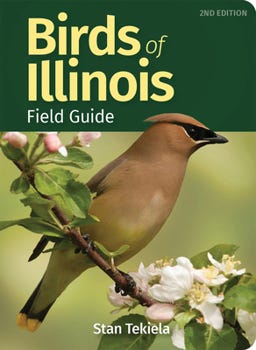
Birds of Illinois
I recently picked up this classic by Stan Tekiela, which was in stock at my local book shop, The Book Cellar. Showing it to a friend recently, she very logically asked, “how is it organized if you don’t know what bird you’re looking at?” And that’s the thing, it’s organized by COLOR! What a treat! You spot what you’re pretty sure is a cardinal? (Even I know that one.) Well, look no further than the red chapter and feast your eyes on an encyclopedia’s worth of info. Even better, this bad boy is slim enough to live in my binocular case so it’s always with me in the field (it’s…a field guide, you know?).
Trees of Illinois
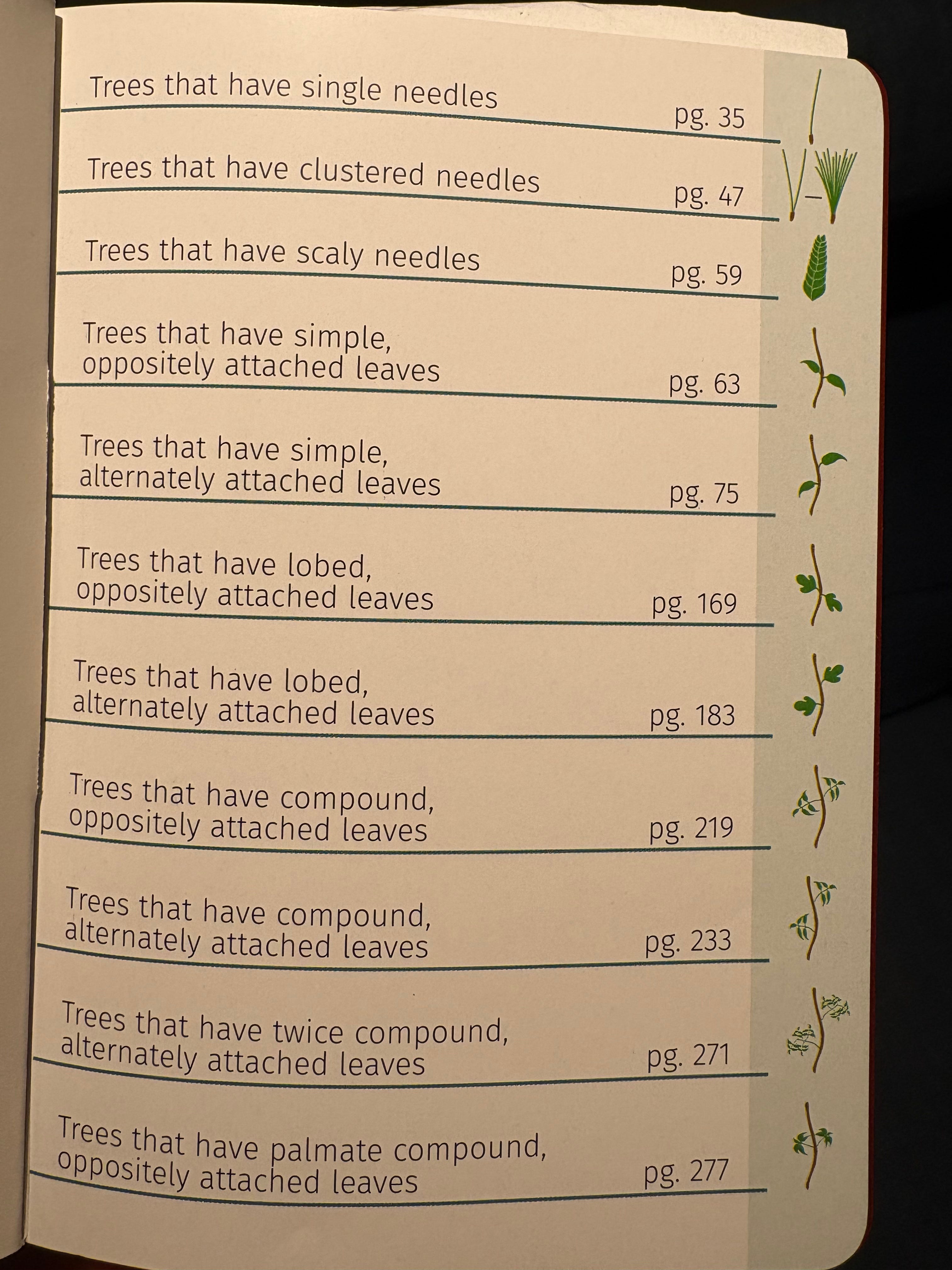
What, am I just gonna buy one Stan Tekiela book? No. That would be insane. I also picked up Trees of Illinois. This is, admittedly, a bit harder to use. You can’t use color — so much green. Instead, you have to search by leaf type. Simple, compound, lobed. Alternately and oppositely attached. It’s much harder than it looks. Looking up the honey locust, for example, it can have both compound and twice compound leaves[3].
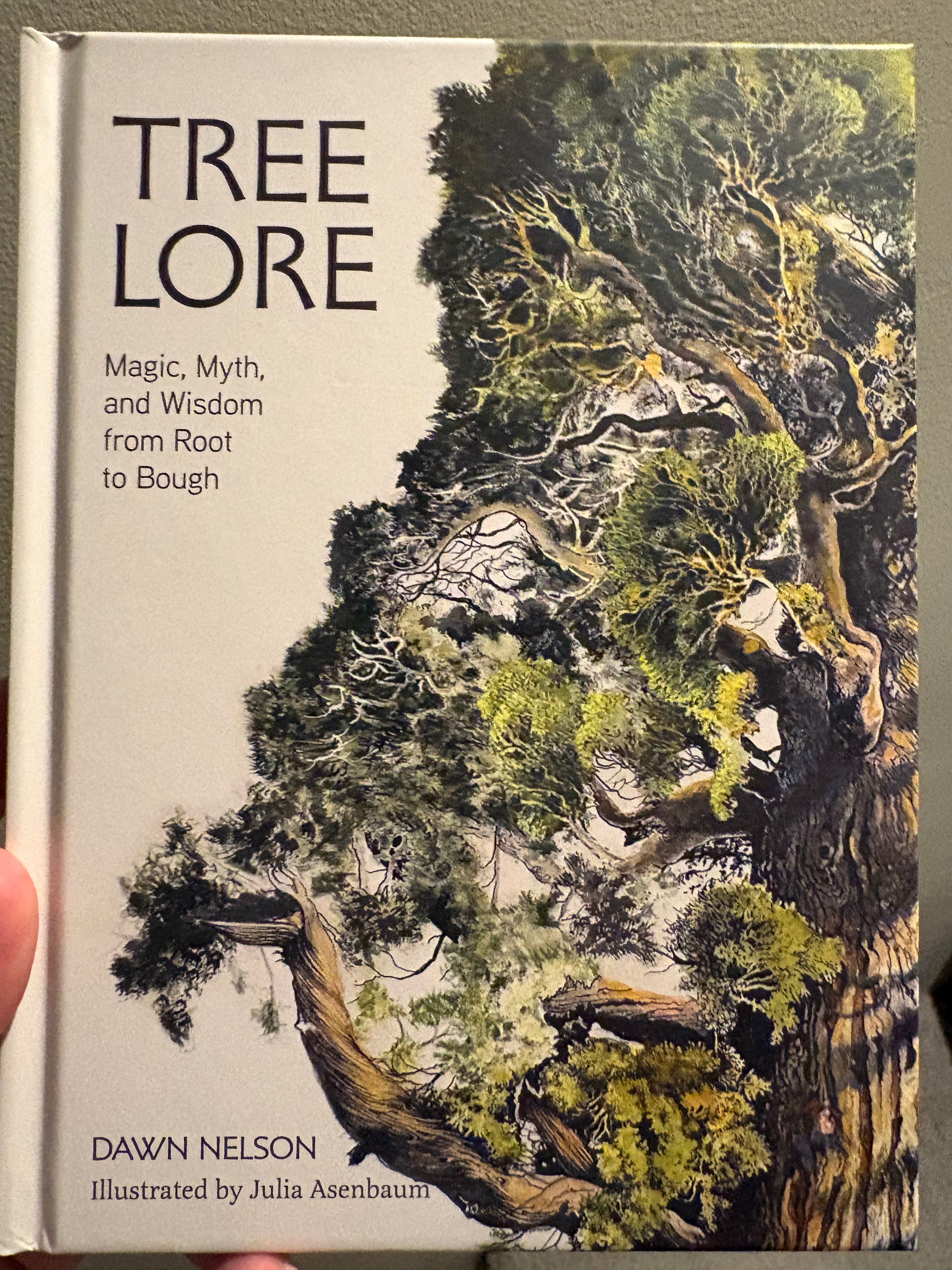
It’s not lost on me, of course, that our ancestors knew nature far more intimately. They knew the names of birds and trees, which ones had edible fruit, which ones might offer you spiritual protection. In a wonderful book, Tree Lore by Dawn Nelson, I’ve been reading about one tree each day, delving into the legends and folklore each tree has carried with it for thousands of years.
I’ve become particularly fascinated by the Rowan Tree. Famous for saving Thor’s life in the underworld, its seeds were smuggled to Earth from the realm of the gods. In the British Isles, Rowans were thought to protect against dark magic, and settlers brought them to North America to do the same. Now, when I see one on a walk through Chicago, I know I can keep my wand in its holster. (Never know when I’m gonna need to Expelliarmus a fool on these mean streets.)
But even more recently than that, the legacy of our relationship with nature filled our cities: streets, towns, and parks all named for trees. In fact, learning the names of trees has been like taking a tour of my own life. Catalpa, the lovely tree with space-alien bean pods, was also the name of the street I played soccer on in high school. Linden, its branches laden with fragrant yellow flowers in June, was the street I lived on in college. Even my childhood friends lived on streets like Tall Oaks, Maple Ave, and Pleasant — which, while not the name of a tree, was clearly named for the trees that line it. Trees are our memory, our legacy, our ancestors. It’s time we remembered.
At the end of this month, I’m heading back to Washington DC for my annual lobby trip with Citizens’ Climate Lobby. Last year, we met with four hundred Congressional offices (and you can read about my experience in the piece Coming to a Capitol Near You). This year, while we’re fighting the good fight again on permitting reform. Slow permitting, if you recall, is holding back renewables, which would lower our energy bills and reduce our emissions. As a recent MIT analysis found:
“Permitting reform is perhaps the single best policy action that can be taken to accelerate the energy transition and power economic growth and opportunity.”
If you want to join in the fun, you can email your Congressperson here to tell them you want permitting reform. There’s genuine momentum for bipartisan work on this issue on the hill, and your voice could help! But, to get back to trees, there’s something more philosophical I’m focused on during this trip to Washington: BRIDGE.
BRIDGE (or, Building Relationships in Dialogue, Growth, and Engagement) is CCL’s new foundational training series, aiming to get us to be better at talking to people, especially those who disagree with us. It’s so easy for us to get lost in wonky policy (I literally just bored you with policy talk) that we forget how important is to make people care about climate.
The incredible, stalwart leader of CCL in Illinois, Alex Marianyi, has called this phenomenon “inspiration for me, policy details for thee.” (He also just wrote a great post about organizing I can’t suggest enough.) BRIDGE is an attempt to fix this deficit. Using moral foundations theory, it aims to get at the WHY before the WHAT. In the end, this is much more aligned to how humans really think. We make snap judgments based on our moral foundations and fill in the logic later.
And that’s what brings us back to trees! Trees are deeply bipartisan (remember the trillion trees act?). Americans have a deep legacy of love for the land, and I think that is a far better approach on climate than wonky policy. If you can love a tree, you can love the air it breathes. So, this summer, don’t just talk about how scary climate change is. Talk about the heat waves. Talk about the beautiful trees we’ve lost to fires and drought. Talk about how you had to cancel your 4th of July barbecue or how you sweat through your favorite hot dog T-shirt. If we know the names of the things we’re losing, it will make it easier for us to want to protect them.
Love always,
JH
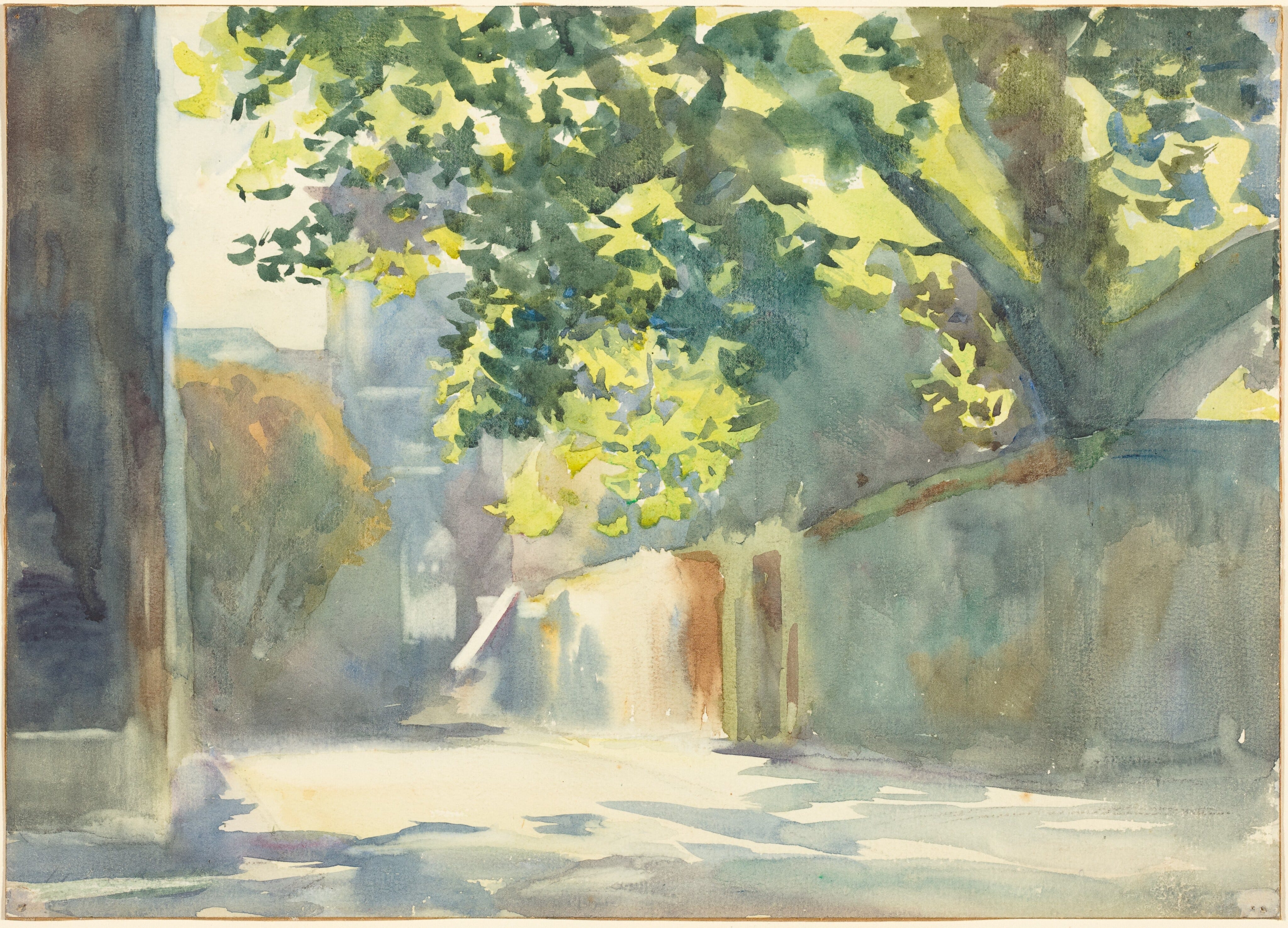
*Art by John Singer Sargent, Sunlit Wall Under a Tree, c. 1913, courtesy National Gallery of Art
**Email header art by Karl Nilsson (sigvardnilsson on instagram), includes portions of Beck’s Castle Ruins by László Mednyánszky Denbigh Castle, W he ales by Edward Dayes & Paysage de la Grand Chartreuse attributed to Jean Lubin Vauzelle
[1] My indie rock high school self would be so proud I wrote a blog that references the violin maestro and Chicago titan, Andrew Bird
[2] This is incredibly nerdy, but if you happened to watch the anime Eden of the East in 2009, the main character could do this with his phone and it BLEW my mind. Now, with neural nets basically everywhere, we have the plant-based power!
[3] It’s listed under twice compound, by the way, which I have some beef with. But, hey, I’m not the tree king, Stan is!
No posts
Comments
Nothing yet. Say the first thing.
Sign in to join the conversation.