
**First, a beautiful disclaimer**
This is one of my all-time wonkiest pieces, perhaps only outdone by my review of nuclear safety. I do posts like these to cement my own understanding and thinking on complex issues like permitting reform. After diving deep on the permitting process, I’ll provide an update on where permitting reform stands. Feel free to skip down there—or skip the whole dang thing, I won’t judge you. Now, without further ado…
You may recall that last year, after many years as a local volunteer, I finally joined Citizens’ Climate for their annual lobby day on Capitol Hill. I wrote about it in a piece called, Coming to a Capitol Near You, in which, I mostly just talked about how hot and sweaty I was.
Well, this year, glutton for punishment that I am (remember, I grew up Catholic, so I hate myself), I decided to return. I looked at the 90-degree forecast and thought “let’s visit the halls of power in a wool suit!” When you thrift your look, beggars can’t be choosers.
Somehow, though, the universe seemed to sense my massive climate karma and someone accidentally left a hand-held fan in my room. I’ll admit, I’ve been skeptical of such fans in the past. What could they really do to beat the heat? It turns out I was wrong. Drenched in sweat and waiting in the bowels of the subway, blasting battery-powered air on my face worked wonders. While arriving sweaty may have bolstered my case that climate change is real, I’ll just have to let the wildfire smoke do that for me…
Anyway, I’m not here to tell you about how I look like King Henry the Eighth after he found out he sired another daughter. I’m here to tell you about what’s up with permitting reform. This was the third time I’ve lobbied on this issue, and I think it’s incredibly important. As I mentioned last month, a recent MIT analysis found:
“Permitting reform is perhaps the single best policy action that can be taken to accelerate the energy transition and power economic growth and opportunity.”
So, today, let’s dig a little deeper. What does the current process actually look like and what are we trying to change?
We know that it takes a long time to build in America, with a wait as long as ten years to build new transmission projects (the clean energy average for permits is 4.5 years vs 6 years for transmission). As I wrote in my review of Abundance, we historically tried to get bad at building on purpose. In the 60s and 70s, we were facing a very different set of problems. America had built and grown extremely quickly after WWII. The result was toxic skies and rivers full of sludge.
We introduced new rules like environmental review and ample local zoning boards. However, the changes we made also took on a new philosophy—a philosophy of slowness. As the theory went, by layering the building process in tons of new procedures, we could use slowness to hopefully discover new information and prevent harm. While that’s not bad in theory, we now face a very different set of problems. Our current system is emitting too much CO2, and we need to build a new clean energy system as quickly as possible.
But what does that process actually entail? There are many layers to permitting: different authorities, processes, and layers. So, to start, let’s see what’s included in permitting. The Brookings Institute did a great summary, but let’s summarize even more:
Local — projects generally need local permission for land use where they’re building. If they need to cross private land (like a transmission project), they may even need eminent domain. Finally, right before building, they will need the usual local construction permits you’d need for building any project: a house, a store, whatever
State — there are multiple layers to state permits, including environmental review and state department permits. After all, NEPA isn’t the only environmental regulation. States have rules and reviews too (like CEQA in California). Various environmental reviews can be coordinated with the federal one, but you still have to clear the state hurdle. You’ll also need state permission if your project crosses any highways (from the state department of transportation) or state borders (in the case of transmission lines)
Regional Transmission Organizations (RTOs) — I’ve written about RTOs like PJM here. Their capacity auctions can be controversial, and are part of why our electric bills have risen so fast. But if you’re a new clean energy project, you’ll have to join the RTO’s interconnection queue and conduct lengthy grid studies. They’re trying to speed this up with new AI tools and rules from FERC (the federal authority on transmission), but it’s also a target for permitting reform
Federal — this depends on project size, but projects large enough could require a bunch of different permits to comply with a myriad of federal rules: bald eagle protection, migratory bird treaties, fisheries protection, etc. There’s also usage of federal land and other reviews (like Department of Defense reviews, which have recently been used by the administration to try and kill wind)
NEPA —when a project is expected to interact with air or water, many of the federal permits come from the EPA. However, the National Environmental Policy Act (NEPA) is a distinct type of review. Instead of creating a separate permit, it is a procedural law. It requires the government to review its permit processes and may require an Environmental Impact Statement (or EIS). It is also frequently the basis of lawsuits—which is an important source of delays
A question I get asked most often is what part of this permitting gauntlet takes so long? Do these processes run concurrently? Where do community feedback and legal challenges enter the mix? The answer is, of course, somewhat complex.
First, some things have recently changed (and hopefully improved). Previously, NEPA reviews had to be conducted across every individual agency with fresh paperwork each time. However, the Fiscal Responsibility Act (passed 2023) worked to make NEPA reviews more efficient. It required the naming of a lead agency to coordinate across the others in the federal government and requires agencies to work off of the same document instead of creating new ones for each piece of the review. It also set time and page limits on EIS’s and EA’s (environmental assessments, which are a preliminary step when a project’s impacts are unknown). It also gave applicants the option to draft their own documents an and have the agencies review them.
Back in 2015, NEPA was also streamlined through the “FAST-41” process, or “Title 41 of the Fixing America’s Surface Transportation (FAST-41) Act.” It covers a number of eligible project types (including clean energy, though only over $200M in investment) and set up the Federal Permitting Council (FPC) to oversee agency coordination. It also lowered the statute of limitations for suing eligible projects after agency decision from 6 years to 2, again, only for those large $200M projects (this will be important later).
But to return to the first question, some parts of the process are concurrent and some aren’t. RTO interconnection queues are separate but run concurrently with federal environmental reviews. Same for state permits. However, parts of the federal process are distinctly sequential. For example, clean air and water reviews tend to follow the NEPA review (since the EPA will review, and sometimes comment on, the EIS). While NEPA can help coordinate environmental review across federal, state, and local agencies, there are elements of local permitting that happen at different stages—like getting the local site permit (first step) and getting construction permits before building (after NEPA). Let’s walk through what NEPA review actually looks like:
Environmental Assessment (EA) — if a project has an unknown impact, it will first go through an EA to get the broad strokes of the environmental stakes. If the project is determined to have “no impact,” which uses the excellent acronym FONSI (Finding of No Significant Impact), it can get a categorical exclusion from the rest of the NEPA process
Construction and Operations Plan (COP) — a crucial early step, the construction plan (how much to build and where), informs the rest of the process. This is also subject to public comment and many stages of review and revision. This will be followed by a “Notice of Intent” to prepare an EIS
Environmental Impact Statement (EIS) — this is the longest part of the process (according to the GW study linked above, the median time is 41.2 months). It starts with scoping, figuring out what issues are involved and which stakeholders need to offer input. After scoping, a draft is produced, which will outline the environmental impacts and required mitigation strategies. The draft also goes through public comment and revision. The median length of a draft EIS is 397 pages and 447 pages for a final
Regulatory Decision — It’s after producing the EIS that the relevant agencies make their decision whether or not to permit the project
Legal challenges — Once an agency has made a decision, this is when lawsuits come into play. According to the RFF paper linked above, about 1/3 of solar and 1/2 of wind projects face legal challenges
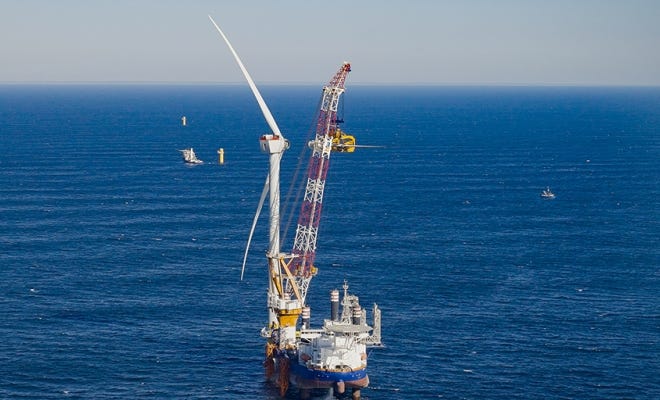
To get a more tangible feel for this process, let’s look at an actual, real-life project, the South Fork Wind Farm. Located 16 miles off the coast of Long Island, its 12 turbines provide 132 MW of capacity, or enough to power 70,000 homes. (There is some great documentation on this project on both Wikipedia and by the Regional Plan Association (RPA), a century-old non-profit civic organization focused on development in NY. The stats block below comes from the RPA review.)
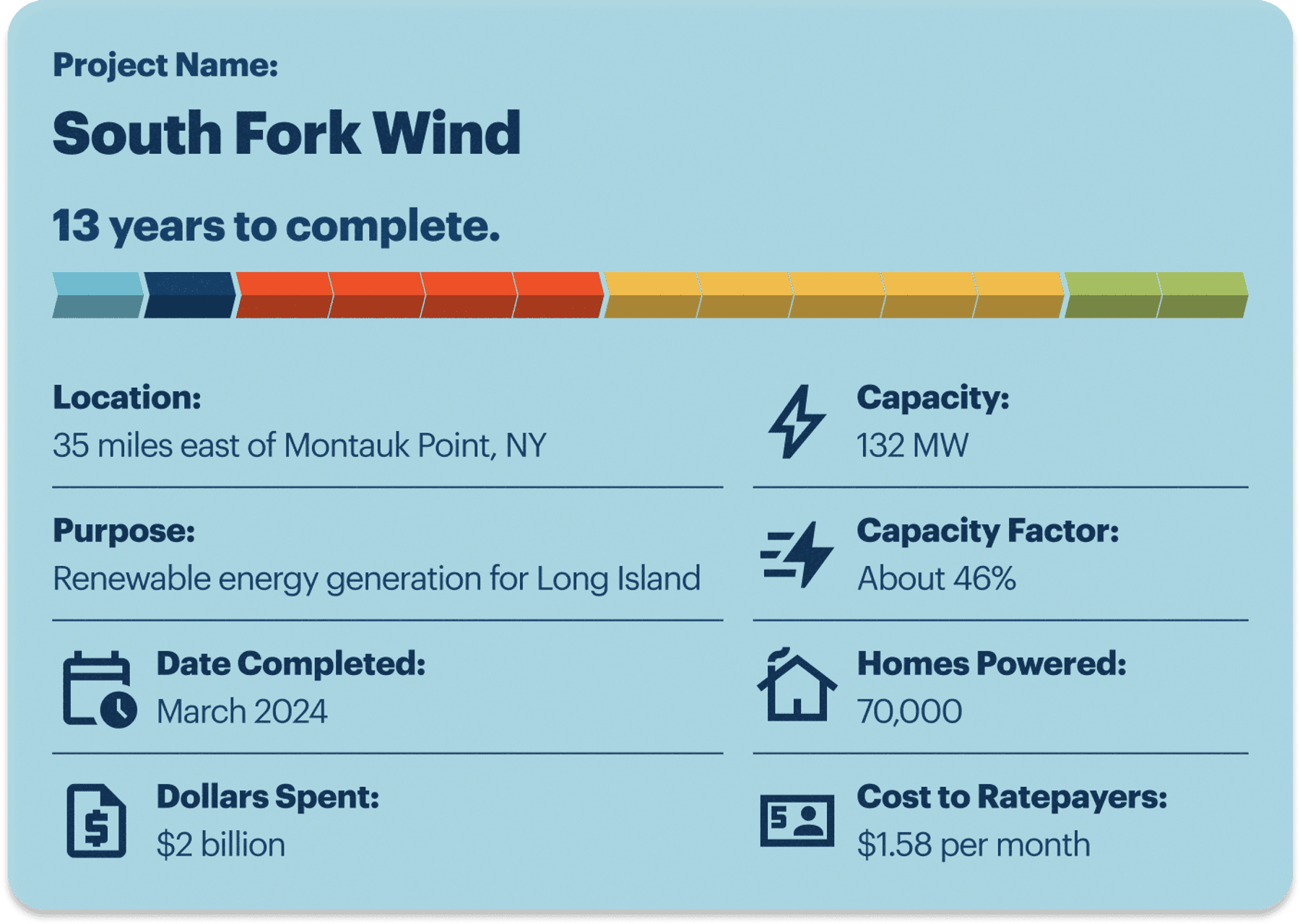
The thirteen years is not all permitting, of course. RPA recorded 1 year for planning, 1 year for leasing, 4 years for site assessment (more complicated at sea than on land), 5 years of permitting, and 2 years of installation after final approval.
Starting in 2012, the Bureau of Ocean Energy Management (BOEM), under the Department of the Interior, started seeking proposals from wind companies. By the time construction finished in 2024, RPA tracked 17 federal reviews, 15 state reviews, and 13 local reviews (which were ultimately pre-empted by the state reviews).
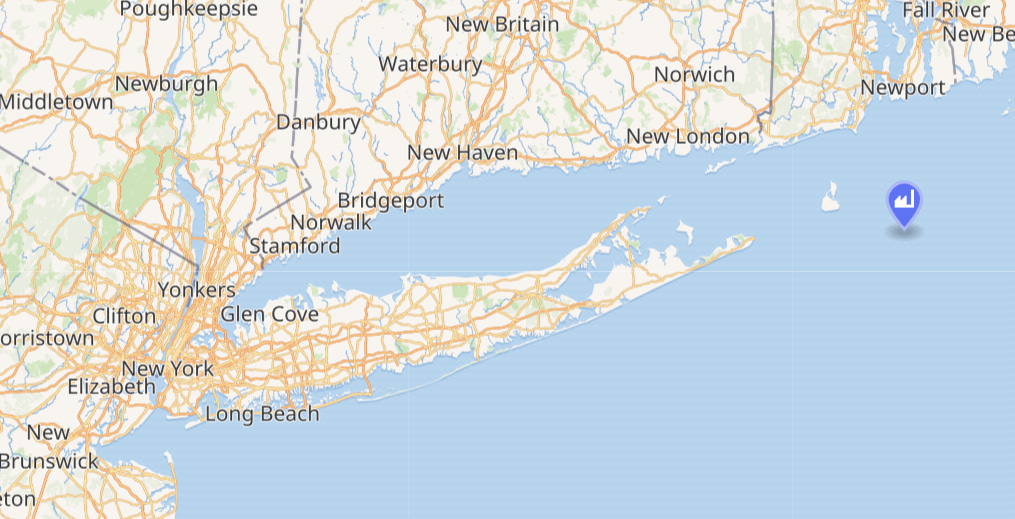
Ørsted, the Danish wind giant, was the company that ultimately finished the project after acquiring Deepwater Wind, the company that started the process. Deepwater Wind first pitched the project in 2013, receiving approval by the Long Island Power Authority in 2017. Only then could the NEPA process really begin.
Ørsted took over in 2019, which caused some delays in ocean lease reassignment and the like. The project’s construction plan took nearly 4 years to complete. First submitted in June 2018, it received final approval in January 2022. This, however, was concurrent with the NEPA review (finished November 2021) as NEPA review and public comment had to be reincorporated into the construction plan.
There were significant comment periods at both the state and federal level, including “significant litigation from some community members.” This was settled by a “Host Community Agreement,” which included the developers paying the town of East Hampton $29M over the 25 years the project will be in service.
Another major hurdle was transmission. Because the project was at sea, it needed to build its own transmission cables back to land, which triggered significant state review—and helps explain why transmission projects have a much longer approval timeline.
This project, however, seems very much worth the trouble. Offshore wind has a very high capacity factor—meaning the wind blows super consistently. This project’s capacity factor hit 53% in the first half of 2025, which is competitive with a natural gas power plant. That helps dispel the fears of intermittent power from solar and wind.
To start, the usual disclaimer: CCL’s lobby meetings are confidential, which allows for more productive conversations with Congress. So, I won’t be mentioning any specific meetings, offices, or people I spoke to. I just want to speak to the general vibe this year.
And to that end, I thought the vibe was definitely more constructive this year. I think 2025 was really intense for a lot of people on both sides, and 2026 is more of a return to traditional policy negotiations—while keeping in mind that we’re still in a deeply polarized environment with the mid-terms bearing down on us…
However, I think another crucial shift I felt across party lines was just how bad it’s gotten on electricity prices. As I said in a post back in December, electricity prices in Chicago were up 180% last summer, and we’re looking at similar increases this year. It felt like representatives and their staff had felt the strain from constituents and were more open to discussing possible solutions. We’re also seeing active bipartisan negotiations on permitting reform in two sub-committees in the Senate (public works and natural resources), which added to the momentum.
However, there also remained some major obstacles to permitting reform, so let me address quickly what some of the potential reforms look like—and why they’re facing resistance.
The current negotiations taking place in the Senate are just the latest in a number of recent efforts to reform the permitting regime in the US. Another major attempt took place in 2024, the Energy Permitting Reform Act of 2024 (or EPRA). While it didn’t garner enough support, it proposed a few key items that are still in play. Not sticking to EPRA specifically, here are some of the most important issues in permitting reform these days:
Judicial review — remember how lawsuits can complicate buildouts? There has been a lot of negotiation around how long groups have to sue after the NEPA process is finished. Recent Republican proposals have looked to reduce this timeframe from 6 years down to 150 days. (If you recall, FAST 41 reduced it from 6 years to 2 years for the largest projects). Democrats believe 150 days is far too short. I think it depends on what else can be added to the process. CCL believes 150 days is reasonable, though they’re also advocating for “early community involvement” (more on that next). Remember too that lawsuits tend to happen all along the process (from state to local to federal). The federal lawsuit window also happens at the end of the nearly 4-year NEPA process, with plenty of public comment in between…
Early community involvement — everyone in the space is in agreement that getting the community involved early in a project tends to drive better outcomes. The earlier the community can be made aware of a project and asked for feedback, the better. A big issue we’re seeing in the build out of AI data centers is the use of NDA’s between tech companies and city councils. The name of the game should be transparency and open discussions with the community. Reforms to this process could also connect community engagement and comment periods to the judicial review process so only groups that have been engaged all along have grounds to sue.
Transmission — as you’ve seen throughout this saga, transmission takes way longer to permit and is a major issue in the permitting regime, especially when transmission cables cross state lines. Proposals include empowering FERC (the national grid regulator) to have more say as well as figuring out cost sharing proposals—who pays for new lines based on how much benefit they’re getting from the electricity. This one is a bit of an Uno-Reverse on the partisan side. Republicans don’t want more power for federal regulators like FERC and are very concerned about their communities not benefiting from electric lines passing through their communities. Democrats tend to support transmission as it’s vital to help move clean energy from where it’s abundant (like windy South Dakota) to where it’s needed (major cities).
A brief aside on permitting reform at the state level. With national legislation and reform taking a long time, we’re seeing more states taking matters into their own hands. In red states, we’ve seen a lot of local ordinances that ban renewables. In Ohio, for example, a whopping 26 counties have moved to ban or restrict solar. Meanwhile, in blue states like Michigan and Illinois, states are writing rules that supersede local authorities when they don’t comply with “compatible” renewable energy processes.
Despite a decent amount of controversy, the Michigan law is actually pretty cool. Companies developing new renewable projects have to start with local approval and pay for counties to hire lawyers if they can’t afford them. The state only kicks approval to their own regulators if the local government doesn’t have a process in line with the legislation. We’ve also seen recent public opinion polling on the subject that was roughly 50/50, even in the Upper Peninsula. While some residents are mad about losing local control, others think the state will make better decisions than the people on their local county boards.
I use this example to show that how we permit things, who gets a say, and how much they can slow down the process is very much in contention. I think any comprehensive permitting reform will need to deal with all of these issues in a fair, balanced, and bipartisan way. Otherwise, people will feel either steamrolled or stymied depending on which county they live in.
That’s all I’ll say for now! If you read this behemoth, I salute you and appreciate your support. If you want to tell your representatives to engage in the ongoing negotiations around permitting reform, you can do so here. I’ll close with some of the possible benefits if we get this right:
Up to $14.4B in potential annual savings for residential consumers ($300 per household per year on energy bills)
Preventing grid outages, which could increase 100x by 2030 without grid modernization
Around 6.5 billion tons of reduced carbon emissions by 2050, equivalent to restoring the IRA
Reform won’t be easy, but neither is our current process. I hope you’ll join me in whatever comes next.
*Art by Joseph Pennell, The Old Shipyard, 1916, courtesy National Gallery of Art
**Email header art by Karl Nilsson (sigvardnilsson on instagram), includes portions of Beck’s Castle Ruins by László Mednyánszky Denbigh Castle, W he ales by Edward Dayes & Paysage de la Grand Chartreuse attributed to Jean Lubin Vauzelle
No posts
Comments
Nothing yet. Say the first thing.
Sign in to join the conversation.